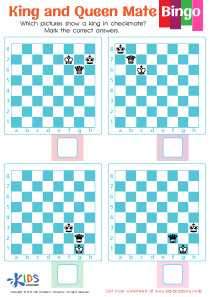
Chess strategy understanding Normal Chess Worksheets for Ages 6-8
3 filtered results
-
From - To
Unlock the fascinating world of chess for your young learners with our "Chess Strategy Understanding" worksheets, expertly designed for ages 6-8. These engaging activities help children develop essential strategic thinking skills while introducing the foundational concepts of chess. With colorful visuals and age-appropriate content, our worksheets make learning fun and interactive. Foster critical thinking and problem-solving as kids delve into common chess strategies, positions, and tactics. Perfect for classrooms or at-home learning, these resources will nurture a love for chess and inspire young minds. Equip your children with the skills to think ahead and master the game!
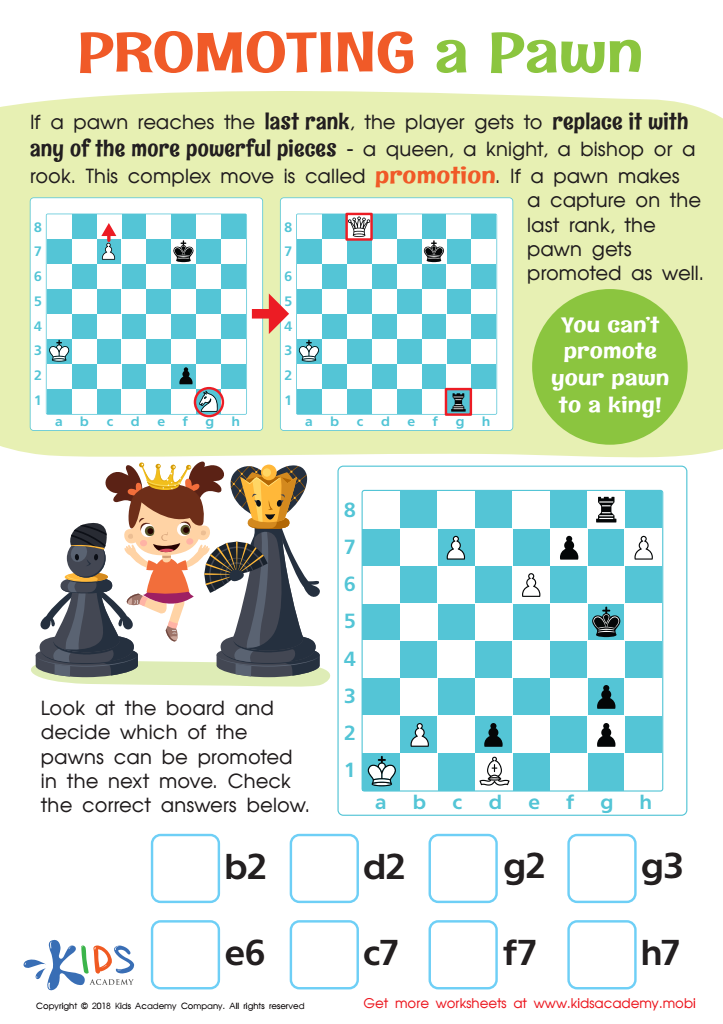
Promoting a Pawn Worksheet
 Assign to My Students
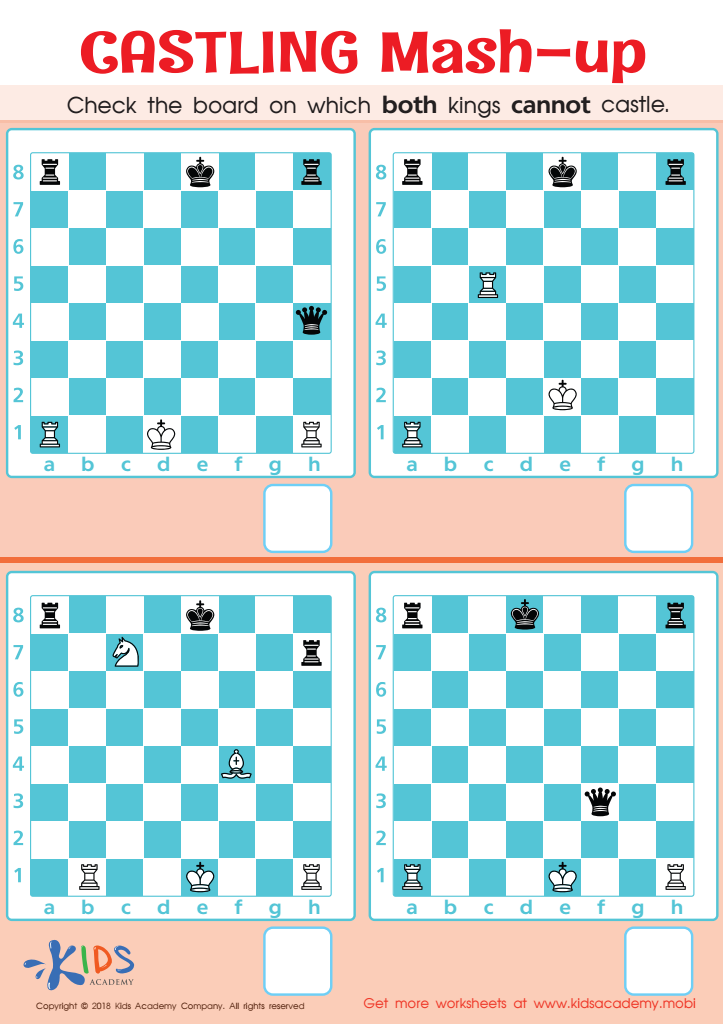
Castling Mash–up Worksheet
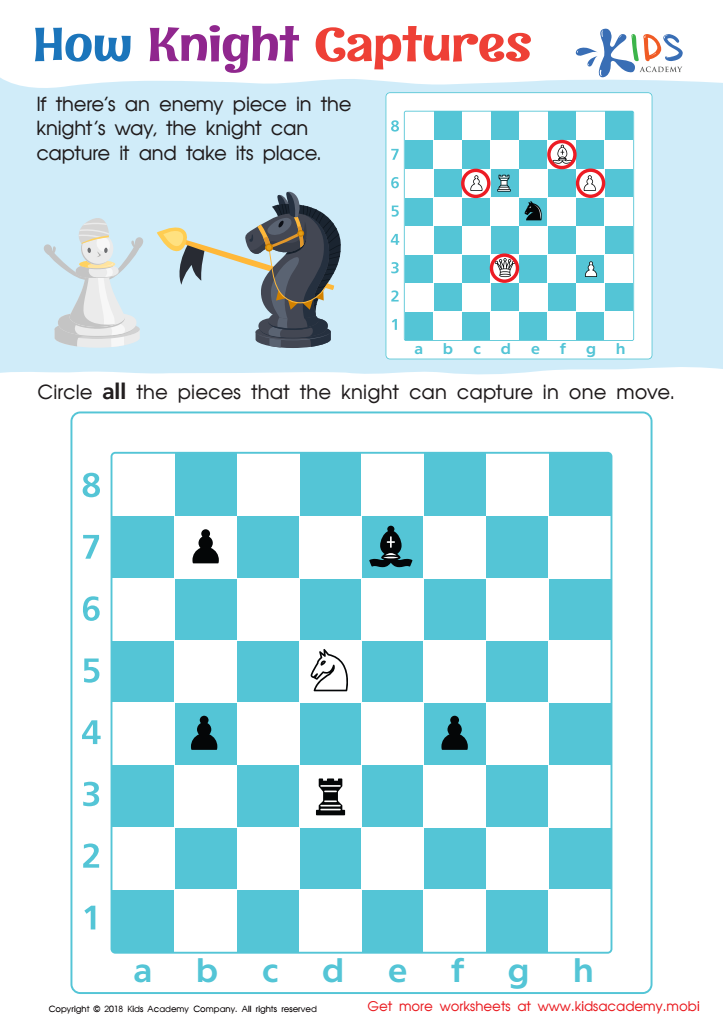
How Knight Captures Worksheet





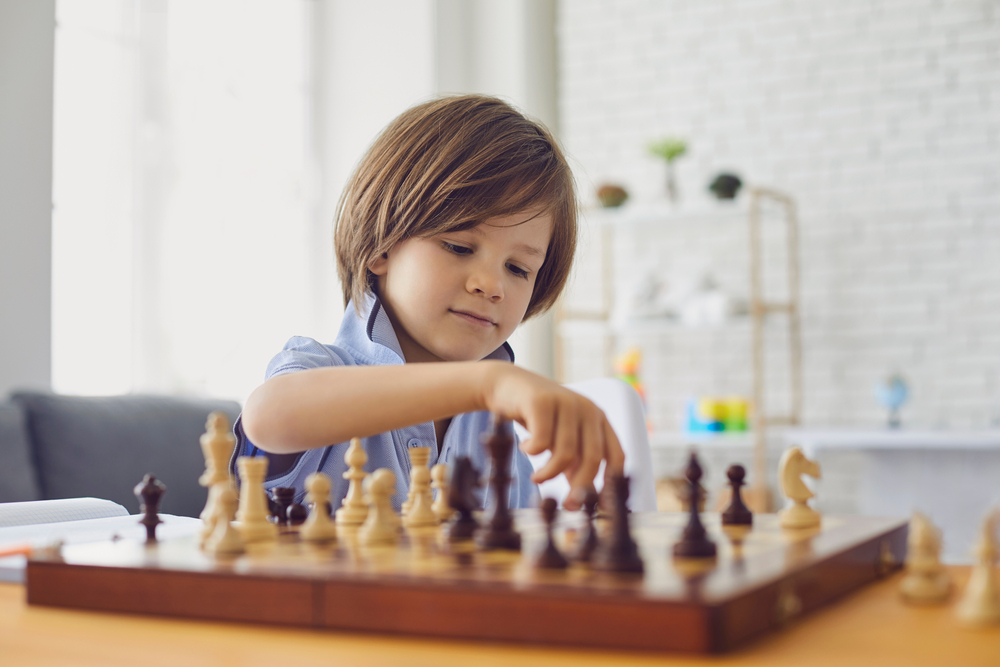

Understanding chess strategies can be incredibly beneficial for children aged 6-8, and it’s vital for parents and teachers to appreciate its potential. First and foremost, chess fosters critical thinking and problem-solving skills. Young children learn to analyze situations, anticipate their opponent's moves, and devise strategies to achieve their goals. This cognitive development can translate into improved academic performance across subjects, particularly in math and logical reasoning.
Moreover, chess encourages patience and teaches delayed gratification. As children understand that making a strategic move can lead to success later in the game, they learn to think long-term. Additionally, playing chess enhances focus and concentration, which are essential skills for both academic tasks and everyday responsibilities.
Furthermore, chess offers social benefits. It can be a bonding activity between parents and children or a way for children to interact with peers, promoting healthy competition and sportsmanship. Lastly, learning and understanding chess creates a sense of accomplishment, boosting self-esteem as children develop their skills over time. By emphasizing chess strategy understanding, parents and teachers not only enrich children's recreational activities but also lay a foundation for critical life skills that will serve them well beyond the chessboard.