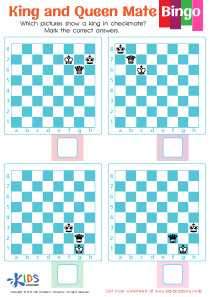
Problem-solving practice Normal Chess Worksheets for Ages 6-8
3 filtered results
-
From - To
Unlock your child's potential with our Problem-Solving Practice Normal Chess Worksheets for ages 6-8. Perfect for young learners, these engaging worksheets make mastering chess strategies fun and accessible. Designed to boost critical thinking and cognitive skills, each worksheet presents a series of thoughtfully crafted chess problems that encourage kids to think ahead and plan their moves. Ideal for beginners and budding chess enthusiasts, our worksheets not only build essential problem-solving abilities but also instill a love for this timeless game. Equip your child with the mental tools they need for success, both on and off the chessboard!
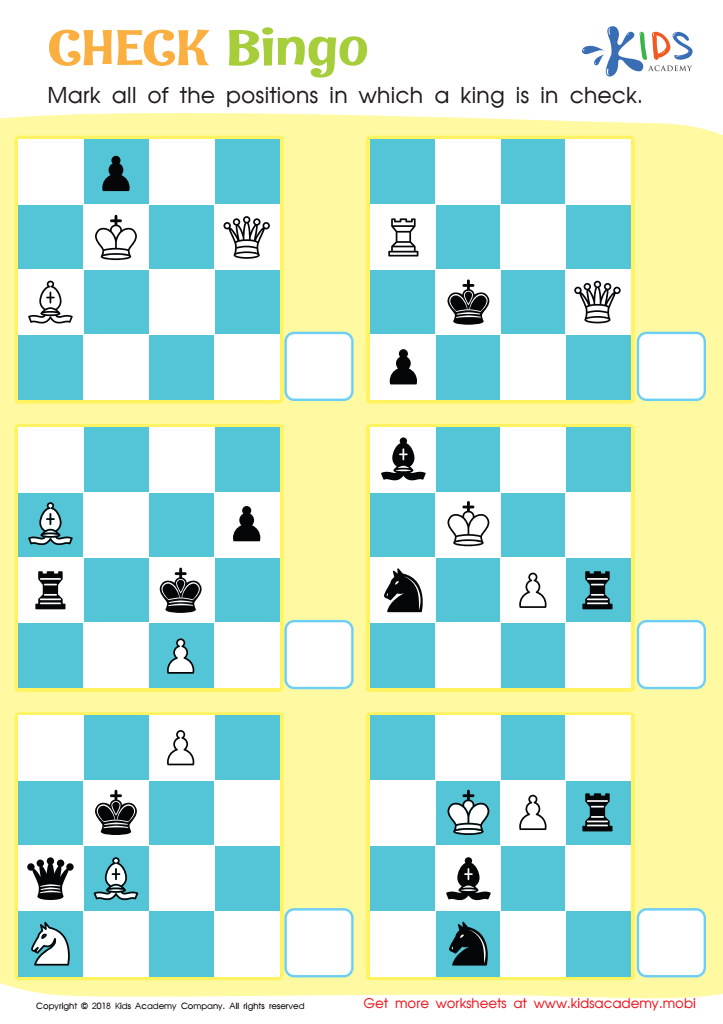
Check Bingo Worksheet
 Assign to My Students
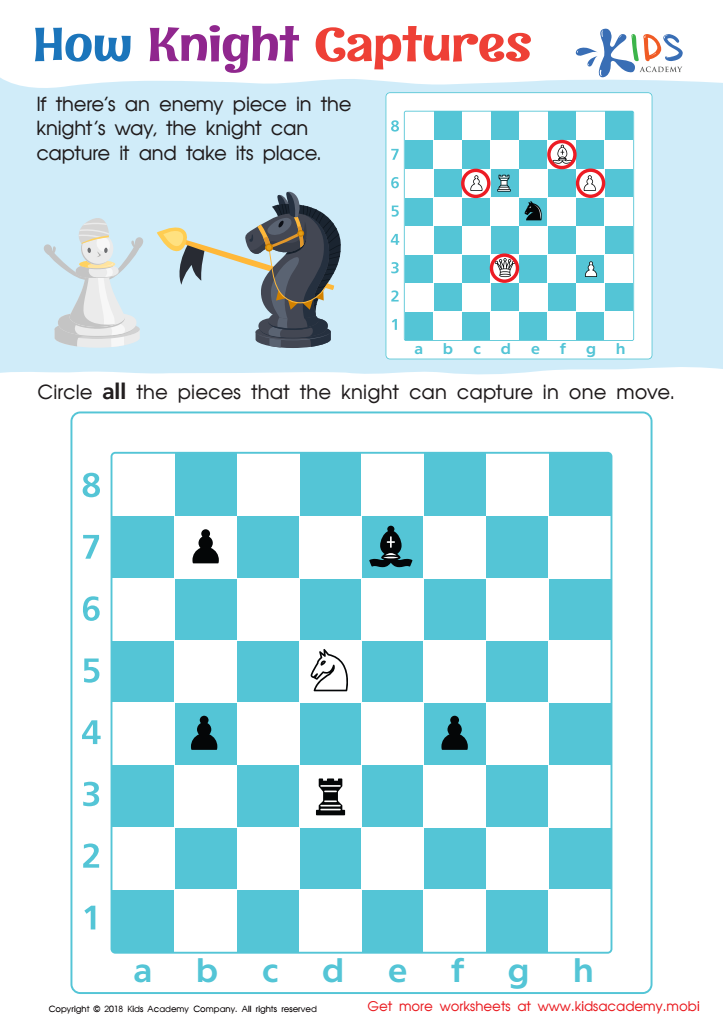
How Knight Captures Worksheet
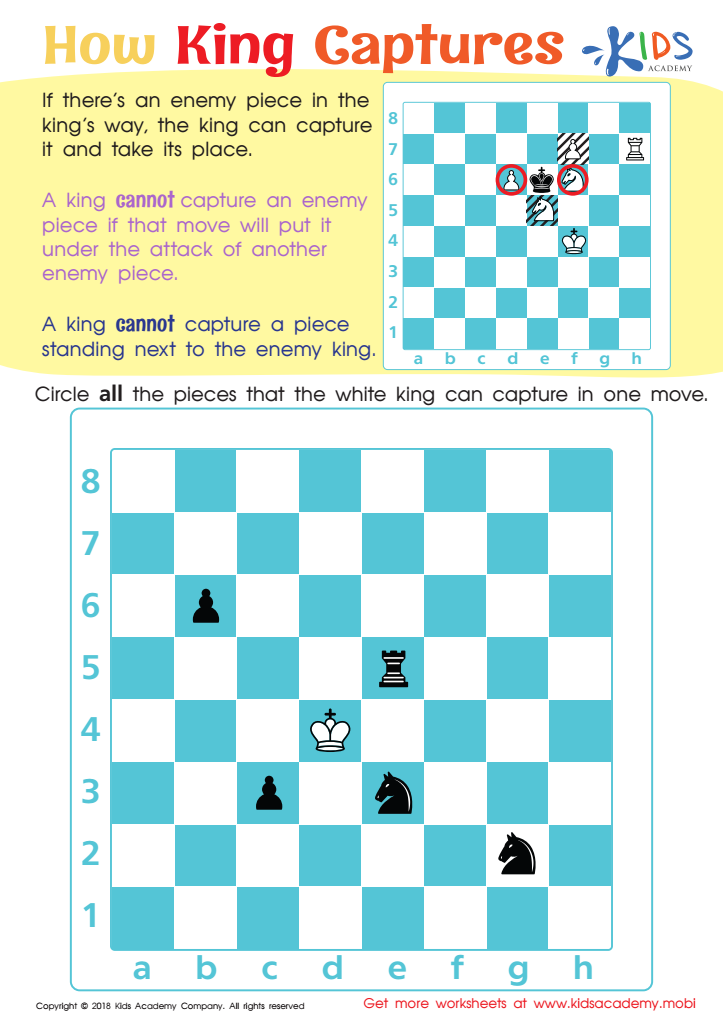
How King Captures Worksheet







Problem-solving practice using normal chess is profoundly beneficial for children ages 6-8. Engaging in chess helps young minds develop critical cognitive skills such as problem-solving, logical reasoning, and strategic thinking. These skills are transferable to academic subjects, helping children excel in math and science by enhancing their ability to design plans and anticipate outcomes.
Chess also fosters concentration and patience, as children must stay focused and think critically about their moves and their opponent’s. This can positively impact their behavior and attention span in classroom settings. Furthermore, because chess requires planning several moves ahead, young players develop foresight and analytical thinking, learning that actions have consequences—crucial lessons for both academic and personal success.
Beyond cognitive benefits, chess can enhance social skills. Playing chess with peers teaches children sportsmanship, respect for others, and how to handle wins and losses gracefully. It promotes interaction and communication, crucial components for building strong interpersonal relationships.
Moreover, chess is an enjoyable and rewarding activity, boosting children's self-esteem and sense of accomplishment as they see their progress. This positive reinforcement can inspire a lifelong love for learning and problem-solving.
Overall, incorporating chess into the routine for children ages 6-8 offers a myriad of benefits that extend well beyond the chessboard, supporting their educational and social development in meaningful ways.