Alphabet familiarity Normal Worksheets for Ages 6-8
7 filtered results
-
From - To
Discover our "Alphabet Familiarity Normal Worksheets for Ages 6-8" designed to enhance your child's letter recognition and phonetic skills. These engaging and educational worksheets provide a fun, interactive way for young learners to become confident with both uppercase and lowercase letters. Each worksheet is crafted to blend playful activities, like coloring and tracing, with fundamental learning objectives. Perfect for use at home or in the classroom, our worksheets aim to build a strong foundation for reading and writing. Boost your child’s literacy skills with Kids Academy's expertly designed alphabet familiarity resources!
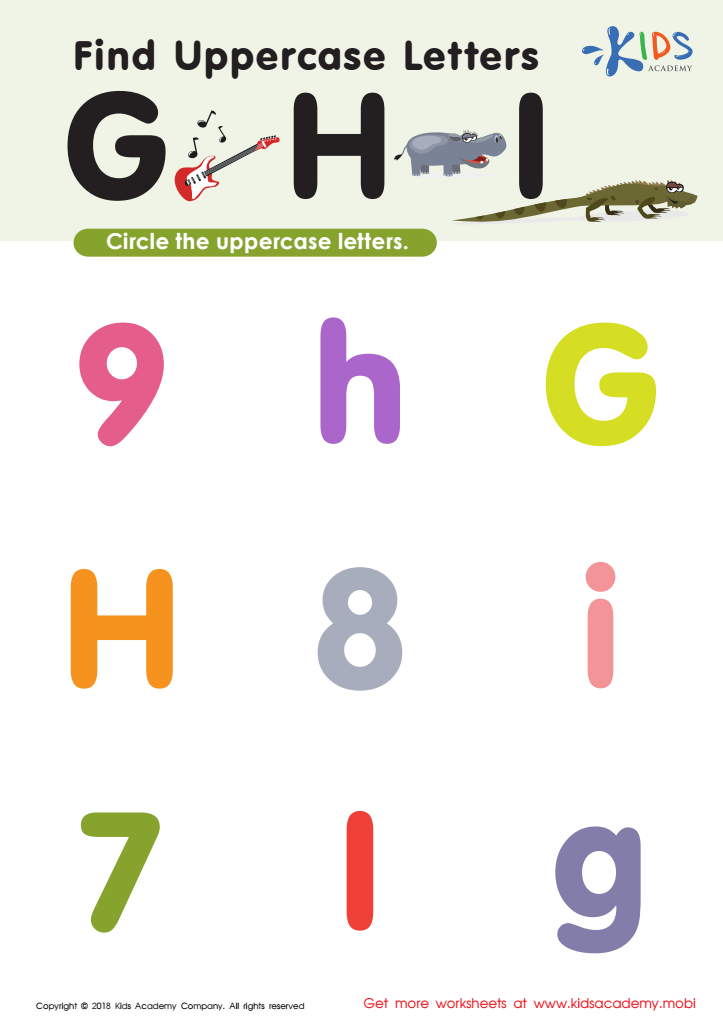
Find Uppercase Letters G, H, and I Worksheet
 Assign to My Students
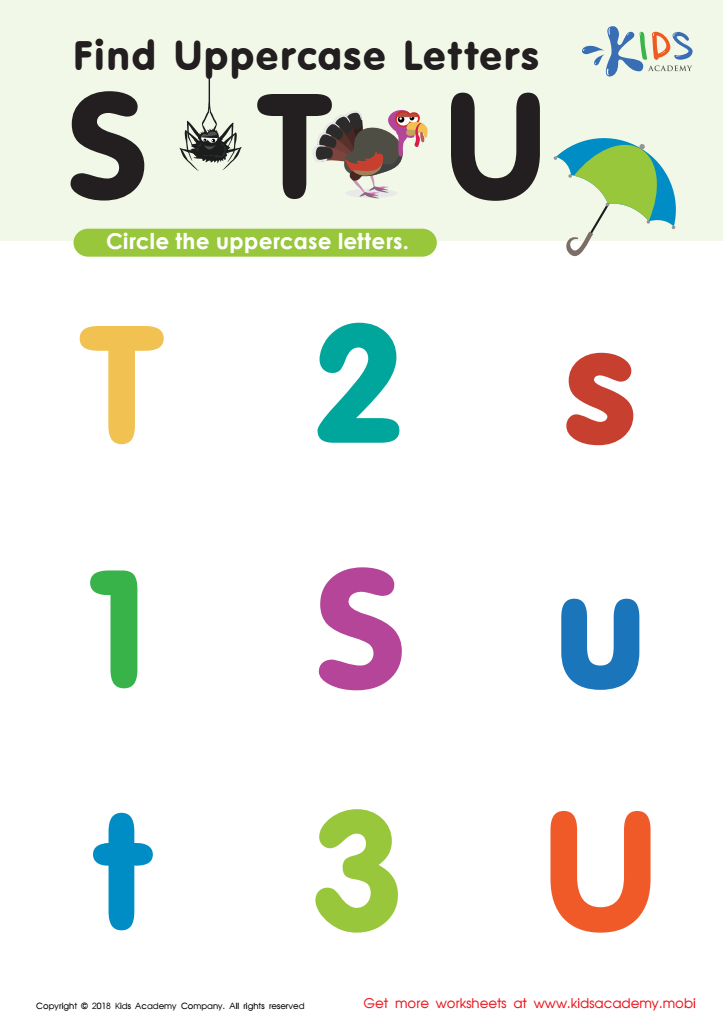
Find Uppercase Letters Worksheet
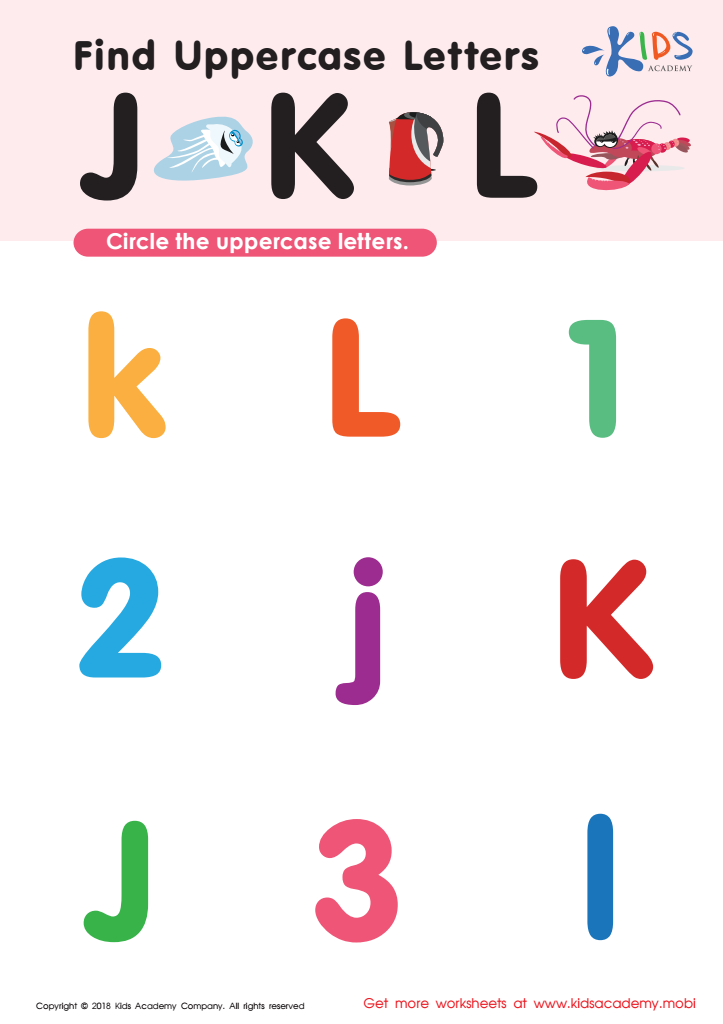
Find Uppercase Letters J, K, and L Worksheet
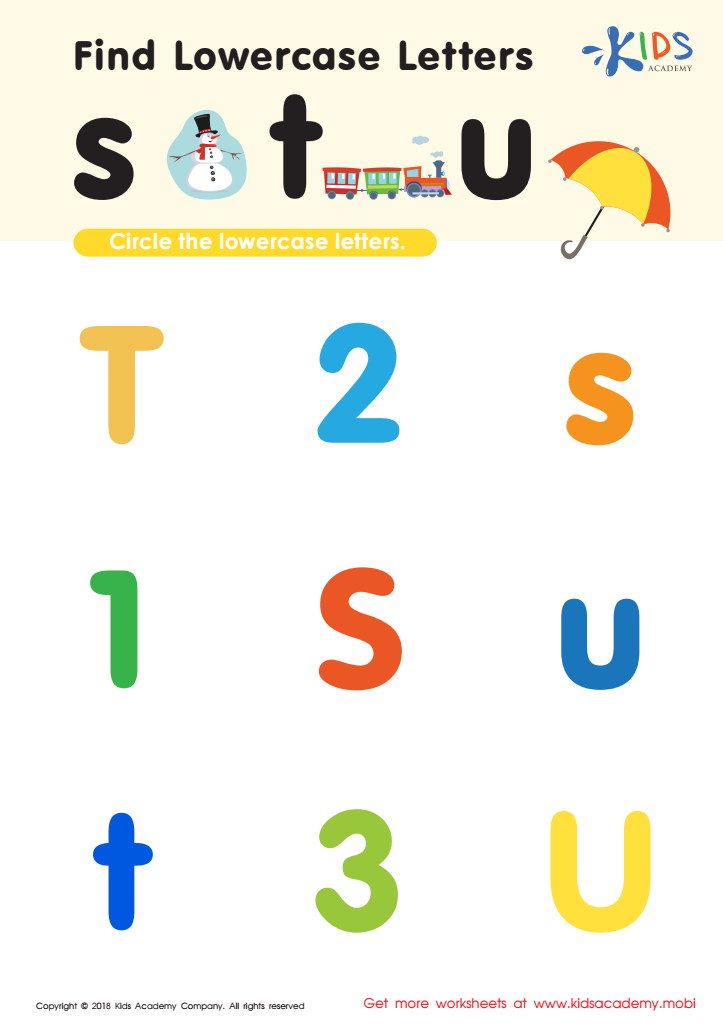
Find lowercase Letters s t u Worksheet

Find Uppercase Letters A, B, and C Worksheet

Find Lowercase Letters v w x Worksheet
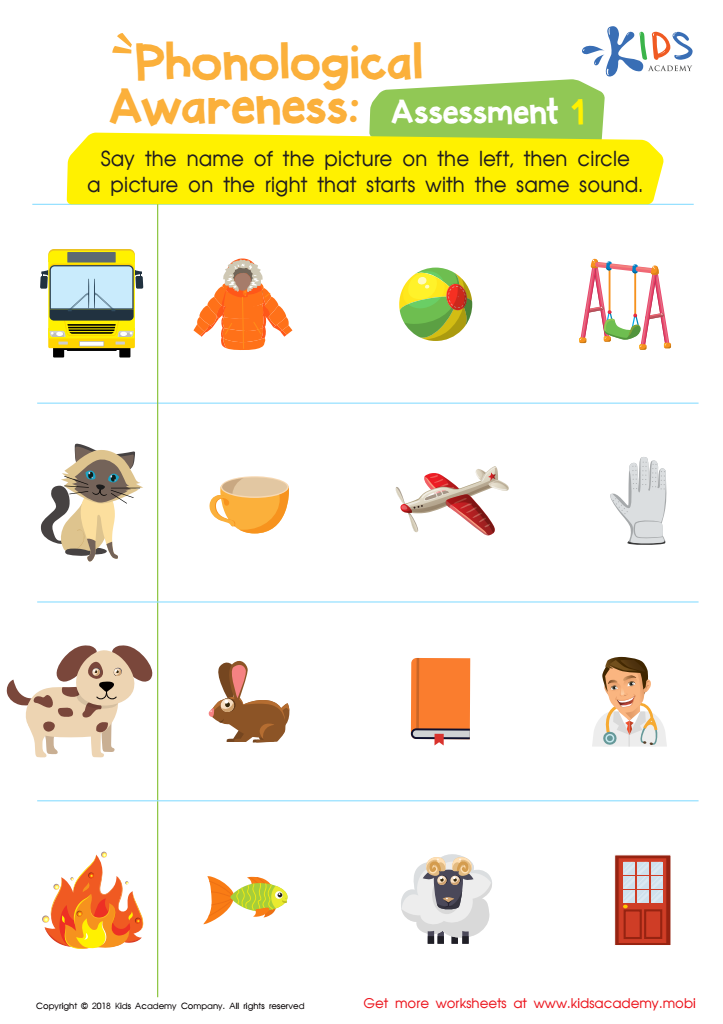
Phonological Awareness: Assessment 1 Worksheet







Alphabet familiarity is a foundational element for children aged 6-8 as it directly impacts their reading and writing abilities, which are essential skills for their academic success and lifelong learning. At this developmental stage, children transition from recognizing letters to decoding words and eventually reading fluently. When parents and teachers emphasize alphabet familiarity, they provide the groundwork for these critical literacy skills.
Children who are familiar with the alphabet are better equipped to understand phonics—the relationship between letters and sounds. This knowledge helps them sound out words, recognize patterns, and improve their spelling. It also enables them to move from reading simple texts to more complex ones, fostering comprehension and a love for reading.
Additionally, early alphabet familiarity boosts children's confidence and motivation. As they master each letter and its corresponding sounds, they experience a sense of accomplishment that encourages further learning and curiosity. Conversely, children who struggle with the alphabet may face frustration and academic setbacks, which can affect their overall self-esteem and attitude towards learning.
Parents and teachers who actively engage children in activities that reinforce alphabet knowledge, such as singing alphabet songs, playing letter games, and using educational apps, can significantly contribute to their cognitive and language development, setting the stage for future success in school and beyond.








