Basic measurement concepts Normal Worksheets for Ages 6-8
3 filtered results
-
From - To
Discover our engaging Basic Measurement Concepts Normal Worksheets designed specifically for children aged 6-8. These educational resources aim to build essential skills in measurement through fun activities. Young learners will explore concepts like length, weight, and volume in an interactive way, helping them understand the importance of measurement in everyday life. Each worksheet is thoughtfully crafted to enhance critical thinking and problem-solving abilities while aligning with early education standards. Perfect for home or classroom use, these worksheets provide a variety of exercises to accommodate different learning styles, ensuring that every child can grasp the fascinating world of measurement easily and enjoyably!
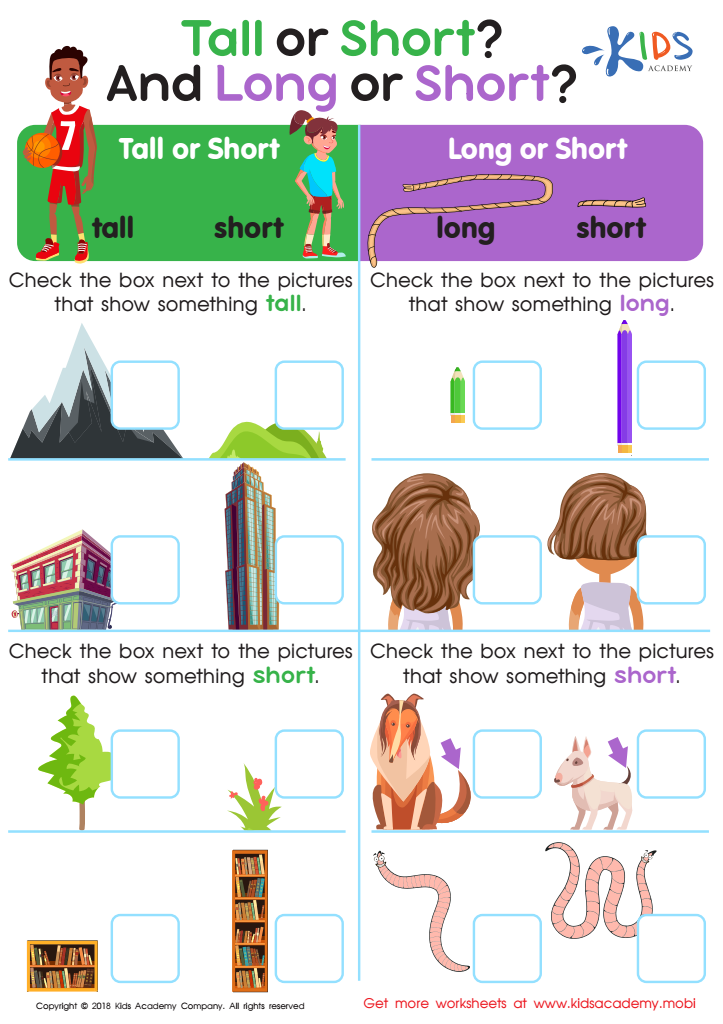
Tall or Short and Long or Short? Worksheet
 Assign to My Students
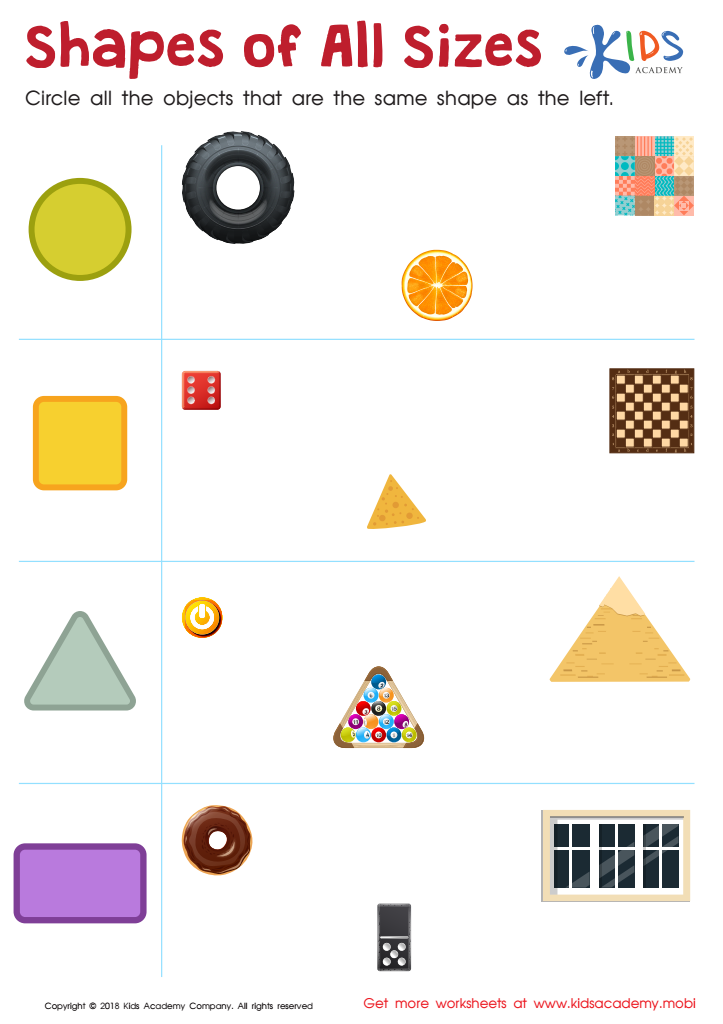
Shapes of All Sizes Worksheet
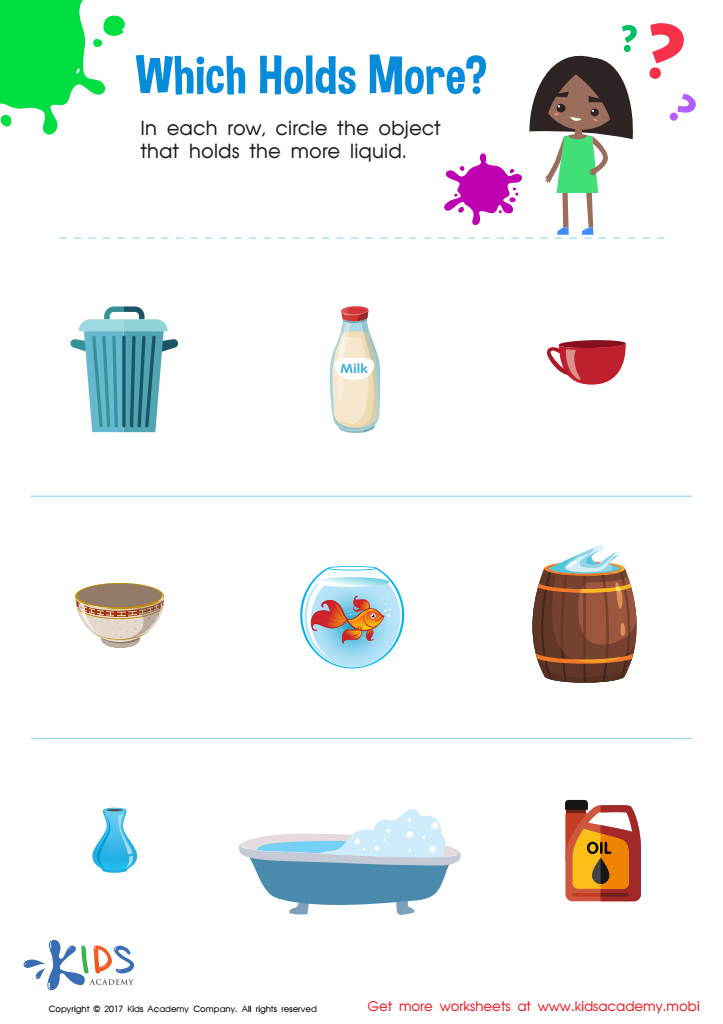
Which Holds More: Capacity Worksheet







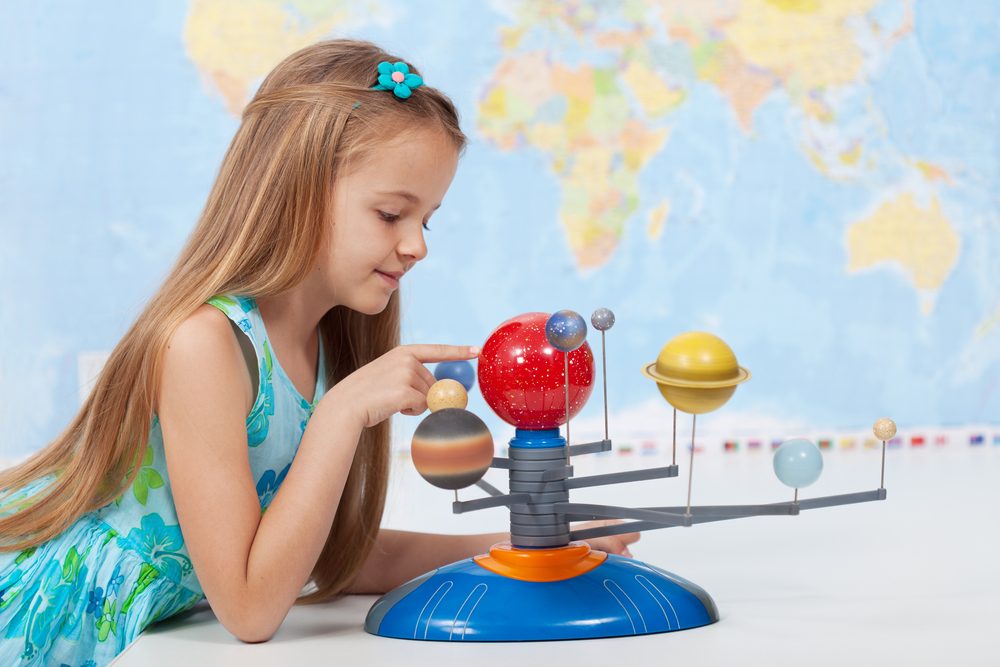
Parents and teachers should prioritize basic measurement concepts for children aged 6-8 because these skills lay a vital foundation for their understanding of the world. At this age, children are naturally curious, making it an ideal time to introduce them to concepts of length, weight, volume, and time. By engaging with measurements, children not only develop critical thinking and problem-solving abilities but also enhance their mathematical skills, which are essential for future academic success.
Understanding measurement helps children make sense of everyday activities—like cooking, shopping, or even playing sports—by connecting abstract ideas to practical applications. Moreover, mastering these concepts fosters confidence and encourages a growth mindset, essential traits for lifelong learning.
Furthermore, engaging with measurement can lead to deeper discussions about units of measure, estimation, and comparison, encouraging children to think more analytically. It's an excellent opportunity for collaborative learning as parents and teachers can involve children in hands-on activities, making learning enjoyable. Ultimately, nurturing these basic measurement concepts prepares children not only for more advanced mathematical skills but also for informed decision-making in daily life, building a bridge between their current experiences and future educational pursuits.








