
Capitalization rules Normal Worksheets for Ages 6-8
3 filtered results
Difficulty Level
Grade
Age
-
From - To
Subject
Activity
Standards
Discover effective and engaging Capitalization Rules Normal Worksheets for kids aged 6-8! Our printable worksheets at Kids Academy are meticulously designed to teach young learners the essential rules of capitalization, blending fun activities with valuable learning. These easy-to-follow exercises help children identify when to use capital letters in various contexts, boosting their writing and grammar skills. With colorful illustrations and simple instructions, our resources make mastering capitalization rules an enjoyable experience, setting a solid foundation for future learning. Perfect for classroom use or at-home practice, these worksheets will enhance your child’s educational journey.
Favorites
With answer key
Interactive
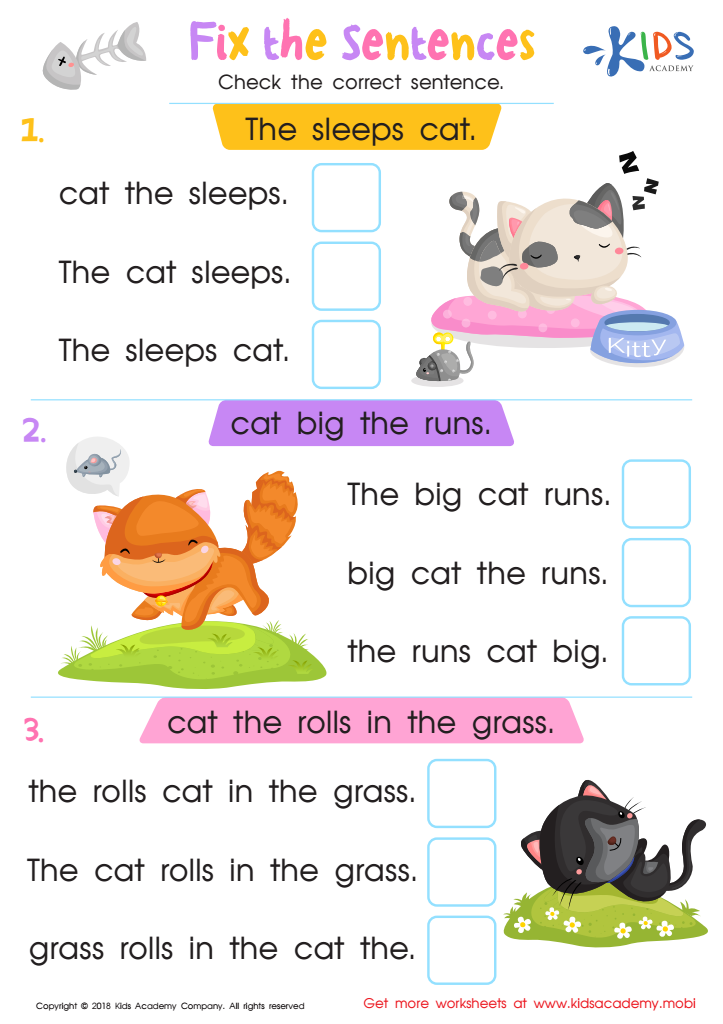
Fix the Sentences Worksheet
Once your students know the alphabet, teach them words. Then move on to constructing sentences. If they have a handle on sentence structure, give them this worksheet. Ask them to read the sentences and check the correct one.
 Assign to My Students
Fix the Sentences Worksheet
Worksheet
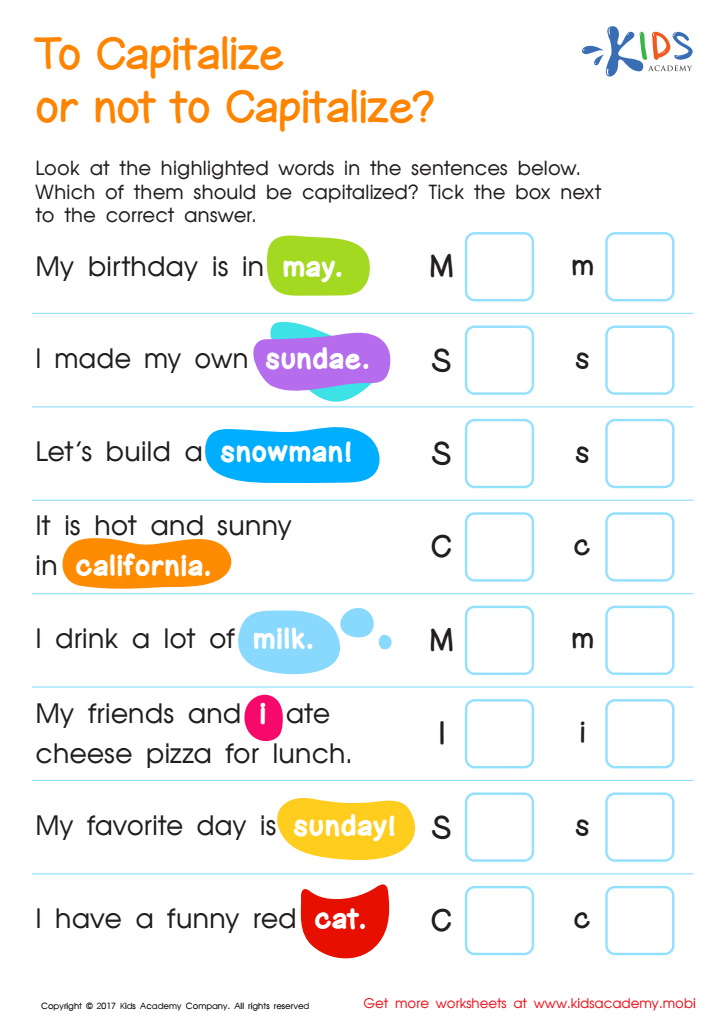
Capitalization: To Capitalize or Not? Printable
Have them answer the questions in "To Capitalize or Not to Capitalize" to check their understanding.
Capitalization: To Capitalize or Not? Printable
Worksheet
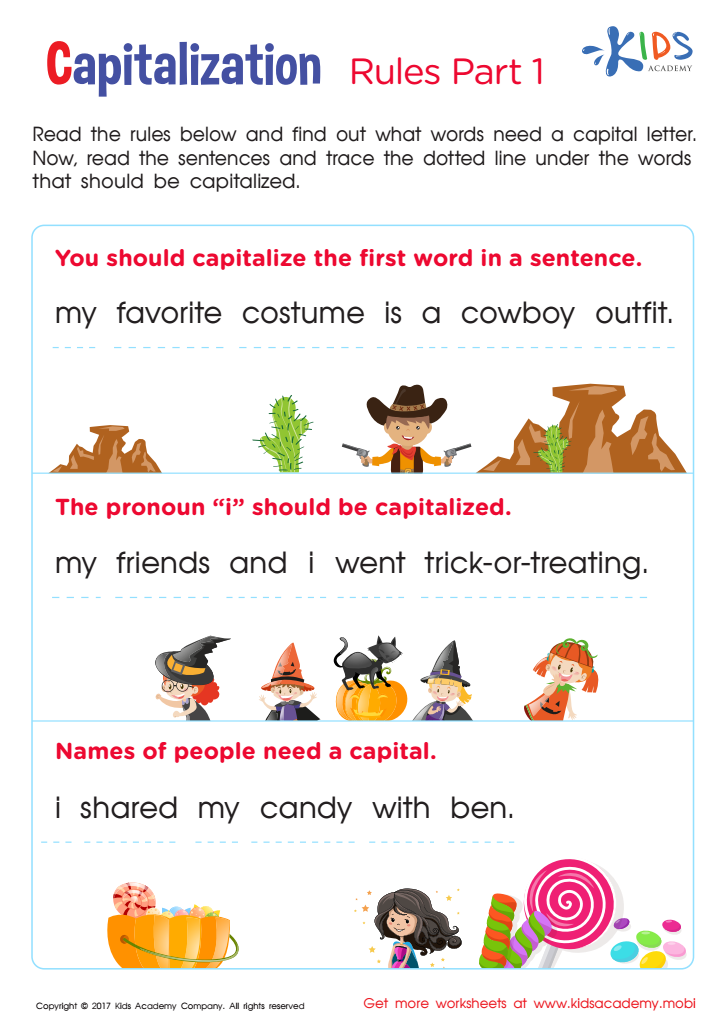
Capitalization Rules: Part 1 Worksheet
Kids entering high school with poor capitalization skills? Equip your 1st grader with the tools to combat this now! This capitalization worksheet will give them the knowledge they need to understand the importance of proper grammar rules and get their writing up to scratch.
Capitalization Rules: Part 1 Worksheet
Worksheet
Join Kids Academy for Free
Who is primarily going to use this learning content?








Parents and teachers should care about capitalization rules for ages 6-8 because early language education forms the foundation for a child's future academic and communication skills. Capitalization is not just a grammatical rule; it aids in the clarity and readability of written language. By teaching children when to use capital letters—for instance, at the beginning of sentences, for proper nouns, and for the pronoun "I"—we instill a sense of structure and order in their writing.
When young children grasp these basic capitalization rules, they're better equipped to write clearly and effectively. Correct capitalization helps distinguish between common nouns and proper nouns, indicating specific names of people, places, or things, which enhances comprehension. If students don’t learn these rules early, they might develop poor writing habits that could be difficult to unlearn later.
Moreover, adhering to capitalization rules teaches children attention to detail and the importance of following specific guidelines, traits that are valuable beyond language skills. For teachers, emphasizing proper capitalization also means that their students' writing will be more professional and easier to evaluate. In sum, understanding capitalization rules empowers young learners to communicate more accurately and confidently, laying a vital cornerstone for their education.








