Comparing Fractions Normal Worksheets for Ages 6-8
5 filtered results
-
From - To
Discover our engaging "Comparing Fractions Normal Worksheets" tailored for children ages 6 to 8! These worksheets provide an interactive and fun way for young learners to grasp the concept of fractions by comparing their sizes. With vibrant illustrations and engaging activities, students will develop essential math skills while learning how to identify larger and smaller fractions. Our user-friendly resources cater to various learning styles, ensuring every child progresses at their own pace. Perfect for classroom use or at-home practice, these worksheets will help build a strong foundational understanding of fractions in a joyful learning environment. Start comparing fractions today!
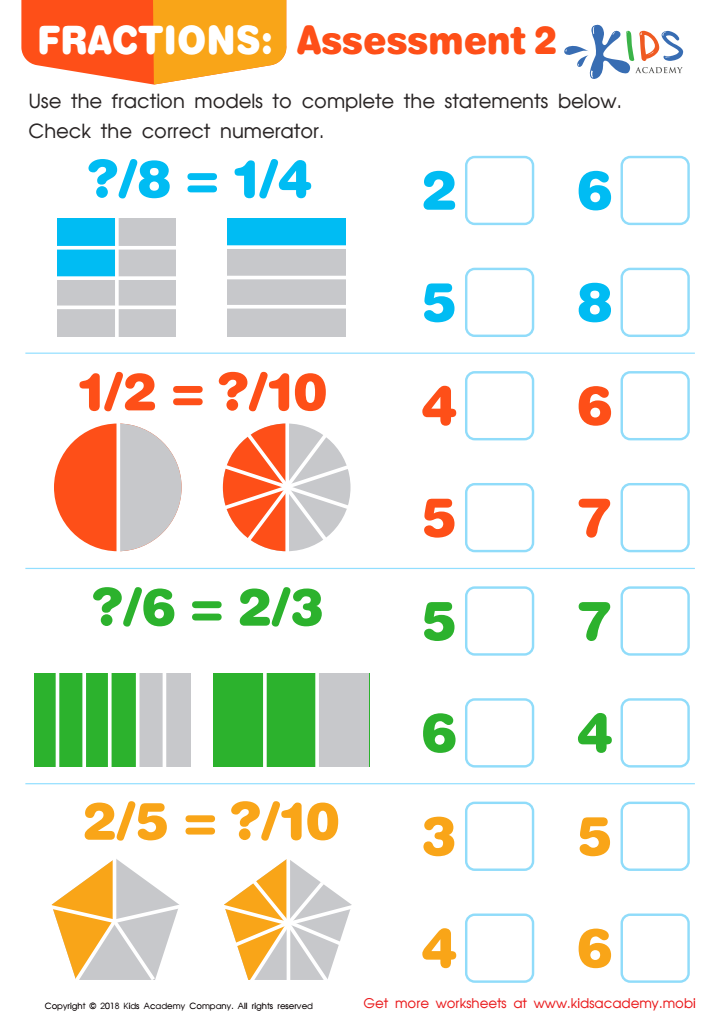
Fractions: Assessment 2 Worksheet
 Assign to My Students
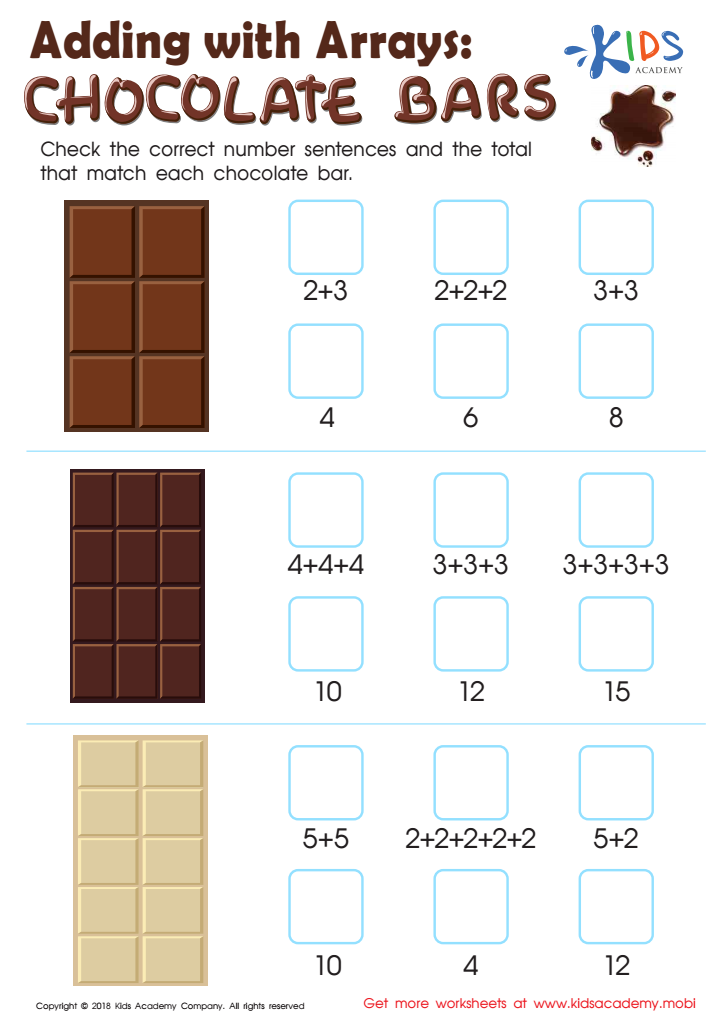
Adding with Arrays: Chocolate Bars Worksheet
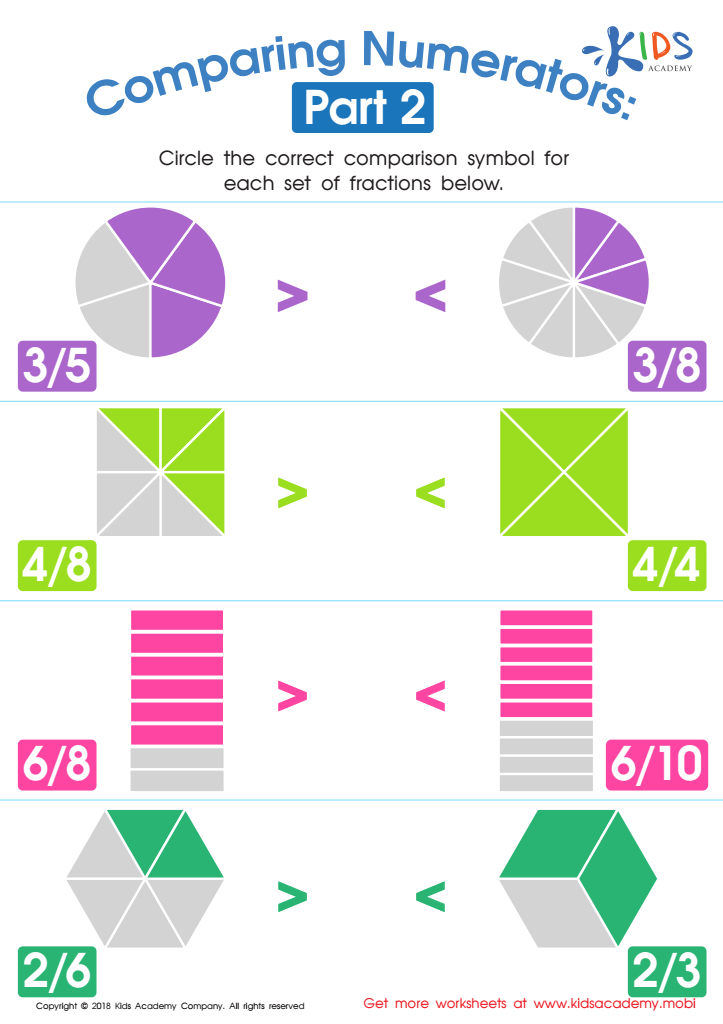
Comparing Numerators Part 2 Worksheet
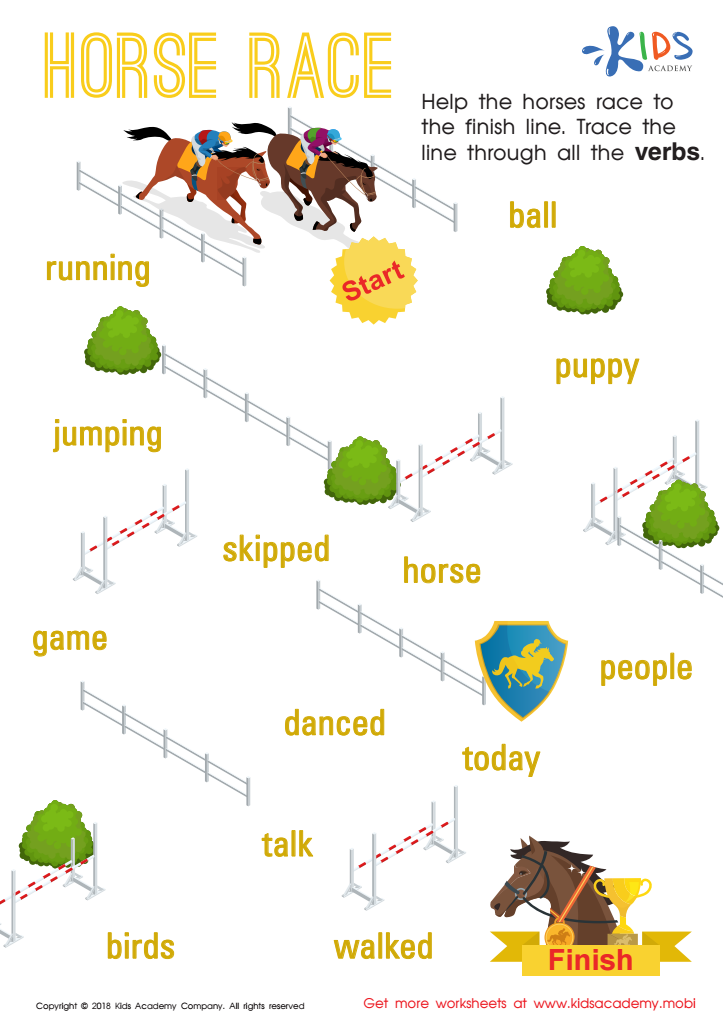
Horse Race Worksheet
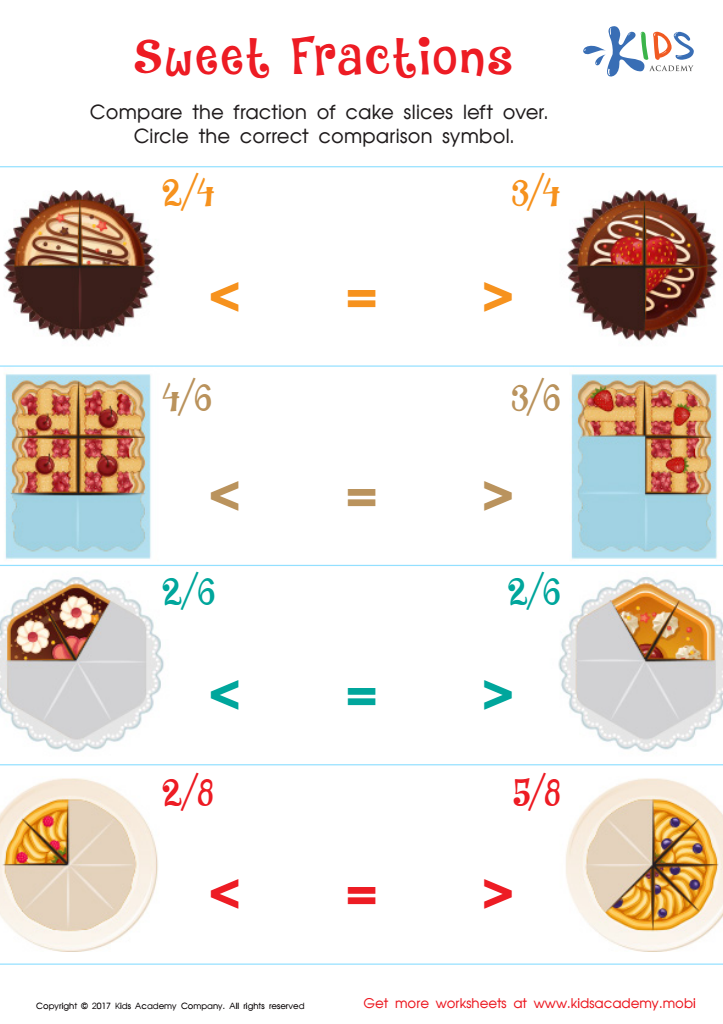
Compare Fractions Worksheet







Understanding how to compare fractions is an essential skill for children aged 6-8, as it lays the foundation for more complex mathematical concepts later on. During this developmental stage, children are naturally curious and eager to learn, making it an ideal time to introduce the idea of fractions. By comparing fractions, students enhance their critical thinking and problem-solving abilities, which are vital skills in everyday life.
Parents and teachers should care about this topic because it fosters a deeper understanding of numbers and measurement, helps with real-world applications, and boosts confidence in mathematical abilities. For instance, activities that involve food, like pizzas or cakes, can help illustrate the concept in a fun, relatable way. Understanding fractions also contributes to success in other areas of mathematics, such as addition, subtraction, and eventually, algebra.
Moreover, mastering the skill of comparing fractions fuels a child's enthusiasm for learning, especially in STEM fields. This early skill not only prepares children for higher-level math but also encourages persistence and resilience. When parents and teachers actively engage in teaching these concepts, they promote a positive attitude toward math that can last a lifetime. Hence, prioritizing this skill is crucial for holistic educational development.








