
Lowercase letter writing Normal Worksheets for Ages 6-8
3 filtered results
Difficulty Level
Grade
Age
-
From - To
Subject
Activity
Standards
Help young learners master the art of writing with our "Lowercase Letter Writing Normal Worksheets for Ages 6-8." Tailored specifically for early grade students, these engaging worksheets guide children in forming lowercase letters using clear examples and step-by-step practice. Each sheet is designed to reinforce fine motor skills and hand-eye coordination while fostering confidence in young writers. Perfect for home or classroom use, these printable resources make learning enjoyable and accessible. Start your child's journey to excellent handwriting with our expertly curated worksheets, proven to build foundational skills in an entertaining and effective manner.
Favorites
With answer key
Interactive
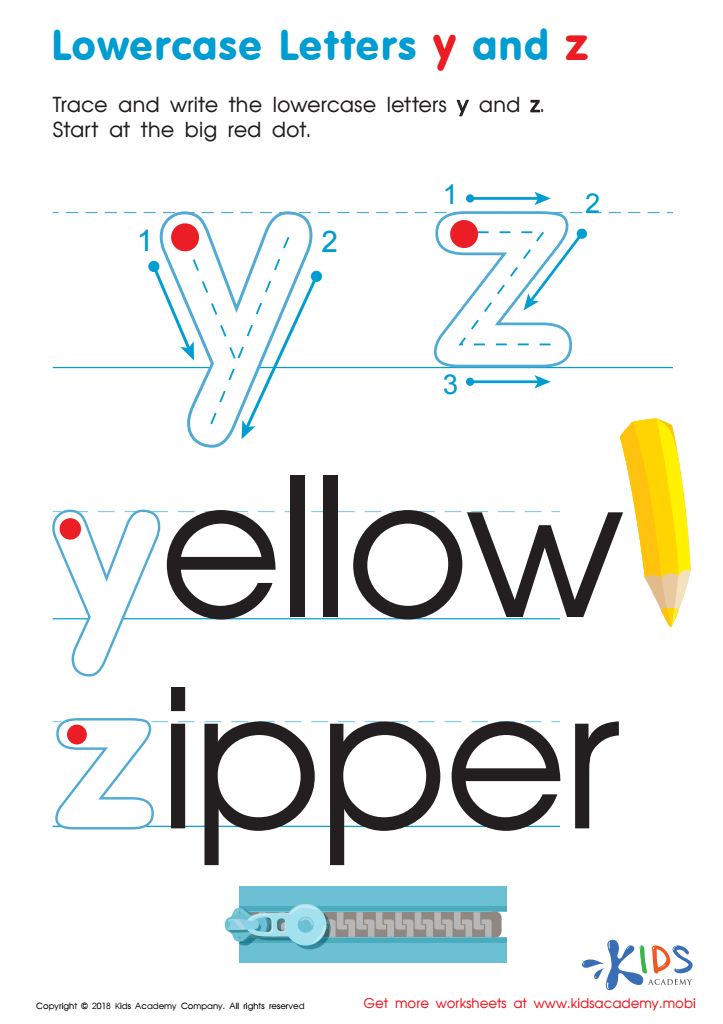
Lowercase Letters y z Worksheet
Help your child get a good start in writing and reading by tracing and writing the lowercase letters y and z. With this activity, they will learn the alphabet, which is essential for literacy success. Guide them through the worksheet and make sure they form the letters correctly. This will help them learn the basics needed to write and read fluently.
 Assign to My Students
Lowercase Letters y z Worksheet
Worksheet
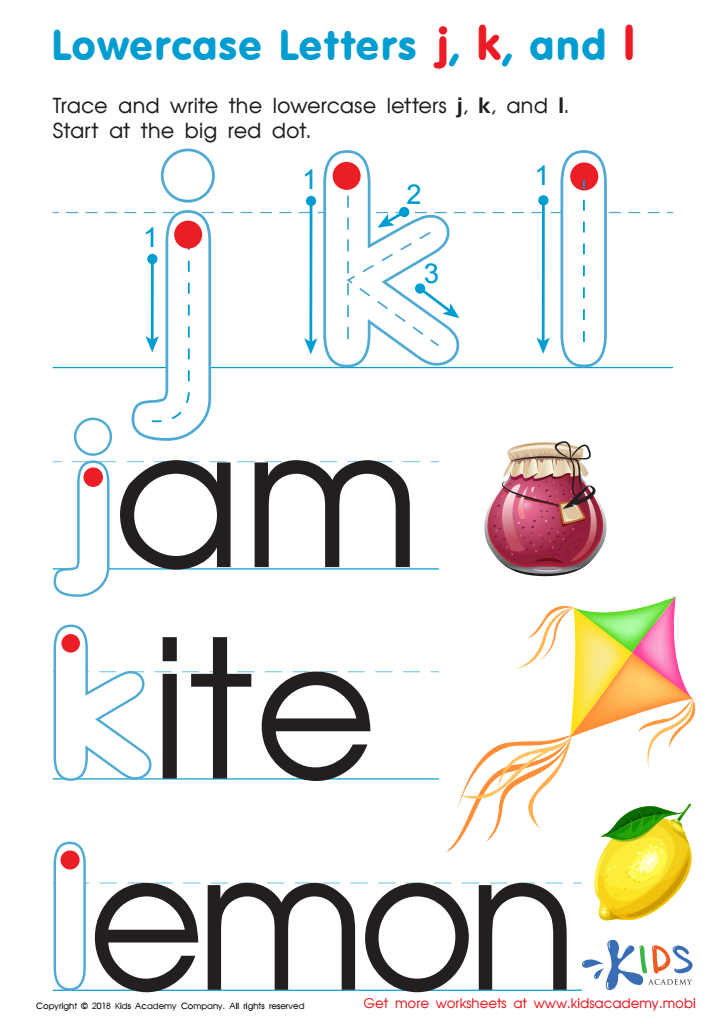
Lowercase Letters j k l Worksheet
Teach your child the difference between uppercase and lowercase letters. Have them trace and write the lowercase letters j, k, and l, starting at the red dot. Guide your child's hand to form the letters correctly.
Lowercase Letters j k l Worksheet
Worksheet
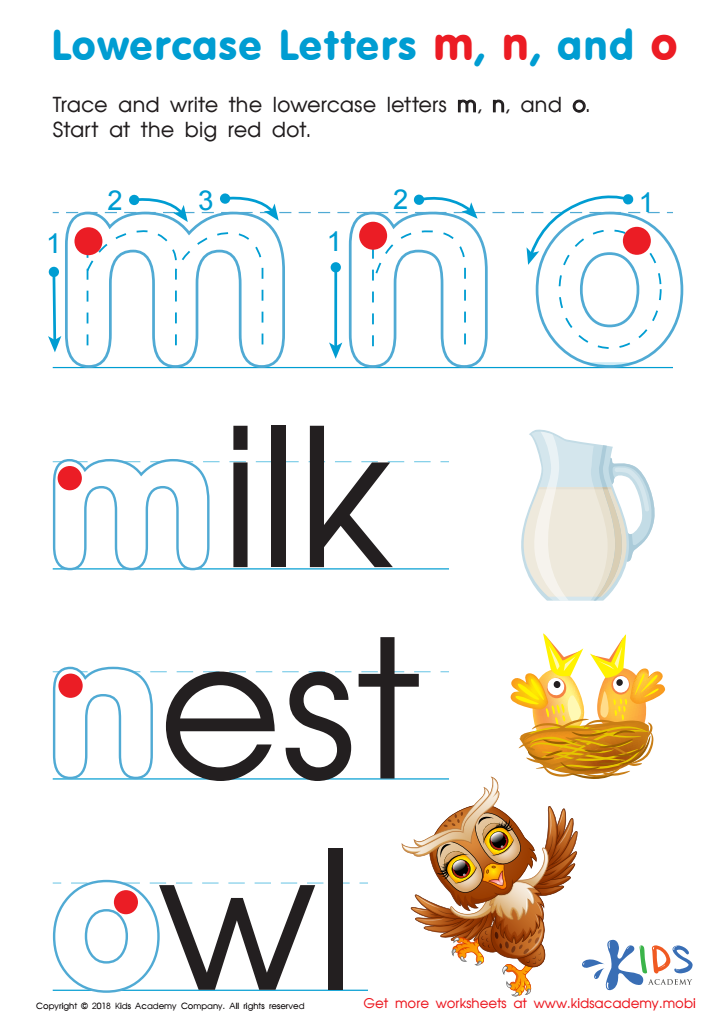
Lowercase Letters m n o Worksheet
Help your child learn the alphabet with letter tracing. Show them the difference between uppercase and lowercase letters by working through this free worksheet, tracing and writing lowercase m, n and o.
Lowercase Letters m n o Worksheet
Worksheet
Join Kids Academy for Free
Who is primarily going to use this learning content?






Parents and teachers should prioritize lowercase letter writing for children ages 6-8 because it is foundational for literacy development and essential for effective communication. At this stage, children are building their reading and writing skills, and mastering lowercase letters is a critical component of this process. Most written texts predominantly use lowercase letters (about 95% of the time), making it imperative for kids to recognize and write them proficiently for fluent reading.
Consistency in lowercase letter writing also aids in handwriting legibility, which is important for academic success and self-confidence. Children who can write smoothly and clearly are less likely to become frustrated with writing tasks, fostering a more positive attitude toward learning.
Furthermore, developing fine motor skills through consistent lowercase letter practice aids in other academic and daily activities. Well-developed handwriting skills enhance cognitive development as children learn to focus, organize their thoughts, and better understand language structures.
Lastly, good handwriting fosters effective classroom communication, ensuring that written work can be easily read by teachers and peers, which is essential for feedback and collaborative learning. By focusing on lowercase letter writing, parents and teachers provide children with the tools they need for academic achievement and lifelong literacy.








