Noun identification Normal Worksheets for Ages 6-8
4 filtered results
-
From - To
Unlock the world of nouns for your 6-8 year-olds with our Noun Identification Normal Worksheets! These specially designed exercises make learning fun and engaging, helping young learners recognize and classify different types of nouns, including people, places, and things. Each worksheet features colorful illustrations and relatable examples that captivate children’s attention while enhancing their understanding of vocabulary. Perfect for both classroom and at-home activities, our easy-to-use resources promote independent learning and reinforce essential language skills. Build confidence in your child's comprehension and empower them to identify nouns effectively. Explore our collection today and watch your child's linguistic abilities flourish!
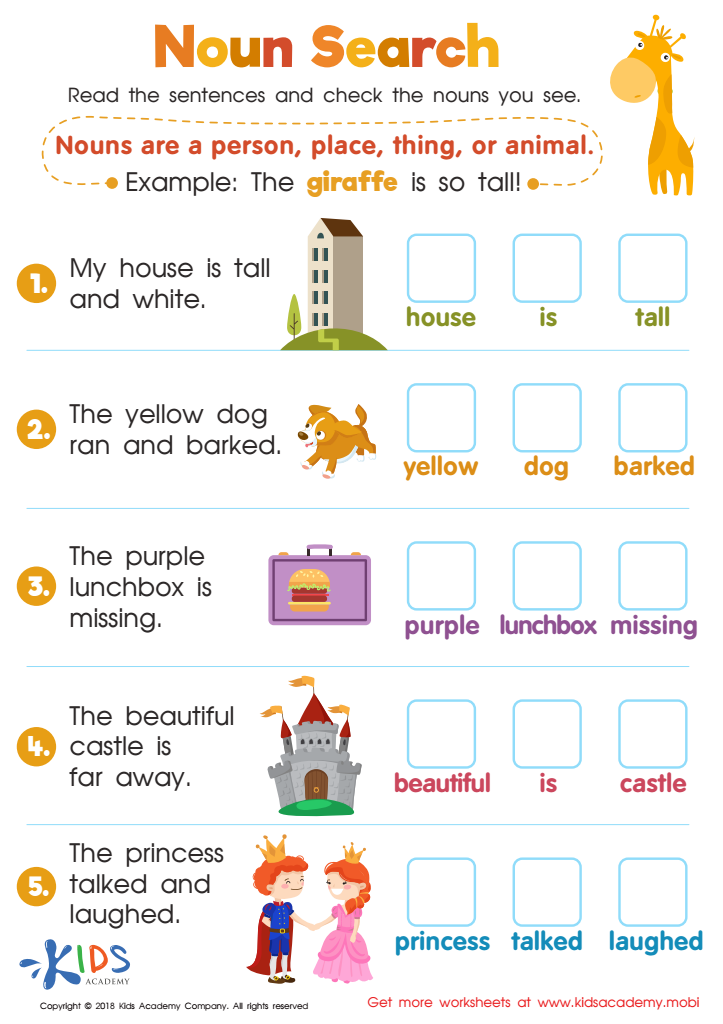
Noun Search Worksheet
 Assign to My Students
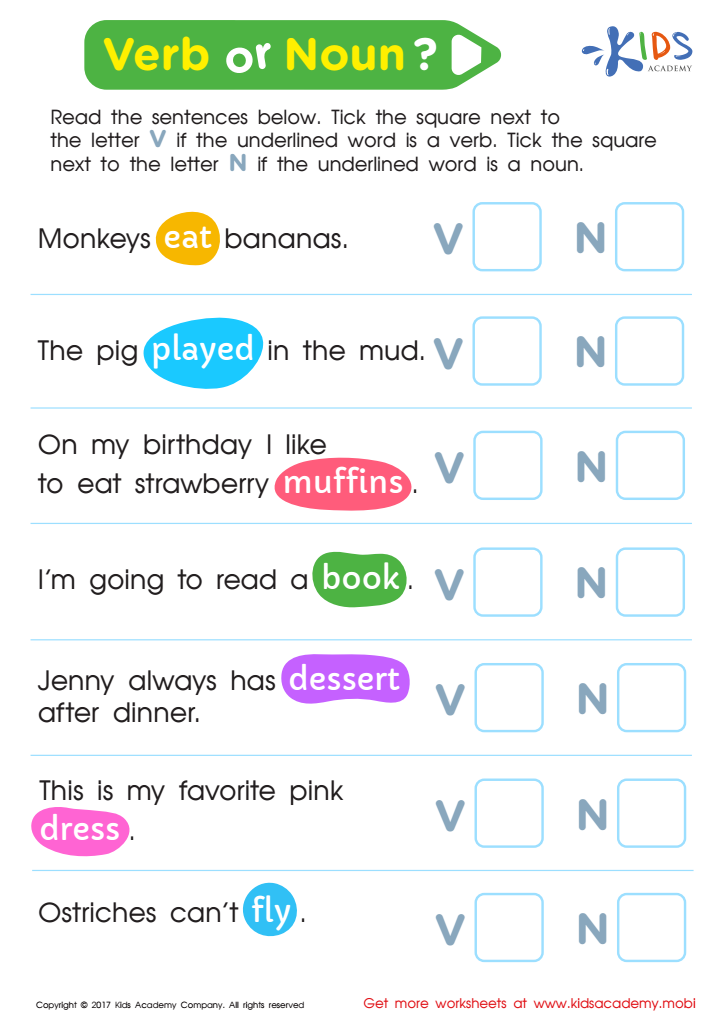
Verb or Noun Worksheet
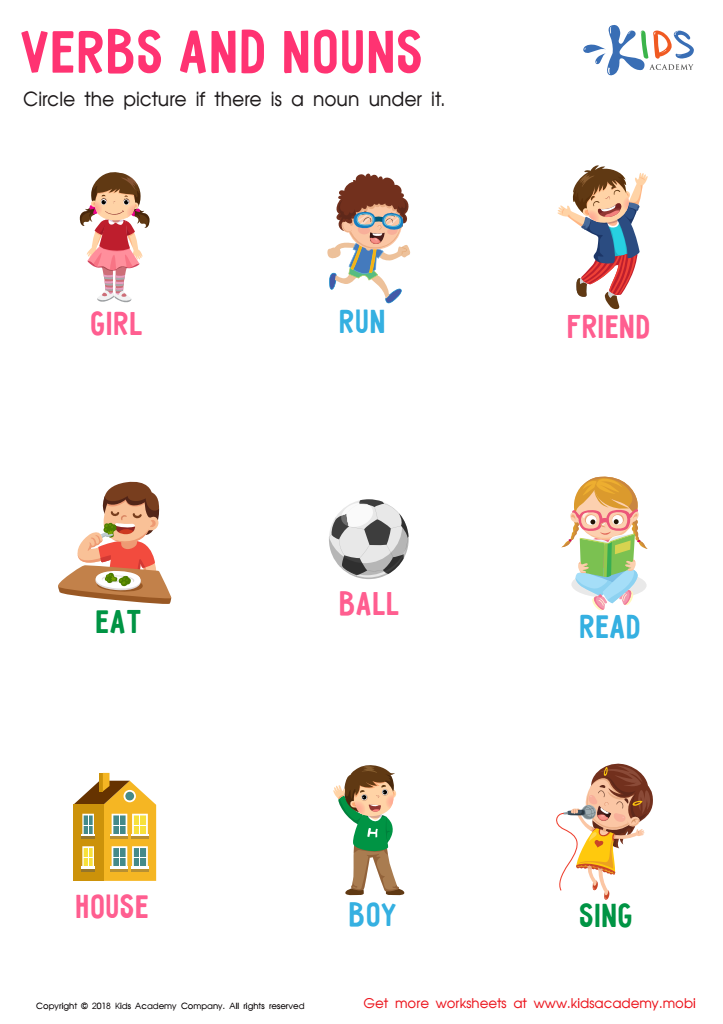
Verbs and Nouns Worksheet
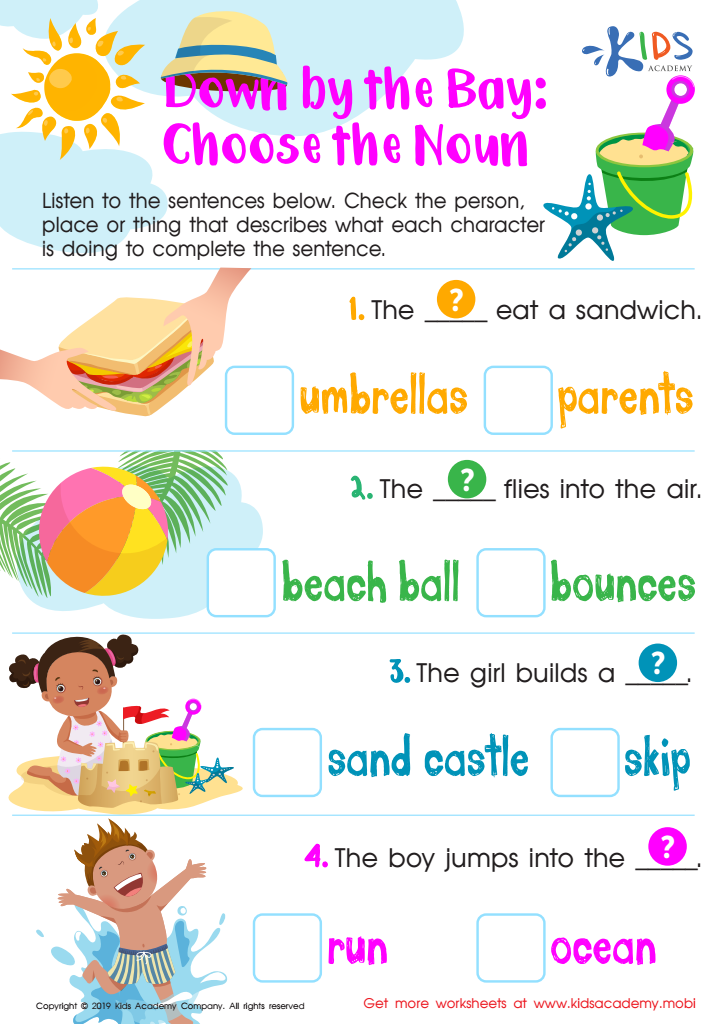
Down by the Bay: Choose the Noun Worksheet







Noun identification is a fundamental skill for children aged 6-8, serving as a cornerstone for language and literacy development. At this age, children are building their vocabulary and learning how to form sentences. By understanding nouns—people, places, and things—they enhance their ability to communicate effectively.
Teachers and parents should care about this skill because it fosters critical thinking and comprehension. When children correctly identify nouns in spoken and written language, they become better readers and writers. This foundational knowledge not only contributes to language arts but also supports math and science learning, where concrete and abstract nouns play a role in conveying concepts.
Moreover, strong noun identification assists cognitive development. As children categorize their surroundings, they learn to make connections and engage in narrative-based thinking, which enriches creativity and problem-solving skills.
Furthermore, mastery in identifying nouns can boost a child's confidence in academic settings. With self-assuredness in their language skills, children are more likely to participate in class discussions and share their ideas, ultimately fostering a love for learning.
In summary, supporting noun identification helps cultivate well-rounded, proficient communicators ready to tackle more complex linguistic tasks as they grow.








