Number comparison Normal Worksheets for Ages 6-8
5 filtered results
-
From - To
Discover our engaging Number Comparison Normal Worksheets designed for children aged 6-8! These printable resources help young learners develop essential math skills by comparing numbers through fun and interactive activities. Each worksheet includes colorful visuals and straightforward instructions to make learning enjoyable. Students will practice identifying greater and lesser numbers, enhancing their number sense and logical thinking. Perfect for both classroom practice and home learning, these worksheets promote confidence in math fundamentals. Download our Number Comparison Normal Worksheets today and pave the way for your child's mathematical success! Explore all the exciting learning opportunities we offer at Kids Academy!
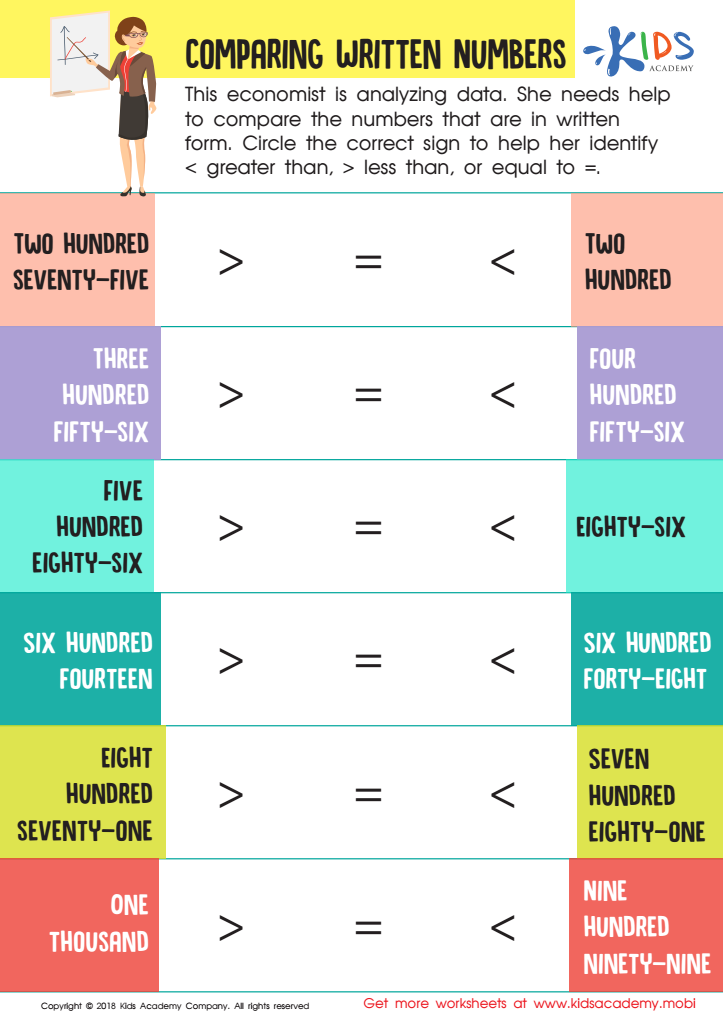
Comparing Written Numbers Worksheet
 Assign to My Students
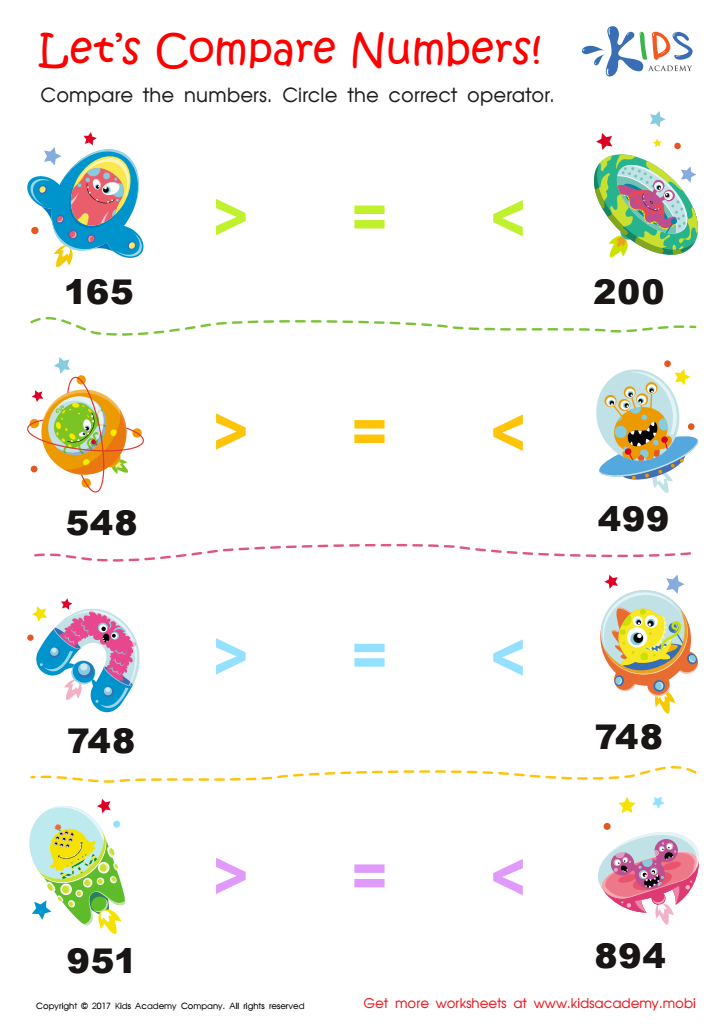
Comparing Numbers Worksheet for 2nd Grade
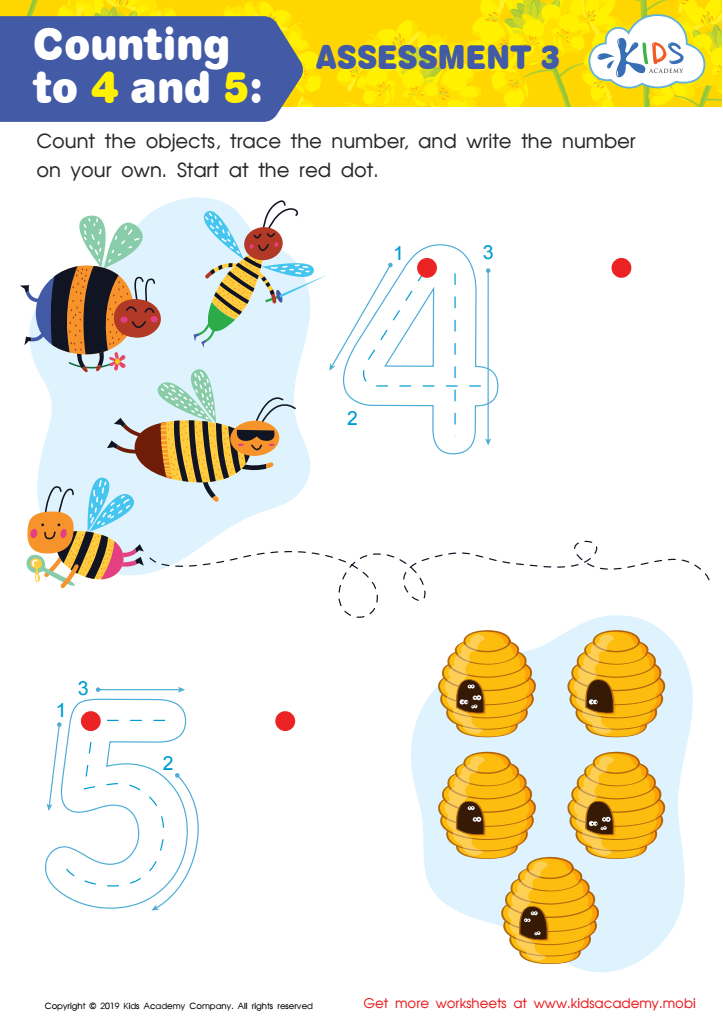
Counting to 4 and 5: Assessment 3 Worksheet
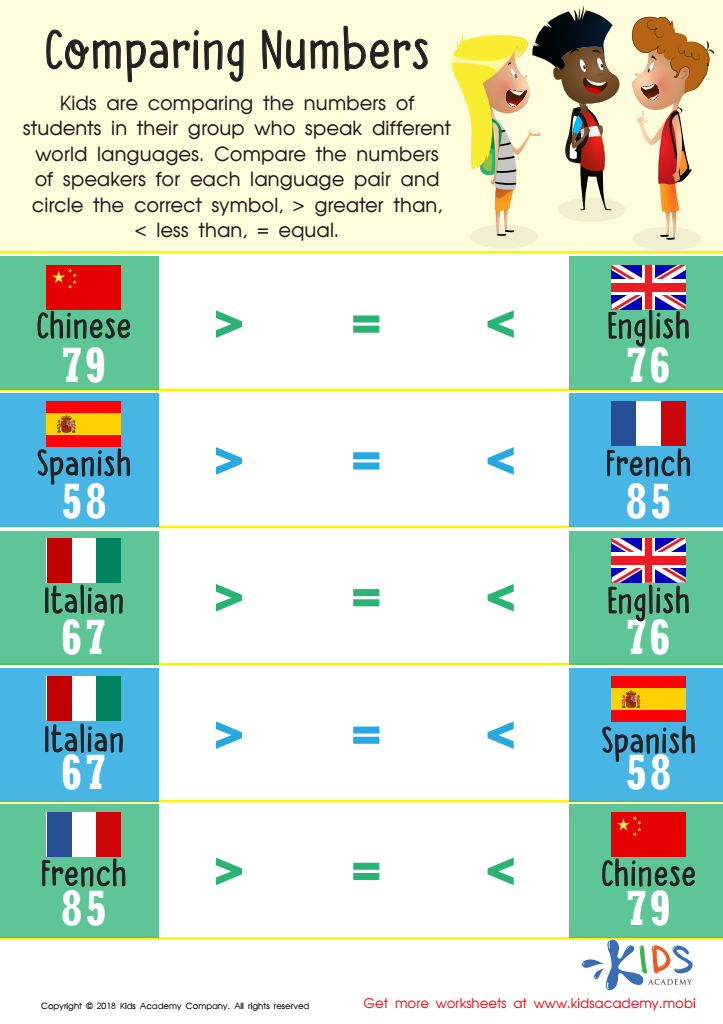
Comparing Numbers Worksheet for 1st Grade
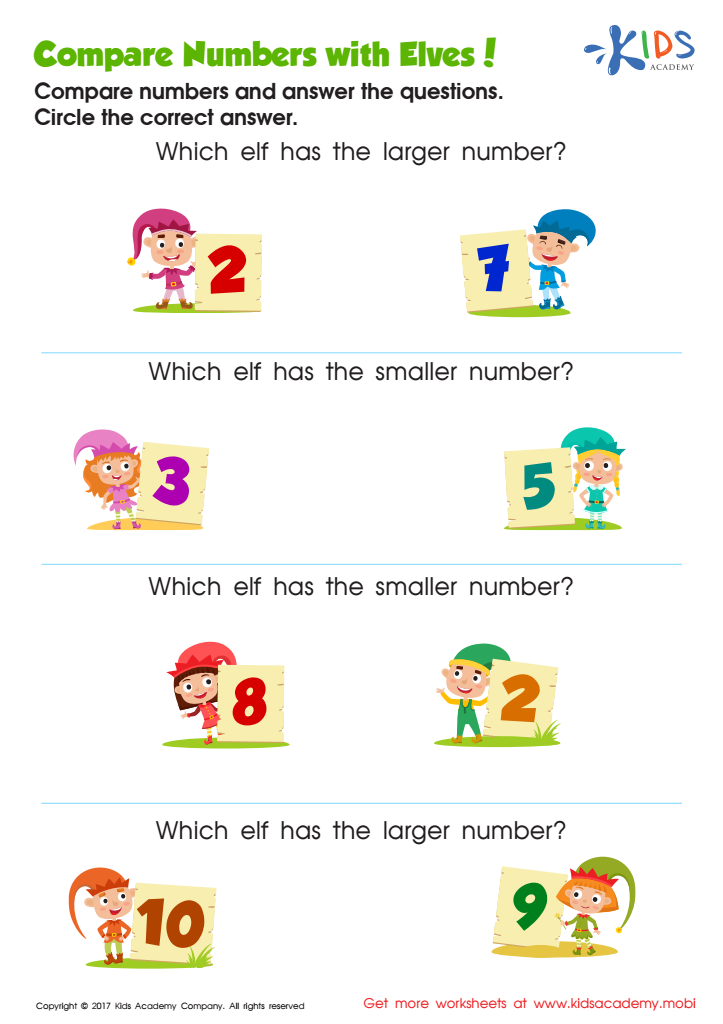
Comparing Numbers Worksheet for Kindergarten








Number comparison is a fundamental mathematical skill that lays the groundwork for deeper concepts in mathematics. For children aged 6-8, mastering number comparison supports critical thinking and cognitive development. It enables students to discern which numbers are larger or smaller, an essential skill for addition, subtraction, and ultimately, multiplication and division.
Parents and teachers should prioritize number comparison because it fosters confidence in young learners. When children can accurately compare numbers, they feel competent and capable, which boosts motivation and enthusiasm for math. Such skills also enhance their ability to solve problems and make informed decisions in everyday life.
In addition, understanding number comparison aids children in grasping differences in quantity and value, which relates directly to real-world situations like money management and resource allocation. This is crucial not only for academic success but for practical life skills.
Ultimately, the ability to compare numbers is not just about beating a math test—it's about equipping children with the skills they need to navigate and understand their world confidently. Encouraging these skills at an early age can lead to a more positive attitude towards mathematics as they advance through their education.








