Reading thermometers Normal Worksheets for Ages 6-8
3 filtered results
-
From - To
Welcome to our "Reading Thermometers Normal Worksheets" for children aged 6-8! These engaging worksheets are designed to enhance young learners' understanding of temperature measurement. Kids will explore various thermometers, learning to read and interpret temperature scales with fun exercises that promote math and critical thinking skills. Each worksheet is tailored to be age-appropriate, helping children master the concept of reading temperatures while also fostering a love for science. Ideal for classroom use or at-home practice, our worksheets ensure that learning is enjoyable and effective. Empower your children with essential skills through our engaging reading thermometers activities today!
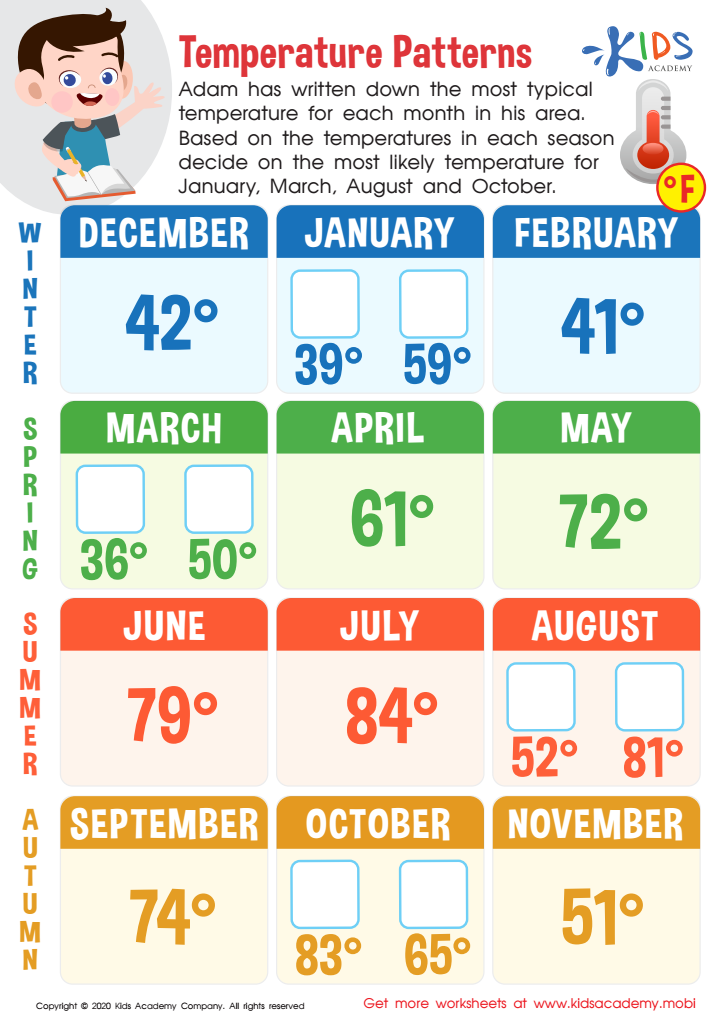
Temperature Patterns Worksheet
 Assign to My Students
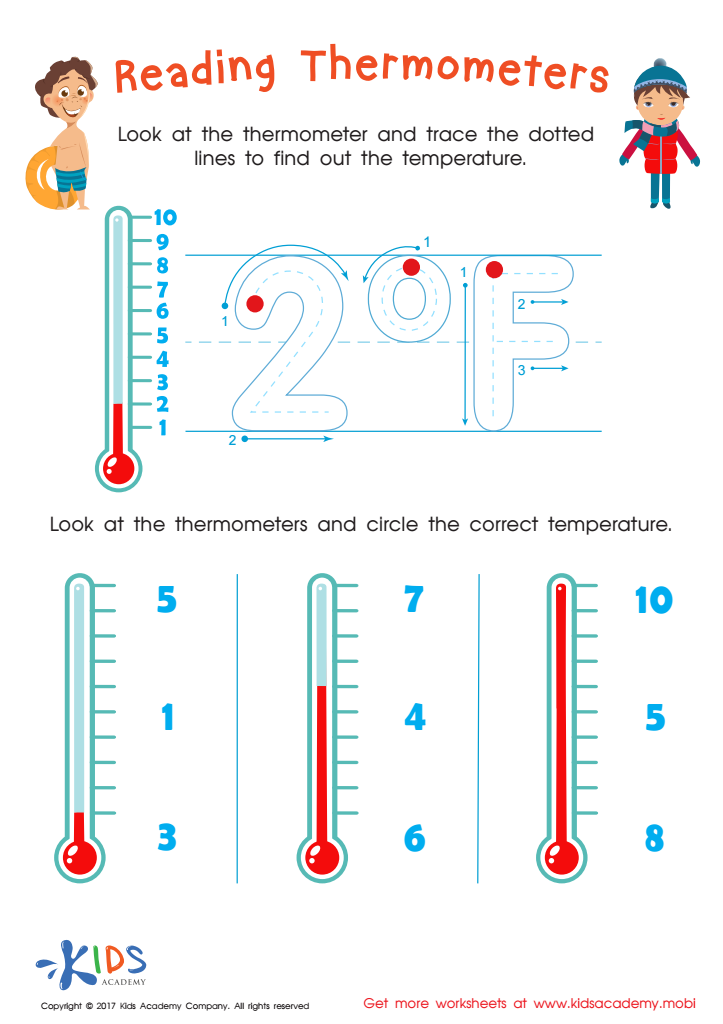
Reading Thermometers Printable
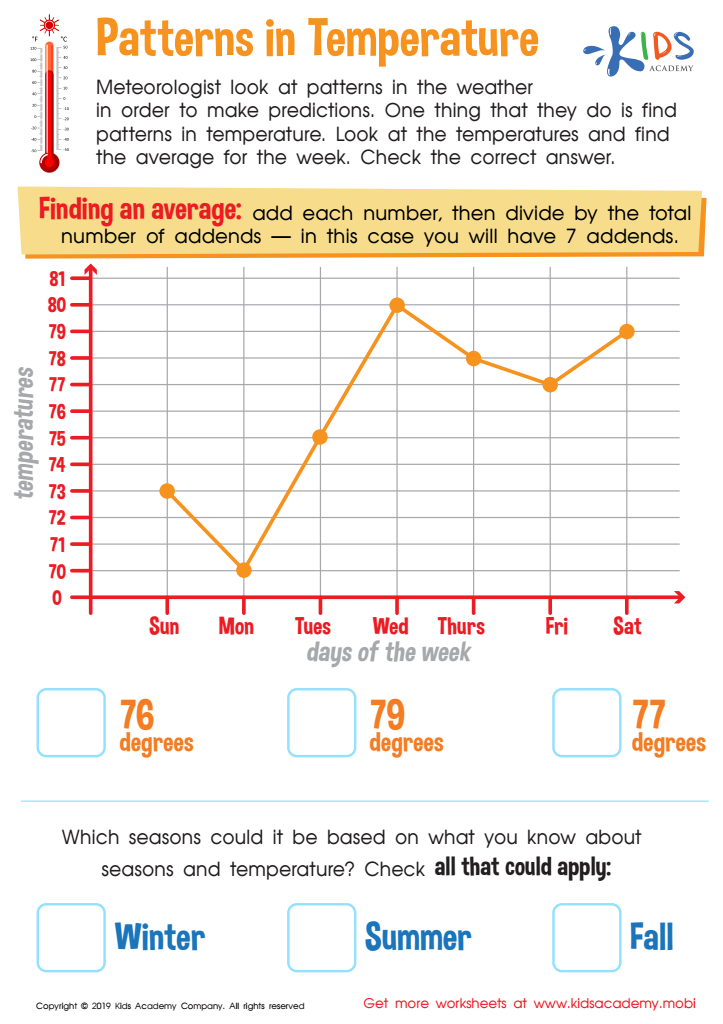
Patterns in Temperature Worksheet






Parents and teachers should deeply care about reading thermometers, especially for children ages 6-8, as it fosters important learning skills and instills a sense of environmental awareness. At this age, children are developing critical thinking and problem-solving skills, and learning to read thermometers contributes directly to these competencies. It helps them understand measurement, scales, and the importance of data in everyday life.
Moreover, understanding how to read a thermometer teaches children about temperature's impact on weather, health, and their environment. They learn basic scientific concepts, such as the effects of heat and cold, and moments like feeling unwell and knowing when to check for a fever. This knowledge empowers children to relate temperature reading to real-life situations, ensuring they make informed choices about dressing appropriately for the weather or recognizing symptoms of illness.
In addition, engaging children in practical science through activities involving thermometers fosters curiosity and a love for learning. As children make sense of their world through observation, skills acquired in reading thermometers fall in line with broader educational goals, such as improving numeracy and comprehension. Overall, it's an essential competency that builds fundamental knowledge for their academic journey and everyday experiences.








