Real-world application Normal Worksheets for Ages 6-8
3 filtered results
-
From - To
Discover interactive real-world application worksheets tailored for children ages 6-8, designed to bridge the gap between academics and everyday life. These engaging activities, crafted by education experts, help young learners apply mathematical and language skills to real-life scenarios, enhancing problem-solving and critical thinking. Topics range from simple arithmetic in shopping scenarios to understanding time and money. Our worksheets make learning practical and fun, ensuring children not only grasp the concepts but also see their value in daily routines. Perfect for homeschooling, early-grade reinforcing, and extra practice, watch your child’s confidence and competence soar with our thoughtfully curated exercises.
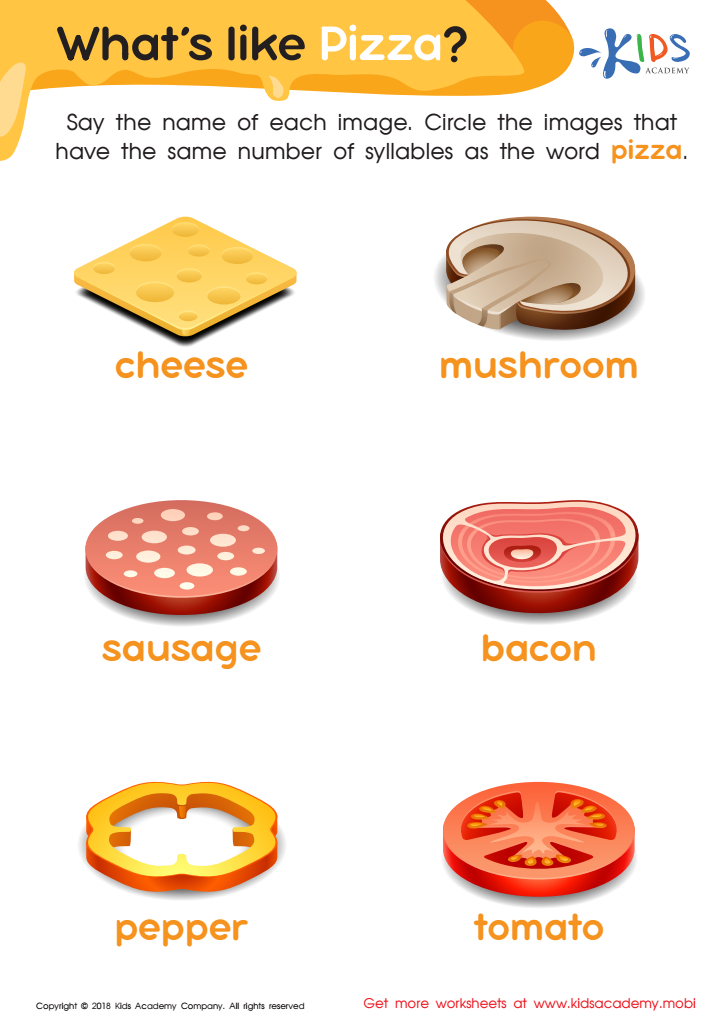
What's Like Pizza? Worksheet
 Assign to My Students
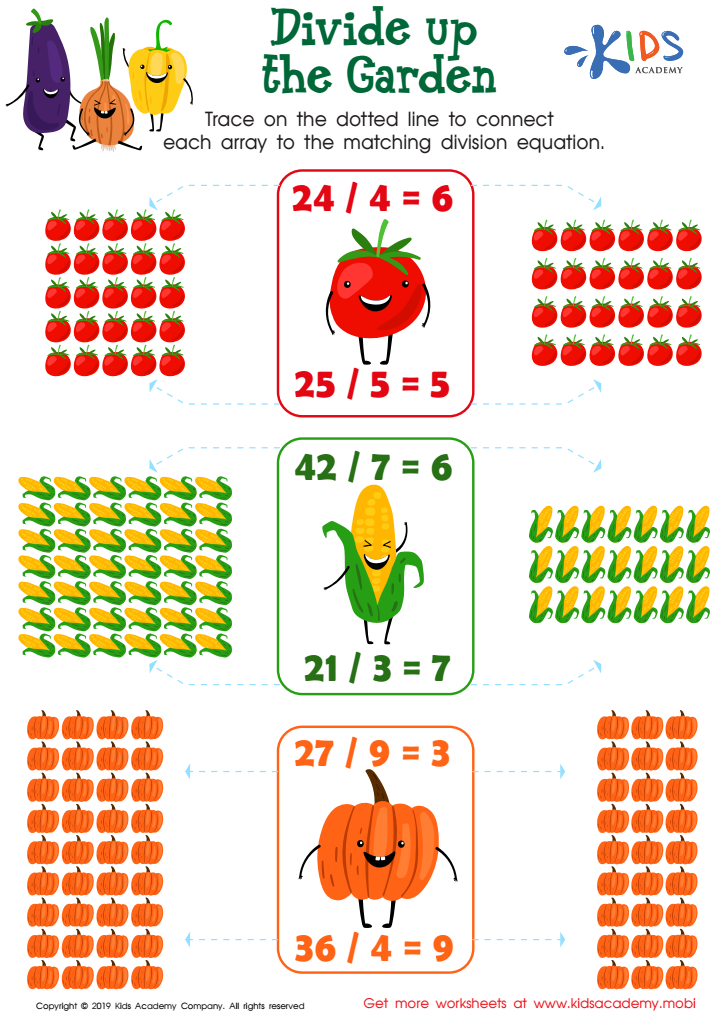
Divide up the Garden Worksheet
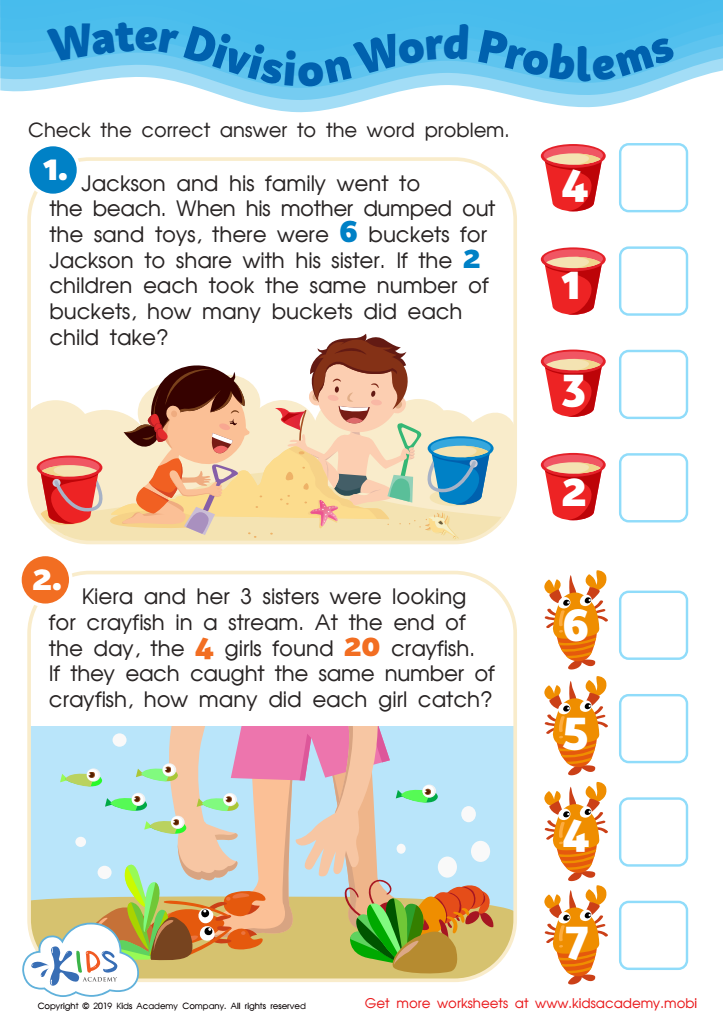
Water Division Word Problems Worksheet



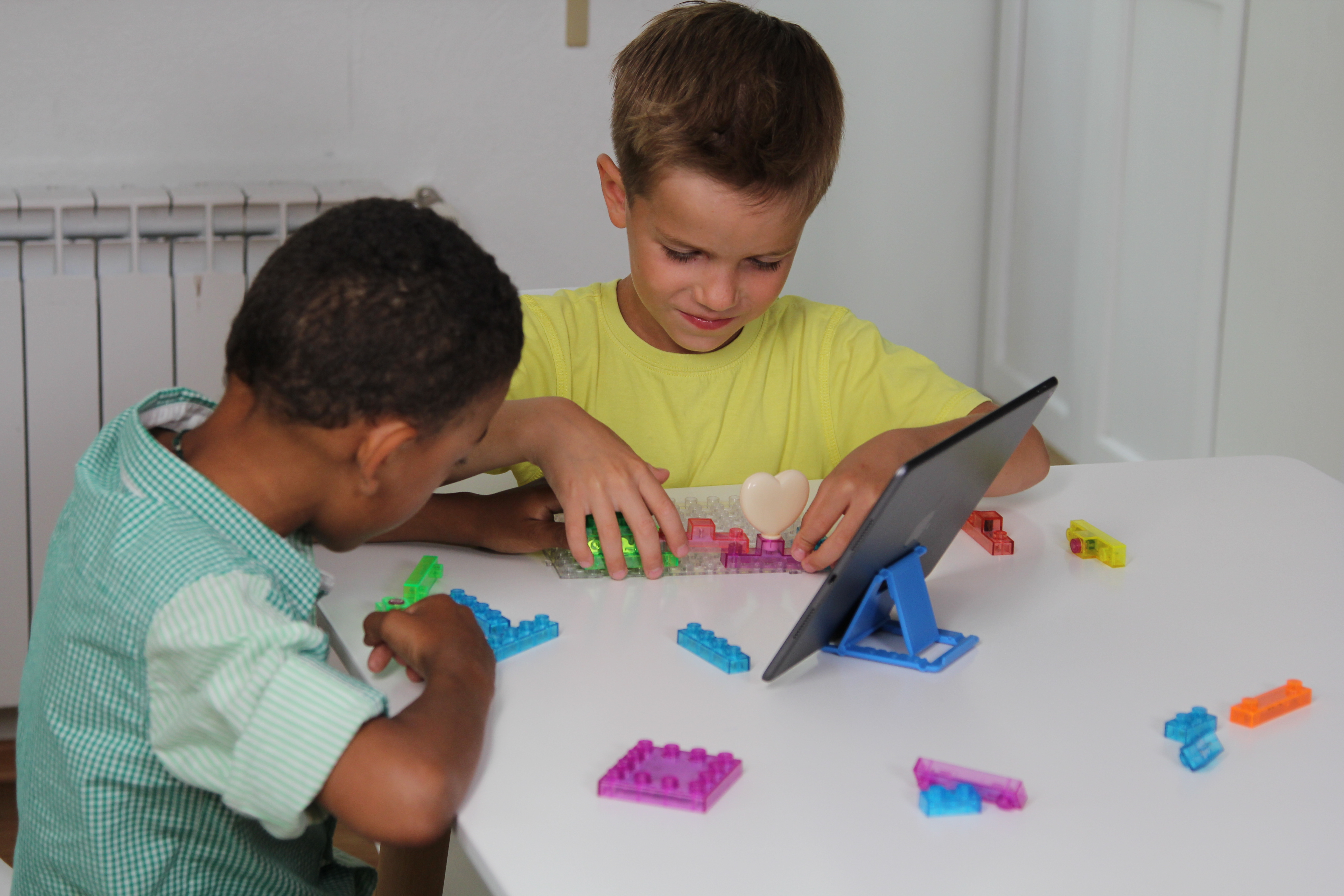


Parents and teachers should care about real-world applications in education for children ages 6-8 because it helps to make learning meaningful and practical. At this age, children are naturally curious and enjoy exploring the world around them. By connecting lessons to real-life situations, we can harness their curiosity and foster a love for learning.
For example, when children learn basic math concepts like addition or subtraction through activities such as counting money or dividing snacks, they understand the relevance of these skills in everyday life. This practical application encourages children to see learning as valuable and not just abstract information to be memorized.
Furthermore, real-world applications help to develop critical thinking and problem-solving skills. These skills are essential in navigating daily challenges and will be beneficial throughout their lives. When children work on solving practical problems, they learn to think creatively, make decisions, and understand cause-and-effect relationships.
Lastly, real-world learning promotes engagement and motivation. Children are more likely to participate actively and retain information when they see a clear purpose behind their studies. By demonstrating how school subjects relate to their world, teachers and parents can help children build a solid foundation for lifelong learning and adaptation in an ever-changing world.








