
Rhyming skills Normal Worksheets for Ages 6-8
3 filtered results
Difficulty Level
Grade
Age
-
From - To
Subject
Activity
Standards
Our "Rhyming Skills Normal Worksheets for Ages 6-8" are designed to spark joy in learning phonics through rhymes! Perfectly tailored for first and second graders, these engaging worksheets help children develop essential literacy skills. Each worksheet provides fun and interactive activities that support the recognition and production of rhyming words. As they connect words with similar ending sounds, kids enhance their listening and auditory discrimination abilities. Our worksheets offer a delightful mix of challenges and creativity, making learning to rhyme an exciting and rewarding experience. Transform your child’s reading journey with these playful and educational resources!
Favorites
With answer key
Interactive
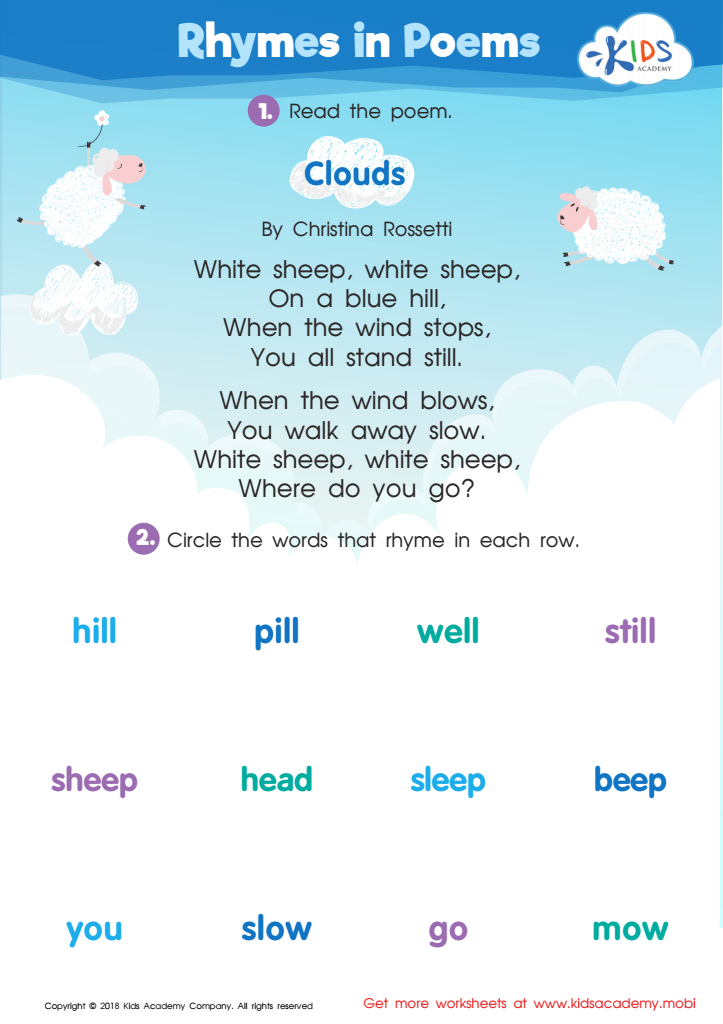
Rhymes in Poems Worksheet
Poems are lovely works of literature; some with rhymes, and some without. This poem for kids is full of rhymes and tells the tale of a sheep. Read it aloud to your kids, then help them circle the rhyming words.
 Assign to My Students
Rhymes in Poems Worksheet
Worksheet
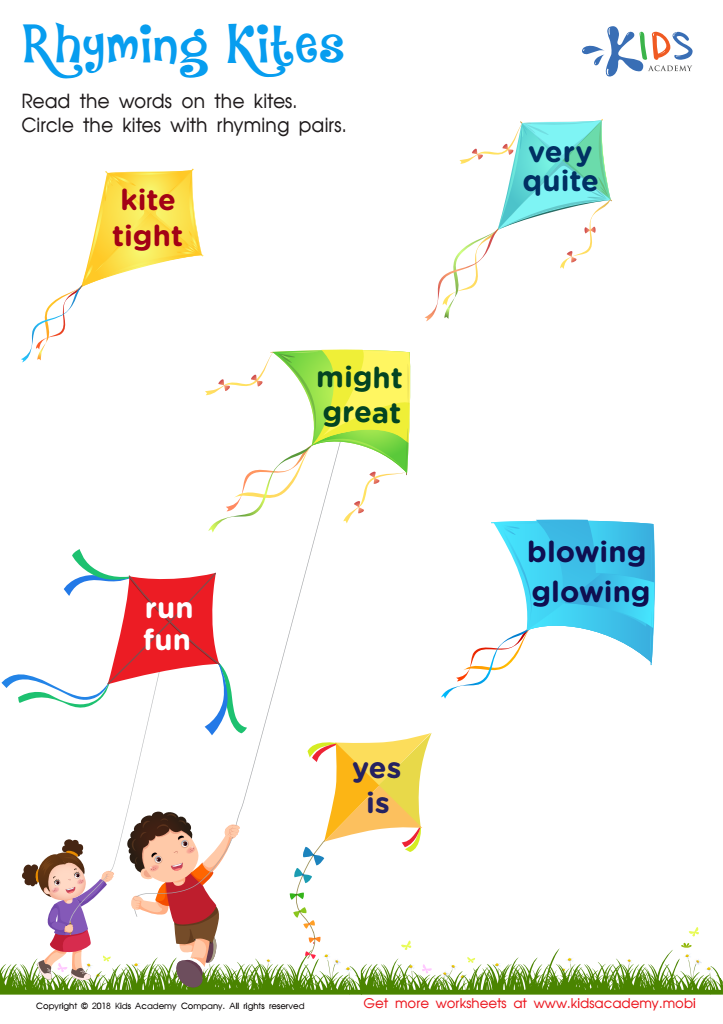
Rhyming Kites Worksheet
On a spring day, fly a kite! Kids Academy has a rhyming worksheet to boost your child's skills. Read the pairs of words aloud. Circle the kites if they rhyme, leave them blank if they don't. Listen carefully and find all the rhyming word pairs to complete this sheet!
Rhyming Kites Worksheet
Worksheet
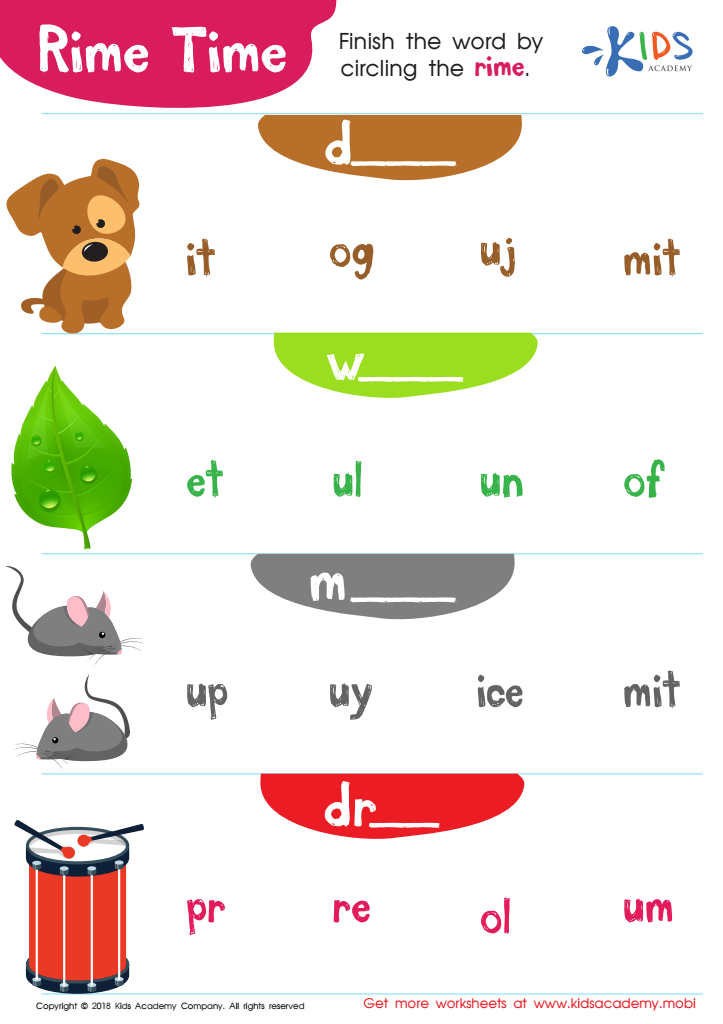
Rime Time Worksheet
This free PDF worksheet helps new and emerging readers identify rimes (the letters after initial consonants) and practice fine motor skills. Kids trace the correct rimes for each picture and increase their fluency and decoding skills with each one!
Rime Time Worksheet
Worksheet
Join Kids Academy for Free
Who is primarily going to use this learning content?








Rhyming skills are a fundamental aspect of early childhood literacy and play a crucial role in a child's reading and language development. For children ages 6-8, rhyming enhances phonemic awareness, which is the ability to hear, identify, and manipulate individual sounds in words. This awareness is foundational for learning to read and spell effectively. When children recognize rhyming patterns, they start understanding word families, which helps them decode new words more easily, boosting their reading fluency and comprehension.
Parents and teachers should prioritize rhyming activities because they make learning fun and engaging, fostering a positive attitude towards reading. Rhymes and rhythmic repetition can enhance memory and recall, making it easier for children to remember words and phrases. Furthermore, rhyming aids in the development of auditory discrimination skills, allowing children to differentiate between similar sounds, which is crucial for accurate pronunciation and listening skills.
Incorporating rhymes through songs, poems, and simple rhyming games also supports social interaction and cooperative learning. Children enjoy participating in group activities, sharing their creativity, and improving their verbal skills. By investing time in rhyming exercises, parents and teachers are not only supporting literacy development but also nurturing a lifetime love for language and reading.








