Time-telling skills Normal Worksheets for Ages 6-8
3 filtered results
-
From - To
Unlock your child's potential in mastering time-telling with our comprehensive Normal Worksheets designed for ages 6-8. These engaging exercises help young learners read clocks with confidence, understanding both analog and digital displays. Each worksheet is curated to progress from whole hours to half and quarter hours, and finally to 5-minute intervals, ensuring a strong foundational grasp on time calculation. Perfect for both classroom and home use, our printable worksheets foster independence and encourage consistent practice. Give your child the tools they need to become proficient time-tellers with fun, educational activities from Kids Academy. Start their journey today!
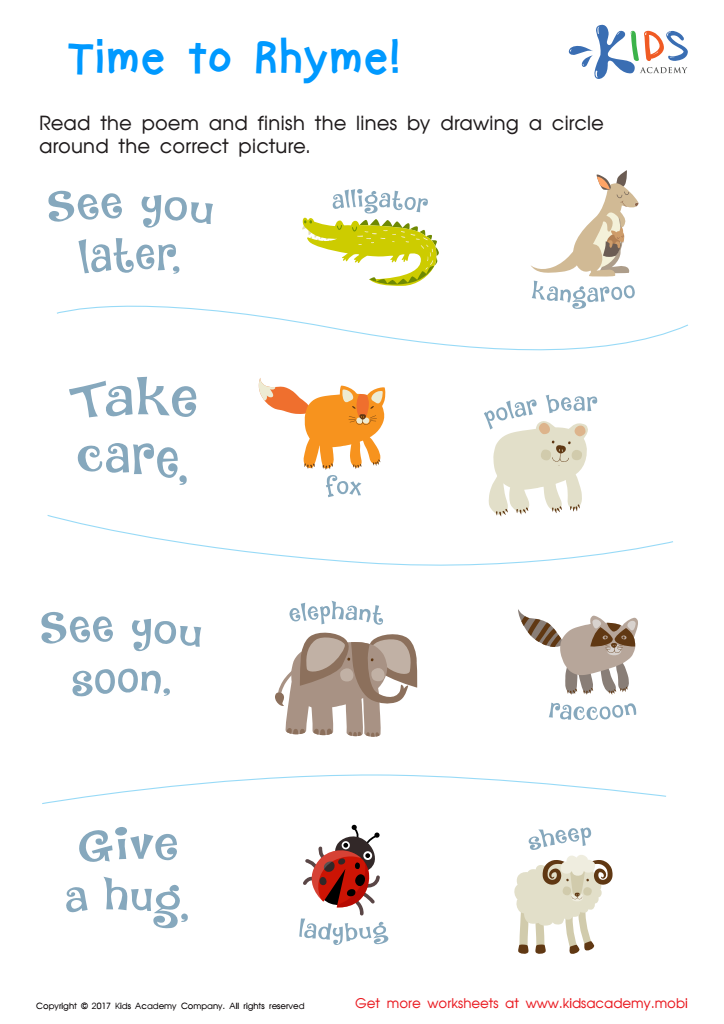
Time to Rhyme Rhyming Worksheet
 Assign to My Students
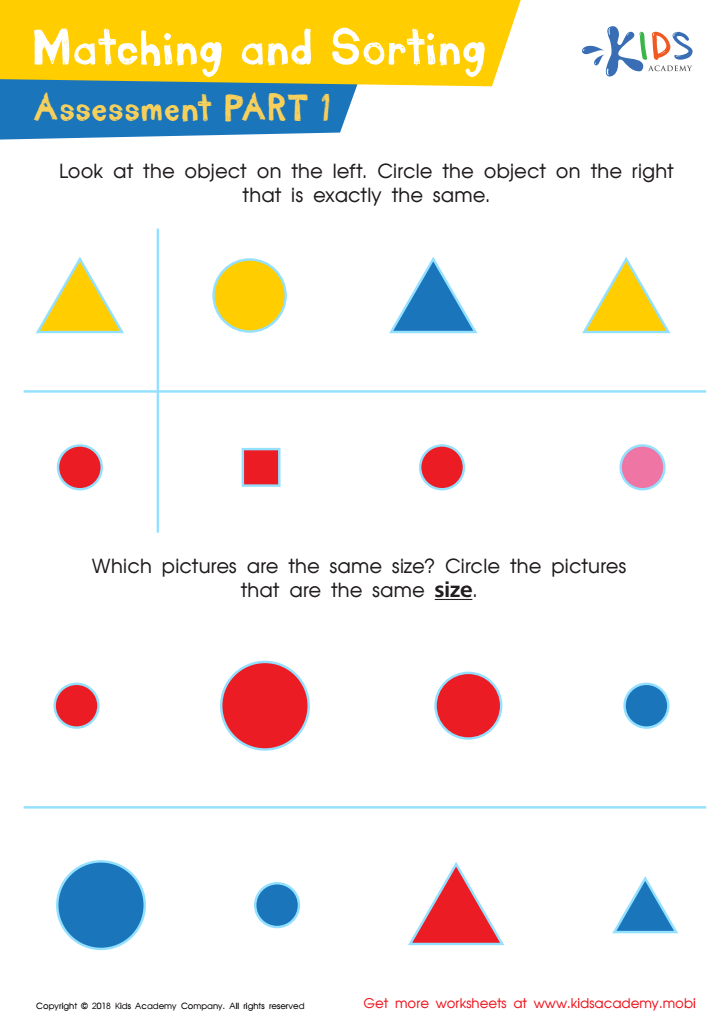
Matching and Sorting for Kindergarten: Assessment 1 Worksheet
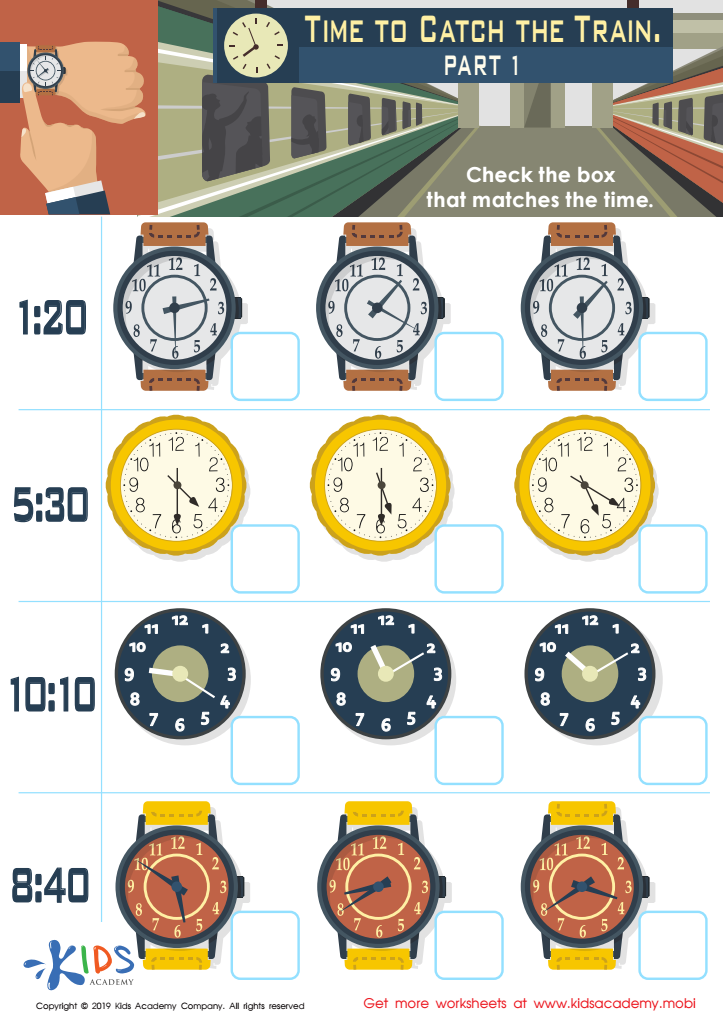
Time to Catch the Train Part 1 Worksheet





Time-telling skills are essential for children ages 6-8 as they foster both cognitive development and day-to-day functioning. At this critical stage, children are beginning to understand the concept of time and how to manage activities within a day. Learning to read a clock, whether analog or digital, instills a sense of order and routine, crucial for academics and personal growth. This skill promotes responsibility and independence, as children start owning tasks like knowing when to start homework or head to bed.
From an educational perspective, mastering time-telling enhances mathematical skills, such as counting, sequencing, and recognizing patterns. This interconnected understanding aids in more complex subjects. Additionally, time-telling aligns with learning to recognize numbers and improve fine motor skills associated with setting and reading a clock, supporting overall smarter development.
Furthermore, punctuality and the concept of elapsed time prepare children for real-world scenarios, like catching a bus or transitioning between school subjects without confusion. For teachers, incorporating time-telling into lessons equips students with critical skills for effective time management and planning. Consequently, paying attention to and fostering these skills helps teachers express the value of time, enhances classroom order, and supports a well-rounded educational experience for young children.








