Understanding biodiversity Normal Worksheets for Ages 6-8
4 filtered results
-
From - To
Explore our "Understanding Biodiversity" worksheets designed specifically for children ages 6-8. These engaging activities, available at Kids Academy, introduce young learners to the diverse world of plants and animals, emphasizing the importance of ecosystems and conservation. Children will enhance their science skills through interactive, age-appropriate tasks that foster curiosity and a love for nature. Each worksheet integrates vivid visuals and simple explanations to make learning fun and effective. Perfect for both classroom and at-home learning, these resources help children build a foundational understanding of biodiversity that will inspire them to protect our planet’s valuable resources.
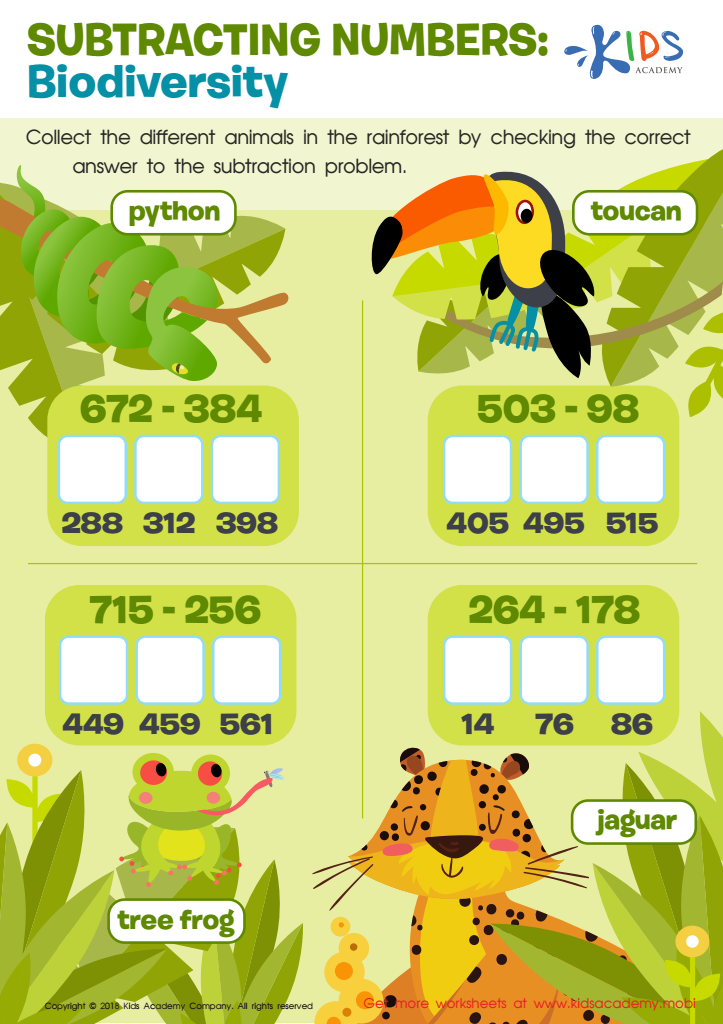
Subtracting Numbers: Biodiversity Worksheet
 Assign to My Students
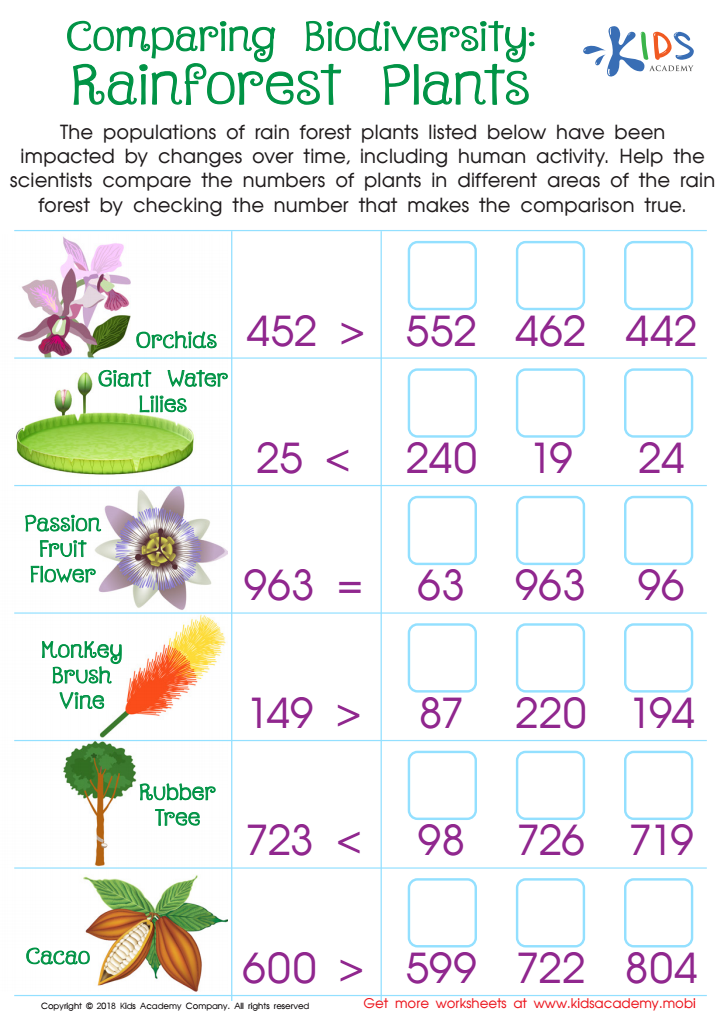
Comparing Biodiversity: Rainforest Plants Worksheet
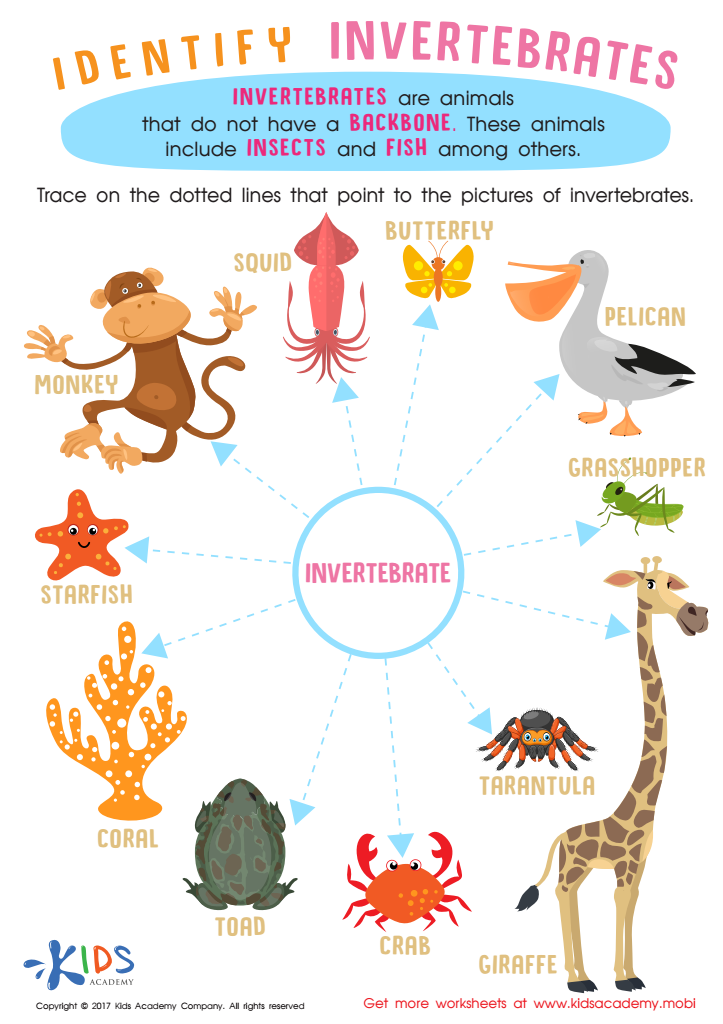
Invertebrates Worksheet for Grade 3
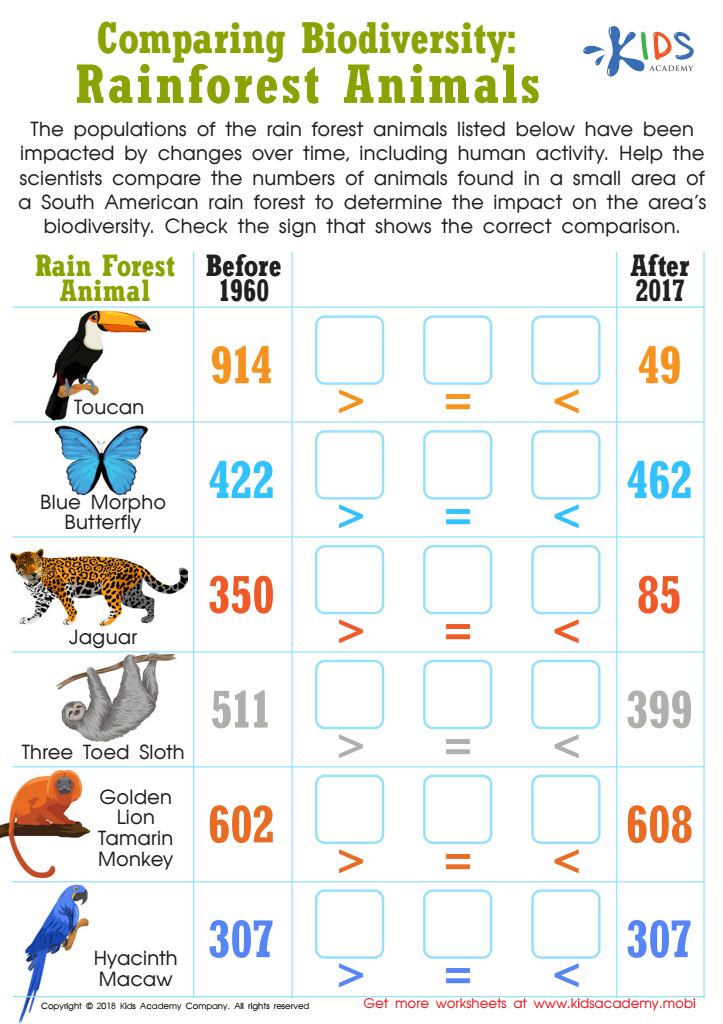
Comparing Biodiversity: Rainforest Animals Worksheet







Understanding biodiversity is important for young children, aged 6-8, as it lays the groundwork for respecting and caring for our planet. Biodiversity refers to the variety of different plants, animals, and ecosystems in the world. When children learn to appreciate this diversity, they start to see the value of all living things and recognize the roles they play in maintaining balanced ecosystems.
Teaching young children about biodiversity can also foster empathy and responsibility. For instance, they can learn how different species depend on each other for food, shelter, and survival, which can make kids more conscious of their actions and their impact on the environment. Children who understand biodiversity are more likely to grow up making choices that help protect the planet, like recycling or conserving water.
Furthermore, learning about biodiversity encourages curiosity and a love of nature. Spending time outdoors and observing the natural world can enhance children’s observational skills and foster a sense of wonder. They can experience firsthand the beauty and complexity of habitats, from a tiny ant hill to a towering tree.
By introducing biodiversity at an early age, parents and teachers can help nurture informed, responsible, and environmentally conscious future stewards of the Earth. It's an essential step in building a sustainable future.








