Understanding communities Normal Worksheets for Ages 6-8
5 filtered results
-
From - To
Discover our engaging "Understanding Communities" worksheets designed specifically for children ages 6-8. These resources aim to enhance young learners' comprehension of their surroundings, promoting an appreciation for the diverse elements that make up their communities. From identifying local landmarks to understanding various community roles, each worksheet provides age-appropriate activities that encourage exploration and critical thinking. Perfect for both homeschooling and classroom settings, these worksheets help develop essential social studies skills while making learning fun and interactive. Explore our collection to foster young minds and cultivate a sense of belonging in your community today!
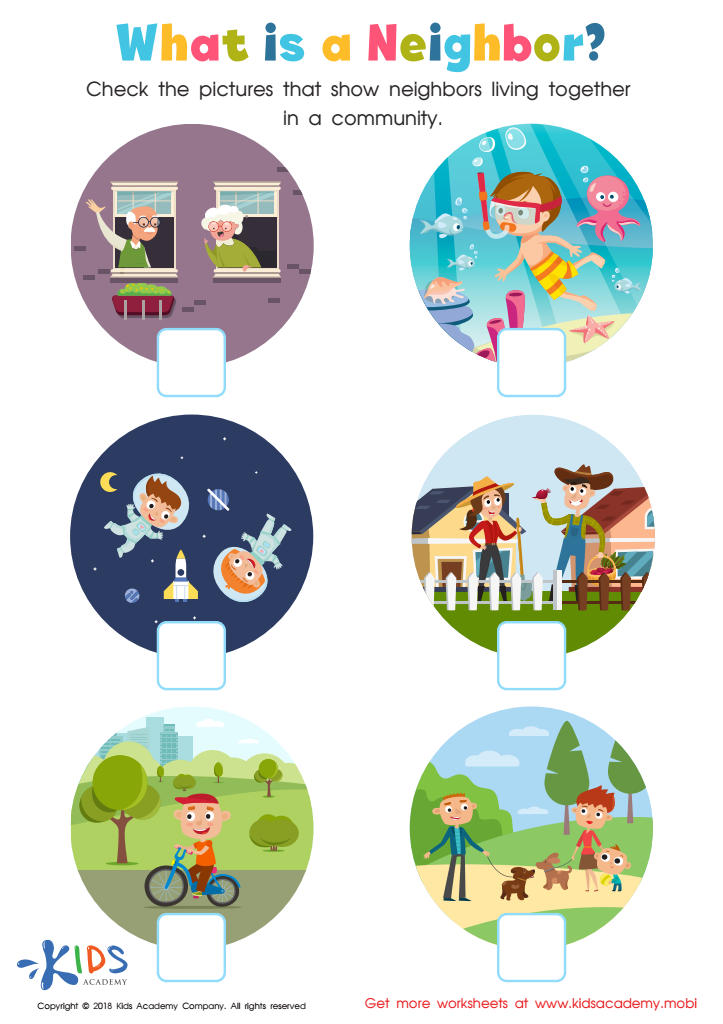
What is a neighbor Worksheet
 Assign to My Students
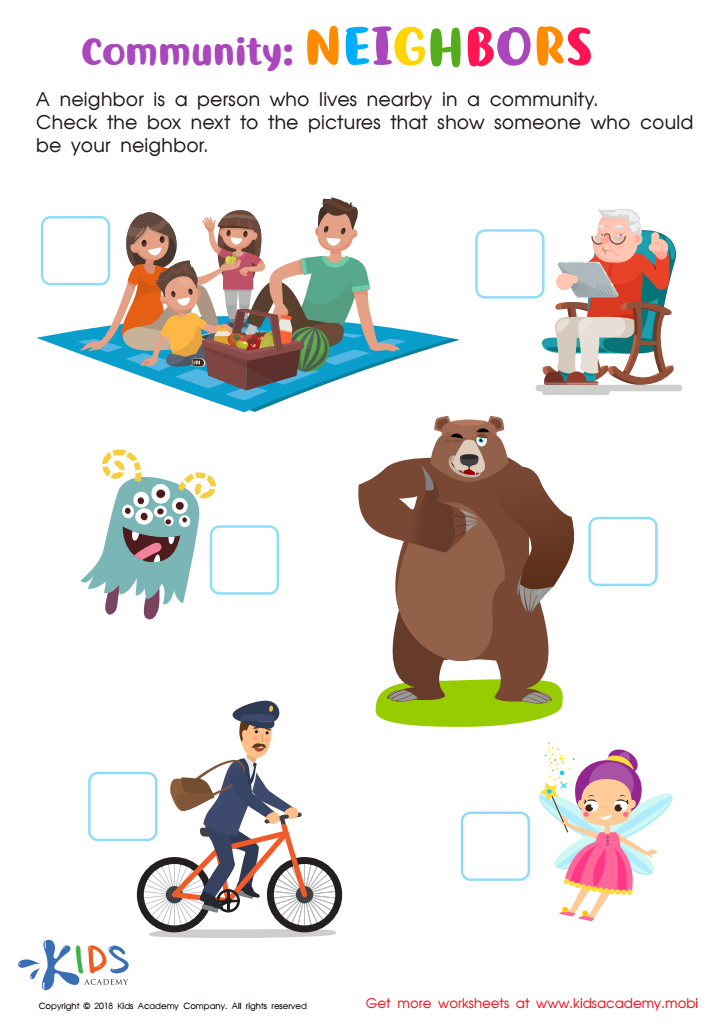
Community: Neighbors Worksheet
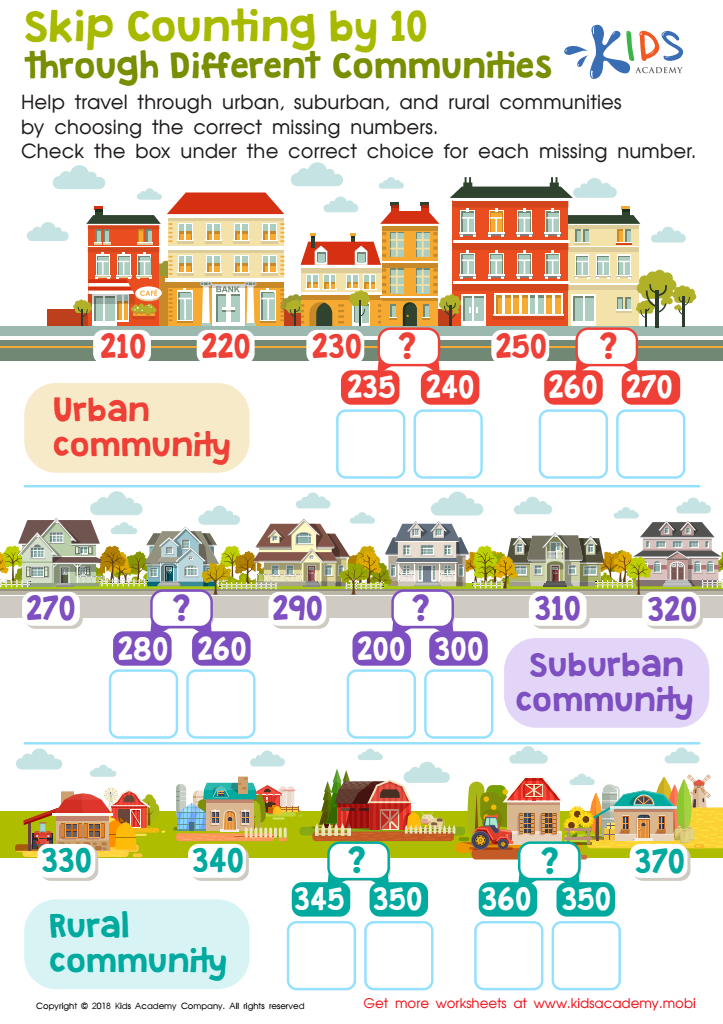
Skip Counting by 10 through Different Communities Worksheet
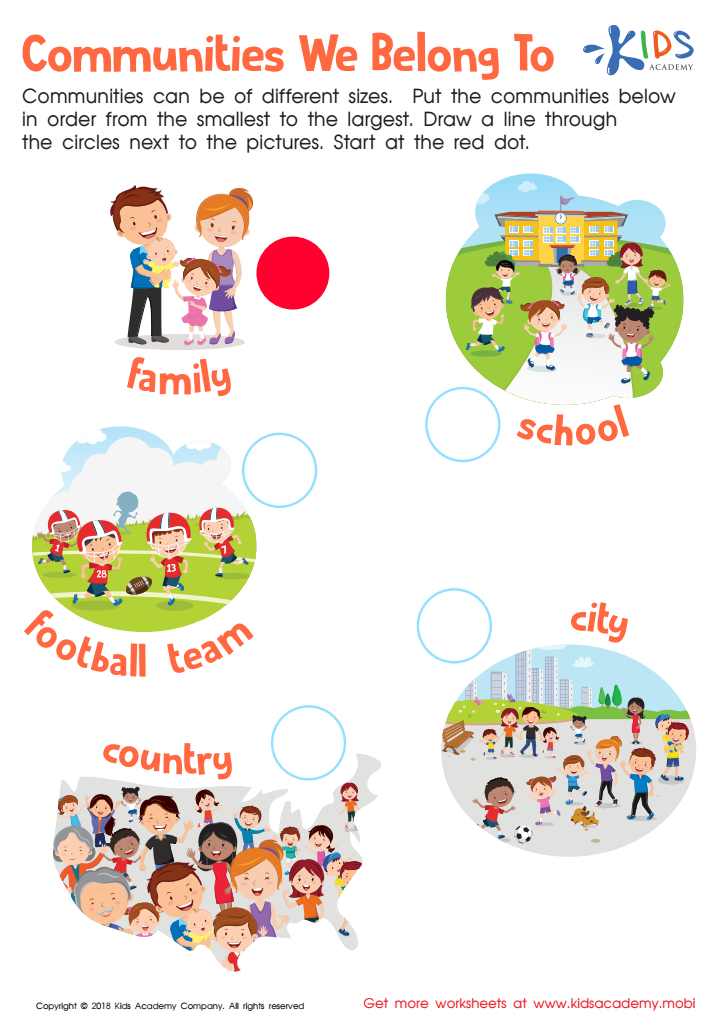
Communities We Belong to Worksheet
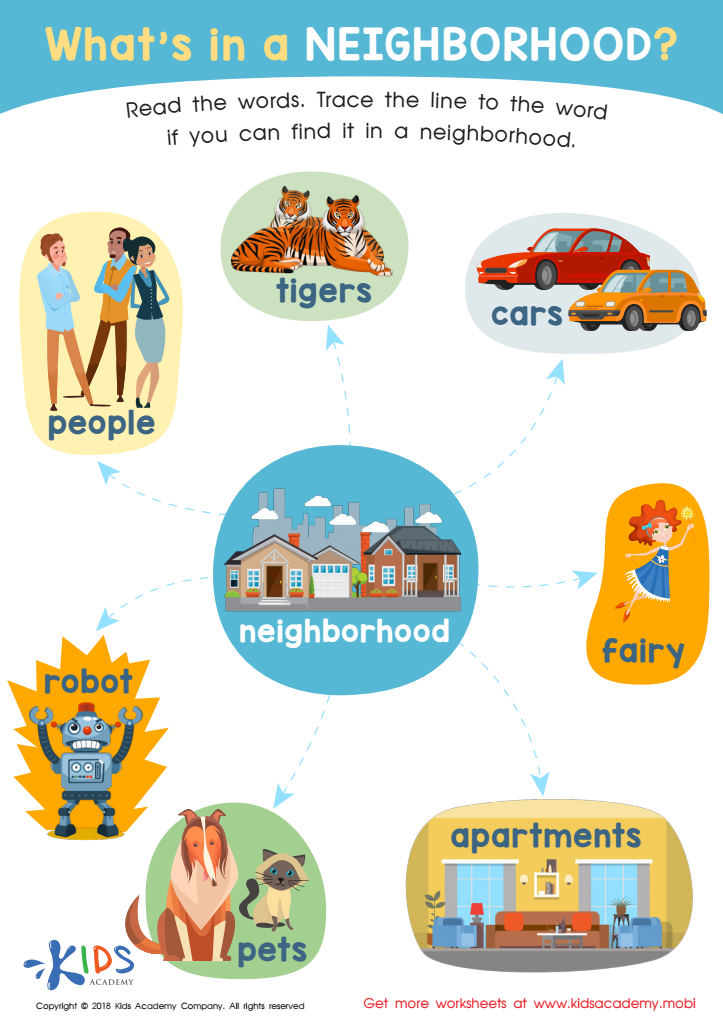
What's in a Neighborhood? Worksheet








Understanding communities is crucial for children aged 6-8 as it helps them develop social awareness and interpersonal skills. At this developmental stage, children begin to form their identities and understand their roles within different social settings. By learning about their communities, children cultivate a sense of belonging, empathy, and respect for diversity.
Teachers and parents should care about this because fostering community understanding enhances emotional and social learning. Children who are aware of various cultures, traditions, and lifestyles learn to appreciate differences, which prepares them for a multicultural society. Through experiential learning about their neighborhoods, families, and schools, children gain insights into the importance of cooperation, confidence, and active citizenship.
Engaging with the community also provides practical learning experiences—like visiting local landmarks or meeting community helpers—which make learning more relevant and engaging. This hands-on approach not only enriches their knowledge but also boosts their communication and critical thinking skills.
Ultimately, when children understand their communities, they become responsible, considerate individuals who are ready to contribute positively. Encouraging this understanding is essential for parents and teachers seeking to nurture well-rounded, socially conscious citizens who can navigate and actively participate in an increasingly interconnected world.








