Understanding forces Normal Worksheets for Ages 6-8
6 filtered results
-
From - To
Discover our engaging "Understanding Forces Normal Worksheets" designed for children aged 6-8. These worksheets offer a fun, interactive way to learn about the essential concepts of forces, including push and pull. Tailored to meet the developmental needs of young learners, each activity combines colors, illustrations, and relatable examples to stimulate curiosity and understanding. Empower your child to explore the wonders of physics through hands-on exercises that foster critical thinking and problem-solving skills. Perfect for home or classroom use, these worksheets are an excellent resource for parents and educators committed to nurturing a love of learning in early education.
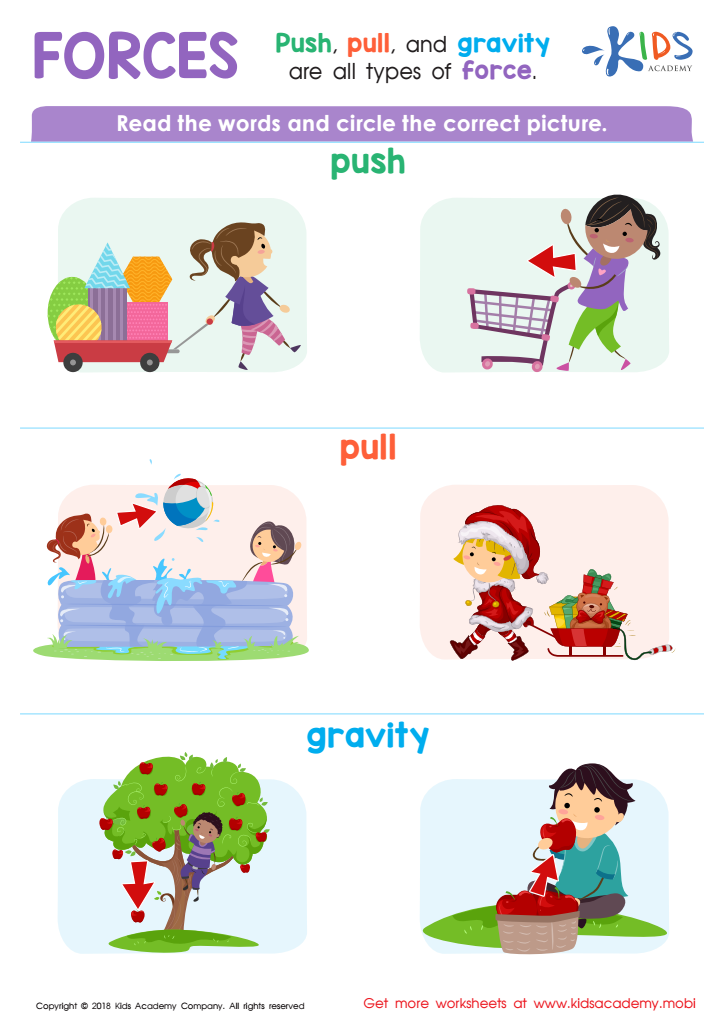
Forces Worksheet
 Assign to My Students
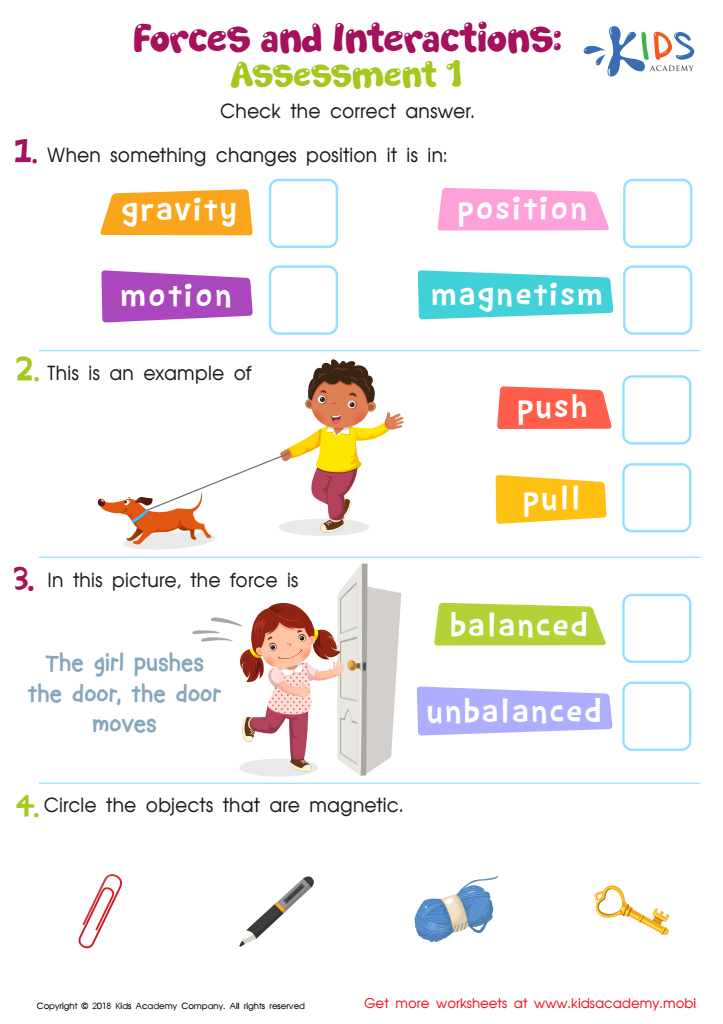
Forces and Interactions Printable
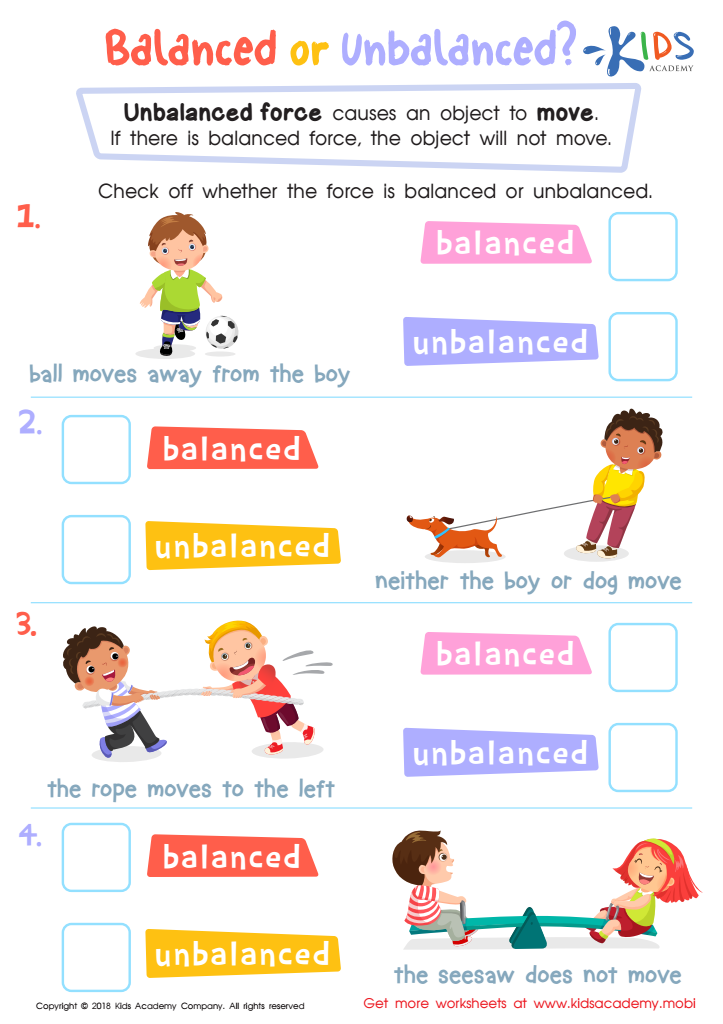
Balanced or Unbalanced Science Worksheet
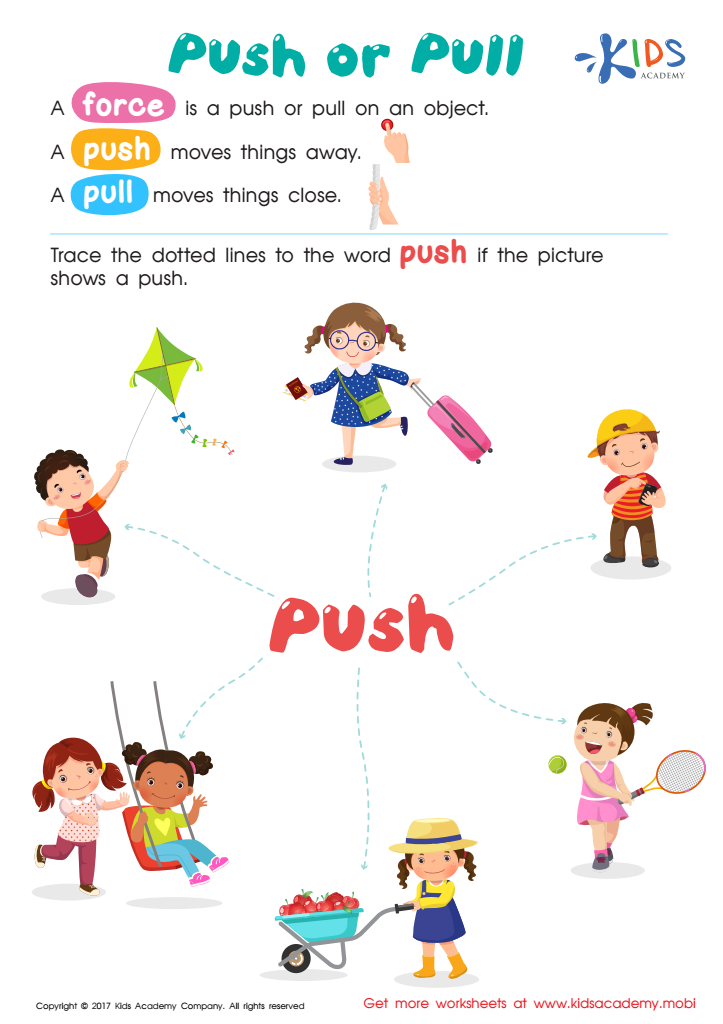
Push or Pull Worksheet
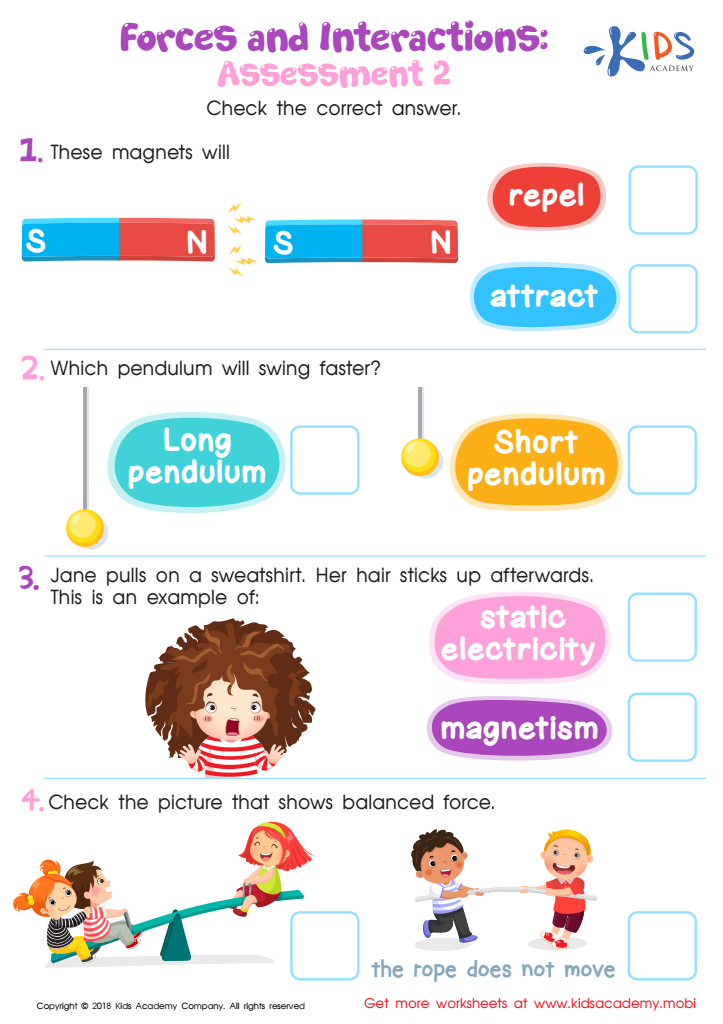
Forces and Interactions Worksheet For 3rd Grade
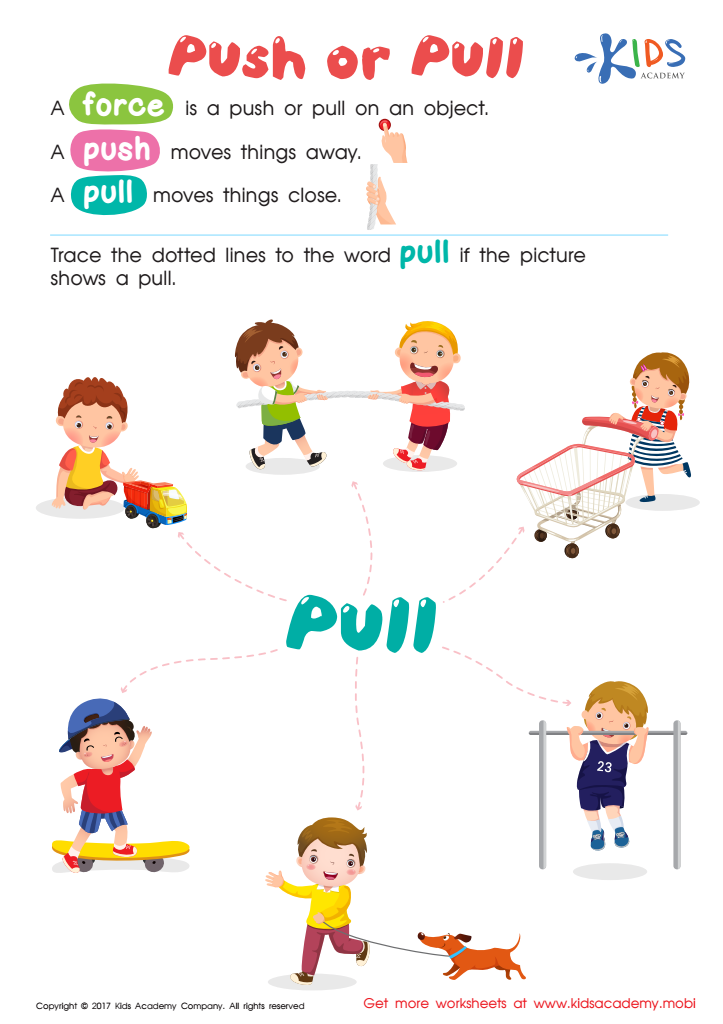
Pull or Push Worksheet







Understanding forces, including the concept of normal force, is essential for children ages 6-8, as it lays the foundation for their scientific literacy. At this age, children are naturally curious about the world around them, and engaging them in the laws of physics can enhance that curiosity.
When parents and teachers introduce the concept of normal force, they teach kids how different surfaces and objects interact. For instance, when a book rests on a table, the table exerts an upward normal force that counteracts the weight of the book. This basic understanding helps children grasp more complex scientific principles later in their education, promoting problem-solving skills and critical thinking.
Moreover, understanding forces fosters a sense of exploration and experimentation. Children can conduct hands-on activities, like observing how objects slide down different surfaces, which encourages hands-on learning.
Moreover, these concepts can be incorporated into various subjects like math, arts, and even social studies when discussing structures and balance in architecture or sports. By caring about teaching these concepts, parents and teachers empower children to become inquisitive learners, ready to face future scientific challenges with confidence and creativity.








