Understanding light sources Normal Worksheets for Ages 6-8
4 filtered results
-
From - To
Unlock the wonders of light with our "Understanding Light Sources" worksheets tailored for ages 6-8. These engaging, educational resources help young learners discover types of light sources, both natural and artificial. Each worksheet is designed to enhance children’s curiosity and critical thinking through fun activities like identifying sources of light and distinguishing between them. By exploring the basics of light and how we use it in daily life, kids build foundational science skills in an enjoyable way. Complement your lesson plans with these printable worksheets from Kids Academy and watch your students shine bright!
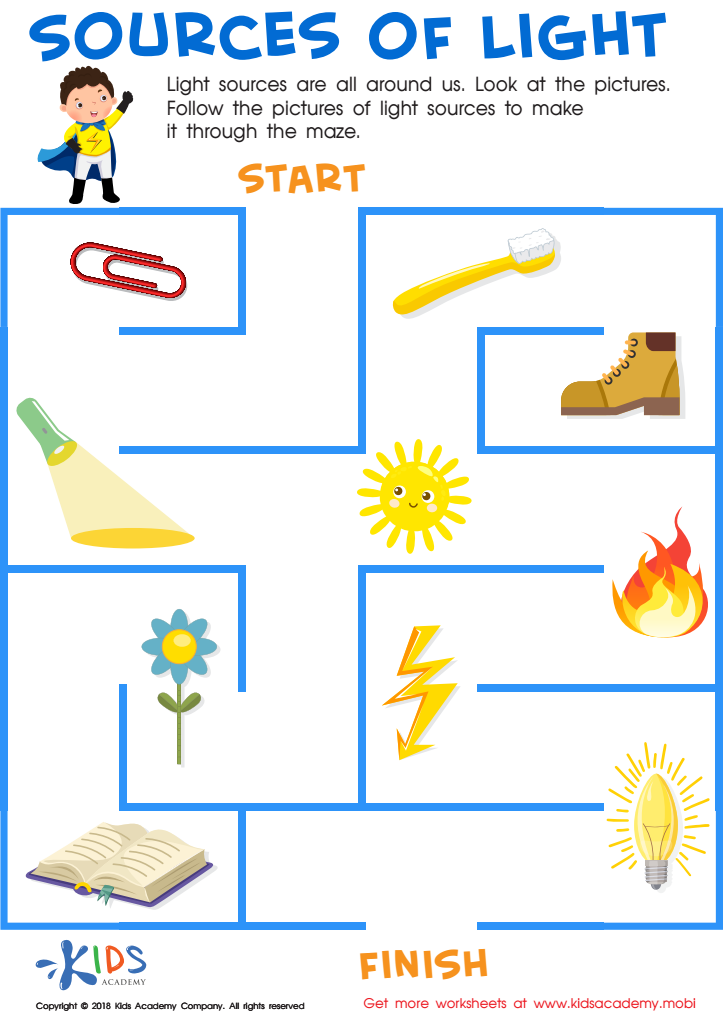
Sources of Light Worksheet
 Assign to My Students
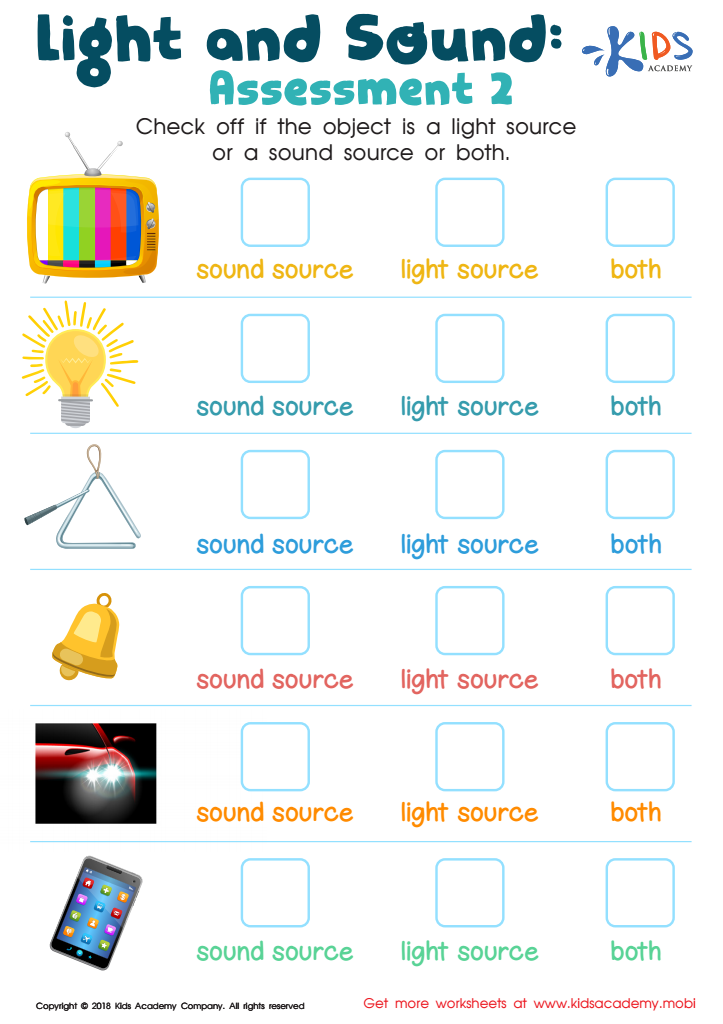
Light and Sound: Assessment 2 Worksheet
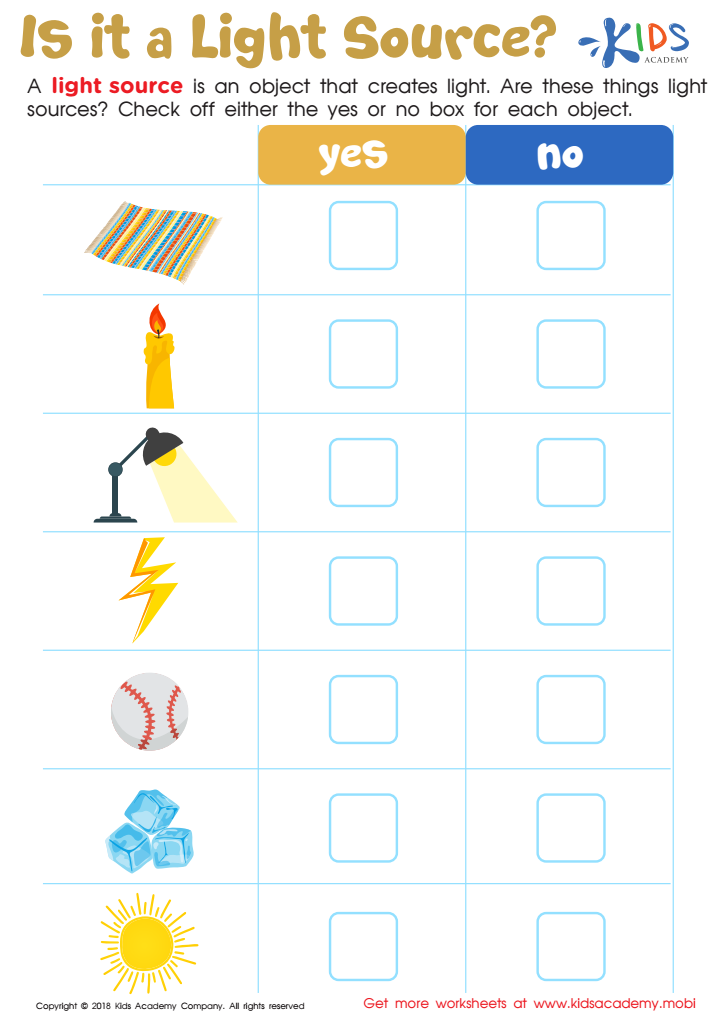
Is It a Light Source? Worksheet
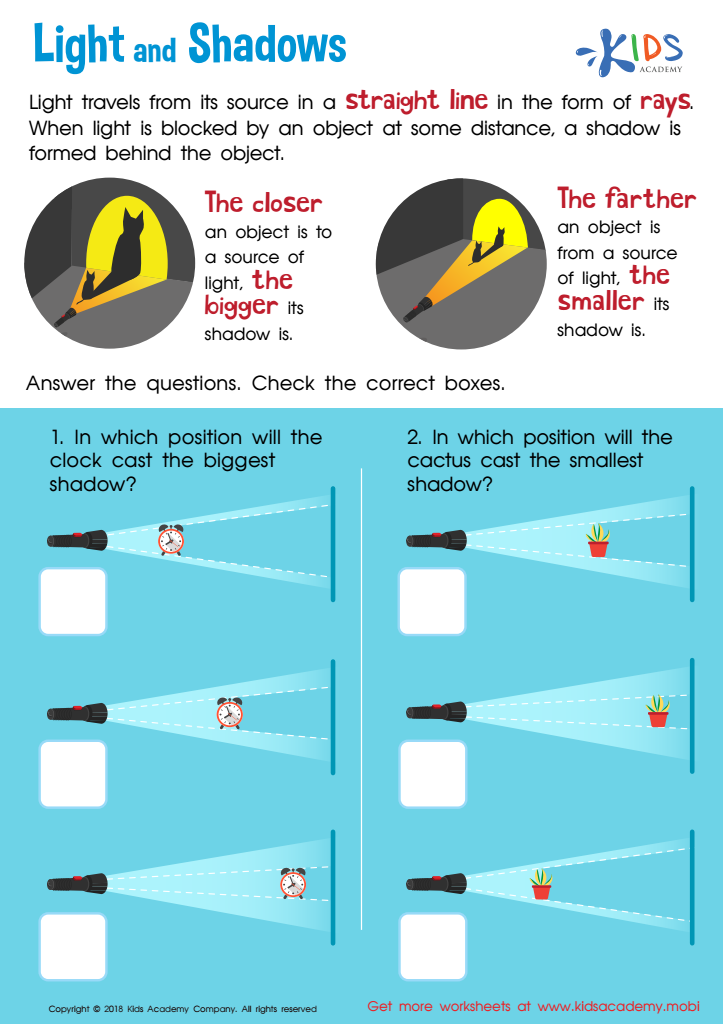
Light and Shadow Worksheet for Grade 3





.jpg)

Understanding light sources is essential for young children as it lays the groundwork for scientific curiosity and literacy. Ages 6-8 is a period marked by rapid cognitive development, and learning about light can spark inquisitiveness and the joy of discovery. Parents and teachers should recognize that these foundational concepts are integral to a child’s education and future learning.
First, light is a basic element of the physical world, and understanding its various sources—natural like the sun, and artificial like light bulbs—helps children make sense of their environment. Grasping these differences enables them to better appreciate day-night cycles, plant growth, and energy consumption.
Second, hands-on activities involving light, such as using flashlights, prisms, or exploring shadows, not only make learning fun but also deepen comprehension. These activities can enhance problem-solving skills, observation, and critical thinking—key competencies in science education.
Finally, introducing light sources aligns with key educational standards and helps prepare students for more complex topics covered in later grades, such as photosynthesis and electricity. It directly ties into essential science, technology, engineering, and mathematics (STEM) concepts, supporting a holistic learning experience.
By understanding light sources, children develop an early scientific mindset, nurturing lifelong learning and curiosity. Therefore, both parents and teachers should actively engage young students in exploring these fundamental ideas.








