Understanding shapes Normal Worksheets for Ages 6-8
4 filtered results
-
From - To
"Understanding Shapes Normal Worksheets for Ages 6-8" are expertly designed to help young learners grasp fundamental geometric concepts. Through engaging activities, children explore various shapes and their properties, enhancing their spatial awareness and problem-solving skills. Each printable worksheet is tailored to support kids as they identify, compare, and create shapes, aligning with key curriculum standards. Perfect for teachers and parents, these resources make learning fun and interactive while ensuring essential math skills development. Empower your 6-8 year-olds with confidence in shape recognition and understanding through our carefully crafted worksheets. Discover now and inspire a love for learning geometry!
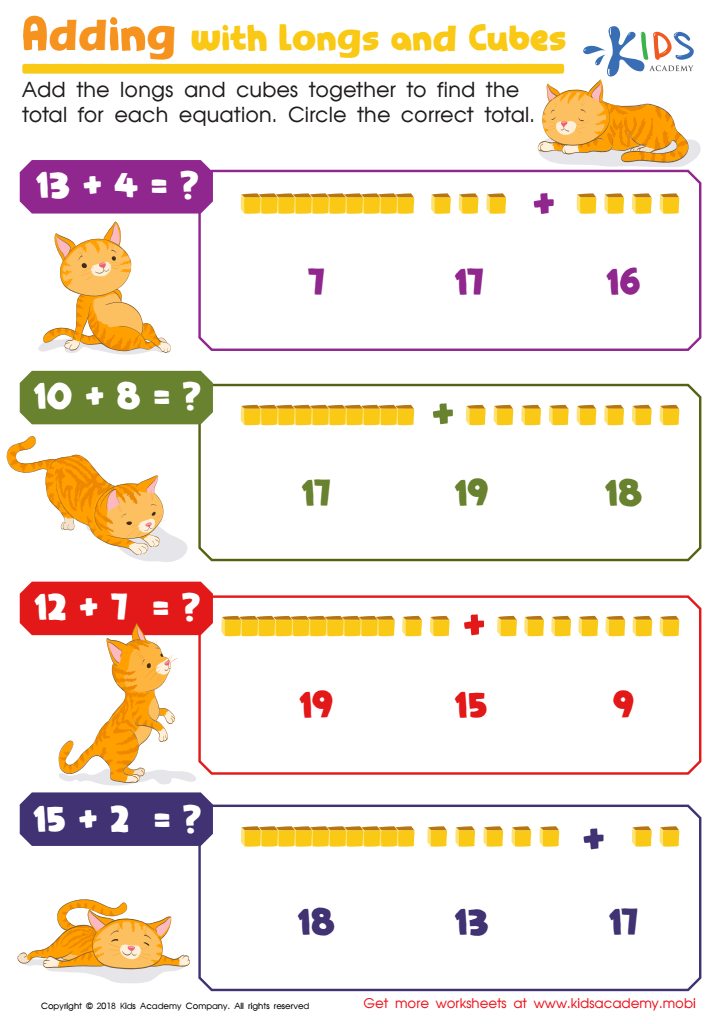
Adding With Longs and Cubes Worksheet
 Assign to My Students
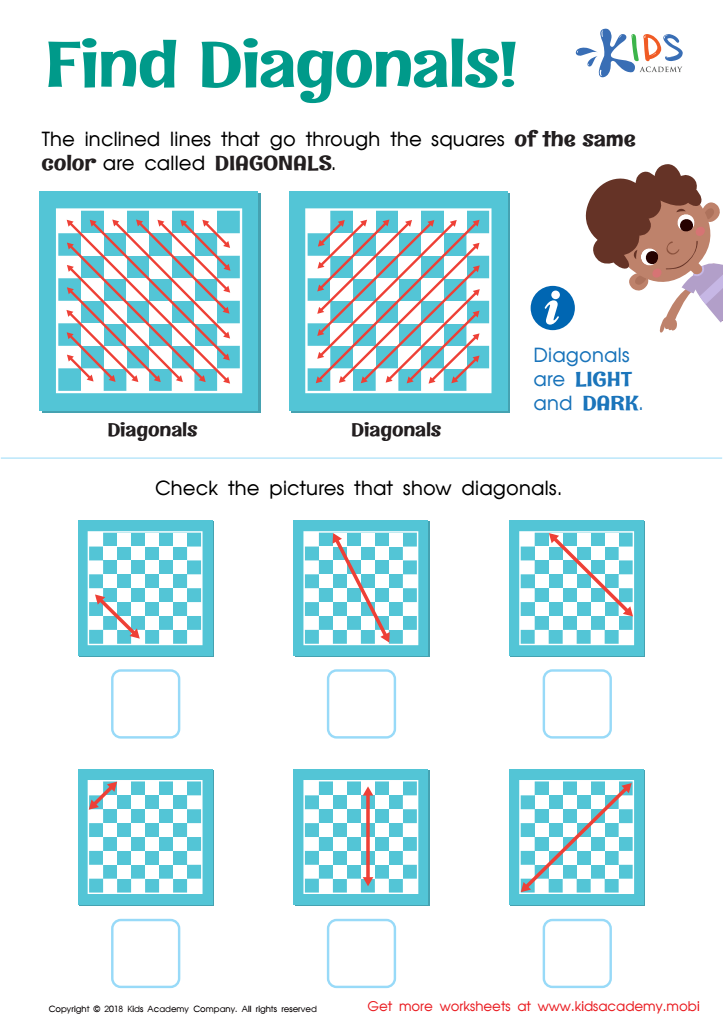
Find Diagonals Worksheet
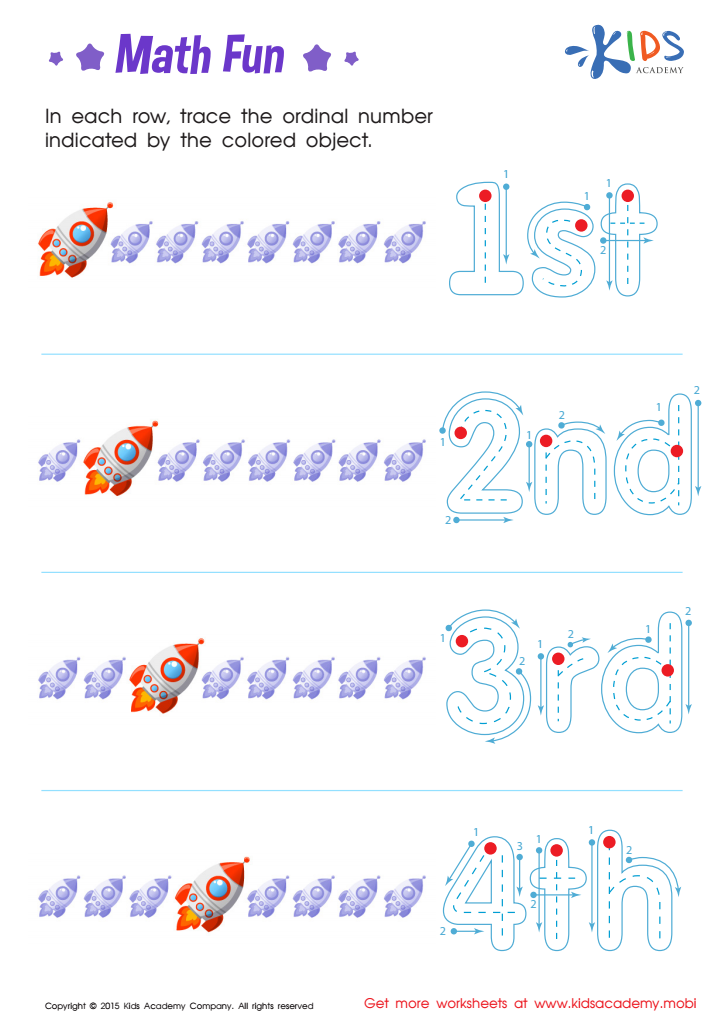
Ordinal Numbers: Math Fun Worksheet
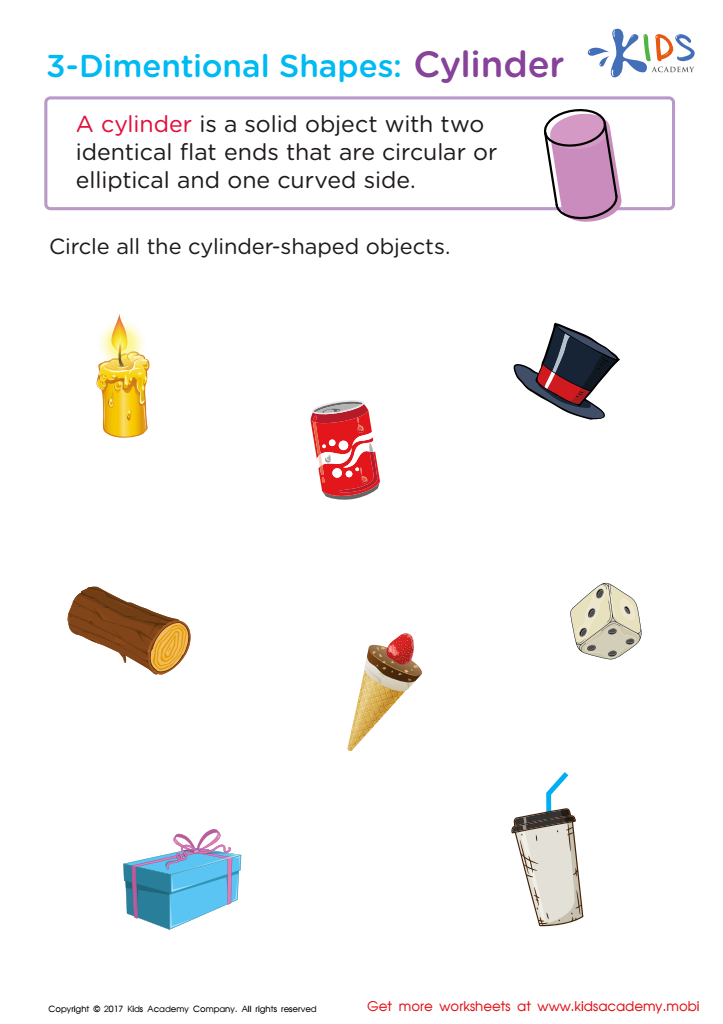
Three–Dimensional Shapes: Cylinder Worksheet








Understanding shapes is crucial for children aged 6-8 because it acts as a foundational element in their overall cognitive development and learning processes. At this age, children begin to recognize and categorize shapes, which significantly aids their spatial awareness and geometry skills. By differentiating between various shapes, such as squares, circles, triangles, and rectangles, children develop visual discrimination—a skill that is essential for reading and writing.
Learning about shapes also enables children to understand other essential concepts, such as pattern recognition and symmetry, which are fundamental in mathematics and sciences. When children manipulate shapes, they enhance their fine motor skills and hand-eye coordination, contributing to improved writing and artistic abilities. Furthermore, shapes are prevalent in everyday life, from road signs to architecture, helping children to better navigate and understand their environment.
Parents and teachers should value shape education because it promotes logical reasoning and critical thinking. When a child identifies how a triangle differs from a rectangle, they learn to categorize and analyze differences and similarities, which are key components of problem-solving. In summary, understanding shapes forms a critical stepping-stone for academic and personal growth, making it an area of learning that parents and teachers should earnestly support.








