Unlock the power of language with our "Understanding Suffixes" worksheets designed for children ages 6-8. These engaging, printable exercises focus on illustrating how suffixes change the meaning of words and the importance of word endings. Through fun activities and clear instructions, kids will enhance their vocabulary and strengthen their reading and writing skills. Our worksheets offer interactive challenges that make learning suffixes enjoyable, promoting critical thinking and creativity. Perfect for parochial school extra credit, homeschooling, or as supplementary learning at home, these resources will help young learners confidently use suffixes in their everyday communications while building a solid foundation for future literacy success.

Check out this FREE "Understanding suffixes" Trial Lesson for age 6-8!

Identify Common Suffixes

Favorites
With answer key
Interactive
  • 6-8
  • Understanding suffixes
  • Normal
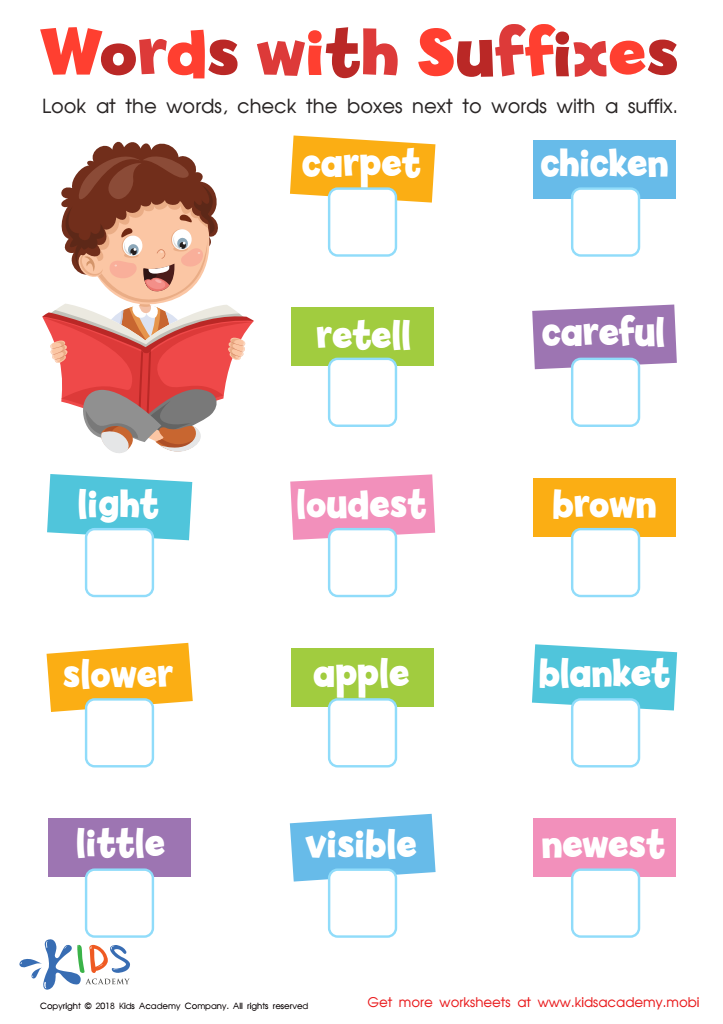
Reading: Words With Suffixes Worksheet

Reading: Words With Suffixes Worksheet

Help your students understand suffixes and build reading fluency with this worksheet. Have them read each word, then choose the ones with a suffix. Practicing this will lead to better comprehension and more confident reading. Save it for future use in language and reading classes.
Reading: Words With Suffixes Worksheet
Worksheet
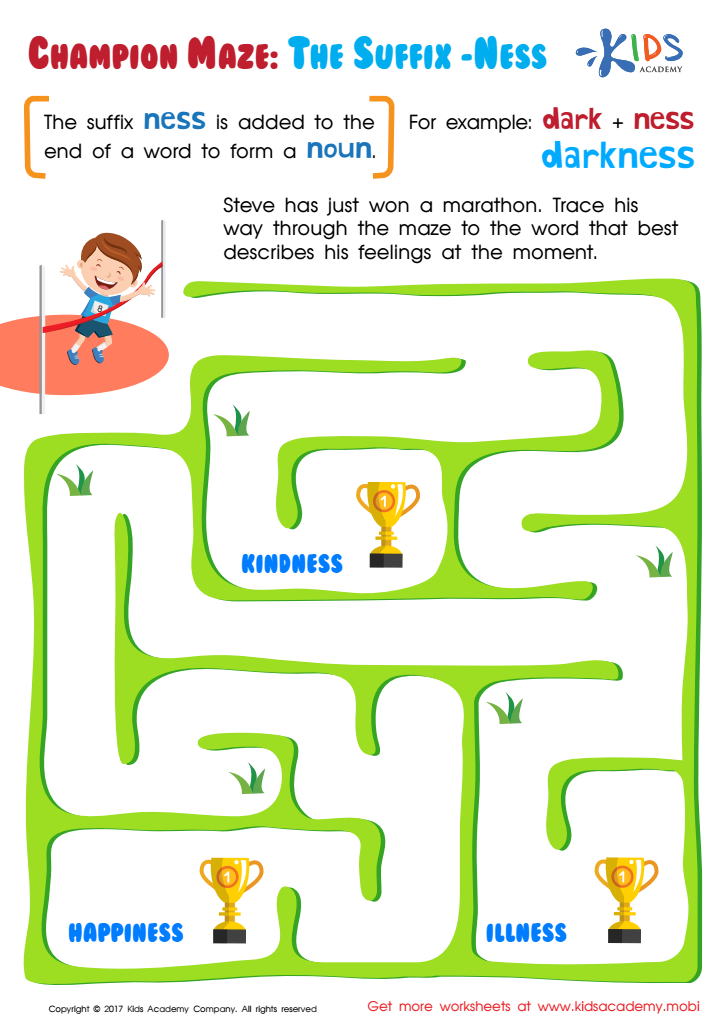
Suffix Ness Worksheet PDF

Suffix Ness Worksheet

Words are amazing! Add an ending and they can change part of speech. Make nouns out of adjectives with -ness. This worksheet has a fun maze to help learners increase vocabulary and language skills.
Suffix Ness Worksheet
Worksheet
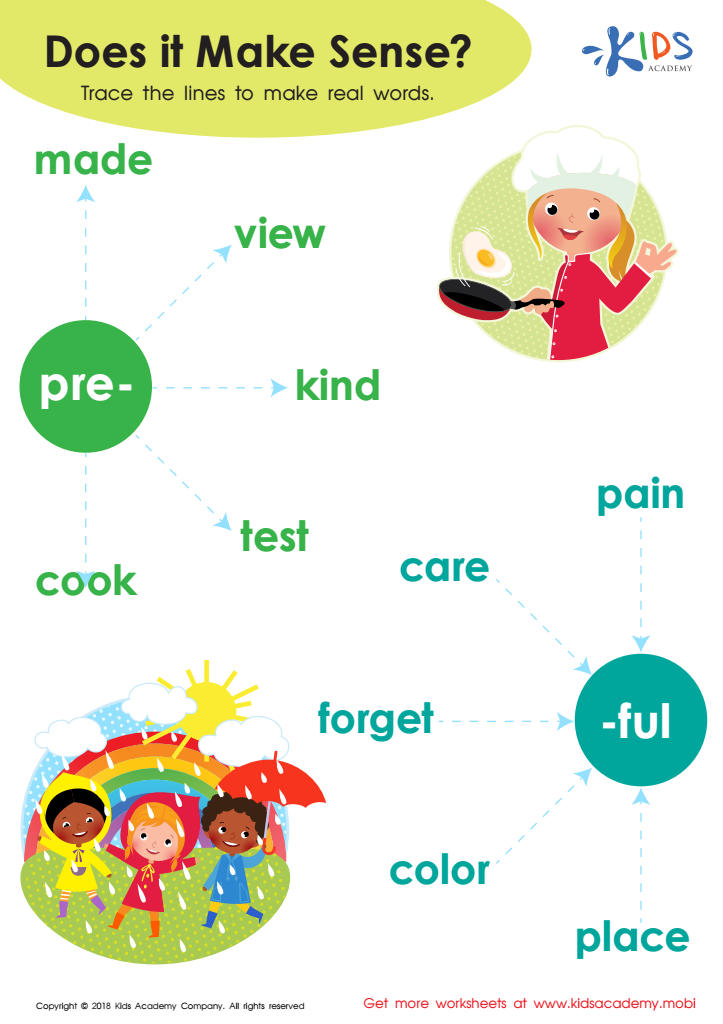
Prefix pre and suffix ful worksheet

Prefix pre– and Suffix ful– Worksheet
Can't preforget something! This worksheet helps kids learn how to attach prefixes and suffixes to root words, forming new words that make sense. With this activity, they'll evaluate how the root words change when adding the prefix or suffix.
Prefix pre– and Suffix ful– Worksheet
Worksheet
Suffix -Able Worksheet

Suffix -Able Worksheet

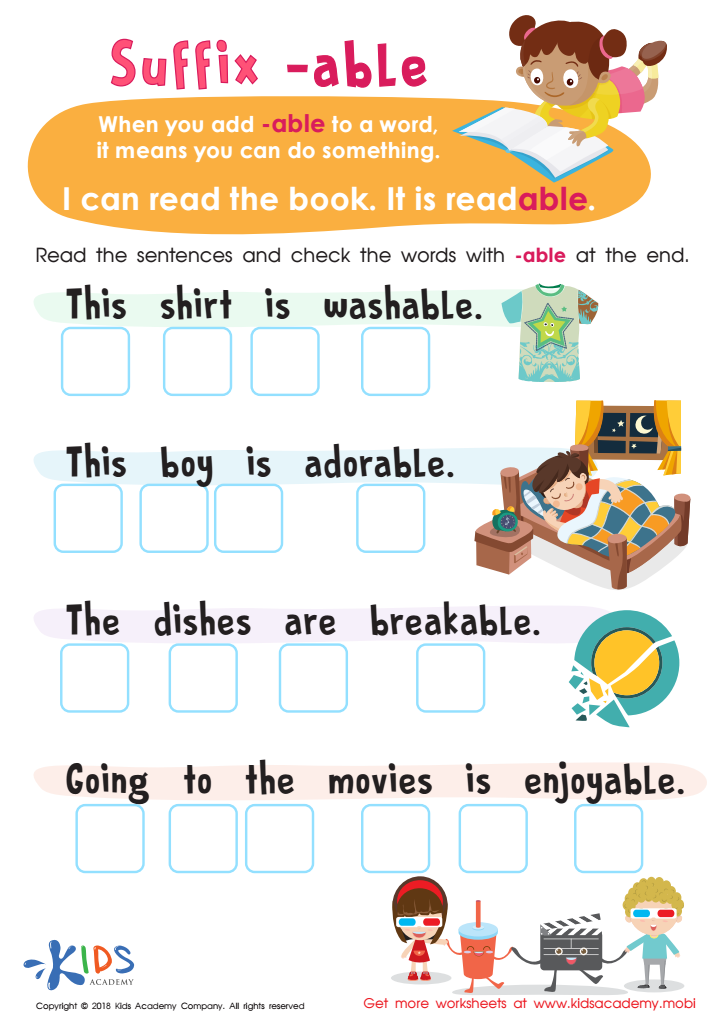
Suffix -able means you can do something. Example: readable - means you can read it. Give kids examples then check this worksheet. Read sentences with kids, looking for words with -able at the end.
Suffix -Able Worksheet
Worksheet
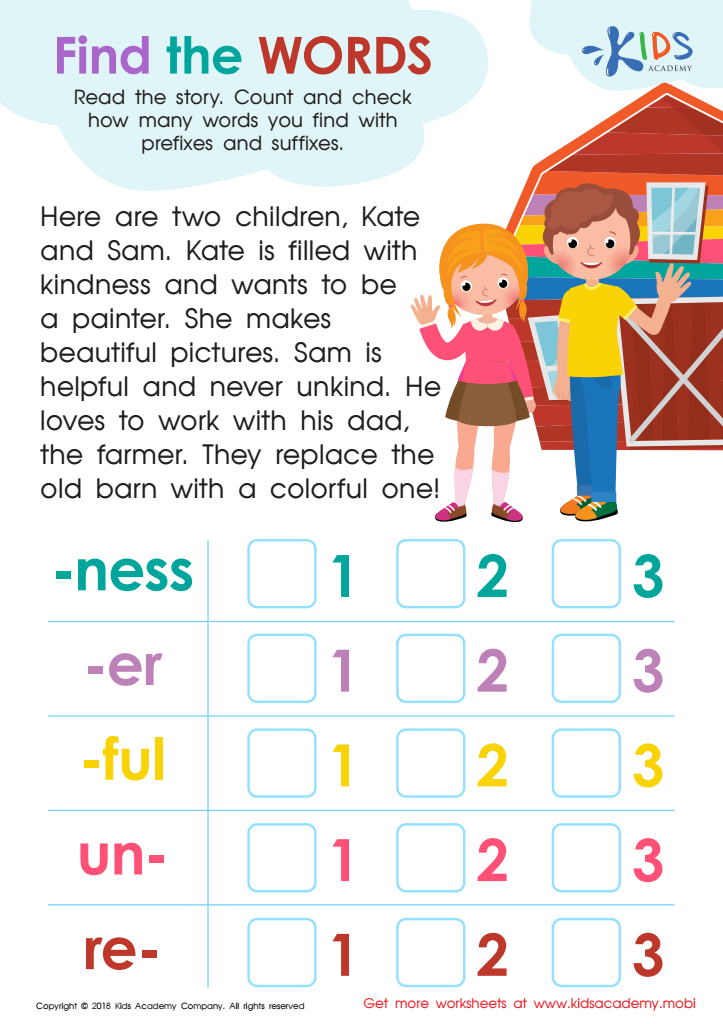
Prefix and suffix worksheet for grade 3

Prefix and Suffix Worksheet For Grade 3
Read the story about Sam and Kate and help your grade 3 child tally all the words with prefixes and suffixes. Check their work by counting the words and ticking the appropriate boxes. This entertaining worksheet will help develop their reading and counting skills! (80 words)
Prefix and Suffix Worksheet For Grade 3
Worksheet
The Suffix -Ly Worksheet

The Suffix -Ly Worksheet

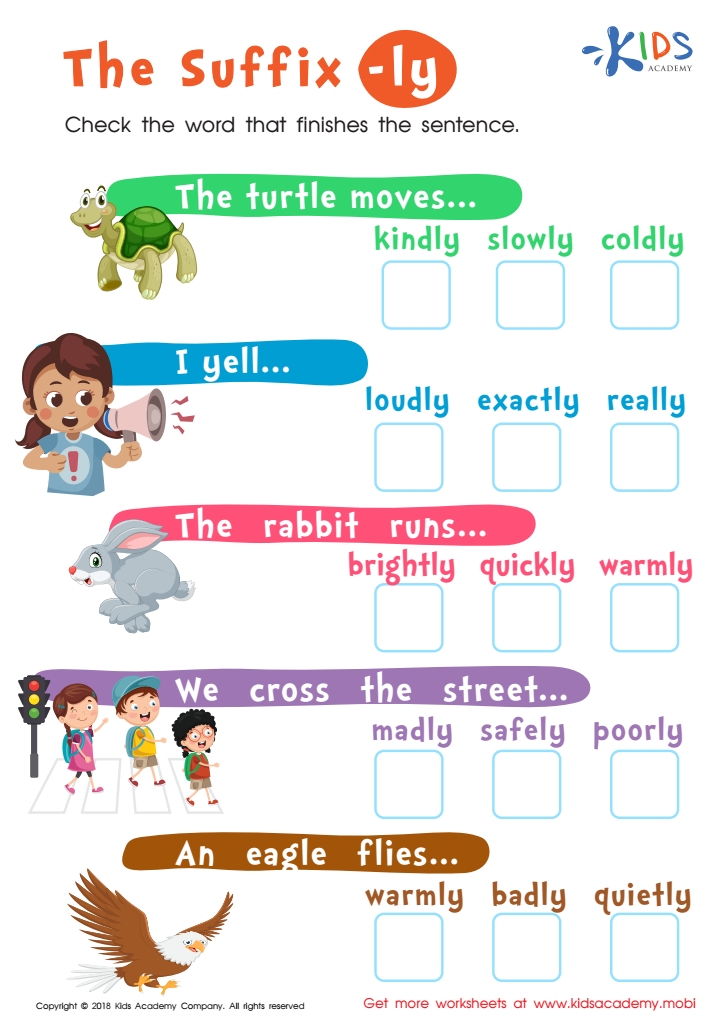
Suffixes change the meaning of words: the -ly suffix usually describes how an action is done (e.g. slowly, quickly, loudly). Help your child understand this and then check out the fun worksheet. Ask them to identify the animals and people in the pictures, then read the sentences out loud and have them check the ones that finish the sentence.
The Suffix -Ly Worksheet
Worksheet
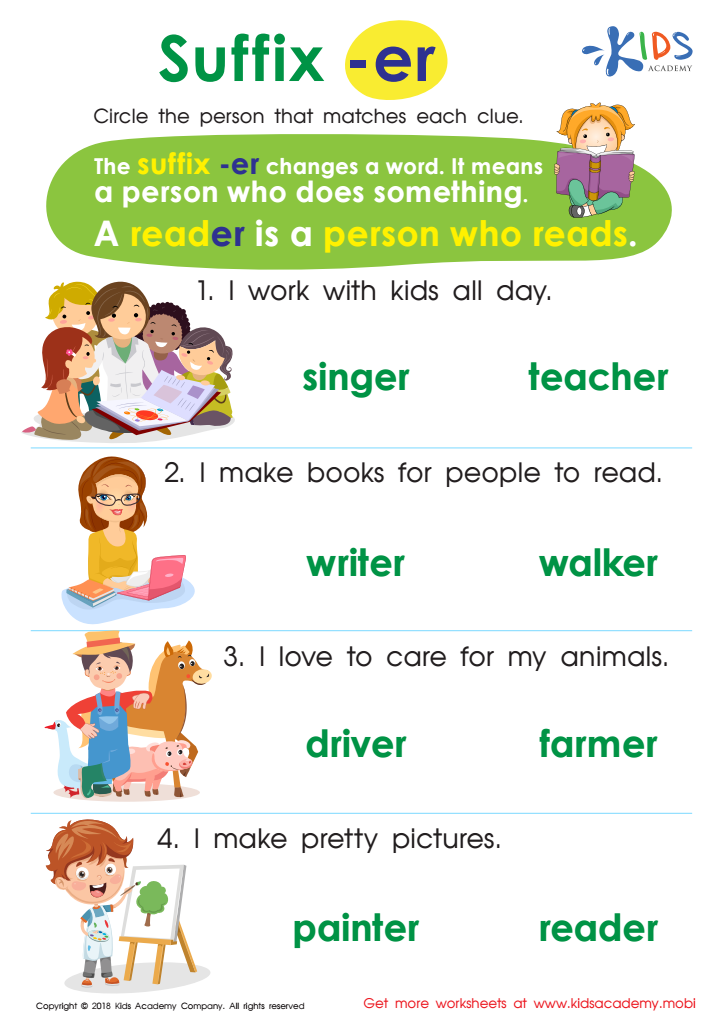
Suffix er printable worksheet

Suffix –er Printable Worksheet
Kids learn how powerful suffixes are with this printable worksheet. Read the sentence clues and select the word it describes. Discuss how the suffix alters the original word. Amazing how two letters can transform meanings!
Suffix –er Printable Worksheet
Worksheet
Suffixes ful and less worksheet

Suffixes Ful and Less Worksheet

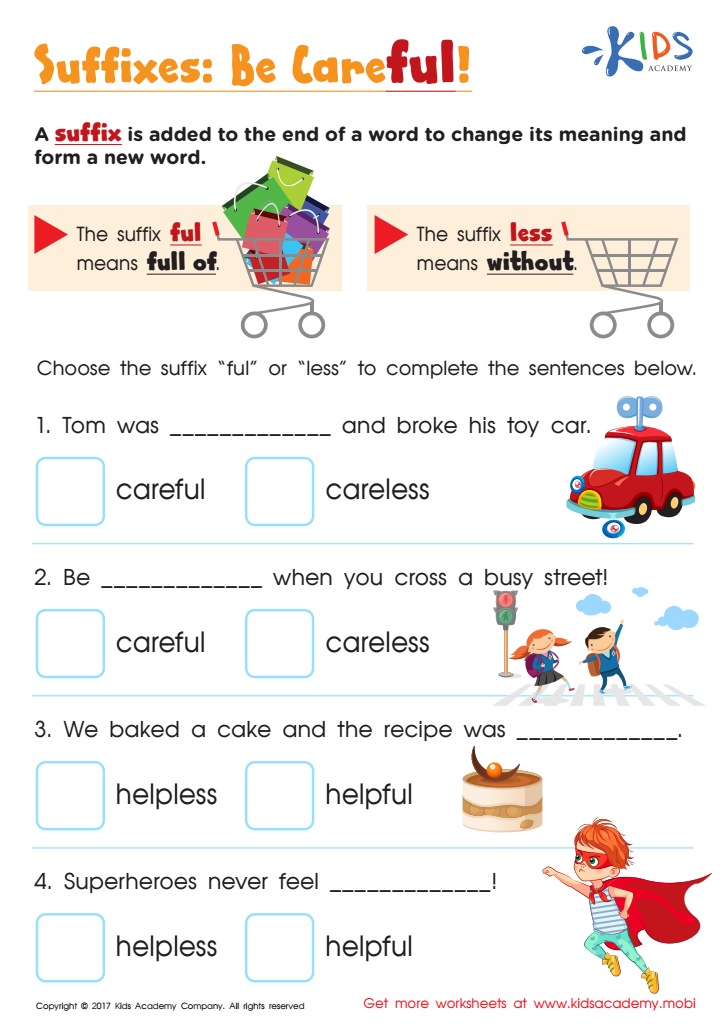
Uh oh! Careful and careless might look similar, but have very different meanings. To avoid mix-ups, learn to spot and use the right suffixes. Use this suffixes ful and less worksheet to help your child master common suffixes!
Suffixes Ful and Less Worksheet
Worksheet


Understanding suffixes is crucial for children aged 6-8 as it lays the foundation for their reading and language skills. Suffixes are letters or groups of letters added to the end of a word to change its meaning or grammatical function. By recognizing common suffixes, like "-ing," "-ed," "-ly," and "-s," children can expand their vocabulary and comprehend new words more easily. For example, knowing that "play" changes to "playing" indicates ongoing action, fostering better understanding in context.

Furthermore, learning suffixes aids in spelling. As children start writing sentences, they will encounter many words that require suffixes; understanding them improves their confidence and encourages expressive writing. By mastering suffixes, students can improve their reading fluency, as they can decode unfamiliar words by breaking them down into recognizable parts.

Parents and teachers should prioritize suffix instruction to build a sturdy language foundation. This knowledge not only enhances vocabulary and comprehension but also cultivates a love for reading and writing. Engaging activities, games, and discussions around suffixes can make learning fun, encouraging children to connect meaningfully with language as they develop essential literacy skills for their academic journey.