Visual interpretation Normal Worksheets for Ages 6-8
5 filtered results
-
From - To
Discover our engaging Visual Interpretation Worksheets designed specifically for children aged 6 to 8. These worksheets aim to enhance critical thinking and observational skills through fun and interactive activities. Each worksheet features a variety of visual tasks, including matching images, identifying patterns, and analyzing scenes. Suitable for homeschooling or classroom use, our resources promote creativity while reinforcing comprehension and cognitive abilities. With colorful illustrations and age-appropriate challenges, kids will enjoy developing their visual literacy in a playful manner. Browse our collection today to support your child’s learning journey and strengthen essential skills in a delightful way!
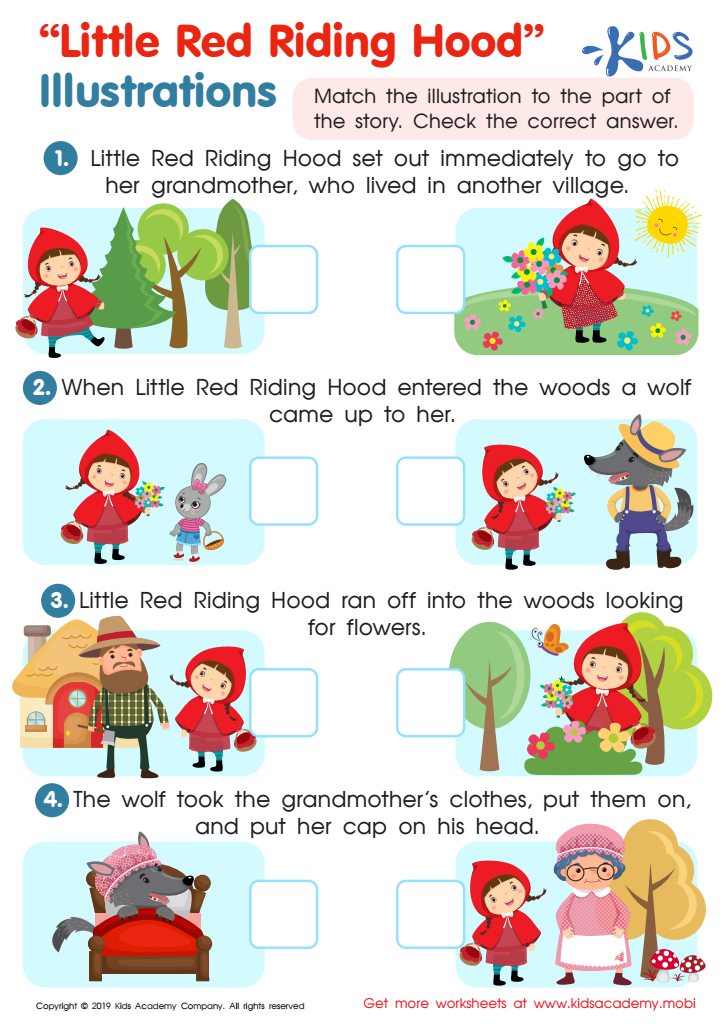
Little Red Riding Hood: Illustrations Worksheet
 Assign to My Students
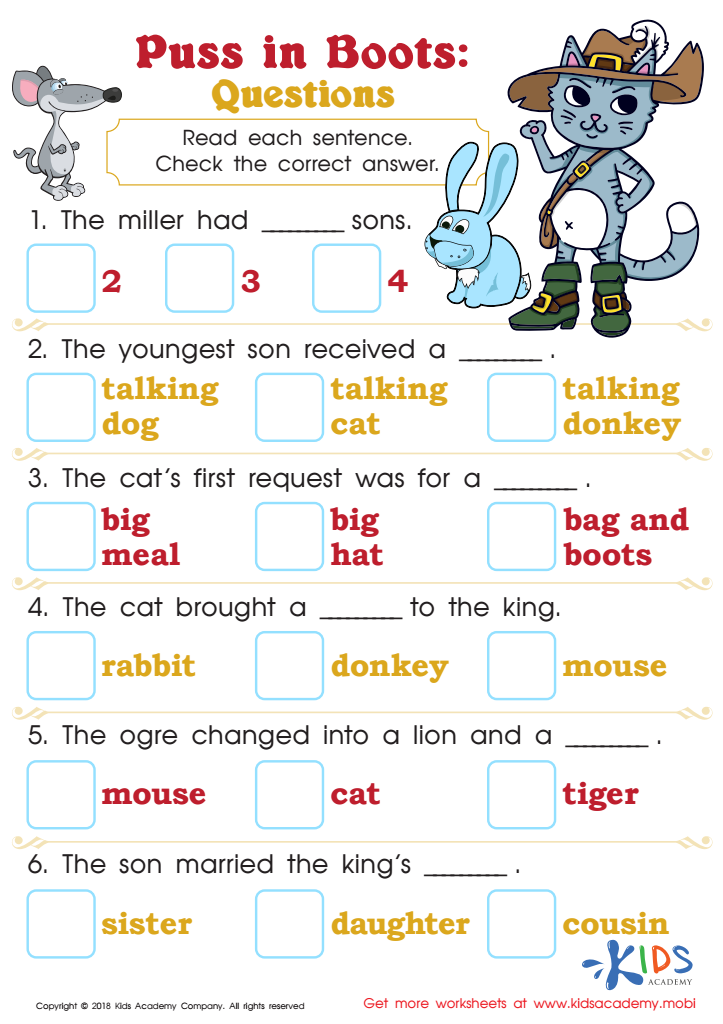
Puss in Boots: Questions Worksheet
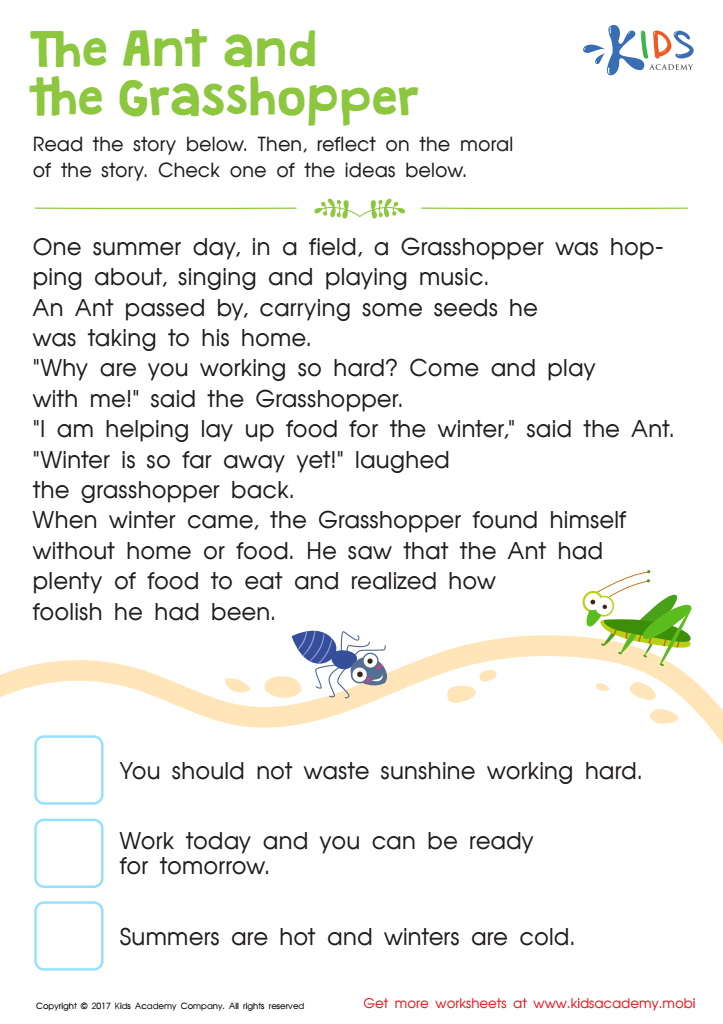
The Ant and The Grasshopper Printable
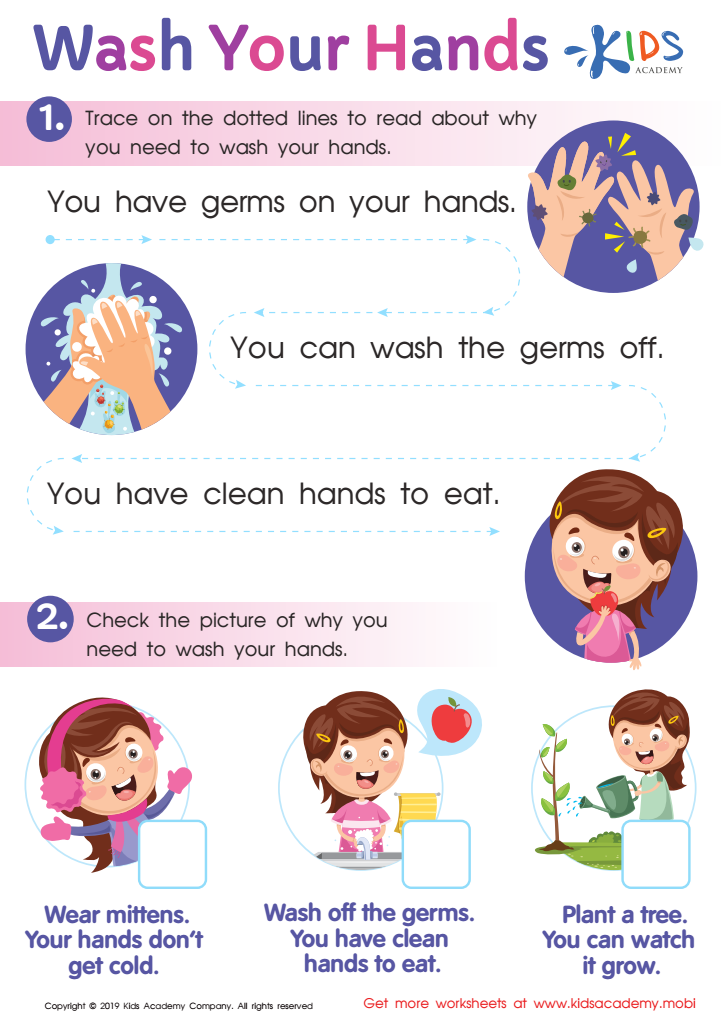
Wash Your Hands Worksheet
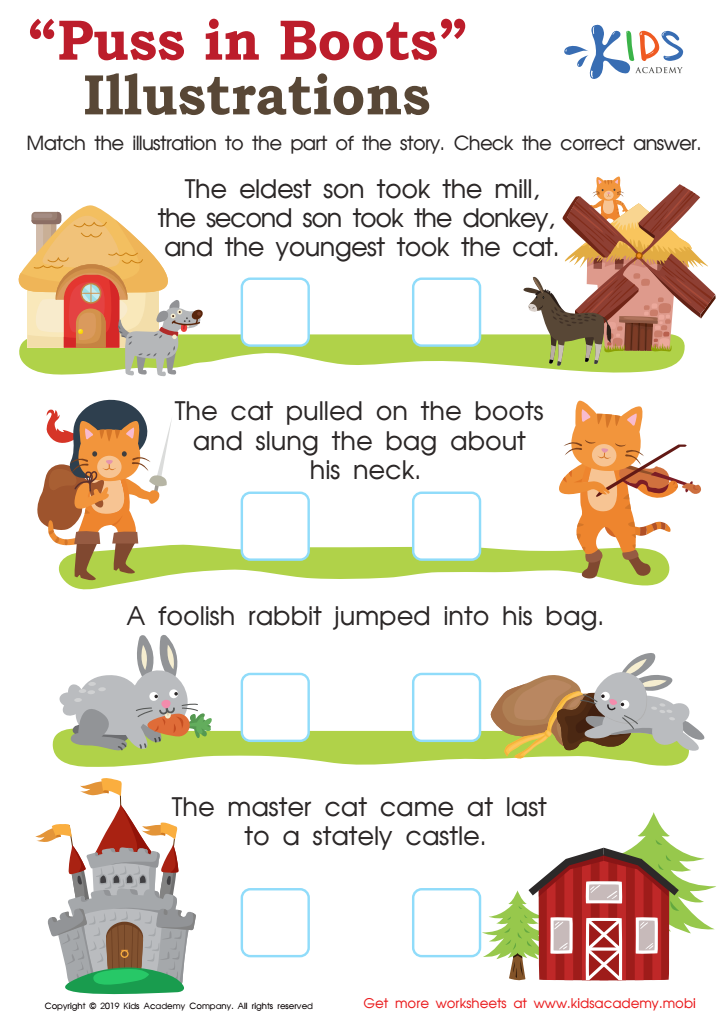
Puss in Boots Illustrations Worksheet






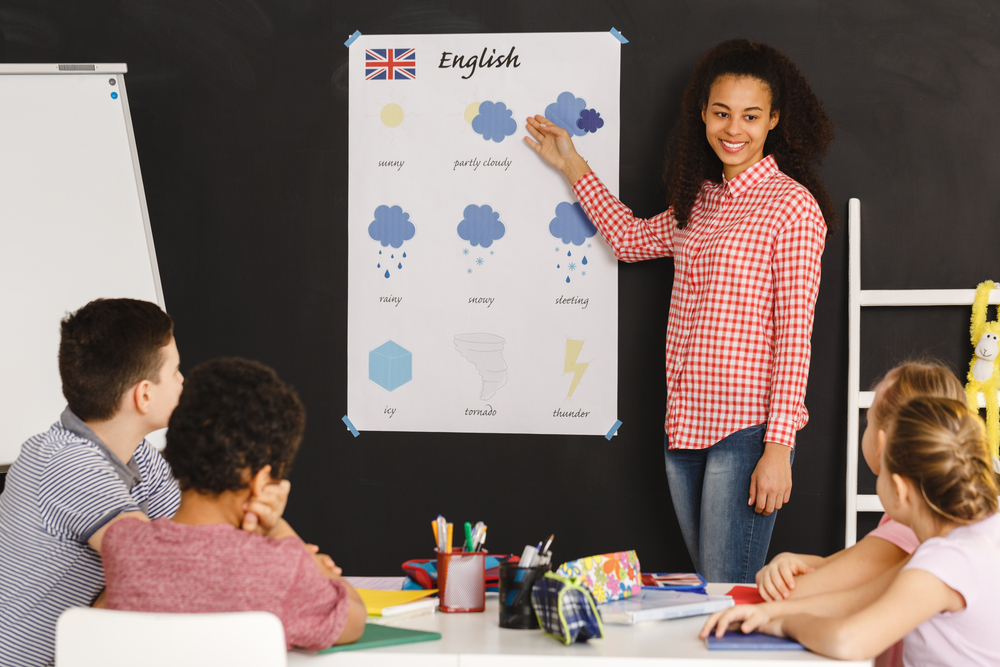

Visual interpretation skills are crucial for children aged 6-8, as they form the foundation for future learning and development across multiple domains. At this age, children are learning to make sense of the world around them, and visual interpretation—being able to understand, analyze, and draw meaning from various forms of visual data—plays a significant role in that process.
Parents and teachers should care about these skills because they directly influence reading comprehension, critical thinking, and problem-solving abilities. As children learn to interpret graphs, charts, illustrations, and diagrams, they enhance their ability to extract relevant information, identify patterns, and make connections. These cognitive skills are not only essential for academic success but are also invaluable in everyday life, helping children navigate social interactions, media, and their environment.
Moreover, strong visual interpretation skills foster creativity and self-expression. Encouraging children to observe, analyze, and draw conclusions from visual materials empowers them to develop their voice and opinion. By promoting visual literacy, parents and teachers can equip children with the tools they need for holistic development, enabling them to thrive in an increasingly visual and information-rich world. Ultimately, investing in visual interpretation is investing in a brighter future for children.








