Logical thinking development Normal Addition Worksheets for Ages 6-8
3 filtered results
-
From - To
Enhance your child's logical thinking skills with our Normal Addition Worksheets designed for ages 6-8. These engaging and thoughtfully crafted worksheets provide a fun way to practice basic addition while developing critical thinking abilities. By solving a variety of addition problems and puzzles, children will not only reinforce their math skills but also learn how to analyze situations, recognize patterns, and apply reasoning in different scenarios. Ideal for home or classroom use, our worksheets will keep young learners motivated and eager to improve their mathematical understanding. Discover the joy of learning and watch your child's confidence soar with our resources!
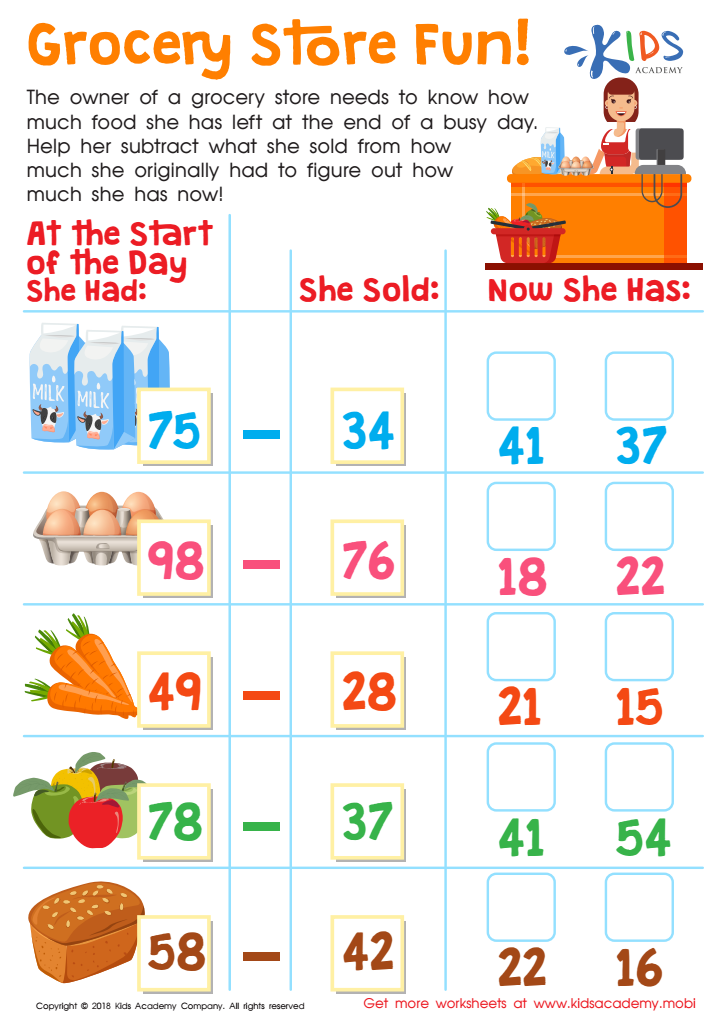
Grocery Store Fun! Worksheet
 Assign to My Students
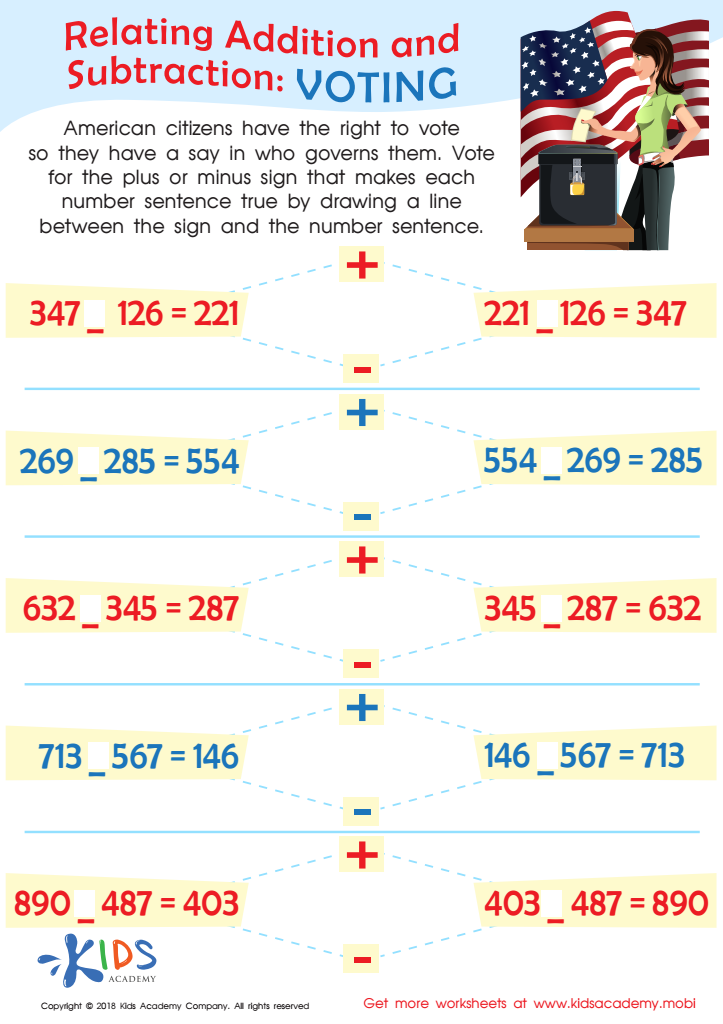
Voting Worksheet
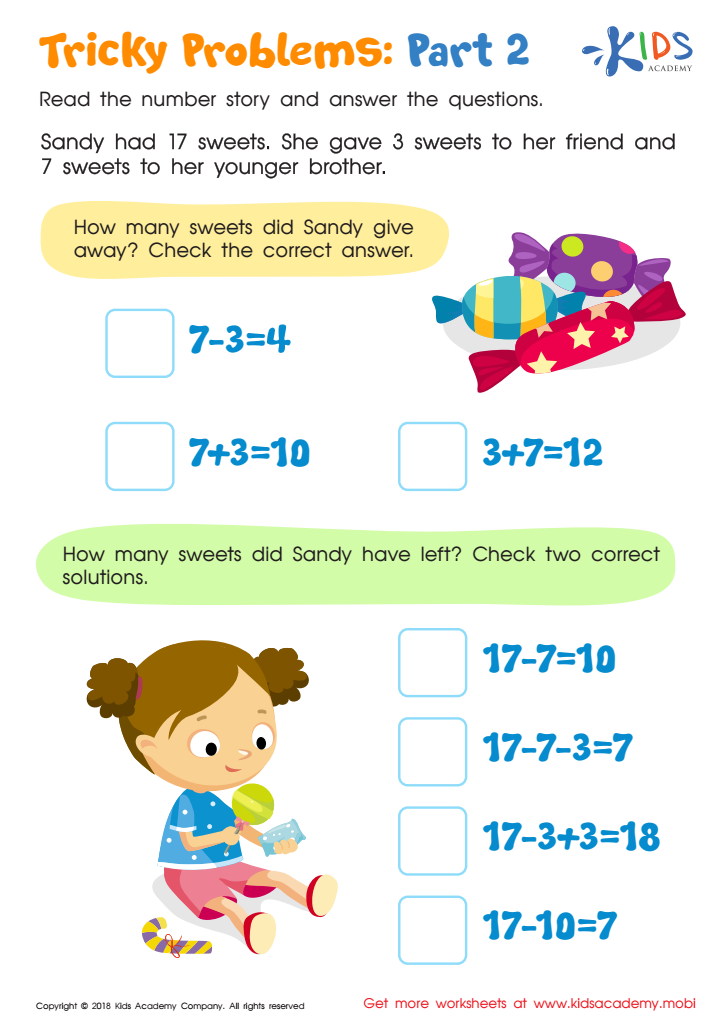
Tricky Problems Worksheet: Part 2








Parents and teachers should care about the development of logical thinking, particularly in the context of normal addition for children ages 6-8, because this foundational skill is crucial for overall cognitive development. During these formative years, children's brains are highly adaptable and receptive to learning, making it the ideal time to cultivate critical thinking and problem-solving abilities.
Logical thinking helps children understand relationships between numbers and reinforces their ability to operate with addition in a meaningful way. It encourages them to approach problems systematically, breaking down complex ideas into manageable parts—skills that are applicable across various subjects and real-life situations.
Engaging children in logical thinking exercises through normal addition not only supports their mathematical literacy but also boosts their confidence in tackling challenges. This leads to a more positive attitude toward learning as they discover patterns, relationships, and rules within numbers.
Furthermore, as students become more proficient in addition, they are better prepared for advanced mathematical concepts later on in life. Thus, fostering logical thinking alongside normal addition during this age range sets the foundation for academic success, promoting both intellectual growth and resilience in facing future educational challenges.