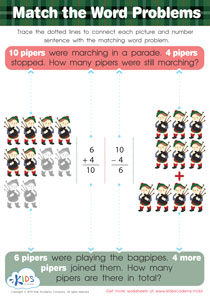
Mental math skills Normal Addition Worksheets for Ages 6-8
5 filtered results
-
From - To
Enhance your child's mental math abilities with our "Normal Addition Worksheets for Ages 6-8". Designed specifically for young learners, these worksheets foster quick thinking and boost arithmetic skills through engaging and age-appropriate exercises. Whether practicing single-digit sums or basic addition facts, children will find each activity both enjoyable and educational. Incorporating fun illustrations and varied problem formats, our worksheets ensure a rewarding learning experience. Equip your child with the tools to excel in math by strengthening their foundational addition skills. Visit Kids Academy to download and print these valuable resources for a solid math foundation and sharpened mental math skills.
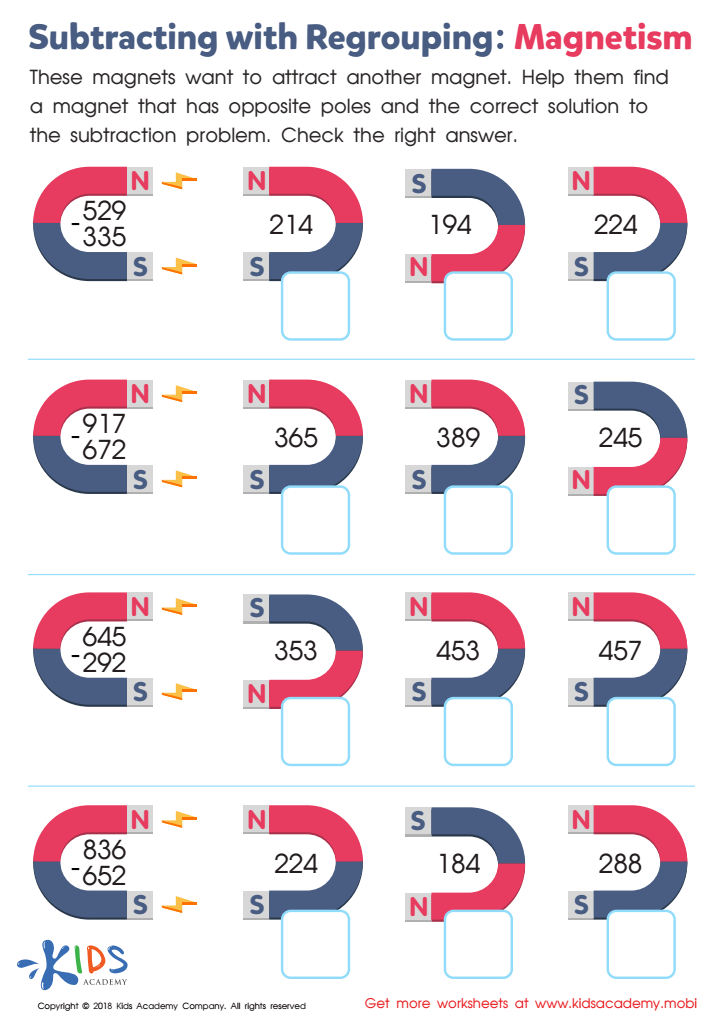
Subtracting with Regrouping: Magnetism Worksheet
 Assign to My Students
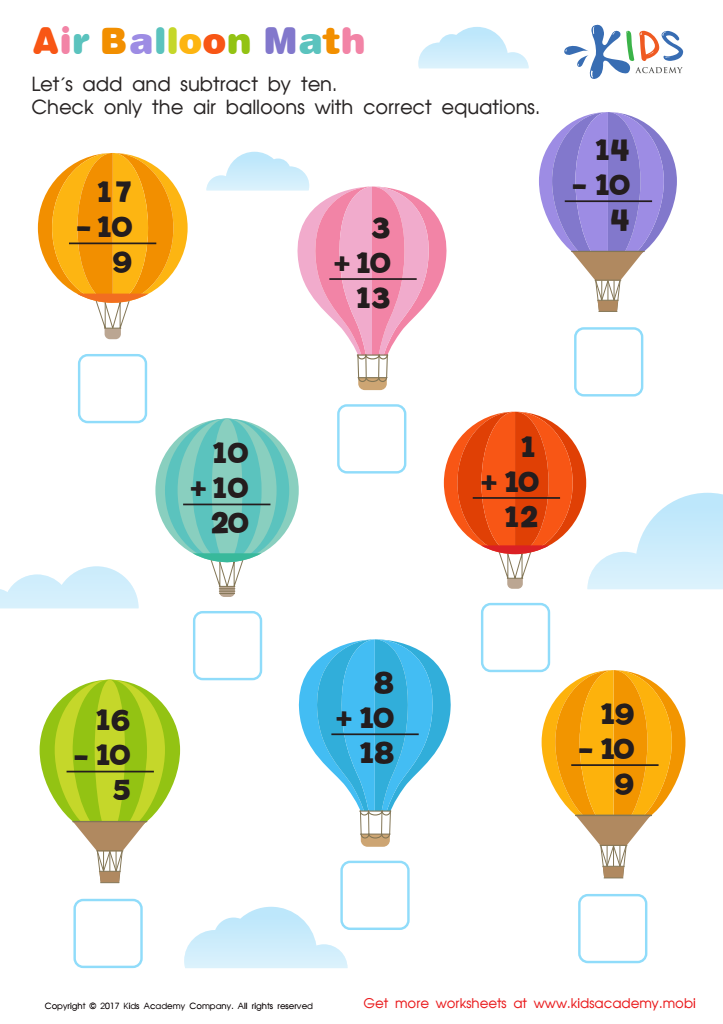
Air Balloon Math Worksheet
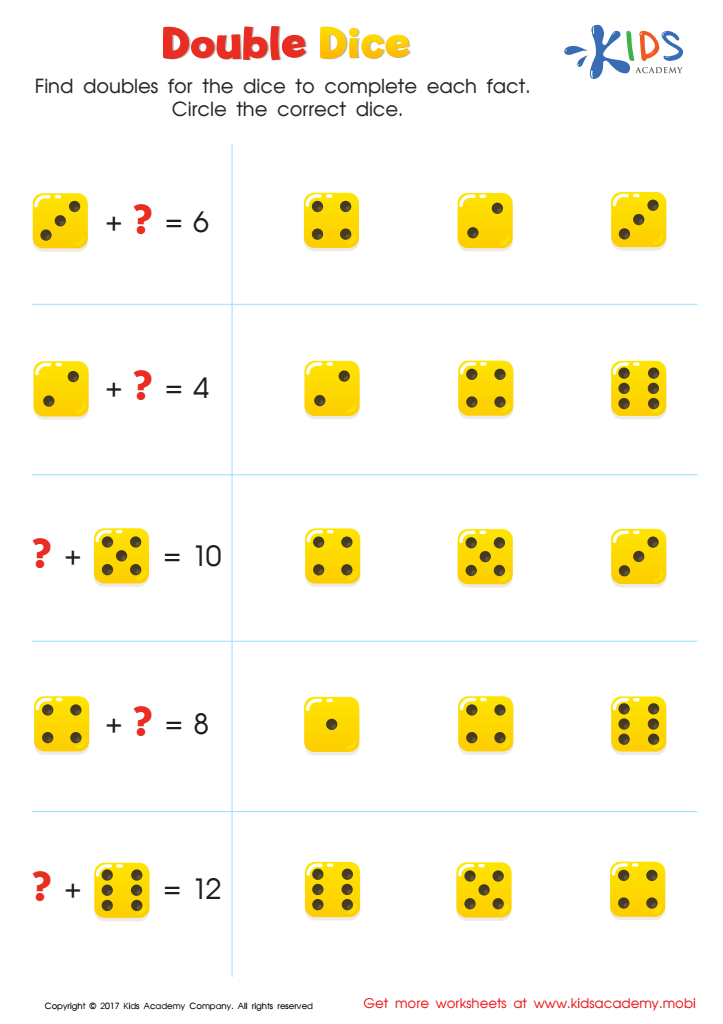
Addition Facts: Double Dice Worksheet
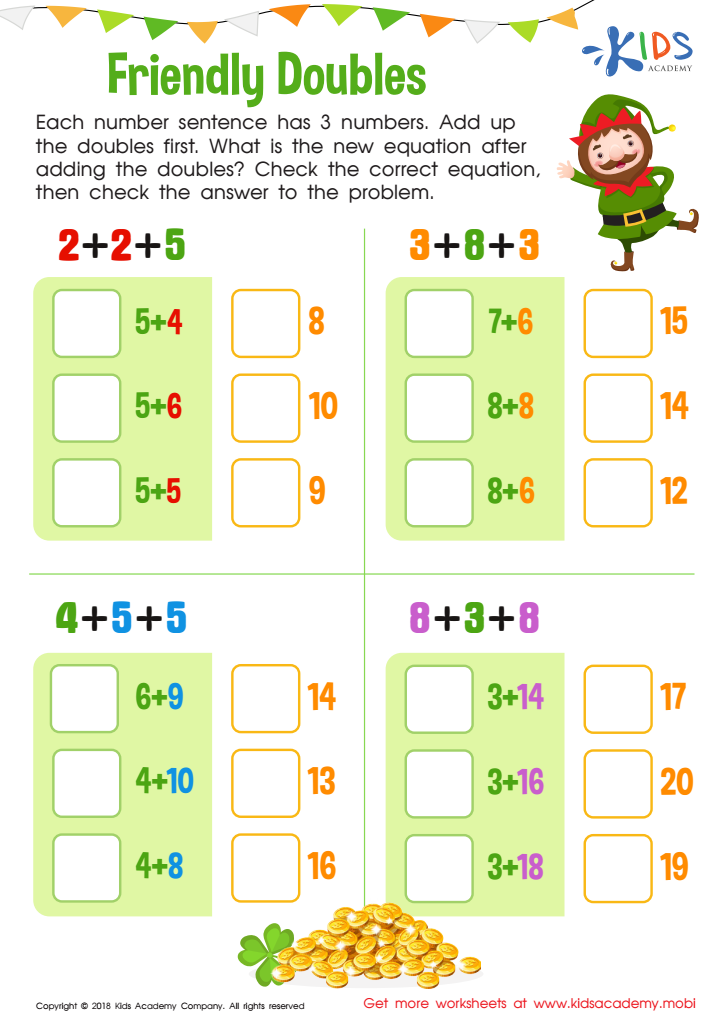
Friendly Doubles Worksheet
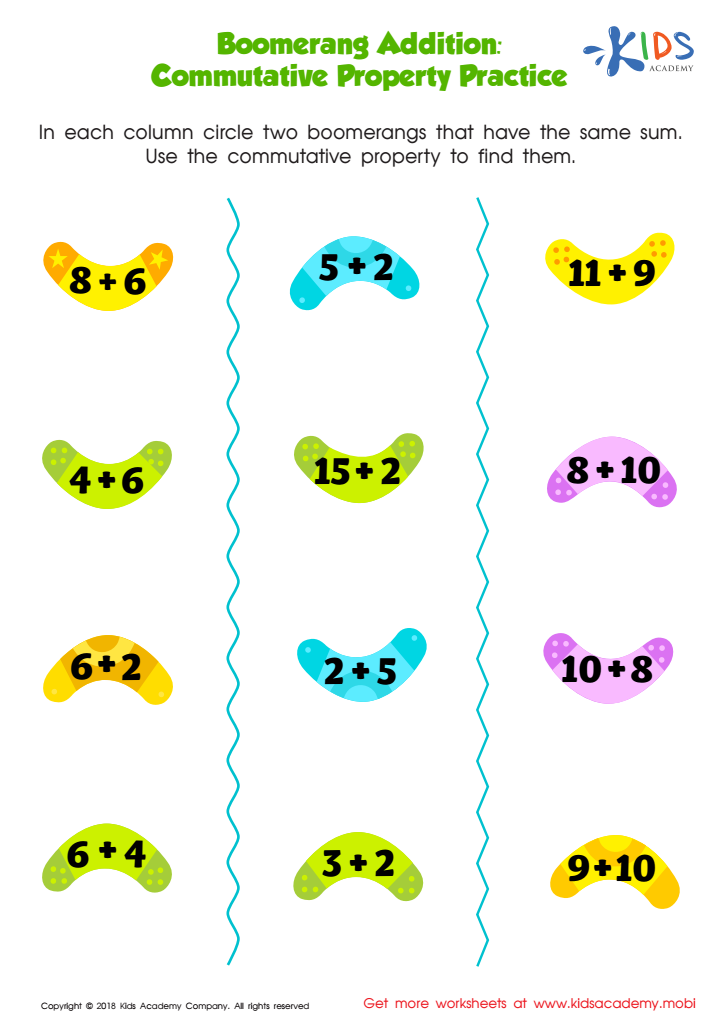
Boomerang Addition Worksheet








Developing mental math skills, specifically in normal addition, is crucial for children aged 6-8 because it lays a solid foundation for their future mathematical understanding. At this developmental stage, children are building their cognitive abilities, and engaging them in mental math helps strengthen their working memory, concentration, and problem-solving skills.
Practicing mental addition boosts number sense, enabling children to easily understand and manipulate numbers without relying solely on visual aids or counting fingers. This fluency fosters confidence in their arithmetic skills, which is essential for more advanced mathematical concepts they will encounter later. Moreover, students with strong mental math capabilities can perform better in everyday situations involving quick calculations, such as making sense of money and time.
Another significant benefit is that mental math encourages logical thinking and the ability to see relationships between numbers. This analytical skill is not only vital for mathematics but also for subjects across the curriculum that require pattern recognition, logical sequencing, and analytical reasoning.
For parents and teachers, supporting children in developing these skills from an early age ensures that they grow into more confident, capable, and independent learners. Investing time and resources in honing mental math proficiency can lead to long-term academic success and a lifelong positive attitude towards mathematics.