Counting skills Normal Geometry Worksheets for Ages 6-8
5 filtered results
-
From - To
Discover our engaging Counting Skills Normal Geometry Worksheets designed specifically for children ages 6-8! These fun, interactive worksheets help young learners master essential counting techniques while exploring basic geometric shapes and concepts. Each worksheet encourages creativity and critical thinking through vibrant illustrations and relatable scenarios, making learning enjoyable and effective. Ideal for use in classrooms or at home, our resources foster early math development and boost confidence in young mathematicians. Get ready to support your child’s educational journey with our carefully curated geometry worksheets, ensuring they build a solid foundation in both counting and geometry skills. Explore today!
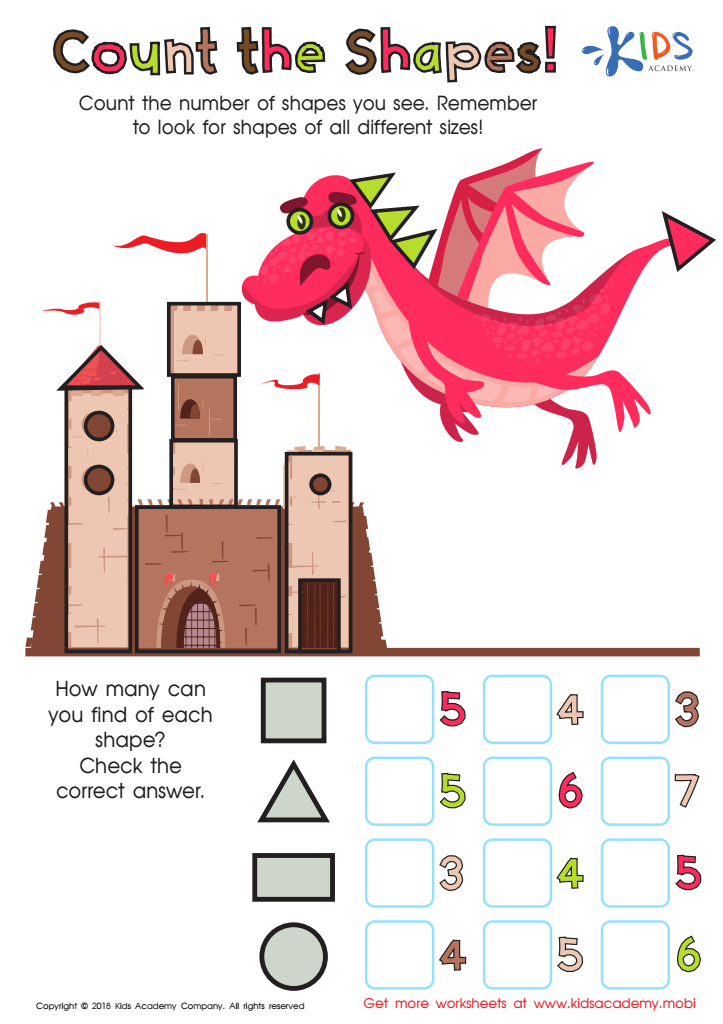
Count the Shapes Worksheet
 Assign to My Students











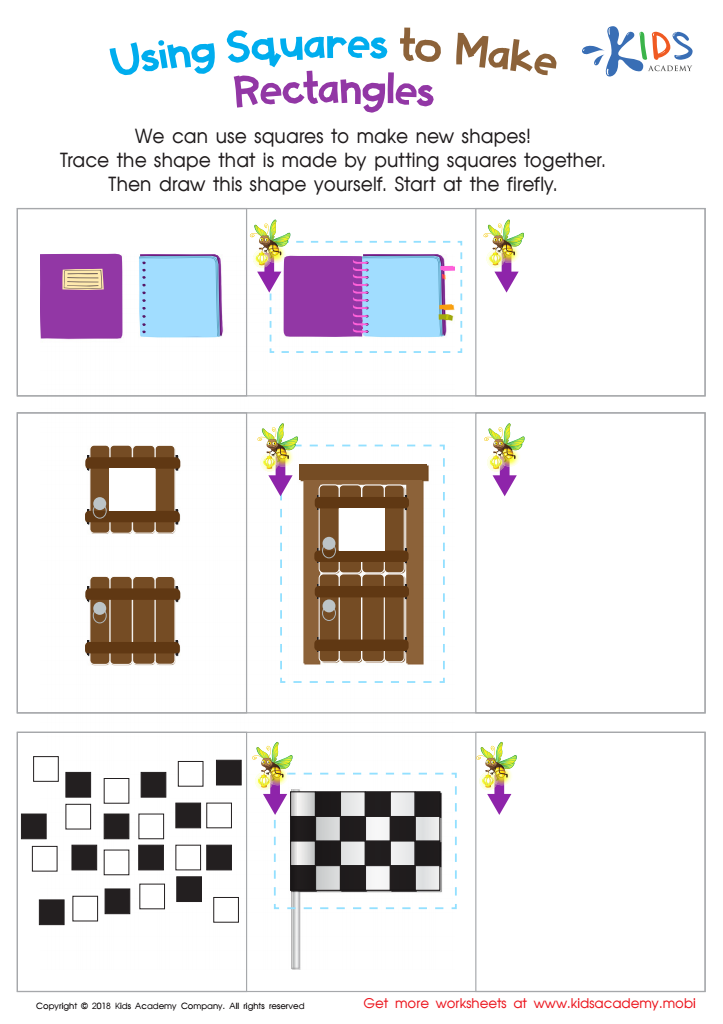
Using Squares to Make Rectangles Worksheet
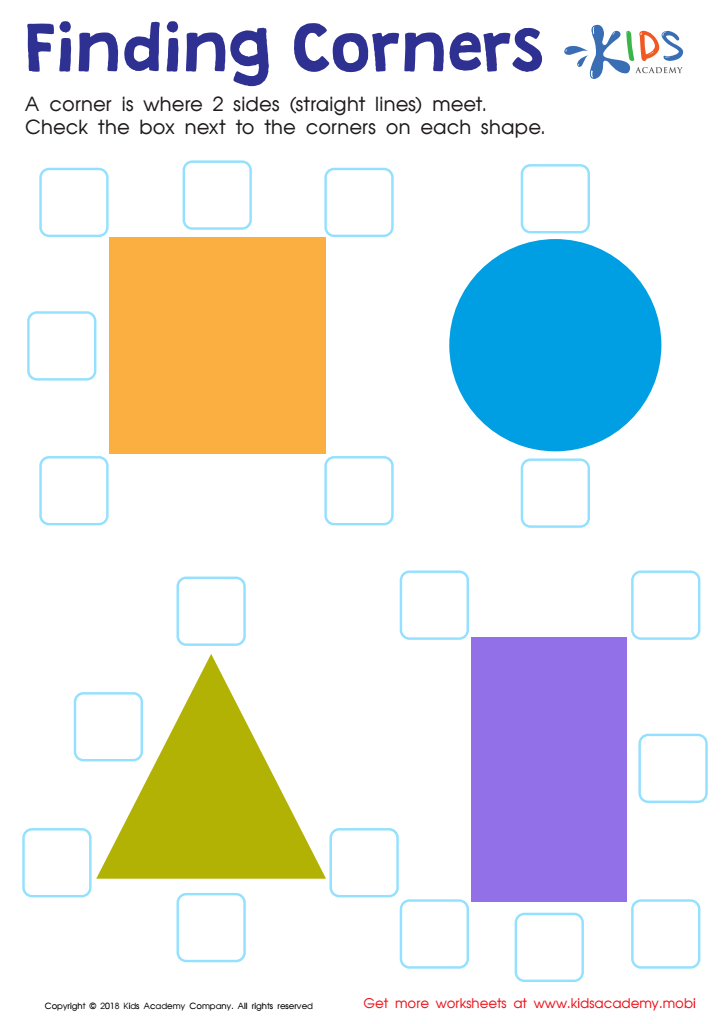
Finding Corners Worksheet
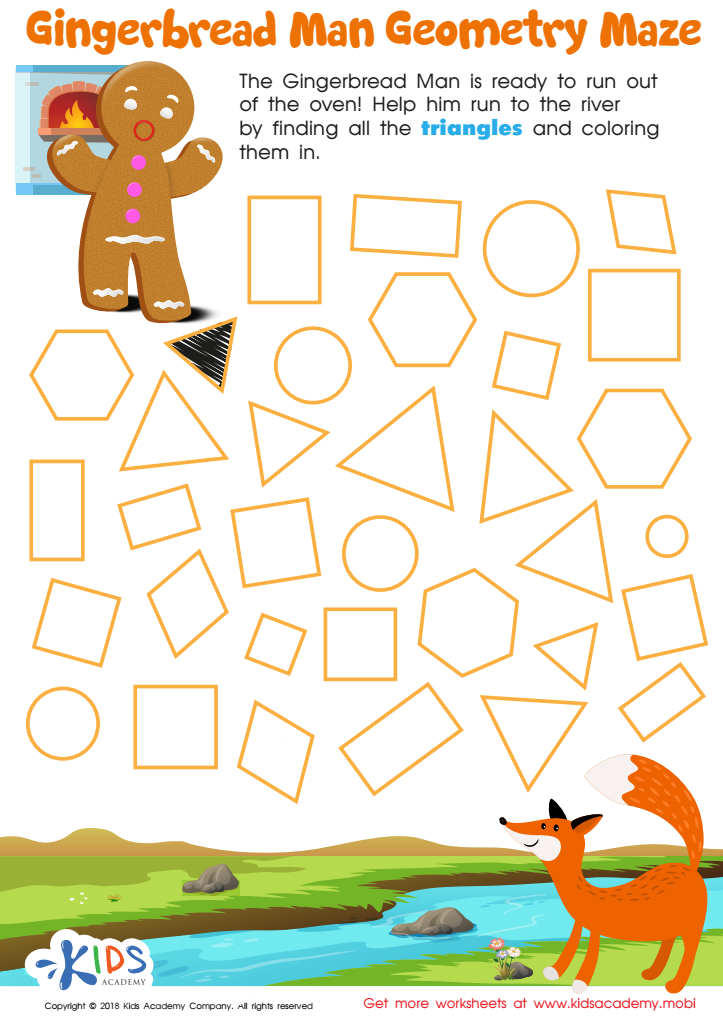
Gingerbread Man Geometry Maze Worksheet








Counting skills and basic geometry are critical for children aged 6-8, as they are foundational elements of early mathematics education. Mastering counting helps children develop number sense, which is essential for more advanced mathematical concepts later on. It enhances their ability to recognize quantities, compare numbers, and solve everyday problems, all while fostering confidence in their mathematical abilities.
Geometry, meanwhile, introduces children to fundamental shapes and spatial awareness. Understanding shapes and their properties aids in enhancing critical thinking and problem-solving skills. It also lays the groundwork for future studies in mathematics, engineering, and the sciences. Activities like identifying shapes in everyday objects or understanding basic symmetry nurture creativity and observation skills, lessons that extend beyond math.
Parents and teachers play an essential role in promoting these skills. Engaging children through games, interactive activities, and practical examples encourages a love for learning and reduces math anxiety. By fostering a strong understanding of counting and geometry, adults help children develop vital skills that not only benefit them academically but also support their ability to navigate the world around them. Ultimately, both counting and geometry are building blocks for lifelong mathematical understanding and proficiency.








