Basic addition practice Normal Numbers Worksheets for Ages 6-8
3 filtered results
-
From - To
Enhance your child’s math skills with our Basic Addition Practice worksheets tailored for ages 6-8. Perfect for young learners, these engaging worksheets help children confidently master addition using normal numbers. Designed to support early elementary education, each sheet includes fun and diverse exercises that make math enjoyable and effective. Focused on building foundational arithmetic skills, these worksheets promote number recognition, counting, and problem-solving abilities. Printable and accessible, they are an excellent resource for both classroom and at-home learning. Visit our website to download and support your child's journey to becoming an addition expert!
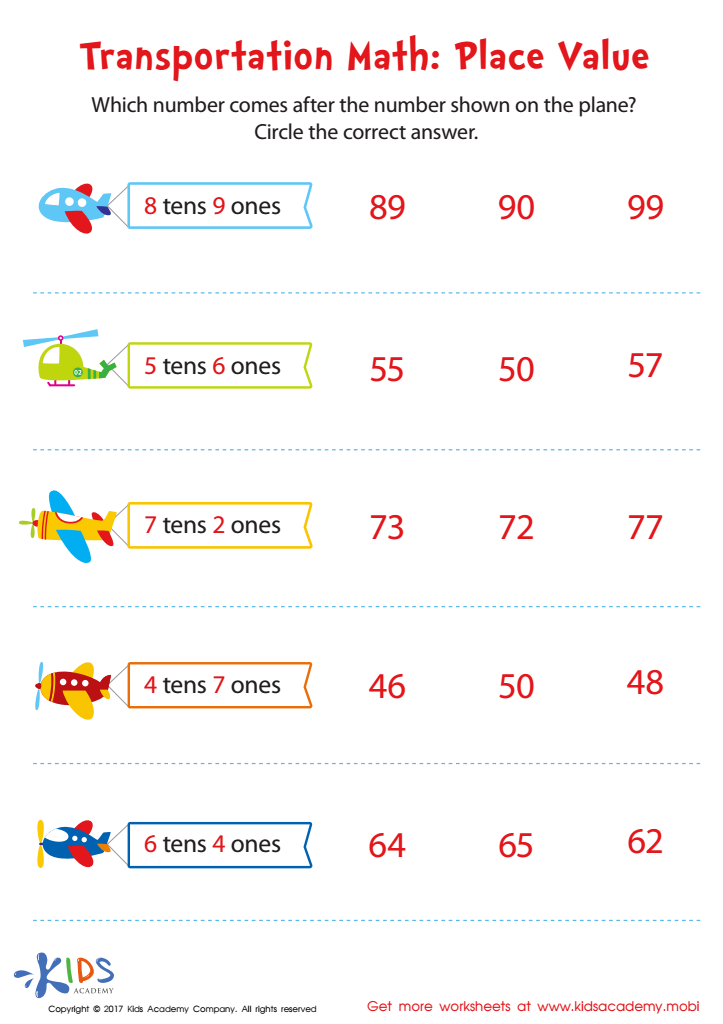
Transportation Math Printable
 Assign to My Students
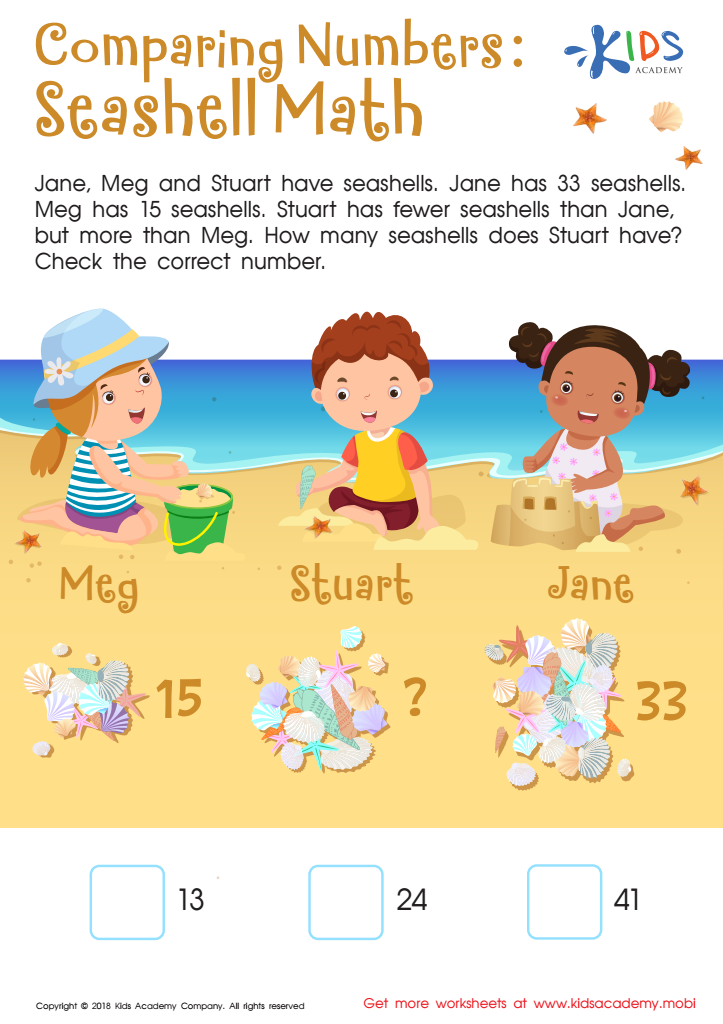
Seashell Collectors Worksheet
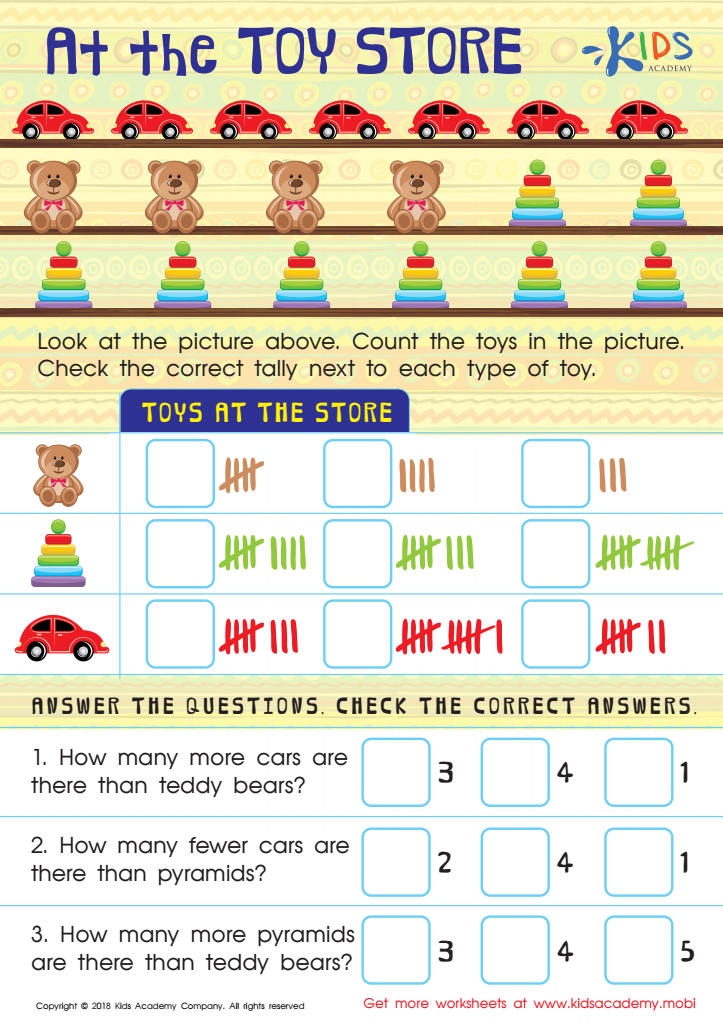
Tally Chart: At the Toy Store Worksheet







Parents and teachers should prioritize basic addition practice for children aged 6-8 because it is a fundamental building block for overall mathematical understanding. At this developmental stage, young learners are typically in grades 1 through 3, where they begin to grasp number concepts and arithmetic operations. Mastering basic addition helps them gain confidence in their math skills, fostering a positive attitude towards the subject.
Understanding addition is crucial because it sets the groundwork for more complex mathematical operations, such as subtraction, multiplication, and division. When children develop strong addition skills, they can apply these foundational principles to tackle word problems, measure quantities, manage money, and understand patterns—all of which are essential life skills.
Consistent practice enhances the child's ability to calculate quickly and accurately, which is beneficial in both academic and everyday contexts. Furthermore, reinforcing basic addition can improve other cognitive abilities like memory, problem-solving, and logical thinking.
Practicing addition with normal numbers—not excessively large or overly simplified ones—ensures that children face realistic scenarios they might encounter in the real world, making their learning practical and meaningful. Support from parents and teachers in this regard is essential to create an engaging and supportive learning environment, enabling children to achieve long-term academic success.








