Enhancing critical thinking Normal Numbers Worksheets for Ages 6-8
5 filtered results
-
From - To
Discover our "Enhancing Critical Thinking Normal Numbers Worksheets" designed for children ages 6 to 8! These interactive worksheets foster essential thinking skills while engaging young learners in fun and challenging activities. By exploring patterns, comparisons, and number relationships, students will enhance their problem-solving abilities and gain confidence in mathematics. Each worksheet encourages critical engagement, allowing children to think deeply about numbers while building a solid mathematical foundation. Perfect for parents and educators, these resources aim to promote independent thinking and active learning in early childhood education. Start your child's journey to critical thinking skills today with our engaging normal numbers worksheets!
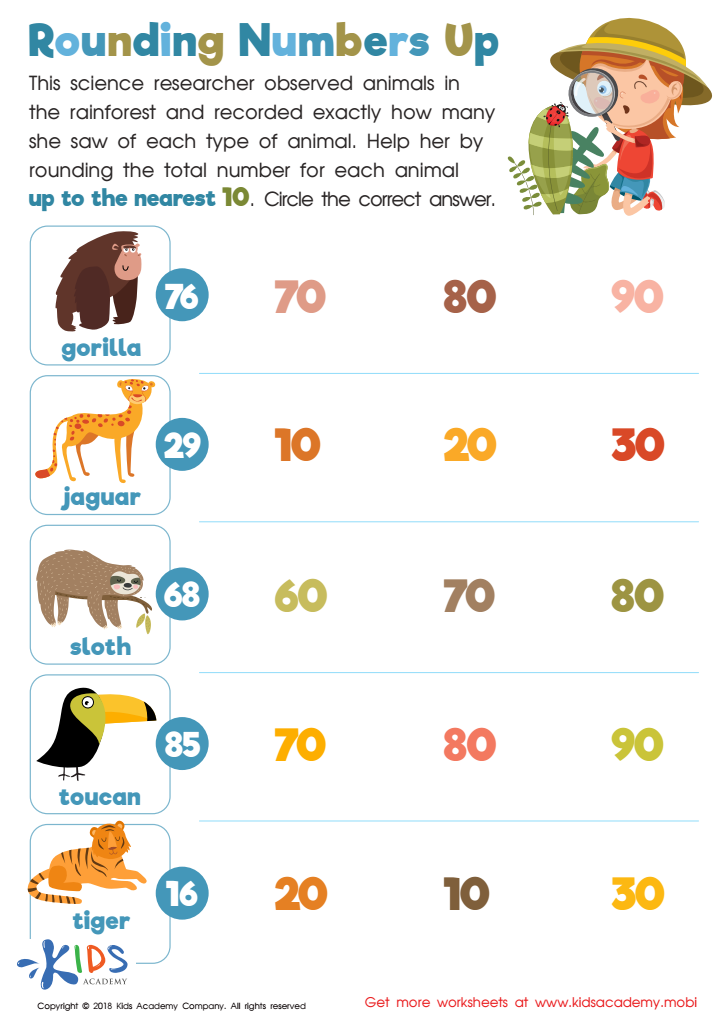
Rounding Numbers Up Worksheet
 Assign to My Students
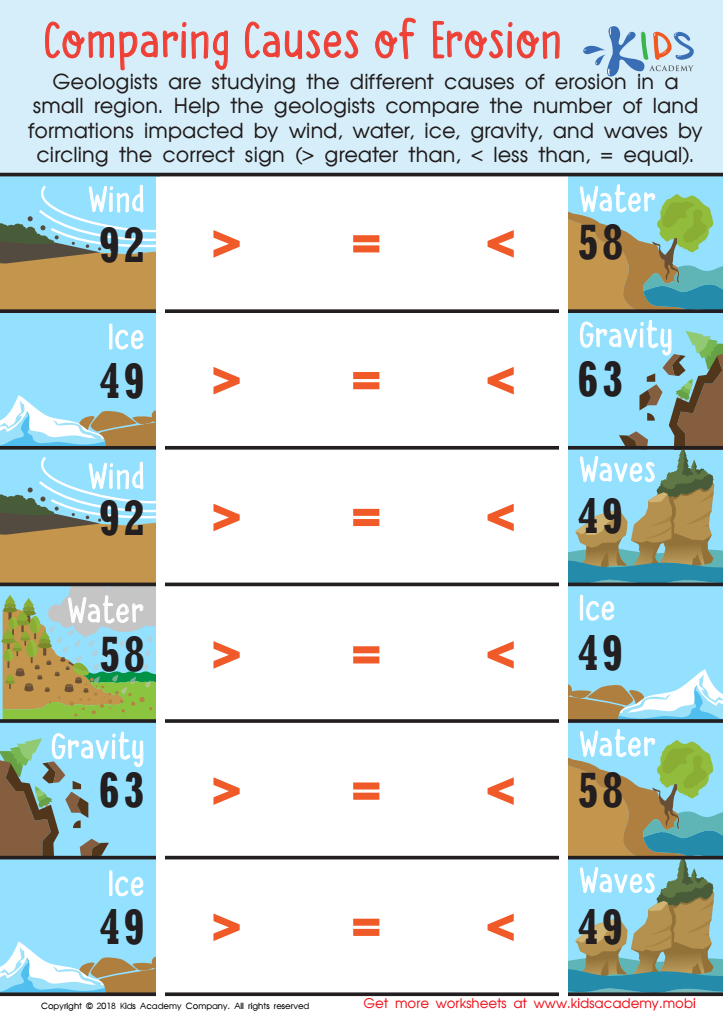
Comparing Causes of Erosion Worksheet
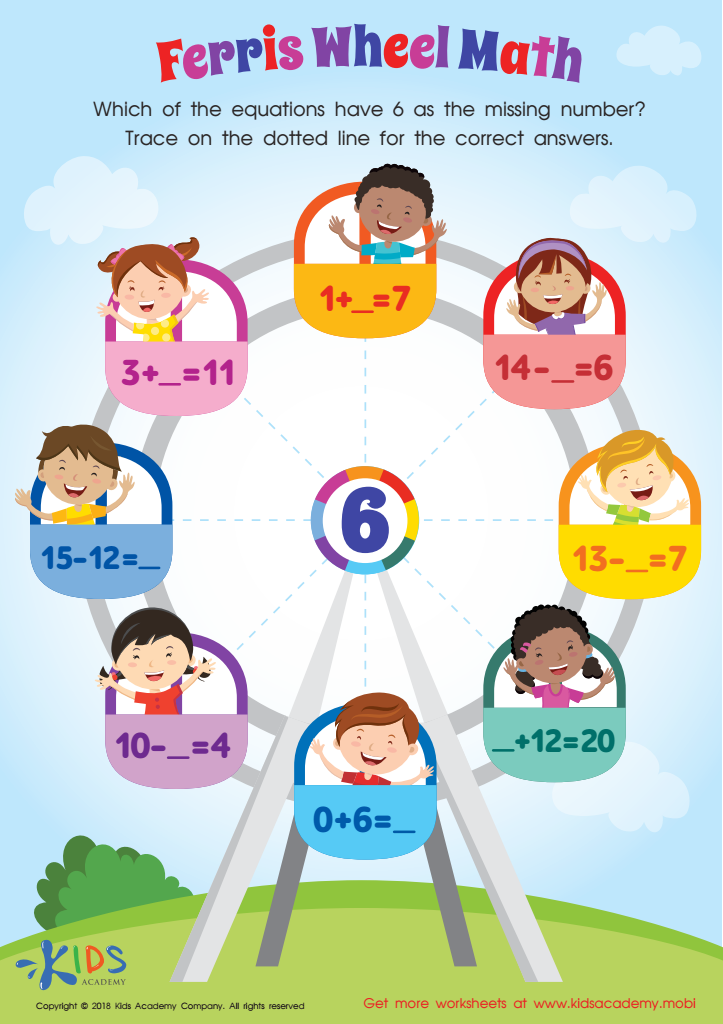
Missing Number: Ferris Wheel Math Worksheet
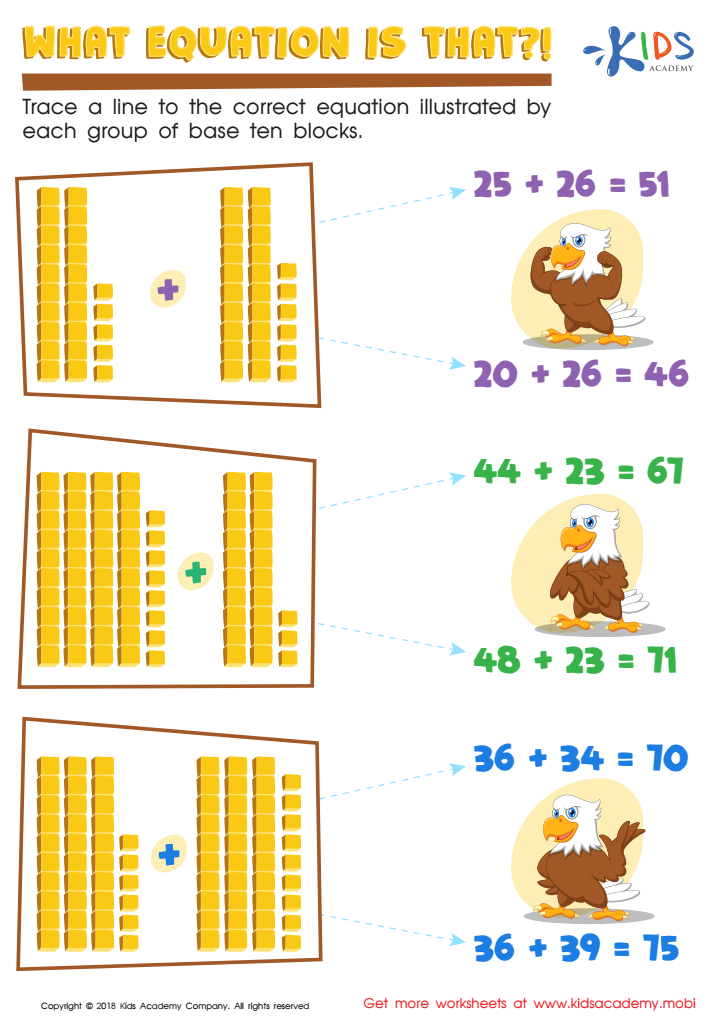
What Equation Is That? Worksheet
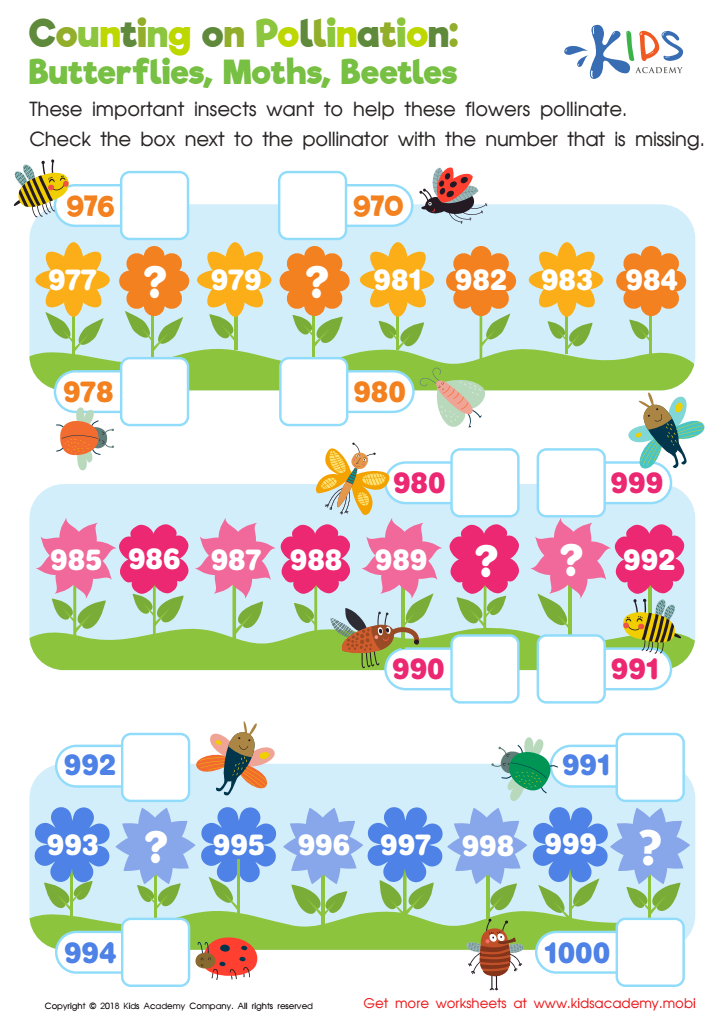
Counting on Pollination: Butterflies, Moths, Beetles Worksheet








Enhancing critical thinking about numbers in children aged 6-8 is vital for their cognitive development and everyday problem-solving skills. At this developmental stage, children are beginning to grasp mathematical concepts and establish foundational skills. When parents and teachers focus on critical thinking related to normal numbers, they encourage children to explore not just how to calculate, but why they arrive at certain answers. This fosters deeper understanding rather than rote memorization.
Critical thinking nurtures analytical skills that are applicable in real-life situations. For instance, when children learn to compare, categorize, and analyze numbers, they become better equipped to tackle everyday challenges, such as budgeting or measuring ingredients in cooking. Engaging activities that require reasoning around numbers help develop their confidence and independence—a crucial aspect of lifelong learning.
Furthermore, cultivating critical thinking nurtures a growth mindset, teaching children that making mistakes is part of learning. This empowers them to be resilient, ask questions, and pursue knowledge actively. By emphasizing critical thinking in mathematical contexts, parents and teachers not only enhance academic performance but also equip children with essential life skills that contribute to their overall success and adaptability.








