Animal Classification Normal Math Worksheets for Ages 6-8
3 filtered results
-
From - To
Discover our engaging Animal Classification Normal Math Worksheets, specially designed for children aged 6-8! These worksheets beautifully blend math skills with the fascinating world of animals, making learning both enjoyable and educational. Students will practice essential math concepts while categorizing different animal groups, enhancing their critical thinking and analytical skills. Perfect for classroom or at-home learning, these resources will captivate young minds and deepen their understanding of both mathematics and biology. Promote your child's love for learning with our thoughtfully crafted worksheets that turn everyday math practice into a fun adventure in the animal kingdom!
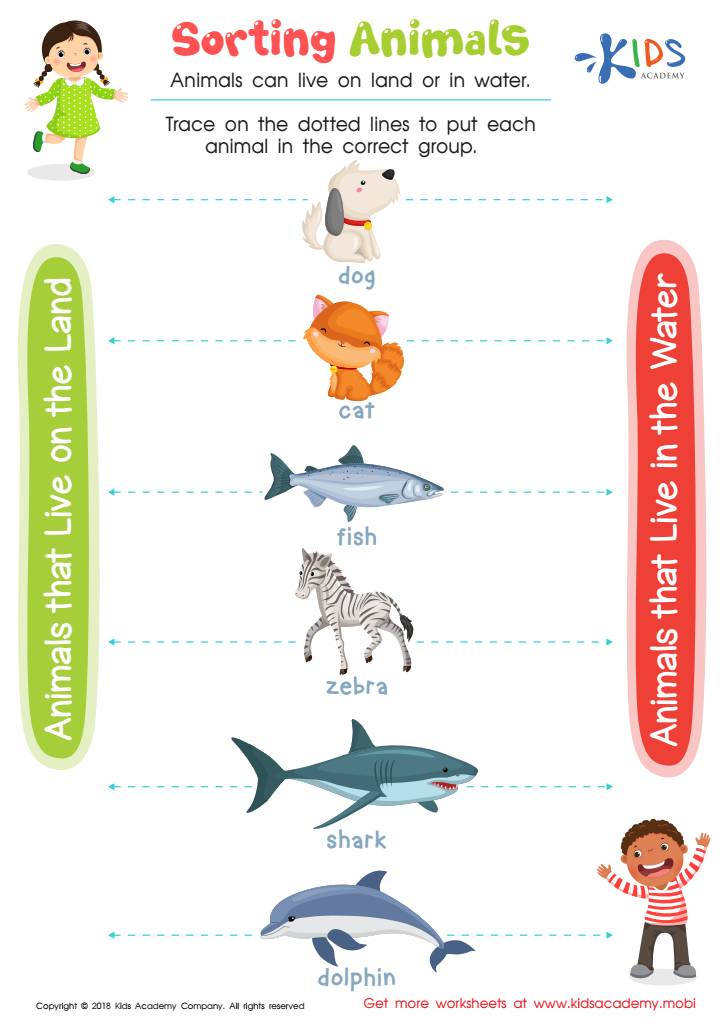
Sorting Animals Worksheet
 Assign to My Students
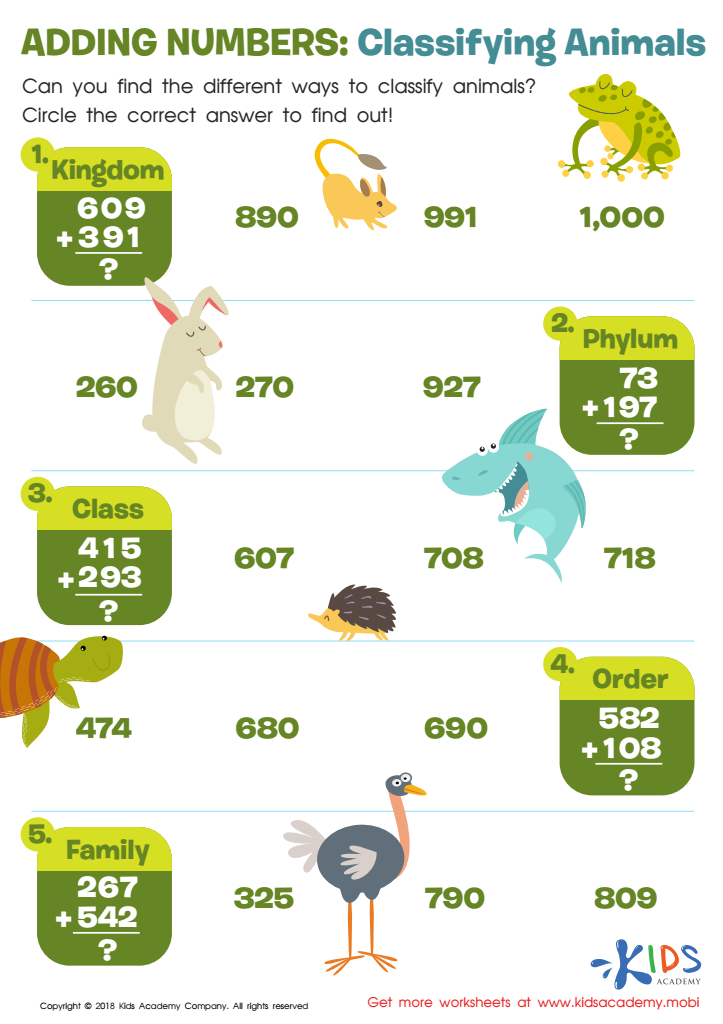
Adding Numbers: Classifying Animals Worksheet
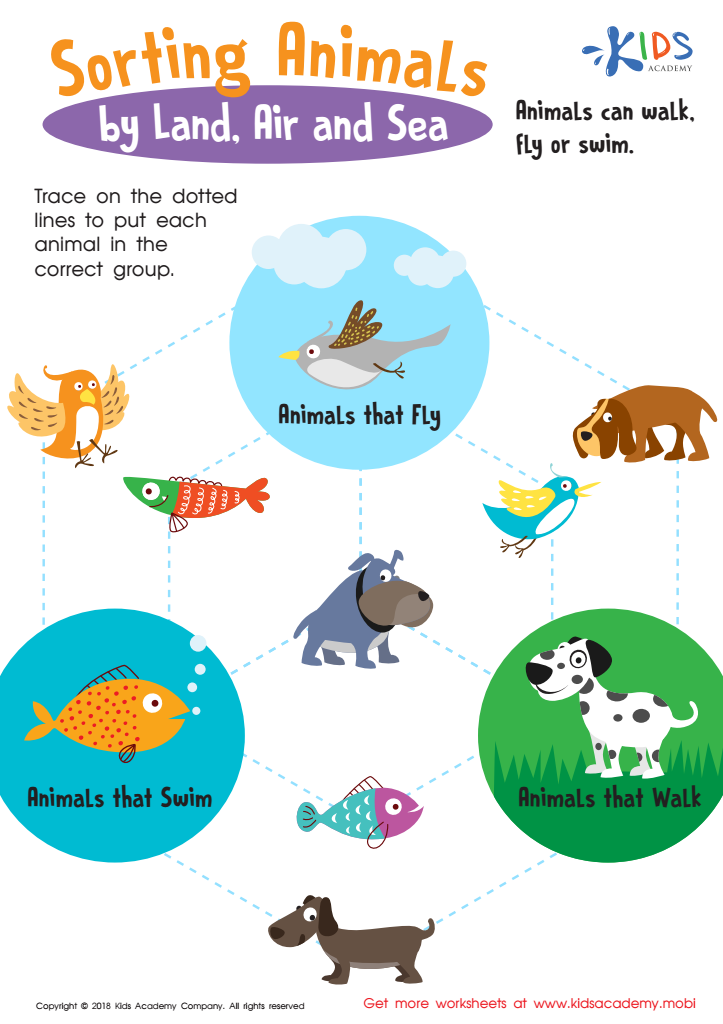
Sorting Animals by Land, Air and Sea Worksheet







.jpg)
Animal classification teaches children essential skills that extend beyond identifying species. For parents and teachers, understanding the normal math connected with animal classification nurtures critical thinking, curiosity, and foundational math abilities among children ages 6-8.
Firstly, it introduces young learners to basic taxonomy—grouping animals based on observable traits. This process promotes analytical reasoning, making children aware of the importance of categorization in everyday life. Learning about different animal groups, such as mammals, reptiles, and birds, helps develop an understanding of ecosystems and biodiversity, fostering a sense of environmental responsibility.
Moreover, integrating math into animal classification—such as counting, measuring, and comparing—is vital. As children classify animals, they practice measuring lengths or sorting data by characteristics, enhancing their numerical skills in a fun, interactive manner. For example, they might use addition to count groups of animals or engage in simple graphing as they organize information, allowing them to visualize data effectively.
In short, teaching young children about animal classification through engaging math activities promotes a holistic learning experience. It equips them with vital cognitive skills while deepening their appreciation for the natural world, ultimately setting the groundwork for future STEM learning and responsible citizenship.








