Counting practice Normal Math Worksheets for Ages 6-8 - Page 2
27 filtered results
-
From - To
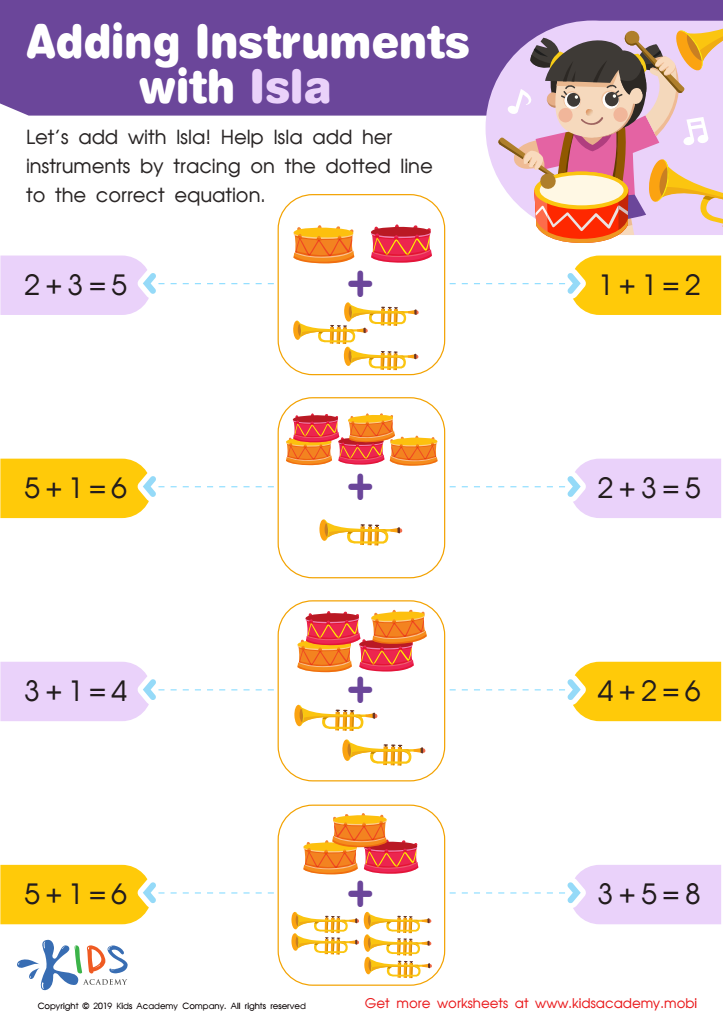
Adding Instruments with Isla Worksheet
 Assign to My Students
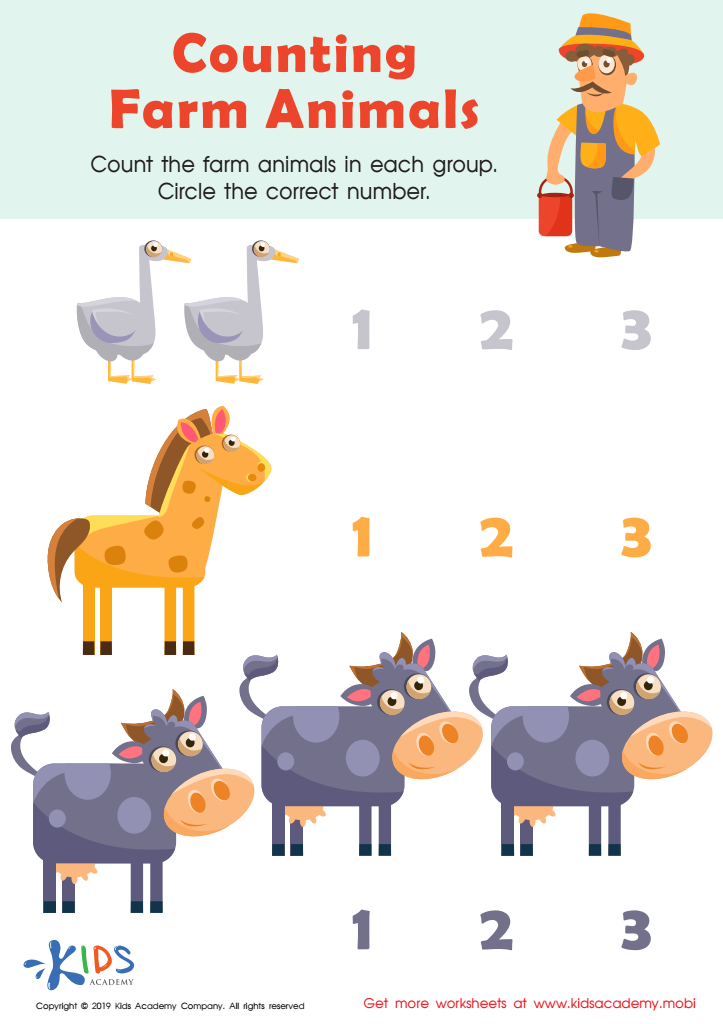
Counting Farm Animals Worksheet
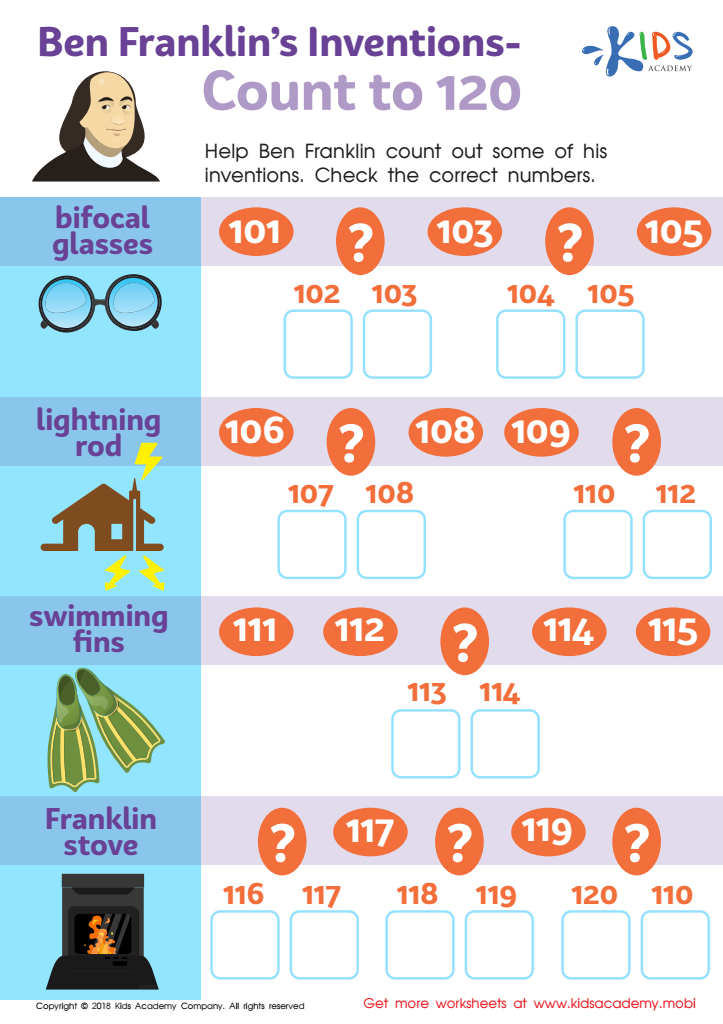
Ben Franklin’s Inventions – Count to 120 Worksheet



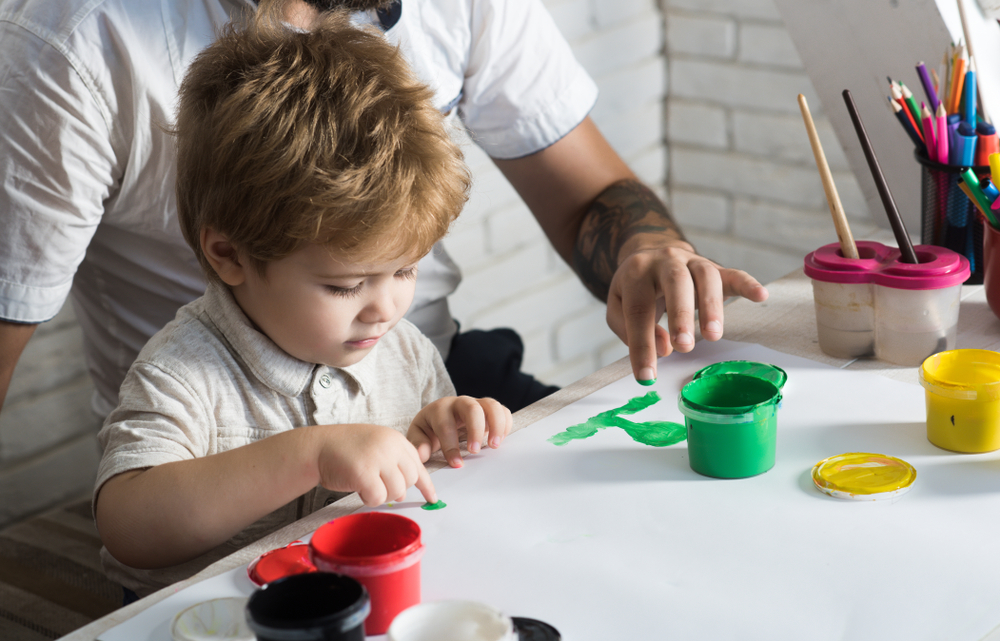



Counting practice in early mathematics is crucial for children aged 6-8, as it lays the foundational skills necessary for more complex mathematical concepts in later years. At this age, children are developing their numerical reasoning and begin to understand relationships between numbers. Regular counting practice enhances their ability to recognize number patterns, increases their confidence in working with numbers, and builds fluency in basic operations such as addition and subtraction.
Teachers play a key role in creating engaging counting activities that emphasize hands-on learning. By using tools such as counting games, number charts, and manipulatives, they can make learning fun and interactive. Similarly, parents can reinforce these skills at home through everyday activities—like counting objects during shopping or while cooking—making math a part of their daily life.
Additionally, counting proficiency helps improve cognitive skills, such as problem-solving and critical thinking. It prepares children for future mathematical tasks, including geometry and algebra, and can enhance their performance in standardized testing. Understanding the significance of counting not only supports academic success but also fosters a lifelong love of learning in mathematics. Therefore, both parents and teachers should prioritize counting practice as an essential element of a child's early education.








