
Cultural awareness Normal Math Worksheets for Ages 6-8
3 filtered results
Difficulty Level
Grade
Age
-
From - To
Subject
Activity
Standards
Explore our engaging Cultural Awareness Normal Math Worksheets for Ages 6-8, designed to foster both mathematical skills and cultural understanding. These printable worksheets align with early grade learning objectives, helping young learners develop essential math concepts while embracing diversity. Each activity encourages students to explore various cultures through relatable math problems, enhancing their awareness of global communities. From counting traditions to geographical puzzles, these worksheets provide a holistic learning experience. Perfect for classroom use or at-home practice, they support educators and parents in cultivating well-rounded, culturally aware individuals. Start your child’s journey to becoming a global citizen while developing their math proficiency!
Favorites
With answer key
Interactive
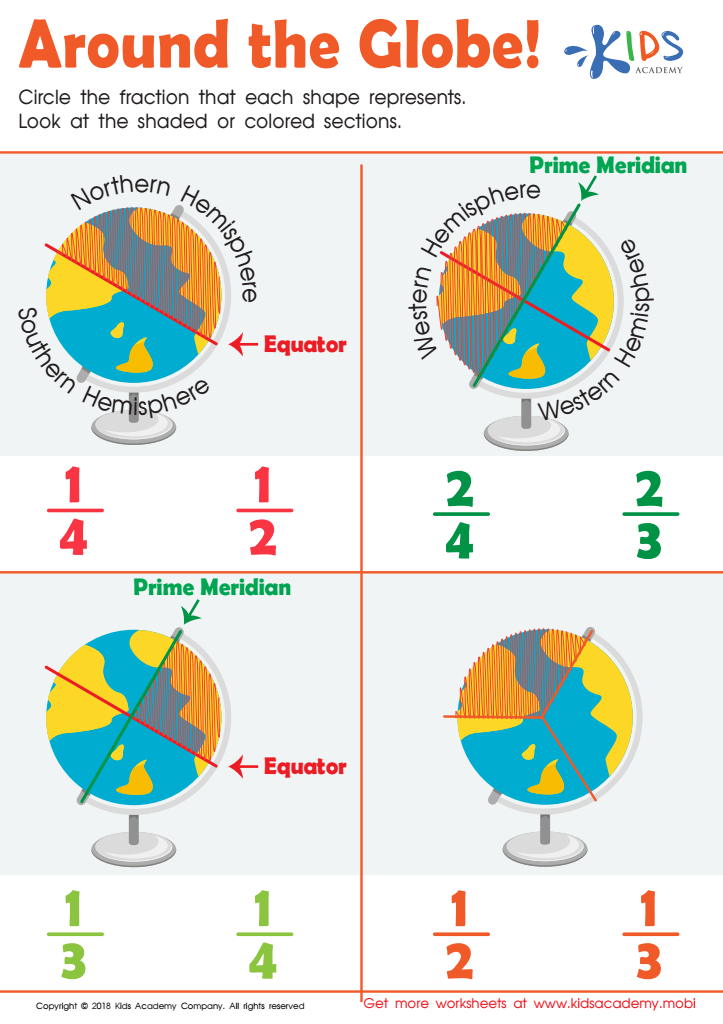
Around the Globe Worksheet
This worksheet introduces your students to the globe. Explain that it's a 3D representation of our planet, and highlight the Northern, Southern, Eastern and Western Hemispheres, plus the Equator and Prime Meridian. Then, have them circle the fractions associated with the shapes shown. Point out the shaded or colored sections for guidance.
 Assign to My Students
Around the Globe Worksheet
Worksheet
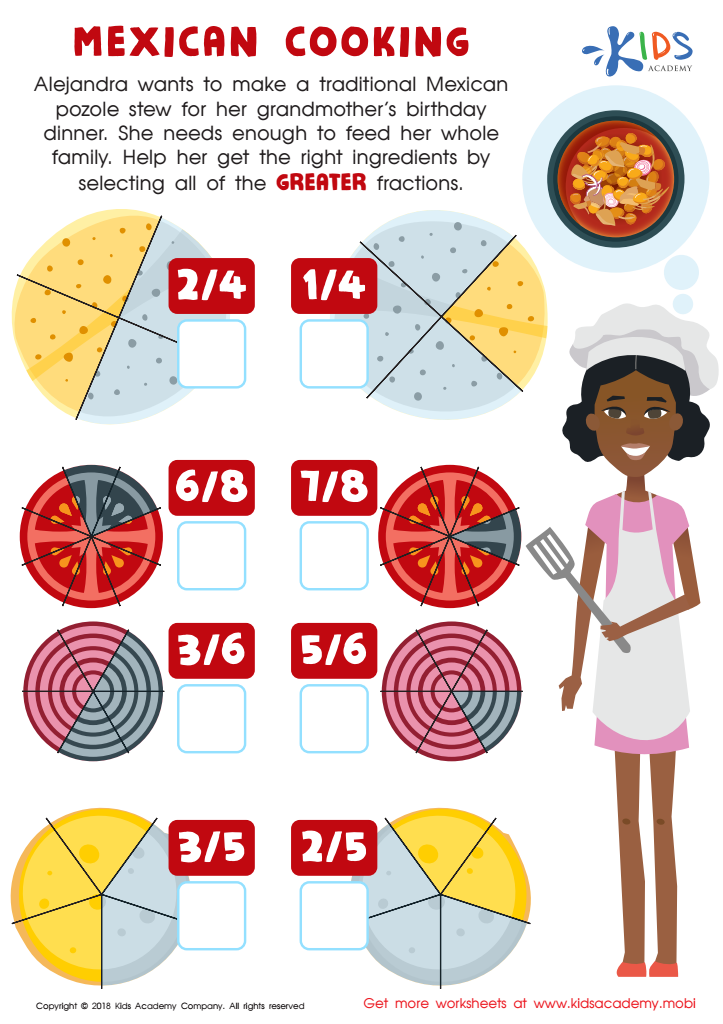
Mexican Cooking Worksheet
Alejandra needs to make a traditional Mexican pazole stew that will feed her whole family. Help her select the right ingredients by choosing the greater fractions in this worksheet. Mexicans have an amazing culture with many unique holidays, customs and dishes - explore it with your kids in your local neighbourhood!
Mexican Cooking Worksheet
Worksheet
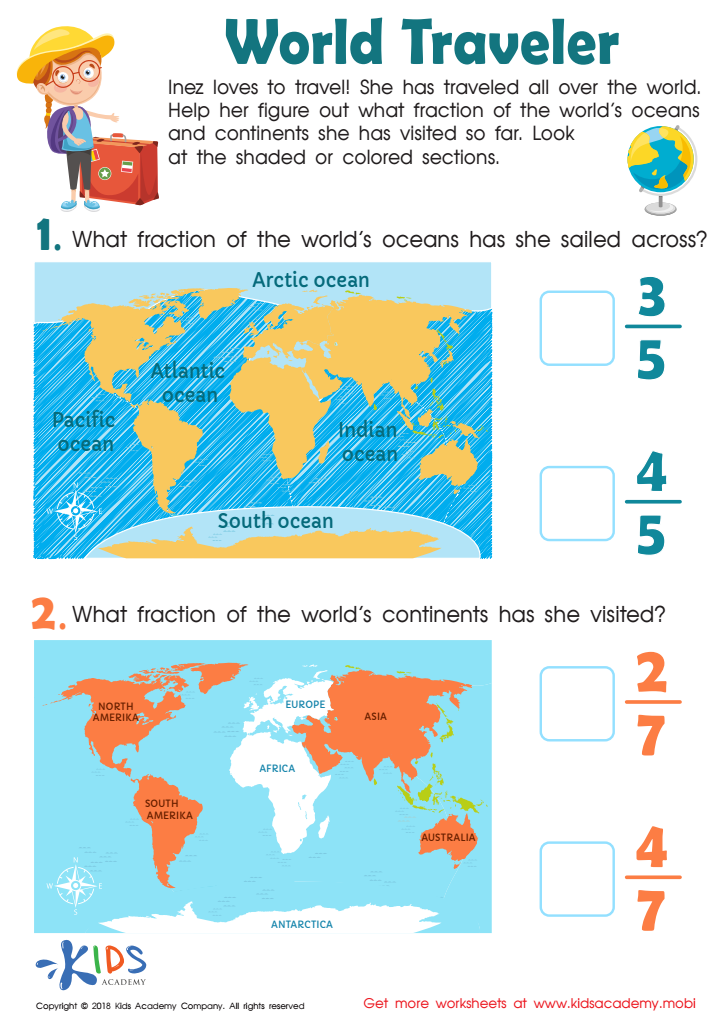
World Traveler Worksheet
Kids love exploring the world? Inez sure does! She's seen oceans and continents around the globe. Your kids can help her figure out what fraction of the world she has visited. Have them name all the countries they've been to, then look at the marked sections on the printout to find out!
World Traveler Worksheet
Worksheet
Join Kids Academy for Free
Who is primarily going to use this learning content?





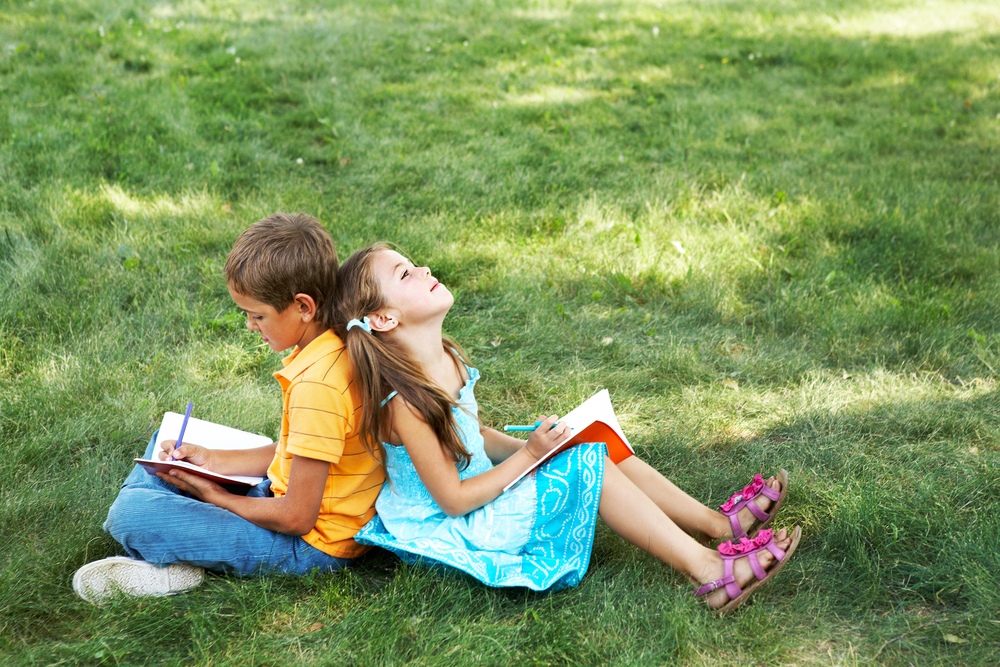

Cultural awareness in education, especially in subjects like math, is essential for children aged 6-8. During these formative years, children are developing their understanding of the world around them. Integrating cultural awareness into math curriculum not only enhances students' engagement with the subject but also fosters inclusivity and respect for diversity.
When parents and teachers emphasize the cultural connections in math, they help children see that mathematics is not a universal language bound by cultural barriers; rather, it reflects various traditions, histories, and practices. For example, exploring counting systems from different cultures or the historical contributions of mathematicians from diverse backgrounds can broaden students' perceptions.
Additionally, culturally aware math education nurtures critical thinking and problem-solving skills by encouraging students to view challenges from multiple perspectives. This appreciation not only enriches their learning experience but also prepares them for a globalized society where cross-cultural collaboration is vital.
Furthermore, fostering cultural sensitivity helps to create a sense of belonging among all students, reducing feelings of isolation and promoting equity in the classroom. Ultimately, when math is taught with a cultural lens, it becomes a tool for unity instead of division, reinforcing the idea that learning is a shared journey.








