
Improving number sense Normal Math Worksheets for Ages 6-8
7 filtered results
Difficulty Level
Grade
Age
-
From - To
Subject
Activity
Standards
Enhance your child's number sense with our expertly designed Normal Math Worksheets for ages 6-8. At Kids Academy, we offer a rich collection of printable worksheets aimed at boosting young learners' understanding of numbers, counting, and basic arithmetic. These engaging activities foster critical math skills through fun and interactive tasks, ensuring kids develop a strong foundation. Perfect for both classroom and home use, our worksheets are aligned with educational standards and tailored to meet the unique learning needs of each child. Start building confidence and a love for math with Kids Academy’s curated resources today!
Favorites
With answer key
Interactive
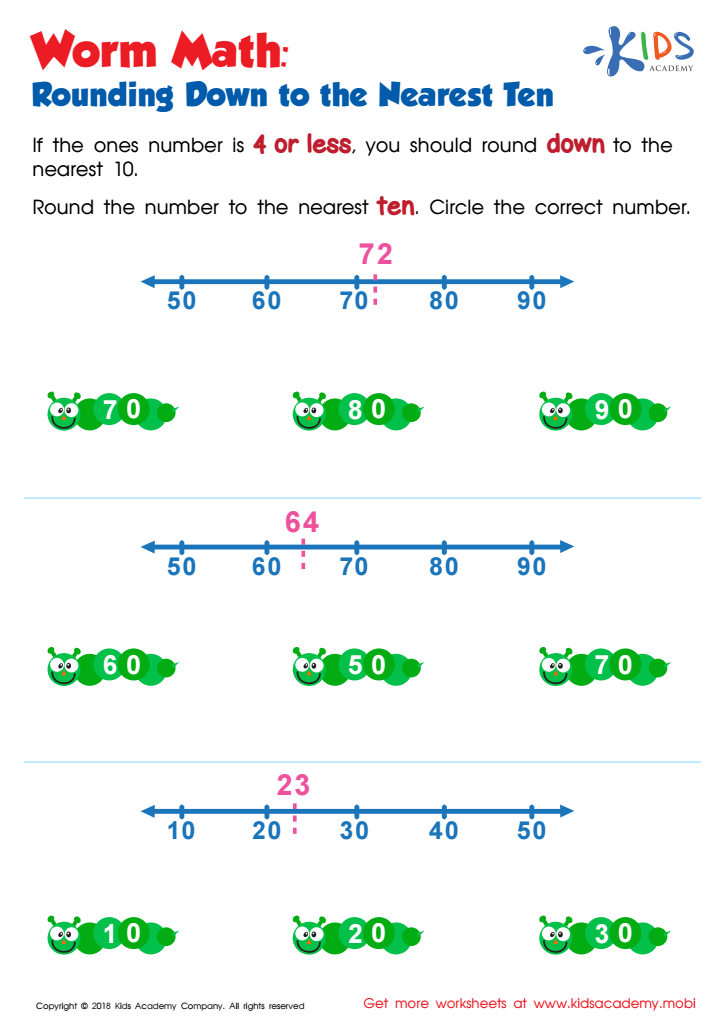
Worm Math Rounding Down to the Nearest Ten Worksheet
Look at the full of smiles worms carrying two-digit numbers. Is the number in the ones spot 4 or less? Round down to the nearest ten! Help kids learn the tricky concept of rounding with this math worksheet. Perfect for clearing up confusion and practicing rounding down to the nearest ten!
 Assign to My Students
Worm Math Rounding Down to the Nearest Ten Worksheet
Worksheet
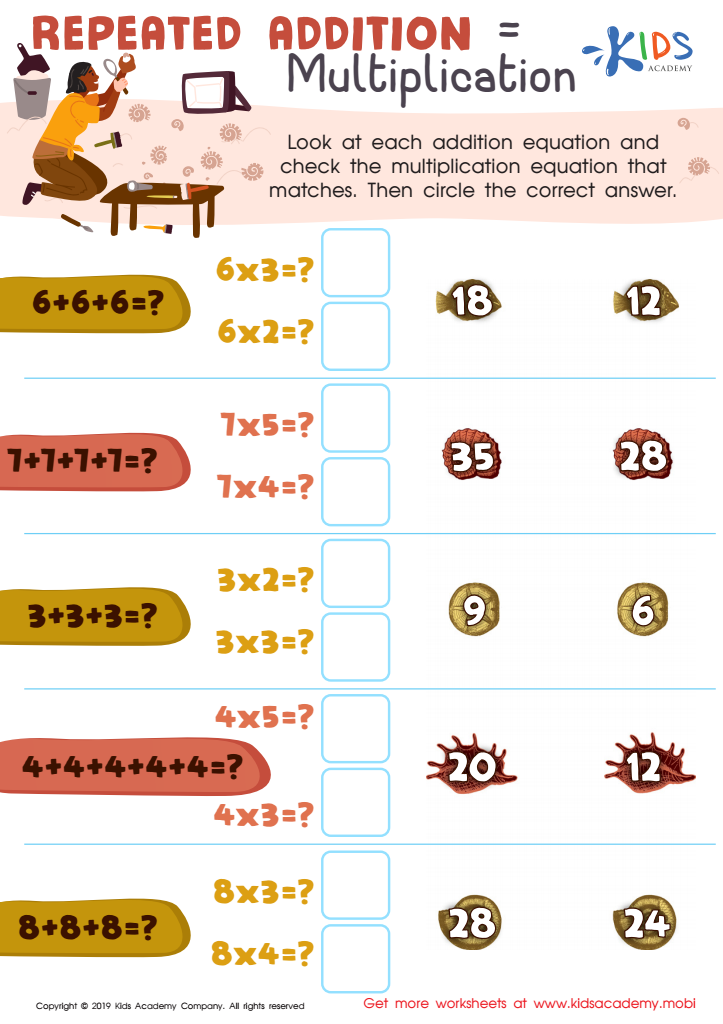
Repeated Addition = Multiplication Worksheet
If your child is having trouble with math, worksheets like this can help them get more practice. Addition, subtraction, and multiplication go together. Look over each addition equation and pick the matching multiplication equation, then circle the correct answer. This can give your child the necessary practice to understand mathematics better.
Repeated Addition = Multiplication Worksheet
Worksheet
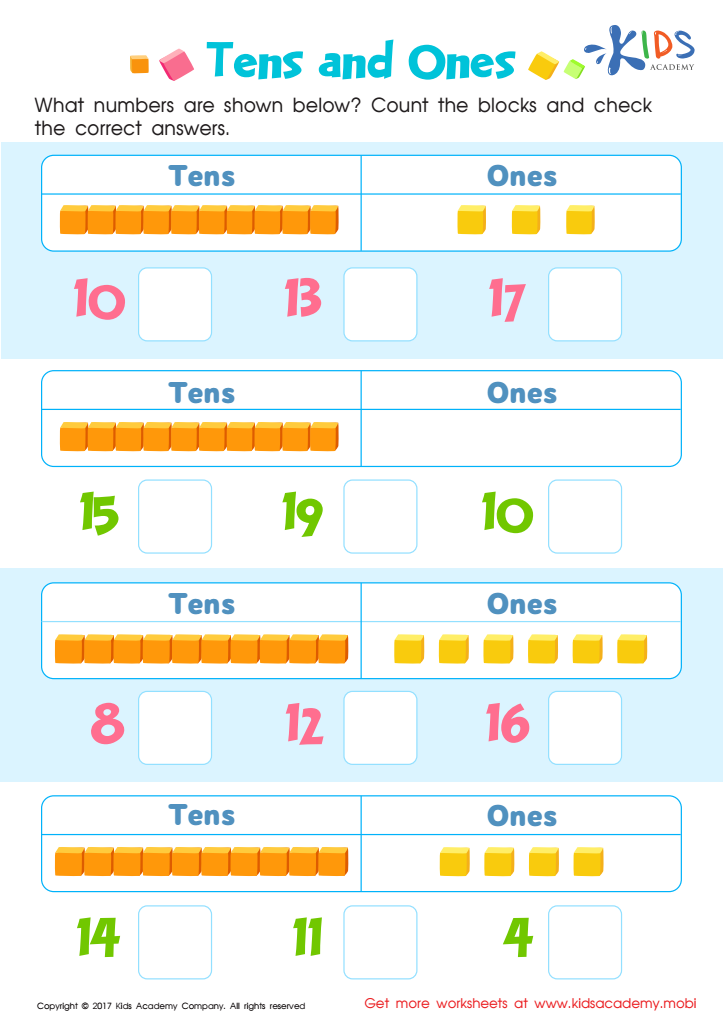
Tens and Ones Worksheet
Help your child make math fun with this worksheet! Count the blocks on both sides and enter the total in the box below the figures. This will help them overcome any math-related anxieties they might have and let them enjoy the learning process.
Tens and Ones Worksheet
Worksheet
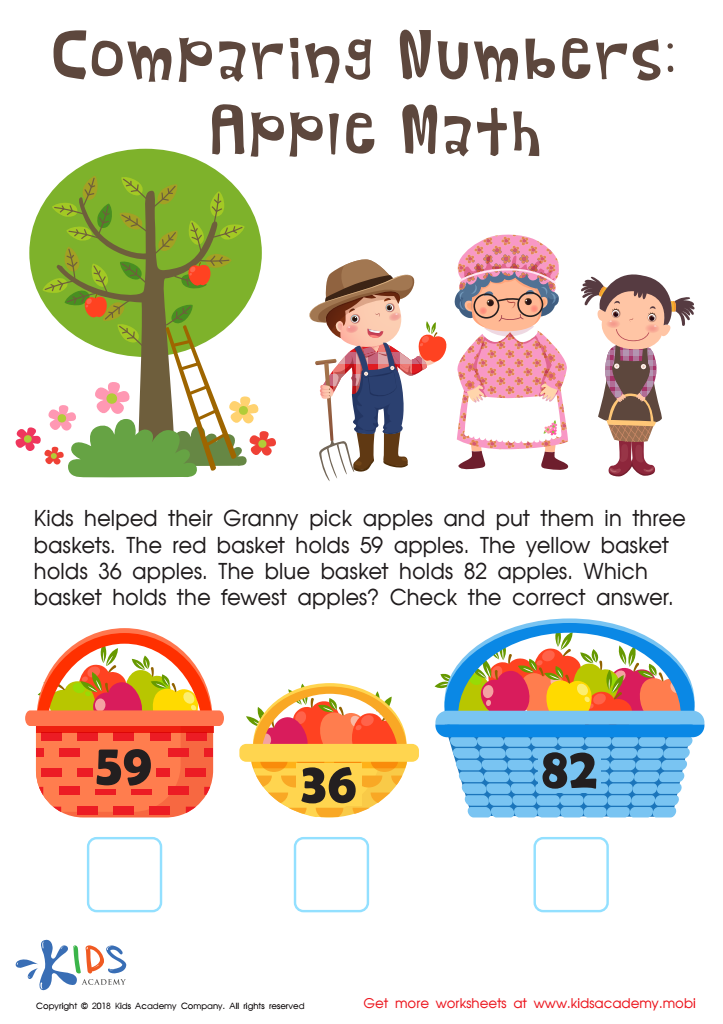
Apple Math Worksheet
Math is more than just counting, adding, subtracting, multiplying, and dividing. Your child may be feeling overwhelmed by all the complexities, like comparing numbers and their differences. But with this worksheet, you can make comparing numbers fun again!
Apple Math Worksheet
Worksheet
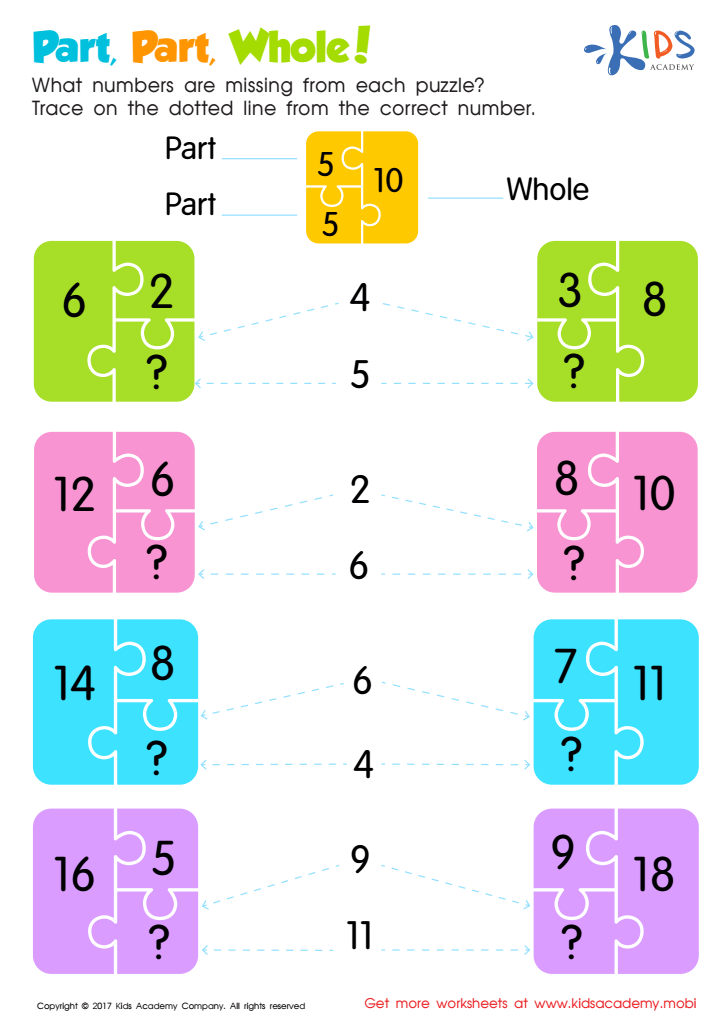
Part, Part, Whole Worksheet
Help your child find the missing numbers in the puzzles. The worksheet combines fun and maths - stimulating the brain while keeping them engaged. Colourful pages will keep the learning enjoyable. Simple addition and subtraction will ensure they stay entertained.
Part, Part, Whole Worksheet
Worksheet
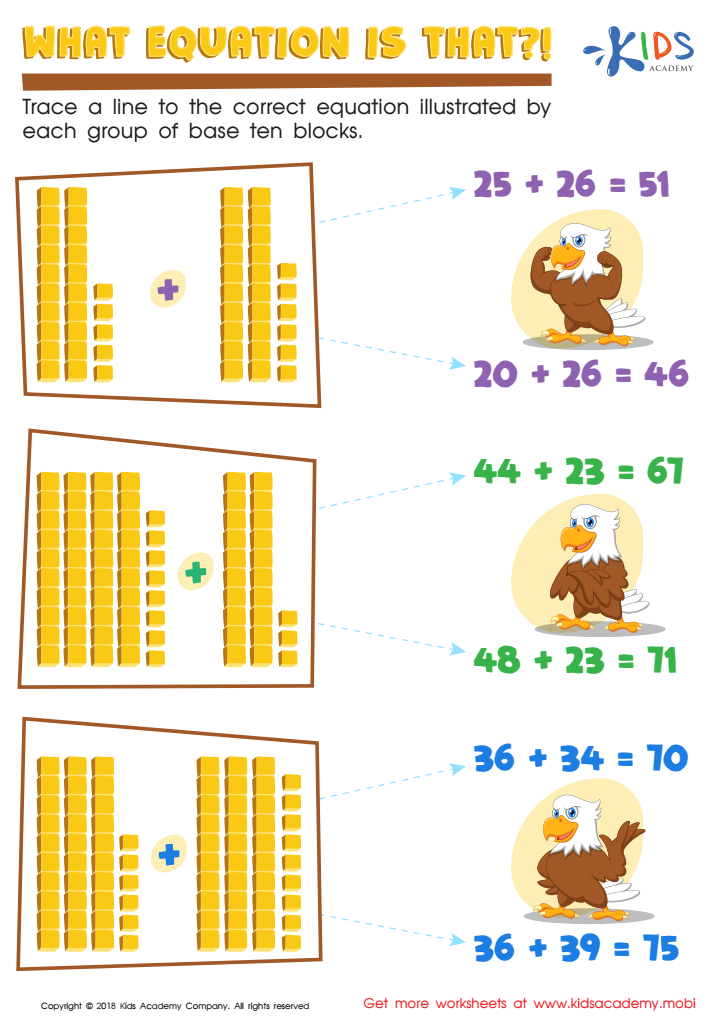
What Equation Is That? Worksheet
Have your students practice counting with base ten blocks. This will help them with math struggles. Homework and worksheets will help them improve; ask them to trace lines to the correct equation on a tracing sheet. Guide them as they count the blocks and trace the lines.
What Equation Is That? Worksheet
Worksheet
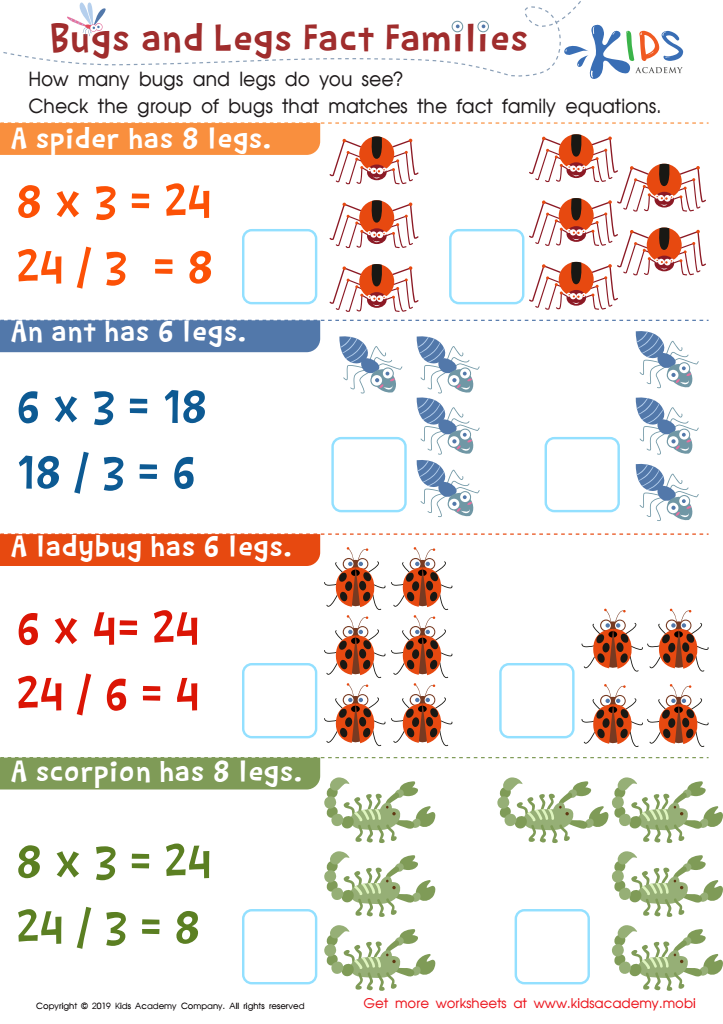
Bugs and Legs Fact Families Worksheet
This free worksheet uses bugs and insects to help young math students learn about fact families and recognize patterns in multiplication and division. It's a fun and colorful way to gain automaticity and efficiency in computation skills, without even realizing it's math!
Bugs and Legs Fact Families Worksheet
Worksheet
Join Kids Academy for Free
Who is primarily going to use this learning content?





Number sense is a foundational skill critical for young children's future success in mathematics. For ages 6-8, developing strong number sense impacts their ability to understand and work with mathematical concepts both in academic settings and everyday life.
Parents and teachers should prioritize improving number sense because it lays the groundwork for all higher-order math skills. When children grasp basic concepts like counting, recognizing number patterns, and understanding magnitude, they are better equipped to approach more complex problems with confidence. This skill set includes comprehension of addition, subtraction, multiplication, and division, which are essential for everyday tasks such as managing money and measuring ingredients.
A strong number sense also enhances cognitive development. It fosters logical thinking, problem-solving abilities, and can even improve attention span. Furthermore, children with good number sense tend to have more positive attitudes towards math, reducing anxiety and promoting a lifelong interest in the subject.
For teachers, tailored methods such as using visual aids, interactive games, and real-world applications help make learning engaging and effective. For parents, simple activities like playing board games that involve counting or cooking together can reinforce these skills in a fun and meaningful context.
In summary, focusing on improving number sense during early childhood supports both immediate learning objectives and long-term cognitive and practical skills, making it a crucial aspect of early education.








