Mental math practice Normal Math Worksheets for Ages 6-8
5 filtered results
-
From - To
Enhance your child's mathematical skills with our comprehensive mental math practice worksheets curated specifically for ages 6-8. At Kids Academy, we offer a variety of engaging exercises designed to foster quick thinking and fortify fundamental math concepts. Each worksheet progressively guides children through problem-solving techniques that improve both confidence and accuracy in calculations. Our structured activities, from simple addition and subtraction to more advanced challenges, provide an enjoyable learning experience while reinforcing classroom lessons. Empower your young learner with tools to excel in math and build a strong numerical foundation with our expertly-crafted, age-appropriate worksheets. Ready for fun and effective practice? Join us today!
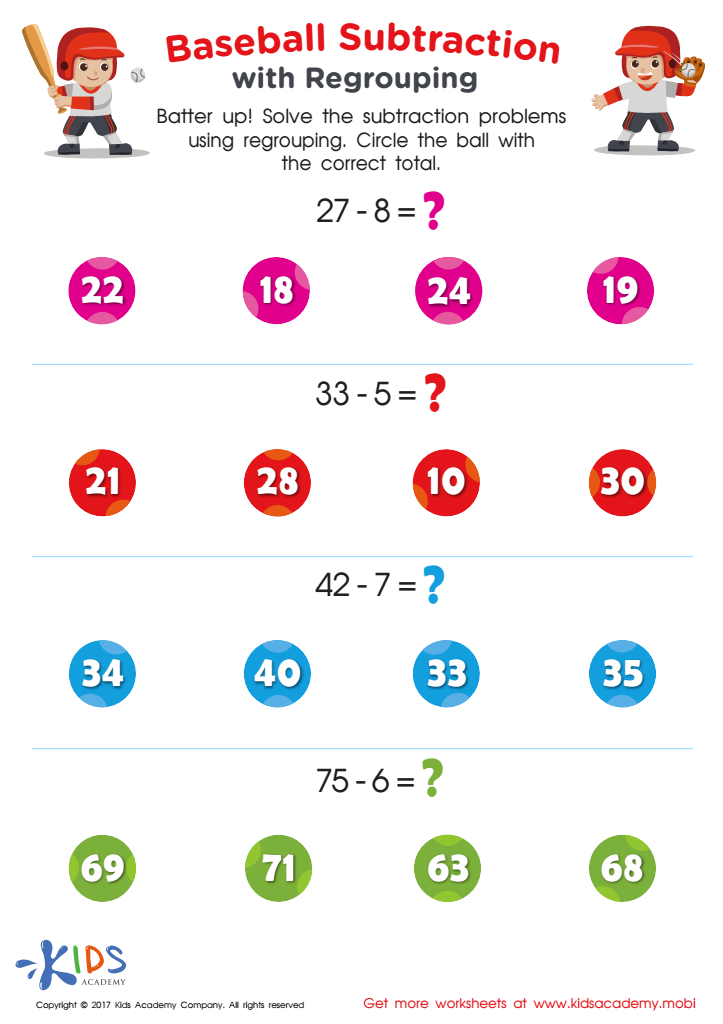
Subtraction With Regrouping for 2nd Grade Worksheet
 Assign to My Students
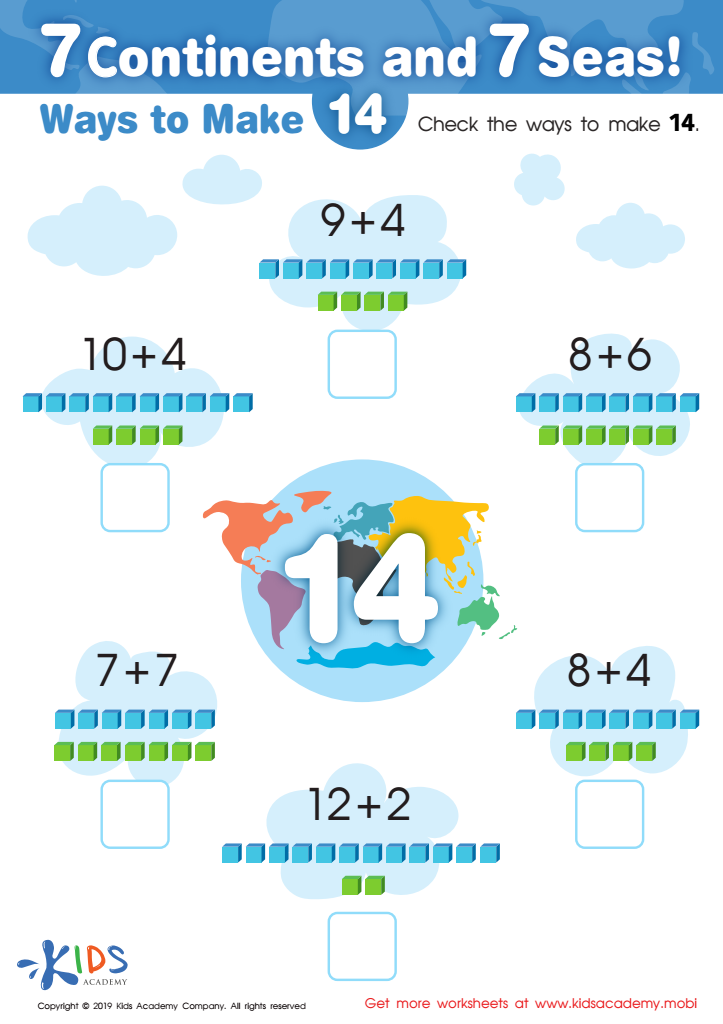
7 Continents and 7 Seas Worksheet
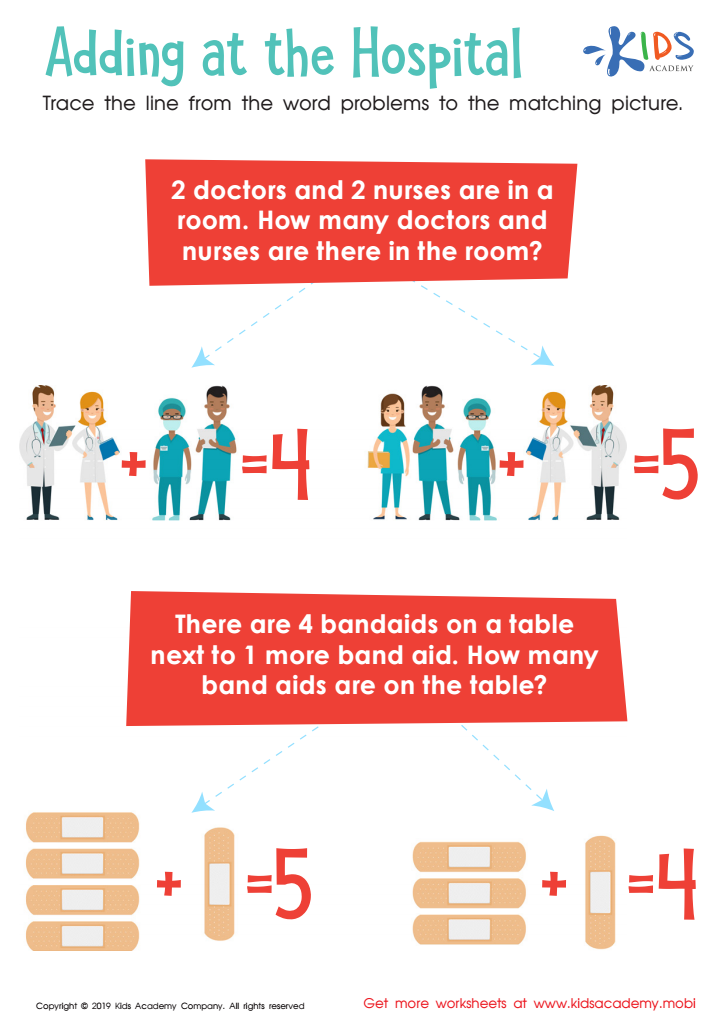
Adding at the Hospital Worksheet
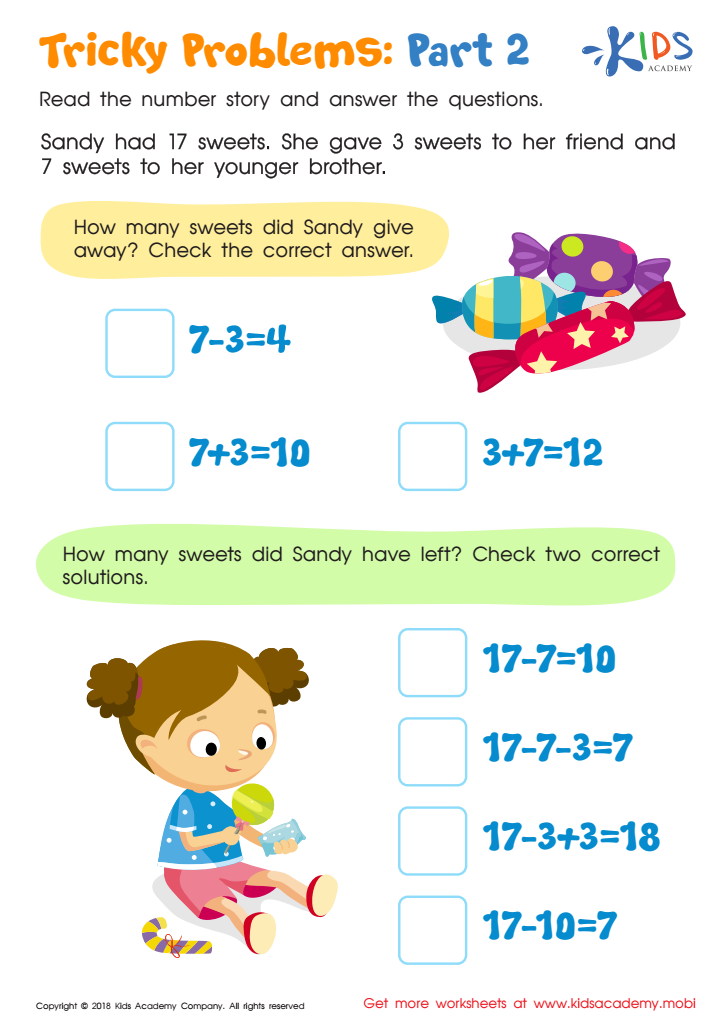
Tricky Problems Worksheet: Part 2
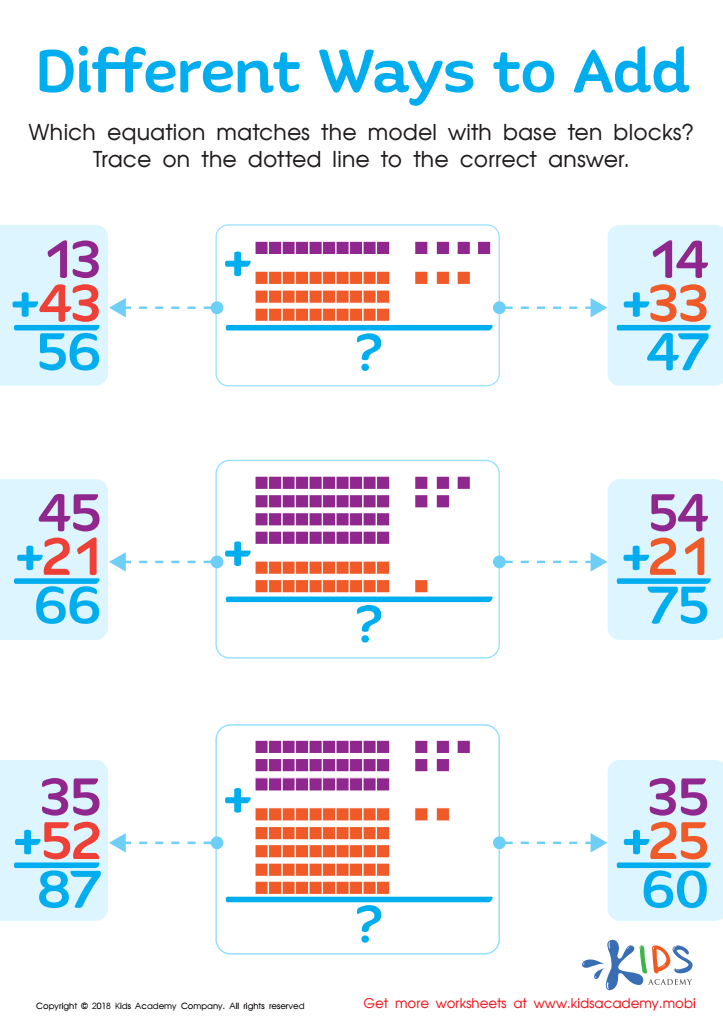
Different Ways to Add Worksheet







Caring about mental math practice and normal math for children aged 6-8 is crucial for several reasons. At this young age, cognitive development is at a stage where foundational mathematical skills are rapidly developing. Mental math, which involves quick calculations done in the mind, helps improve number sense, logical reasoning, and enhances overall mathematical intuition. These skills are essential for problem-solving and everyday decision-making.
Practicing mental math strengthens neural connections in the brain, allowing children to process information more efficiently. This not only helps with math but also improves concentration and memory across other subjects. Mental math fosters a sense of confidence and independence as children learn to solve problems on their own.
Normal math practice, which involves using paper, pencils, or manipulatives like blocks, allows children to conceptually understand math. It’s important for them to see and interact with numbers and operations in tangible ways, which solidifies abstract concepts in their minds. Combining both practices ensures a well-rounded mathematical foundation.
For parents and teachers, integrating both mental math and normal math practice into daily routines can make a significant difference. It sets the stage for advanced mathematical learning, nurtures a love for the subject, and equips children with critical thinking skills that benefit their overall academic journey and life experiences.








