Multiplication practice Normal Math Worksheets for Ages 6-8 - Page 2
30 filtered results
-
From - To
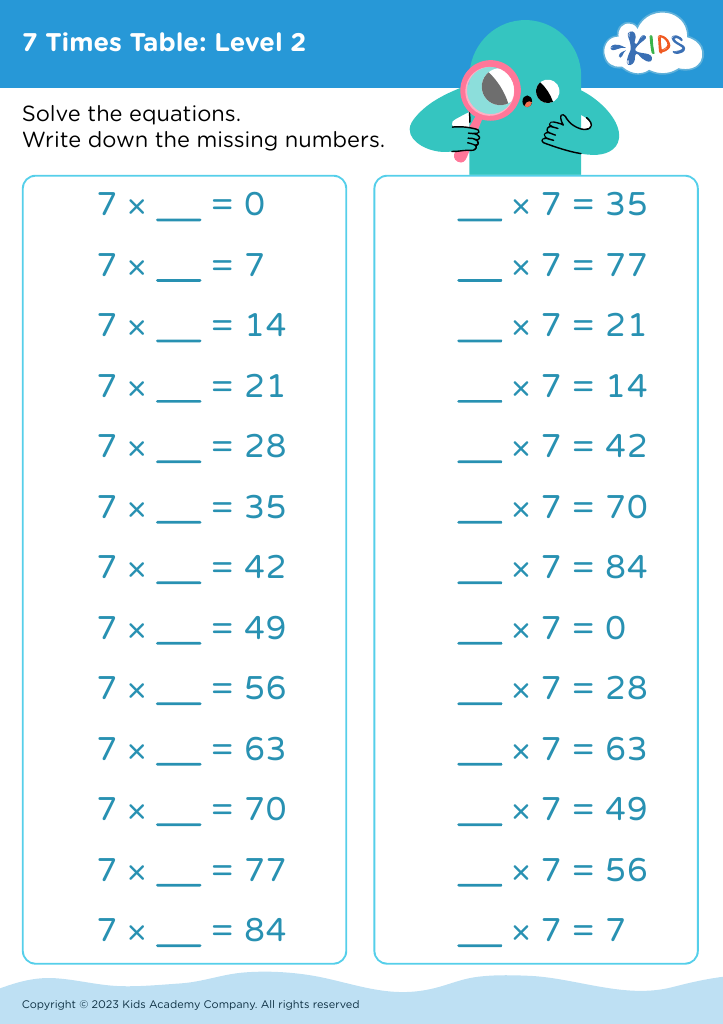
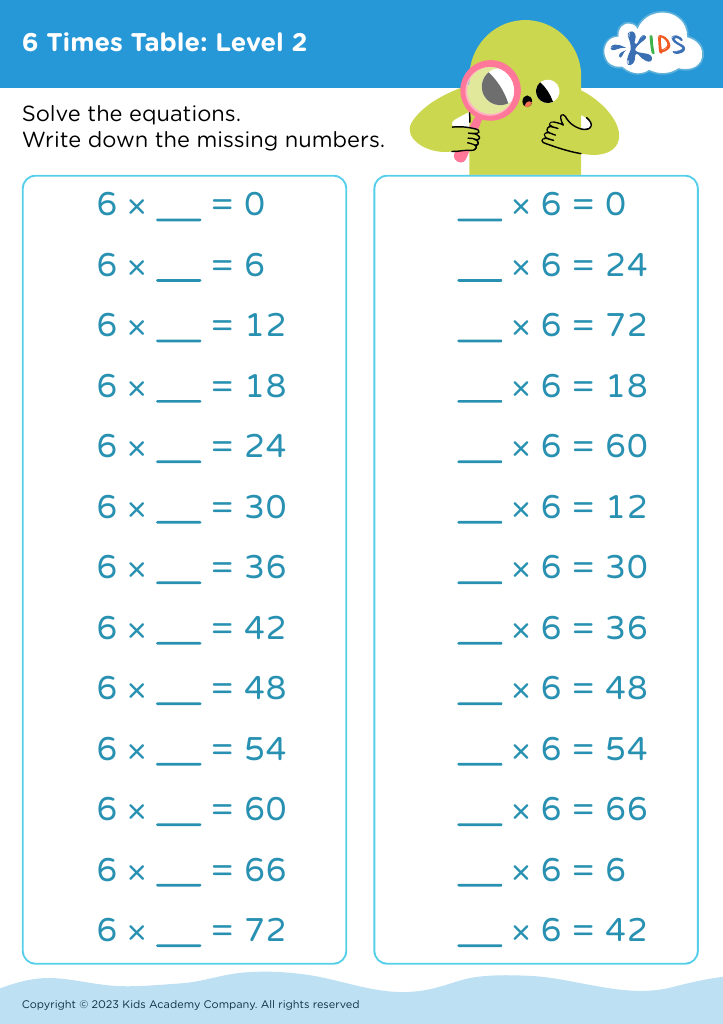
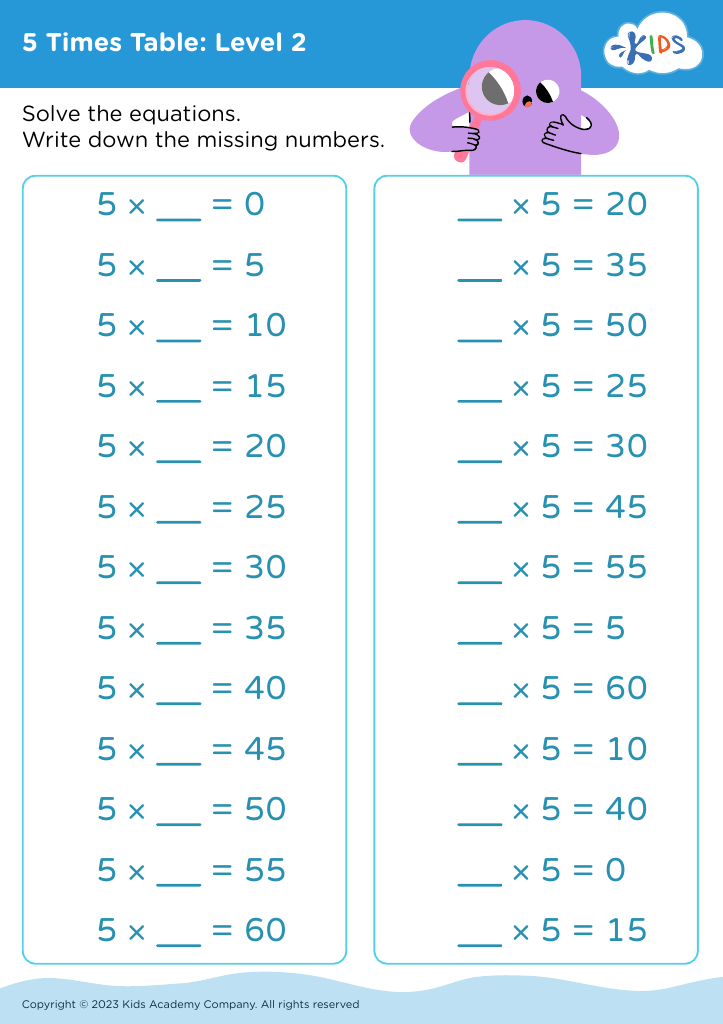
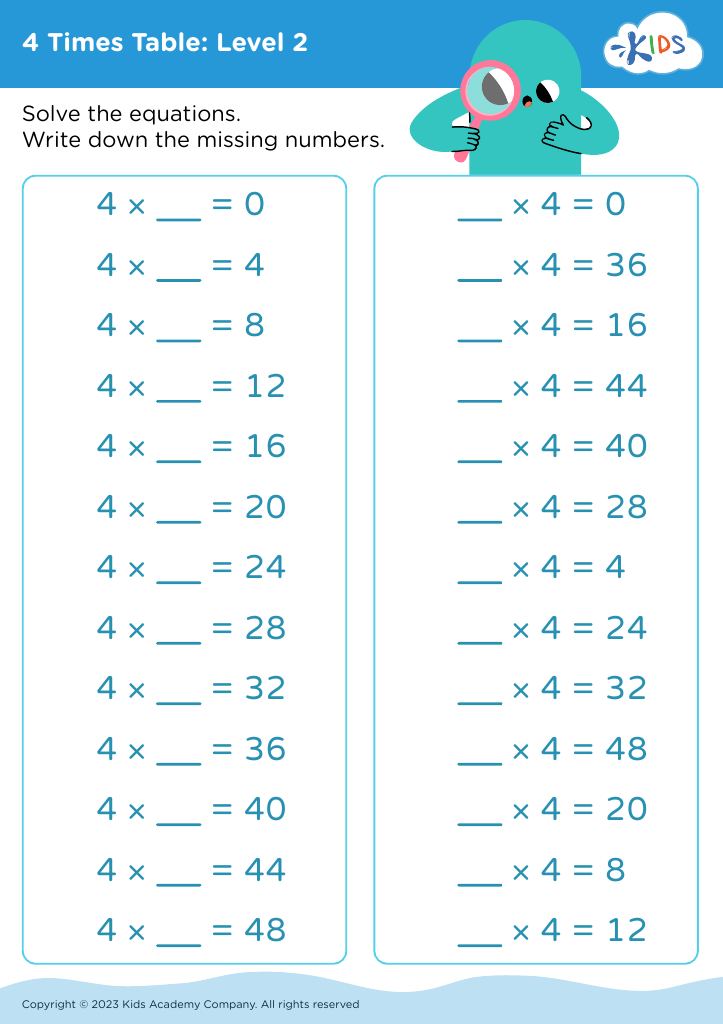
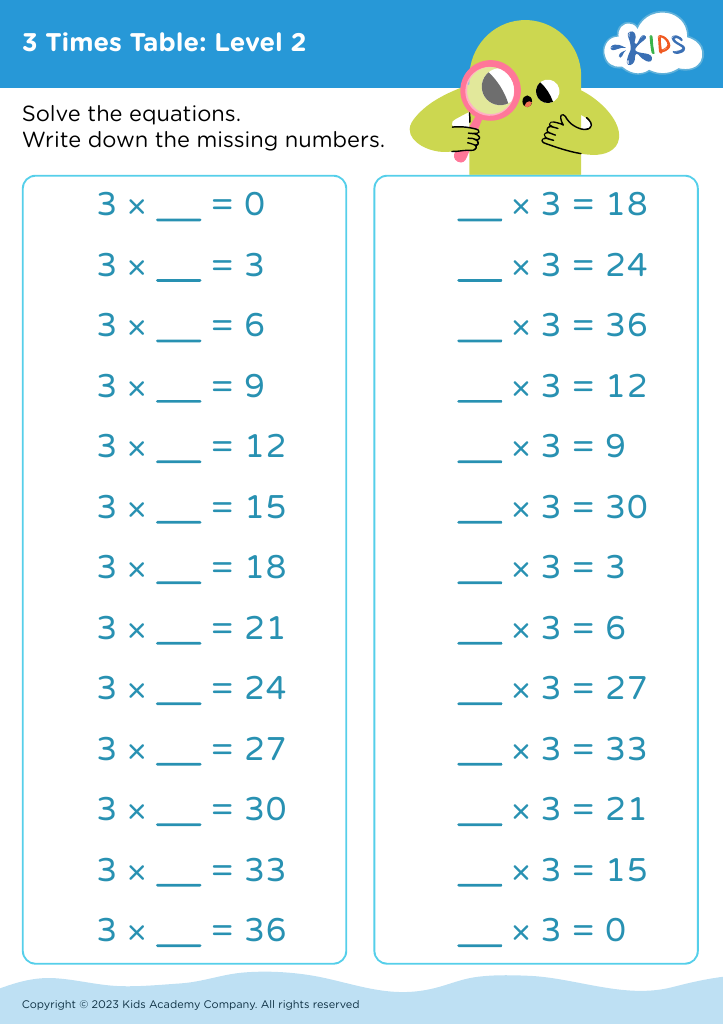
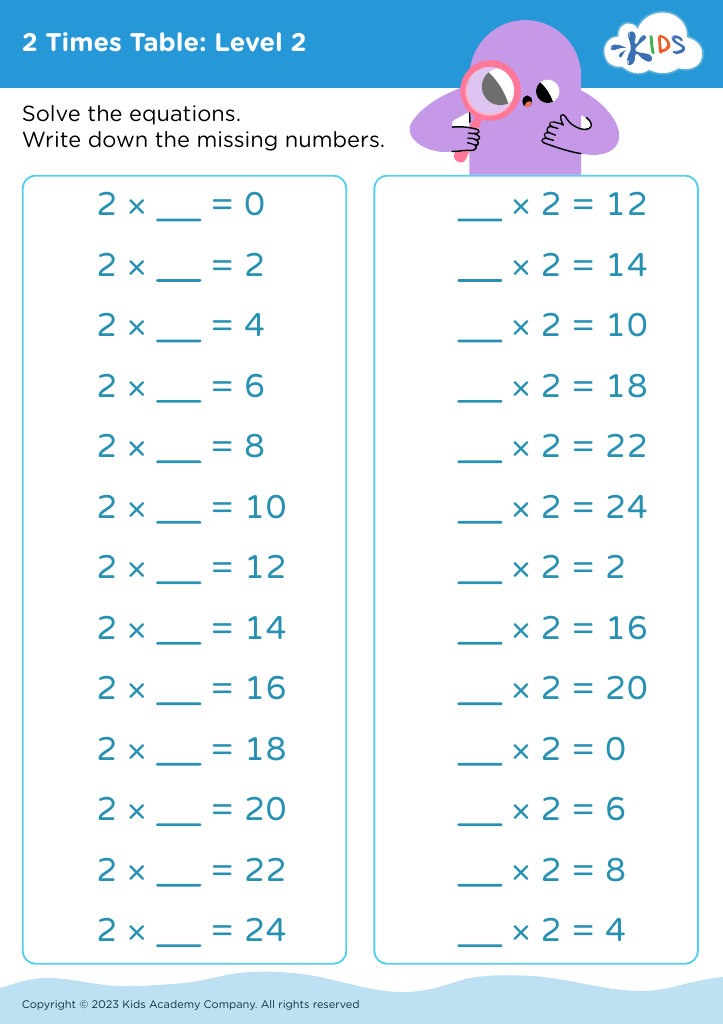







Multiplication practice in the early grades is foundational for a child's mathematical understanding and future academic success. For children aged 6-8, establishing a solid grasp of multiplication concepts not only boosts their confidence but also enhances critical thinking skills. It helps them recognize patterns and develop a deeper understanding of number relationships, laying the groundwork for more complex mathematical operations.
Moreover, mastering multiplication can improve performance in other subjects, such as science and economics, where mathematical concepts are applied. Engaging in regular multiplication practice fosters retention of basic facts, allowing children to solve problems more efficiently and reducing anxiety related to math tests.
From a parental or educational perspective, ensuring that children practice multiplication regularly promotes accountability and perseverance. It encourages students to adopt effective study habits and build resilience, which are valuable life skills. Moreover, it opens up opportunities for family involvement in learning through fun games and activities, helping to cultivate a positive attitude toward math.
Ultimately, prioritizing multiplication practice equips children with essential tools for their academic journeys and transforms math into a more approachable and enjoyable subject, setting the stage for lifelong learning and curiosity.








