Sorting skills Normal Math Worksheets for Ages 6-8
5 filtered results
-
From - To
Boost your child's mathematical foundation with our "Sorting Skills Normal Math Worksheets" tailored for kids ages 6-8! Designed to enhance analytical thinking and organizational abilities, these engaging worksheets help young learners master sorting by attributes such as size, shape, color, and more. With fun, interactive exercises, your child will develop critical skills essential for math success. These worksheets align with educational standards and provide a solid groundwork for future learning. Perfect for at-home practice or classroom use, our printable resources make learning enjoyable and effective. Unlock your child's potential with our expertly crafted sorting worksheets today!
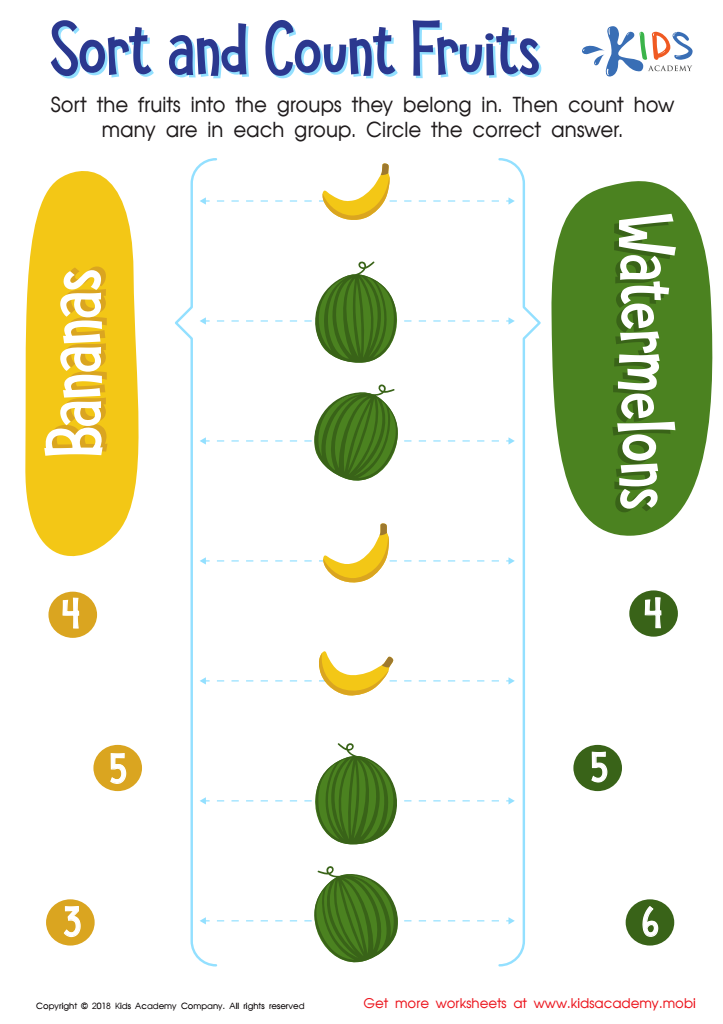
Sort and Count Fruits Worksheet
 Assign to My Students
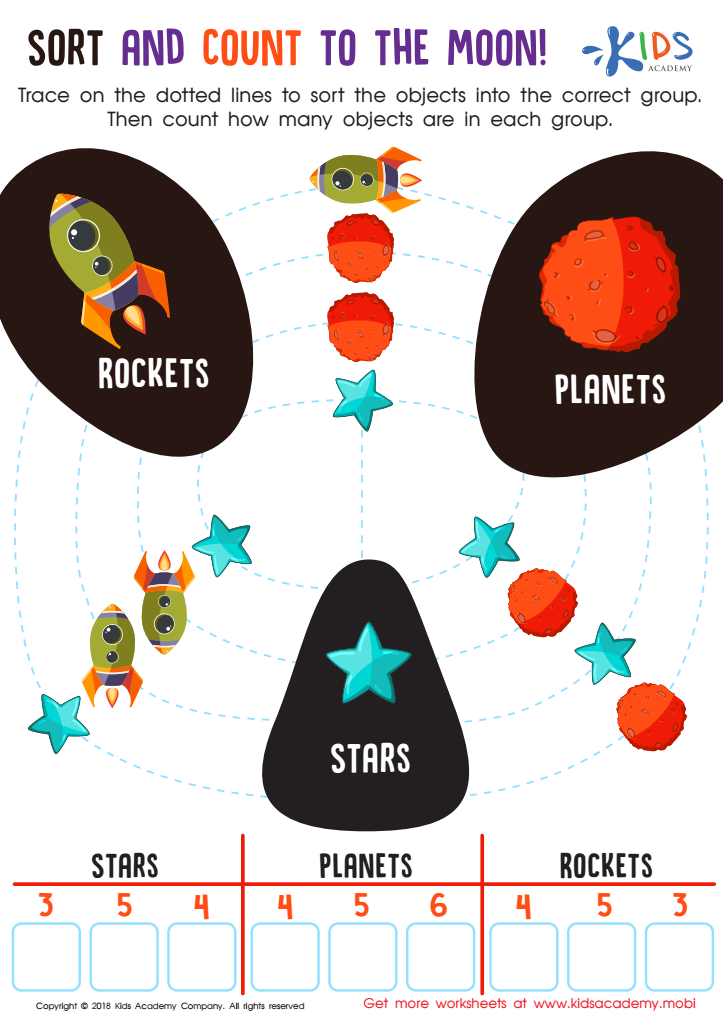
Sort and Count to the Moon Worksheet
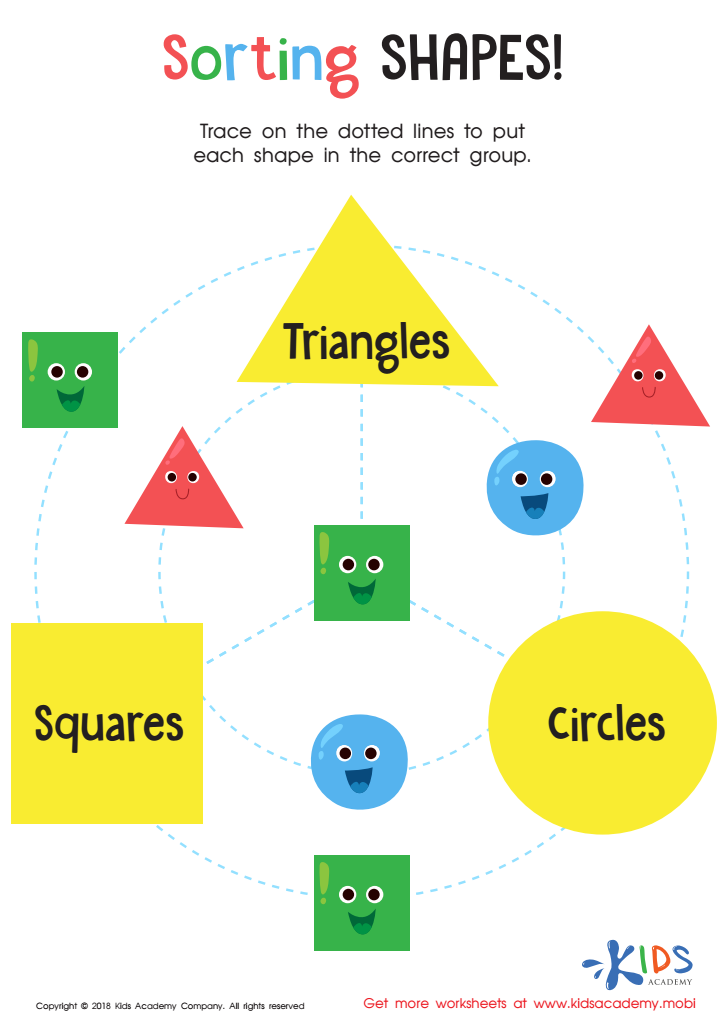
Sorting Shapes - Part 3 Worksheet
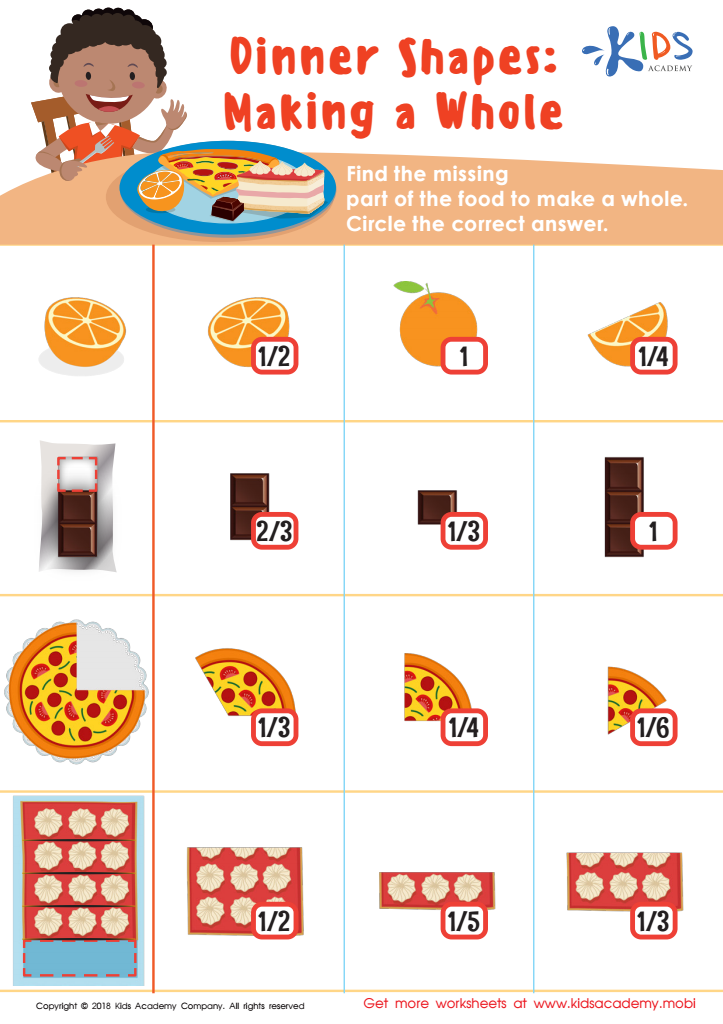
Dinner Shapes: Making a Whole Worksheet
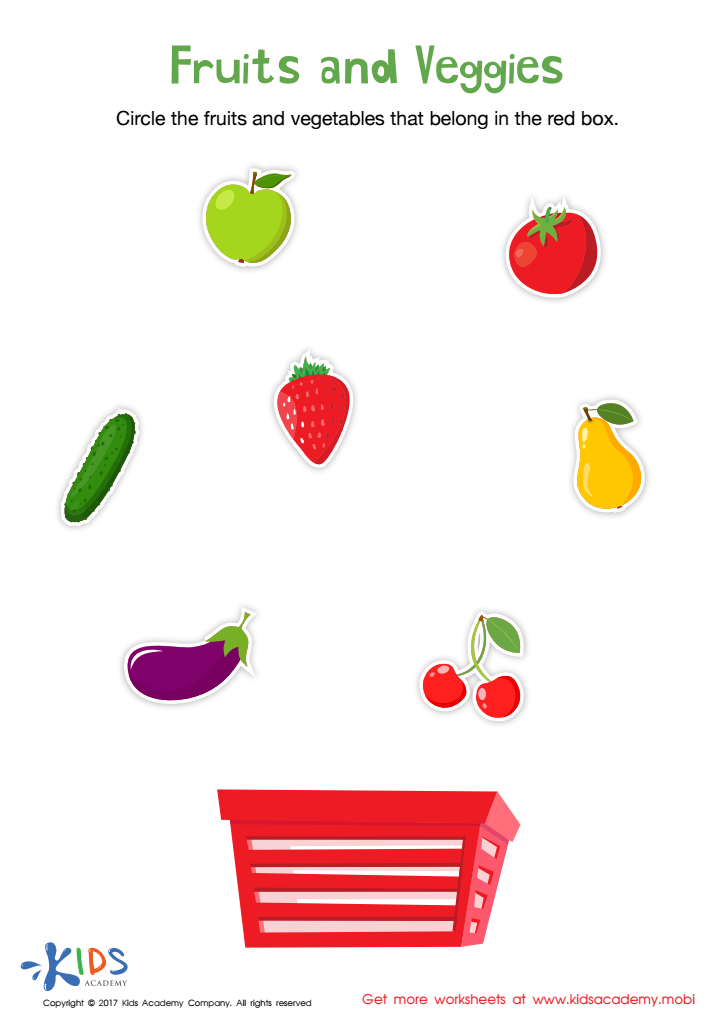








Sorting skills are a fundamental aspect of early mathematical development for children aged 6-8, acting as a building block for more complex math concepts that they will encounter later in their academic journey. When children learn to sort, they begin to organize objects based on specific attributes such as color, shape, size, or type. This process bolsters their ability to recognize patterns, which is critical for understanding number sequences, arithmetic, and data classification.
For parents and teachers, fostering sorting skills helps sharpen children's cognitive abilities, including critical thinking and problem-solving. Sorting activities enhance attention to detail and encourage systematic thinking, which are essential for mathematical reasoning. Moreover, sorting strengthens fine motor skills when manipulative objects are involved, boosting coordination and dexterity.
In an educational context, sorting is not isolated either but integrates into daily learning. By incorporating sorting into routines, like tidying up toys or classroom objects, children naturally engage in mathematical thinking without it feeling like a lesson. Parents and teachers who emphasize sorting skills are laying a robust foundation for their children’s future success in math and other analytical disciplines. Therefore, it should be a priority in early education due to its wide-ranging cognitive and developmental benefits.








