Understanding biodiversity Normal Math Worksheets for Ages 6-8
3 filtered results
-
From - To
"Understanding Biodiversity" Normal Math Worksheets for ages 6-8 blend the wonders of nature with core mathematical skills, making learning engaging and relevant. These worksheets introduce young learners to the diversity of life on Earth while reinforcing math concepts like counting, patterns, and basic operations. Kids will explore various species, habitats, and ecosystems through fun, interactive activities. Developed by experts, these resources align with educational standards, ensuring kids enhance their math abilities and environmental awareness simultaneously. Perfect for classroom use or at-home practice, these worksheets spark curiosity and foster a love for nature and numbers.
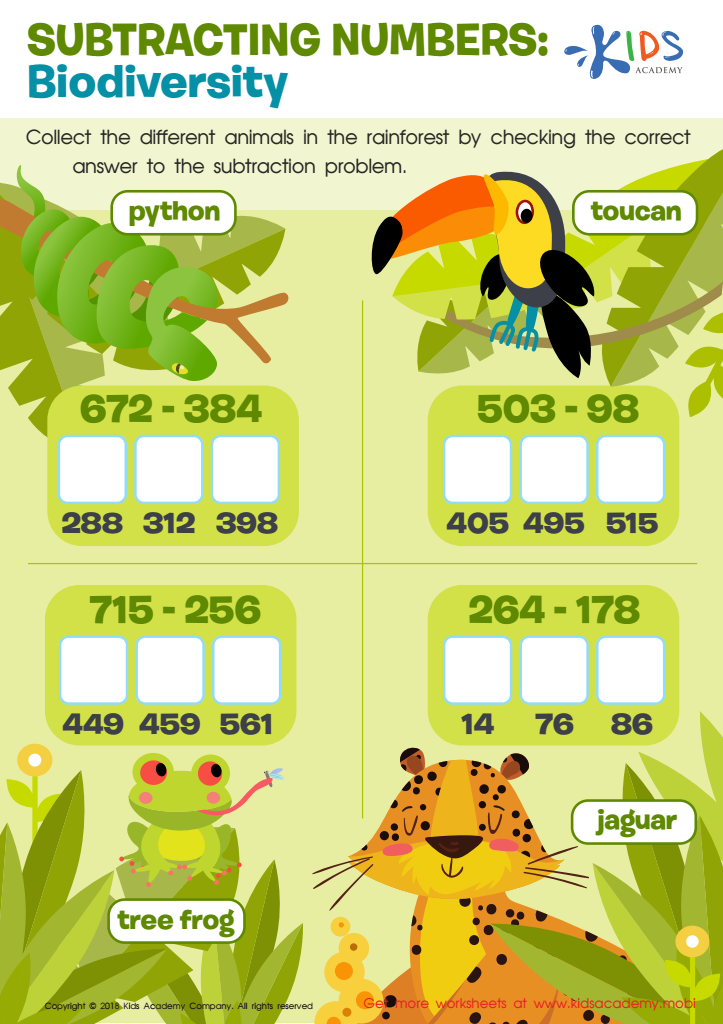
Subtracting Numbers: Biodiversity Worksheet
 Assign to My Students
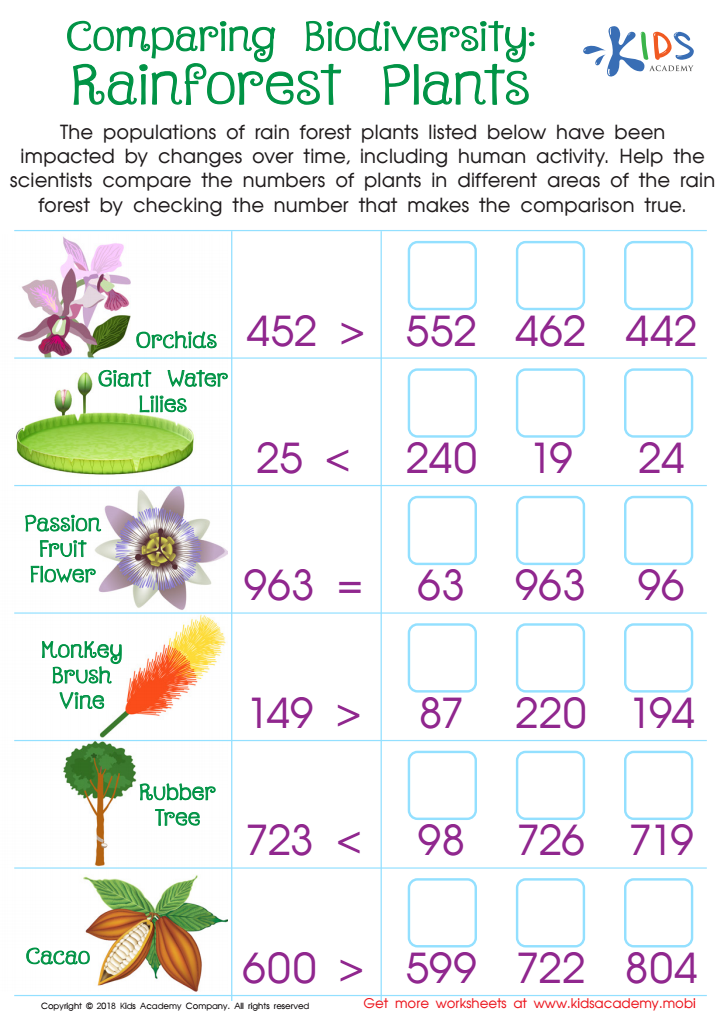
Comparing Biodiversity: Rainforest Plants Worksheet
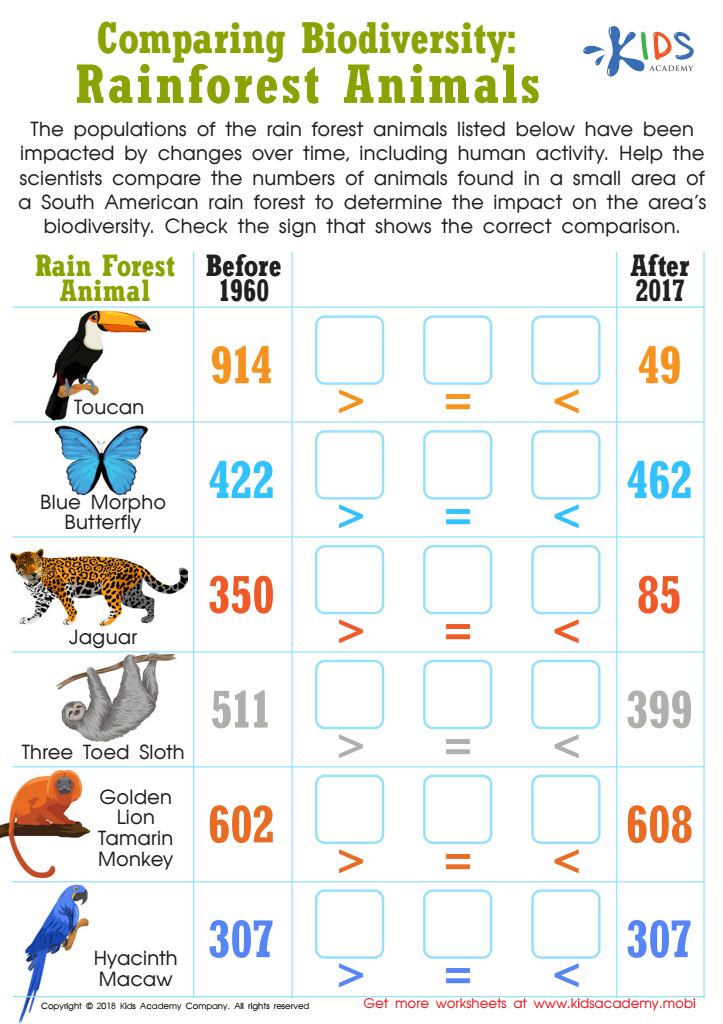
Comparing Biodiversity: Rainforest Animals Worksheet






Understanding biodiversity is crucial even for young children aged 6-8, as it lays a foundation for them to appreciate and care for the natural world. When parents and teachers introduce the concept of biodiversity, they help children recognize the variety of life forms—from plants and animals to fungi and microorganisms—that make up our ecosystems.
At this early age, children are naturally curious and open to learning. Teaching them about biodiversity nurtures a sense of wonder and respect for nature. It encourages them to ask questions like, “Why do bees matter?" or "What happens if forests disappear?" Simple activities, such as observing different types of trees, bugs, or birds, make learning interactive and engaging.
Understanding biodiversity also helps children grasp basic math concepts. Counting species, sorting different types of leaves or insects, and measuring simple aspects of the environment provide hands-on math experiences. These activities enhance their analytical skills and lay a strong foundation for more complex STEM (Science, Technology, Engineering, and Math) learning in the future.
Moreover, when children learn about biodiversity, they also understand the importance of conservation. They realize that their actions affect the world around them, nurturing responsible future citizens who can make informed decisions to protect our planet. This early education fosters a lifetime of environmental stewardship and scientific curiosity.








