Enhancing observation skills Normal Measurement Worksheets for Ages 6-8
3 filtered results
-
From - To
Enhance your child's observation skills with our tailored Normal Measurement Worksheets designed for ages 6-8! These engaging worksheets focus on essential math concepts while encouraging young learners to hone their ability to observe and analyze. By exploring various measurement scenarios and visual data representations, children will develop critical thinking skills and a deeper understanding of their surroundings. Each worksheet is crafted to be interactive and fun, ensuring that kids remain engaged while learning foundational math principles. Help your child excel in observation and measurement with our comprehensive resources, perfect for both home and classroom use. Get started today for a brighter learning future!
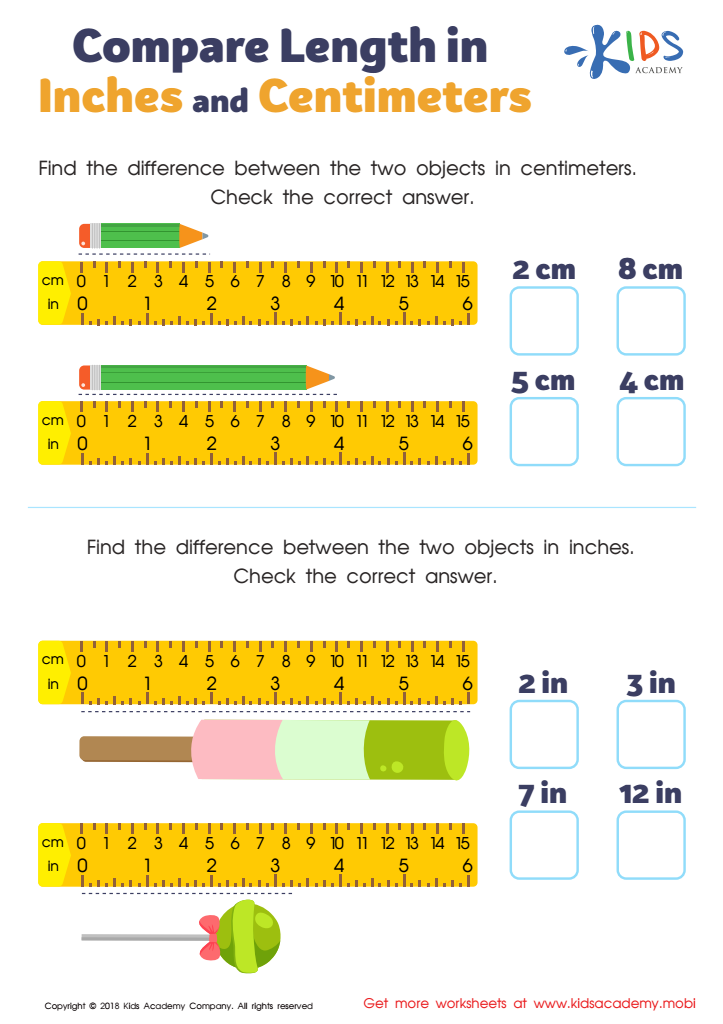
Compare Length in Inches and Centimeters Worksheet
 Assign to My Students
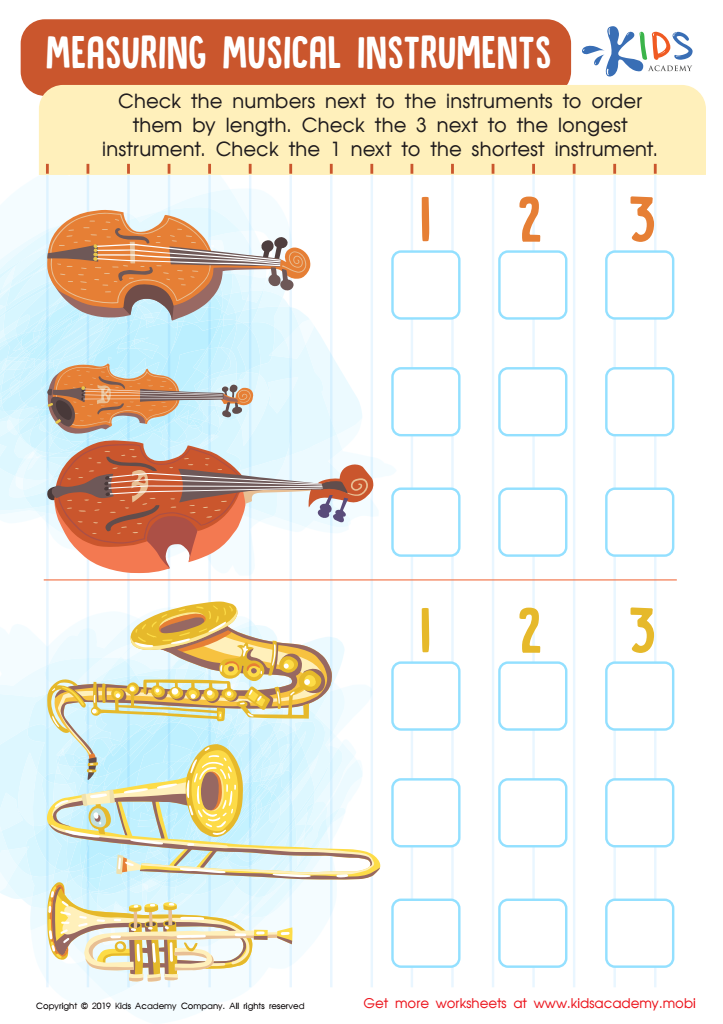
Measuring Musical Instruments Worksheet
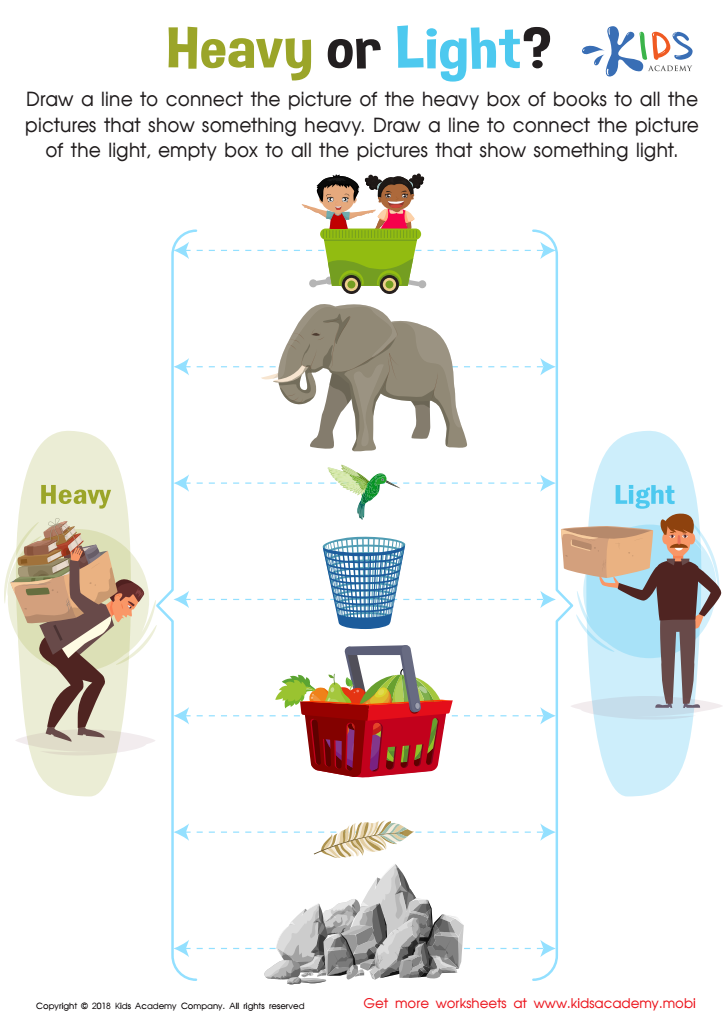
Heavy or Light? Worksheet








Enhancing observation skills in children aged 6-8 is crucial for their overall development and learning. At this stage, children are naturally curious and eager to understand the world around them. By fostering observation skills, parents and teachers can help children become more engaged learners. When kids learn to observe details in their environment, they develop critical thinking skills, curiosity, and creativity.
These skills also lay the foundation for scientific inquiry, promoting early understanding of the scientific method. For example, when children observe and describe their surroundings, they practice language skills and expand their vocabulary, which enhances their communication abilities. Furthermore, honing observation skills encourages attention span, focus, and patience—traits essential for academic success.
Parents and teachers can nurture these skills through engaging activities like nature walks, art projects, or simple discussions about everyday experiences. The act of careful observation fosters a love for exploration and learning, making education more enjoyable and meaningful. Cultivating these skills helps children to not only excel in academic settings but also in social interactions, promoting empathy and an understanding of diverse perspectives. In essence, enhancing observation skills equips children with lifelong tools for learning, critical thinking, and problem-solving that will serve them well in the future.








