Number Sequencing Normal Numbers up to 100 Worksheets for Ages 6-8
3 filtered results
-
From - To
Discover engaging "Number Sequencing Normal Numbers up to 100 Worksheets for Ages 6-8" at Kids Academy! Perfectly crafted for young learners, these worksheets enhance number recognition and sequencing abilities. Children will enjoy interactive exercises that promote mathematical fluency while building a solid foundation in understanding numerical order. Tailored for ages 6-8, the printables offer age-appropriate challenges that boost confidence and encourage independent learning. Ideal for classroom activities or at-home practice, these worksheets are essential tools to support your child's math journey. Visit us now to explore and download high-quality educational resources for young math enthusiasts.
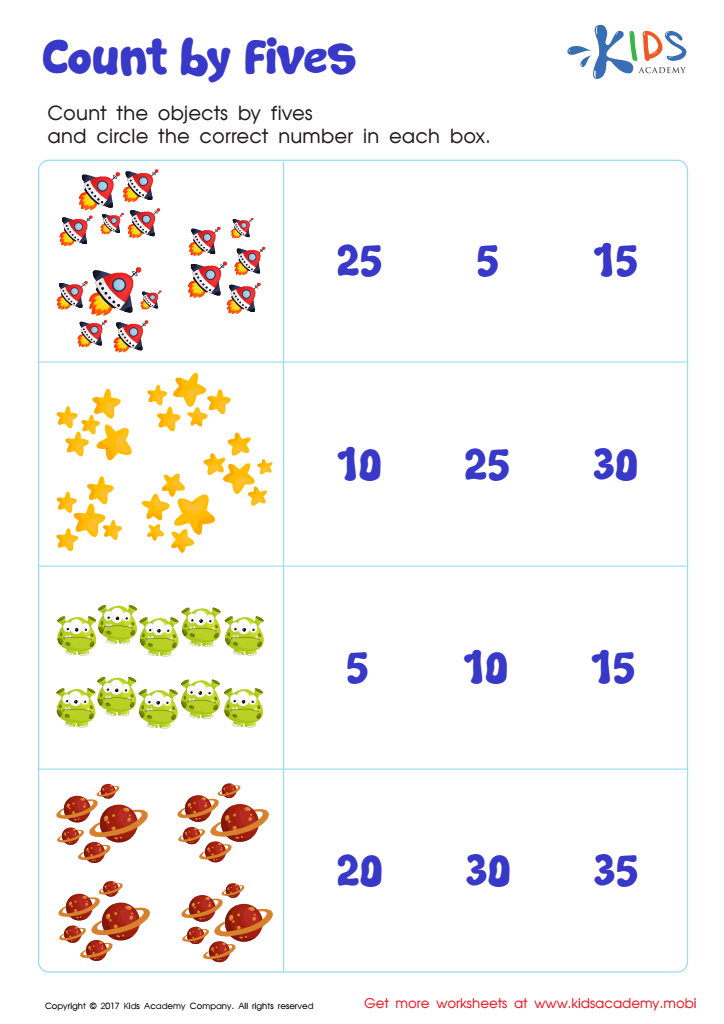
Skip Counting by 5s: Space Math Printable
 Assign to My Students
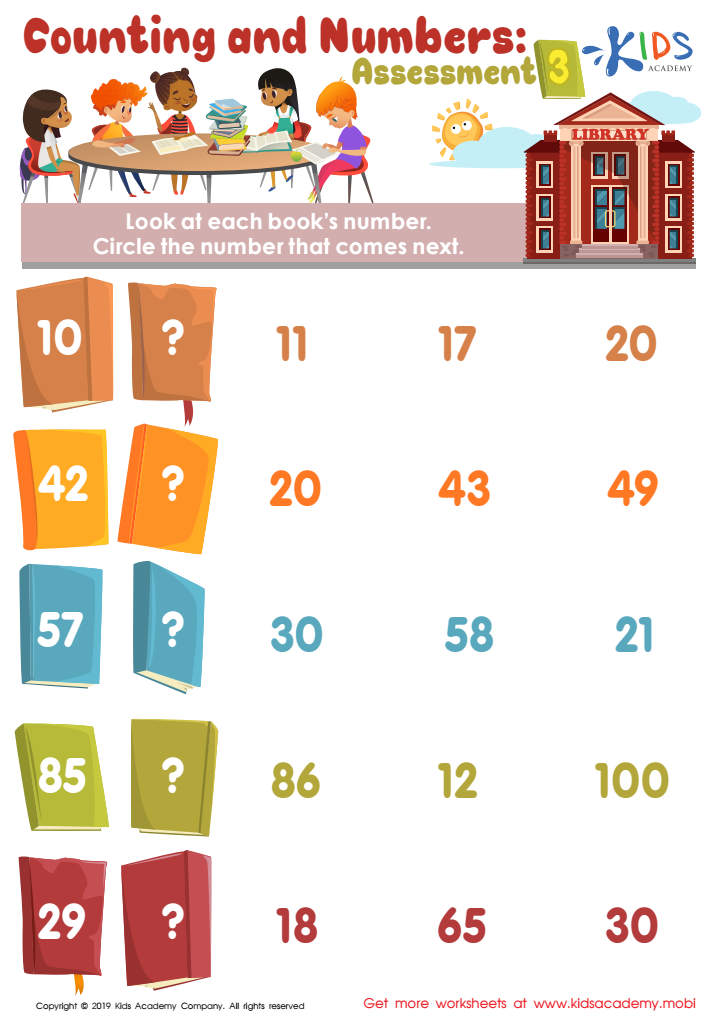
Counting and Numbers: Assessment Worksheet
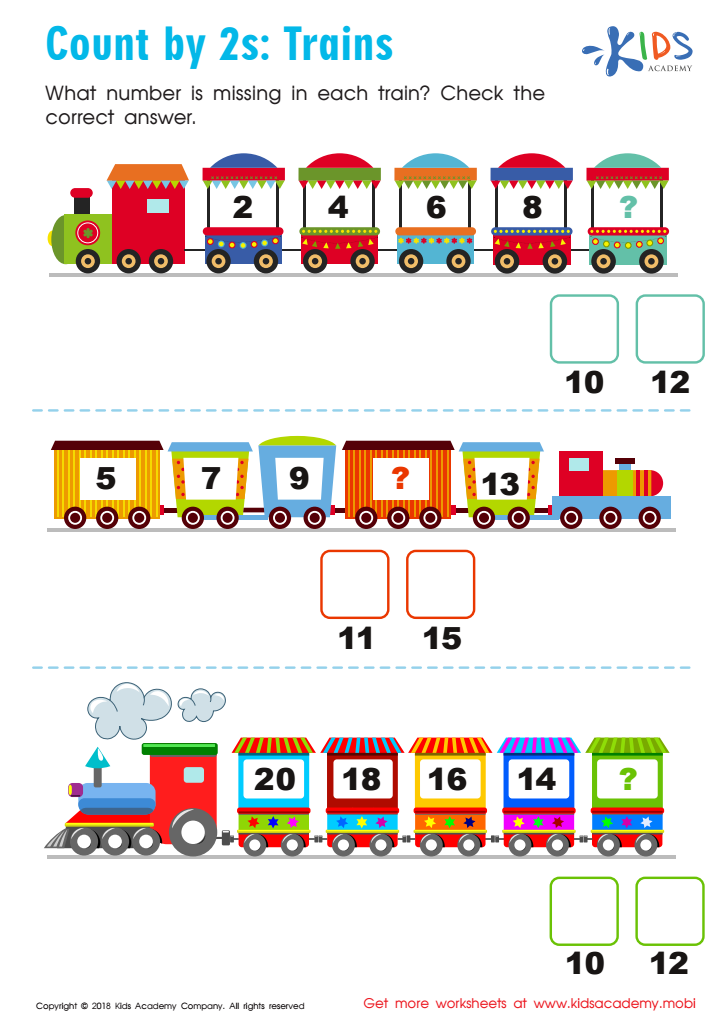
Count by 2's: Trains Worksheet





%20(1).jpg)


Developing a strong understanding of number sequencing and recognizing normal numbers up to 100 is crucial for children aged 6-8, as it lays the foundation for more advanced mathematical skills and everyday problem-solving. This age range is vital because children are transitioning from concrete to more abstract thinking.
Sequencing numbers helps children understand the order and relationship between numbers, which is essential for grasping basic arithmetic operations such as addition, subtraction, multiplication, and division. For example, knowing that 50 comes before 51 and after 49 helps children easily navigate through counting-based tasks and understand incremental changes.
Moreover, mastering number sequences enhances cognitive abilities in pattern recognition and strengthens their memory retention. These skills are not only pertinent for mathematics but also for other academic subjects and real-life scenarios, such as telling time, handling money, or organizing tasks sequentially.
Additionally, fostering number sequencing proficiency builds confidence in young learners, encouraging a positive attitude towards mathematics. When children feel competent in handling numbers, they generally exhibit increased enthusiasm to tackle more complex mathematical tasks, creating a solid groundwork for their future education. Therefore, parents and teachers should actively engage in teaching number sequencing, using interactive and practical approaches to help children appreciate and master this fundamental concept.