Filters

9 filtered results

Clear all filters
Favorites
With answer key
Interactive

9 filtered results

Difficulty Level

Grade


Explore our "Problem-Solving Skills Normal Two-Step Word Problems Worksheets" tailored for children aged 6 to 8. These engaging worksheets are designed to enhance critical thinking and problem-solving abilities in young learners through fun, relatable scenarios. Each worksheet presents age-appropriate two-step word problems that encourage students to read carefully, analyze information, and apply basic arithmetic skills. Perfect for classroom use or at-home practice, our resources foster independence and confidence in math. Watch as your child develops essential skills while enjoying the challenge of solving real-life math problems. Start fostering a love for problem-solving today with our thoughtfully crafted worksheets!

Check out this FREE Trial Lesson on Two-step Word Problems for age 6-8!

More Word Problems

Favorites
With answer key
Interactive
  • 6-8
  • Problem-Solving Skills
  • Two-step Word Problems
  • Normal
Tricky Problems Worksheet: Part 1

Tricky Problems Worksheet: Part 1

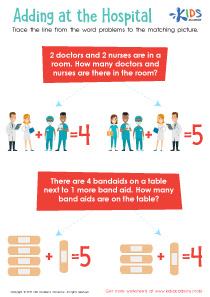
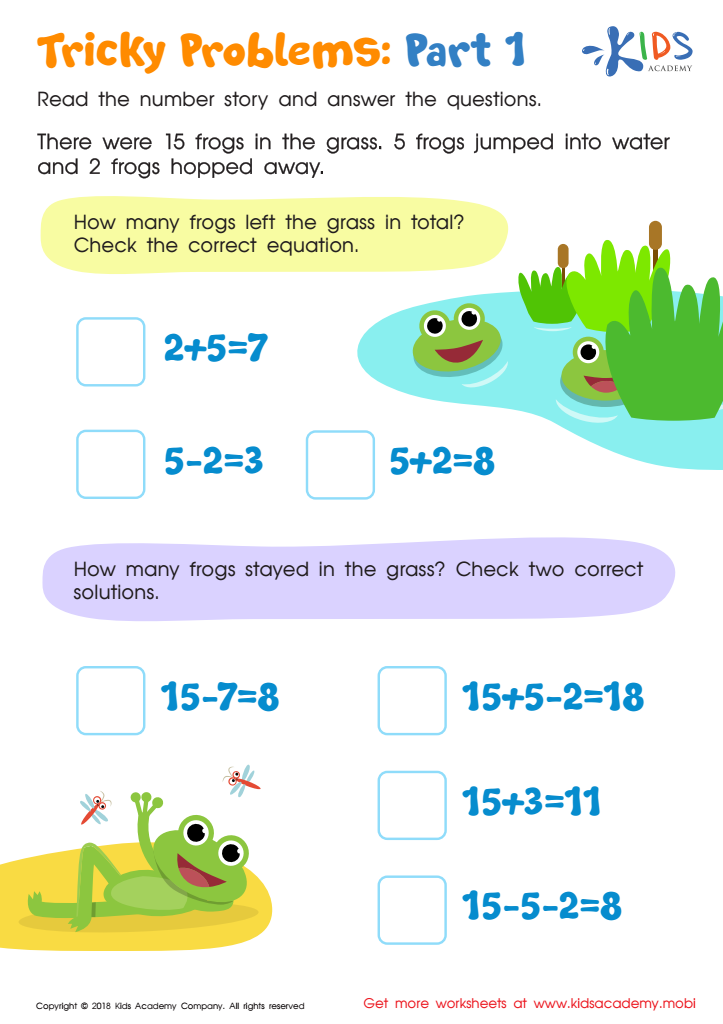
Visualizing word problems can help students solve them. This fun PDF worksheet encourages students to create mental images using math facts, then check boxes to match the equations for basic addition problems. It's a great way to build confidence in solving math.
Tricky Problems Worksheet: Part 1
Worksheet
Enrichment -2 Step Word Problems Worksheet

Enrichment -2 Step Word Problems Worksheet

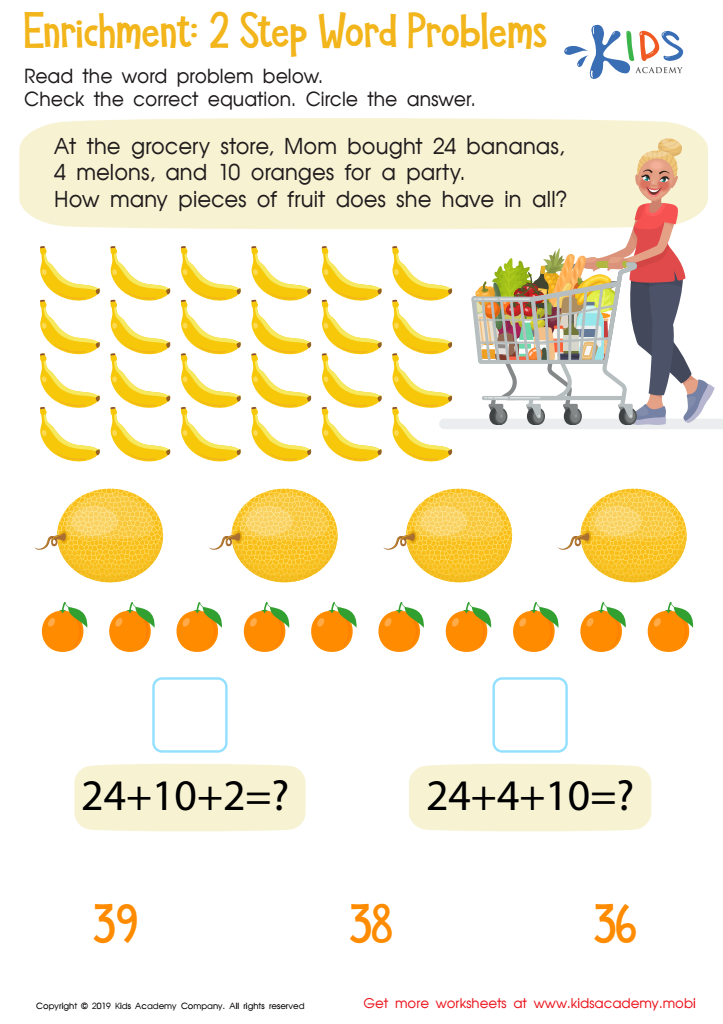
Help your students learn math easier and faster with this colorful worksheet. Read the word problem and then guide them in checking the correct equation and finding the answer. Your students will benefit from the extra help, as they work through new concepts each day.
Enrichment -2 Step Word Problems Worksheet
Worksheet
Fruity Problem Solving Worksheet

Fruity Problem Solving Worksheet

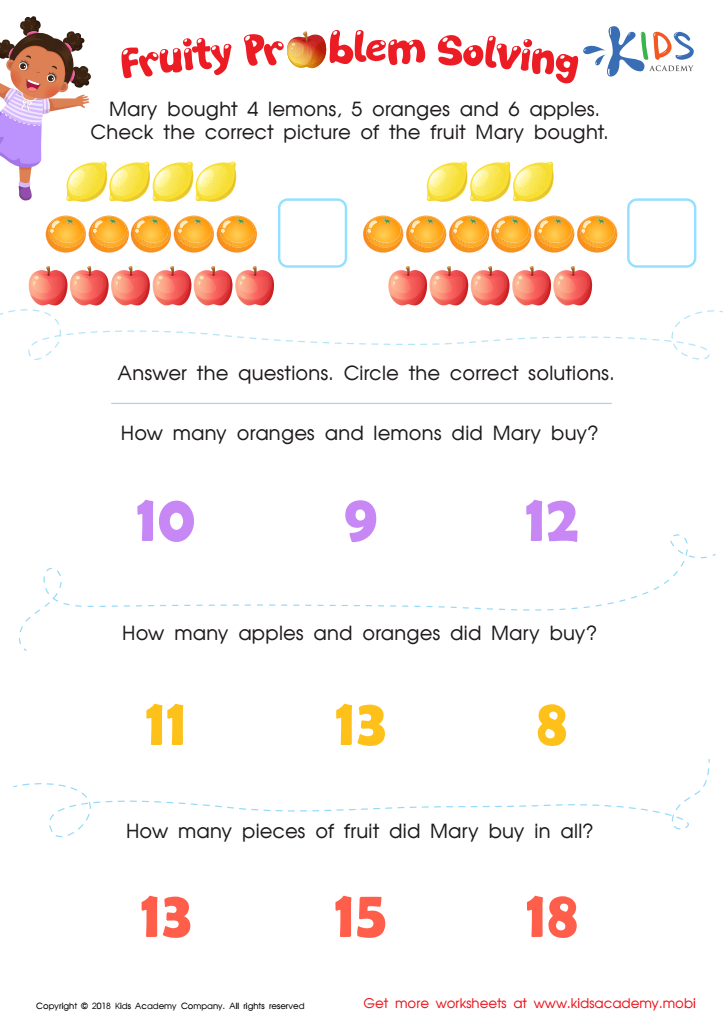
Practice addition word problems with young mathematicians using this PDF worksheet featuring fruit. As they read each problem carefully and circle the correct sums, they'll reinforce attention to detail and fine motor skills. Tangible representations are key to helping them with basic addition.
Fruity Problem Solving Worksheet
Worksheet
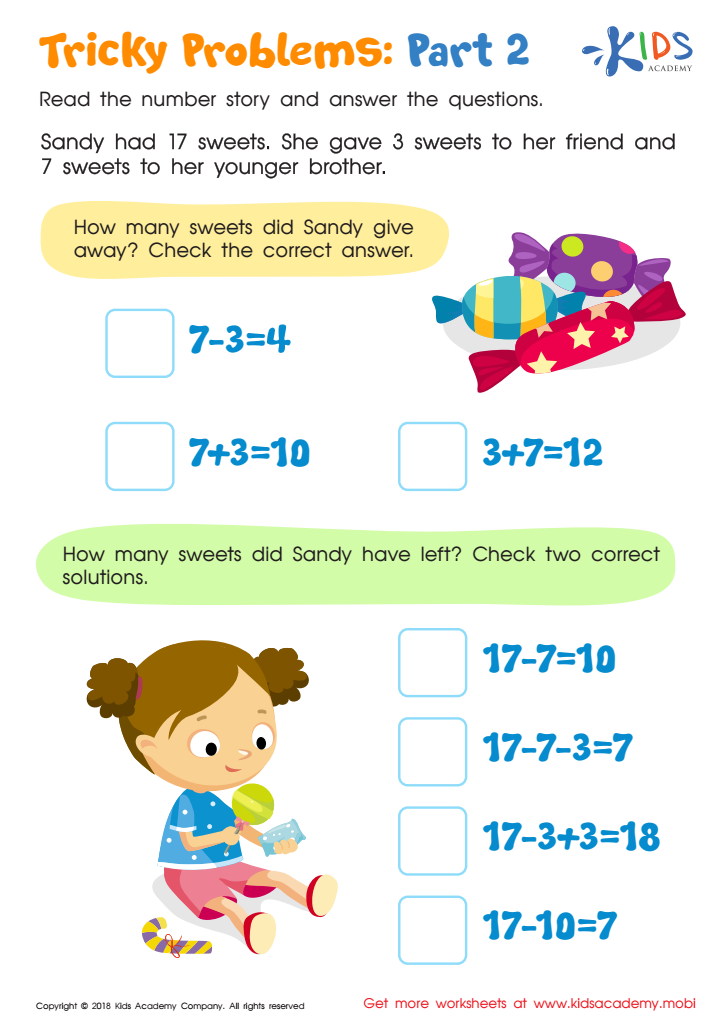
Tricky Problems Worksheet: Part 2

Tricky Problems Worksheet: Part 2

Help your little math learner visualize number stories with this engaging worksheet. They'll connect pictures to the story and use math facts to find the sums. After that, they'll be able to identify the correct number sentences to match. Let them practice and get better at problem solving!
Tricky Problems Worksheet: Part 2
Worksheet
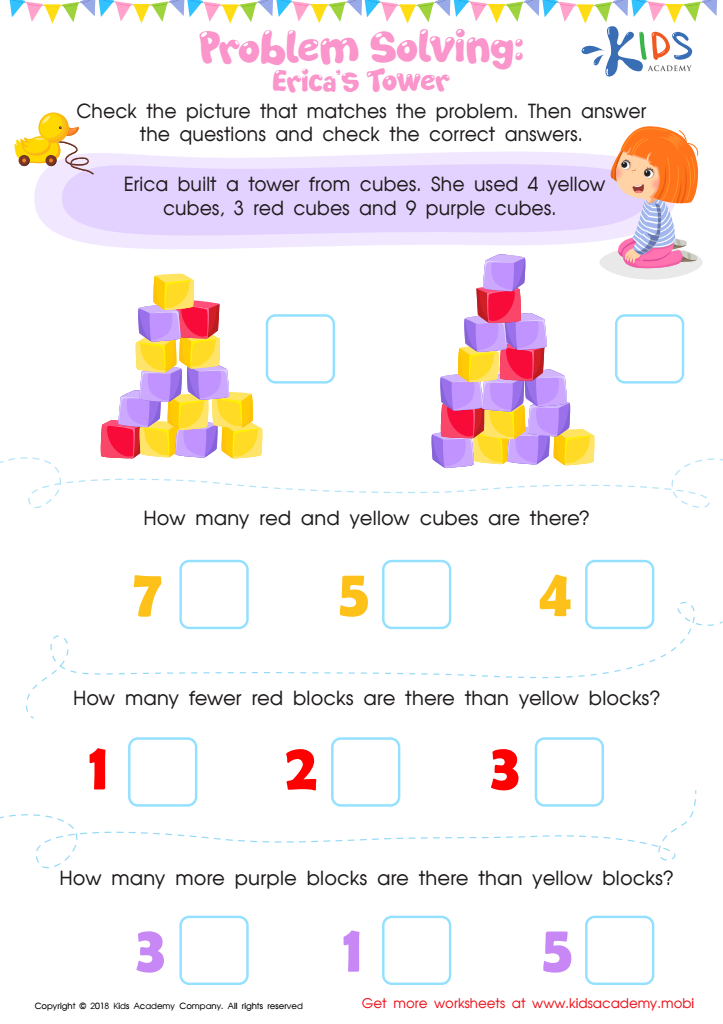
Problem Solving: Erica's Tower Worksheet

Problem Solving: Erica's Tower Worksheet

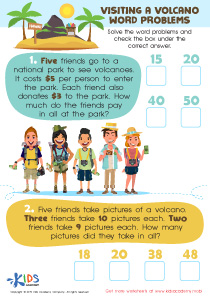
Sweet Erica needs your math student's help! Download the PDF worksheet and have your little math whiz read the word problems, match the pictures and solve basic addition/subtraction problems with two/three addends, minuends and subtrahends. They'll be having fun while strengthening their math fact skills!
Problem Solving: Erica's Tower Worksheet
Worksheet
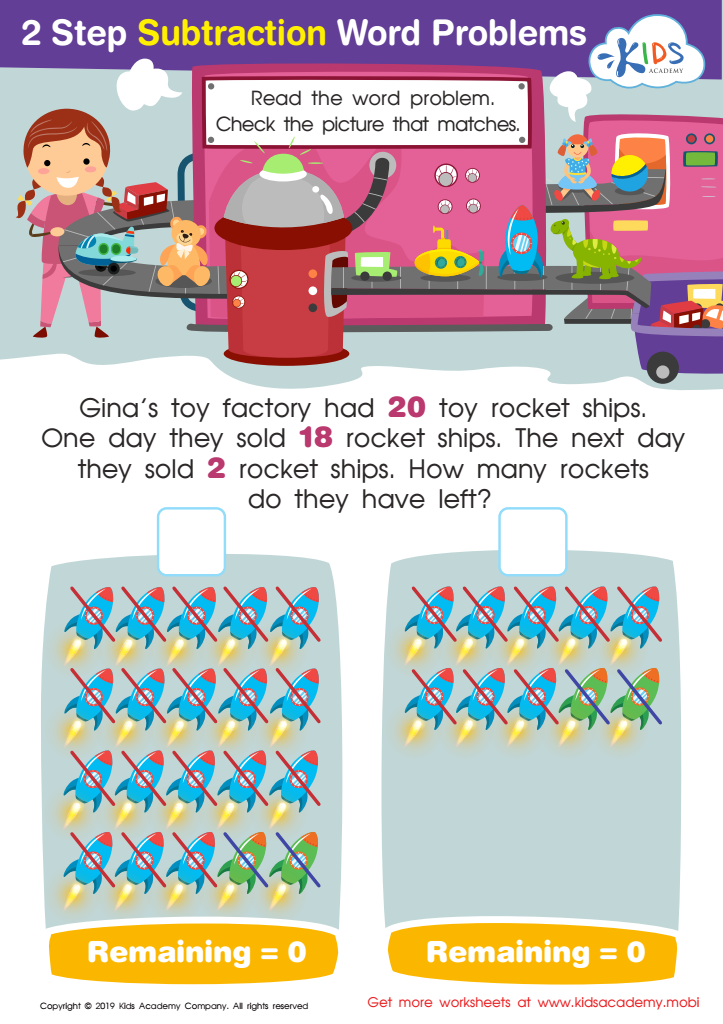
Step Subtraction Word Problems Worksheet

Step Subtraction Word Problems Worksheet

With this worksheet, kids can solve a multi-step subtraction problem with one-to-one number representation, helping Gina figure out her rocket count. Visualizing word problems is key, and this PDF will give your child a concrete image to work with. They'll be successful problem solvers in no time!
Step Subtraction Word Problems Worksheet
Worksheet
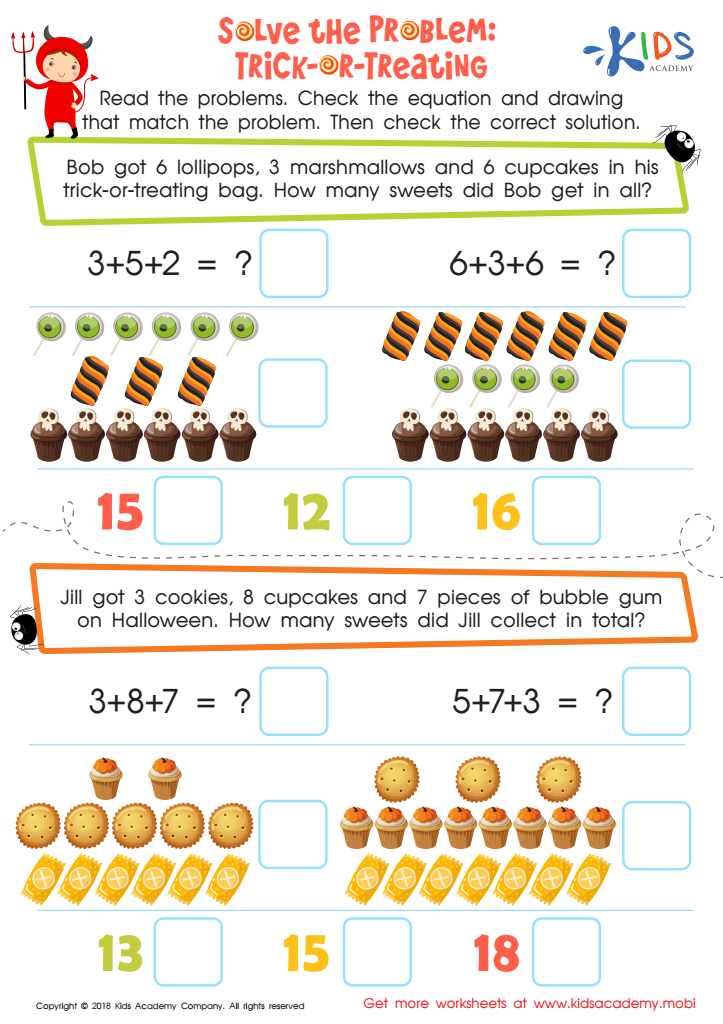
Solve the Problem: Trick–or–treating Worksheet

Solve the Problem: Trick–or–treating Worksheet

Kids will love this fun PDF worksheet for trick-or-treating! It's packed with yummy images and math practice. They can read the word problems, count and add numbers, check their answers, and match the addition equations with the pictures. Math made delicious!
Solve the Problem: Trick–or–treating Worksheet
Worksheet
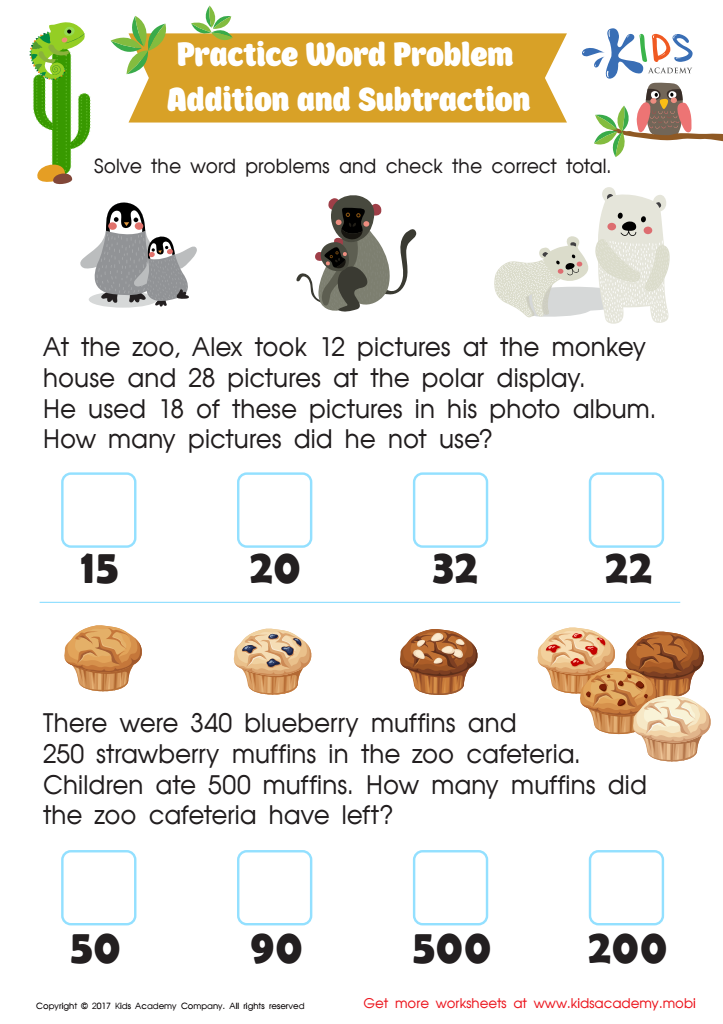
Addition and subtraction word problem worksheet for 3rd grade

Addition and Subtraction: Word Problems Worksheet
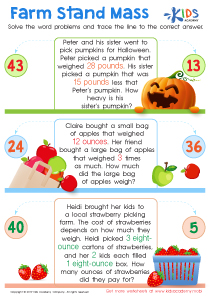
Word problems can be difficult, but they offer another way to understand math. Our 3rd grade worksheet takes your child to the zoo; two intriguing word problems will test their thinking skills and help them find the total.
Addition and Subtraction: Word Problems Worksheet
Worksheet
Vegetable Gardens Worksheet


Vegetable Gardens Worksheet

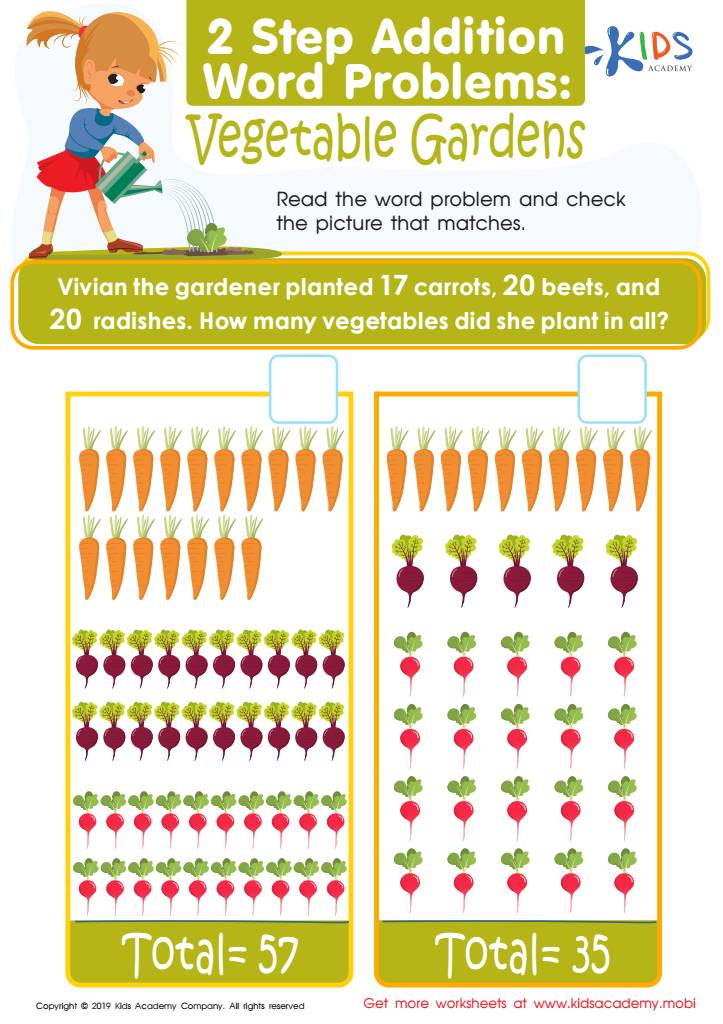
Kids will have fun helping their buddy Vivian solve the addition word problems. Using one-to-one representation, they'll count the beets, carrots and radishes, then figure out the multi-step word problems. After, they'll check the picture that matches the answer, boosting their understanding of adding multiple numbers for one answer.
Vegetable Gardens Worksheet
Worksheet


Problem-solving skills, particularly in the context of two-step word problems, are vital for children aged 6-8 as they lay the groundwork for critical thinking and mathematics proficiency. At this age, children are honing their cognitive skills, and engaging with word problems helps them learn to interpret information, identify relevant data, and develop logical reasoning. These skills are essential for navigating everyday situations, from handling money to planning activities, ensuring that children grow into capable, independent decision-makers.

For teachers and parents, fostering problem-solving abilities promotes persistence and resilience, particularly when faced with challenges. When children solve two-step problems, they learn the value of breaking tasks down into manageable parts, improving their focus and patience. This not only benefits their math skills but also translates to other areas of learning.

Moreover, in a world increasingly reliant on analytical abilities, cultivating these skills prepares children for future academic and career success. By encouraging engagement with problem-solving tasks, teachers and parents contribute to a foundation where children feel confident tackling complex situations. Ultimately, prioritizing problem-solving in early education nurtures critical skills essential for both their current studies and lifelong learning.