Contextual understanding Normal Reading Worksheets for Ages 6-8
5 filtered results
-
From - To
Discover our engaging Normal Reading Worksheets designed for kids ages 6-8 to enhance their contextual understanding skills. These worksheets focus on teaching young learners how to comprehend text by analyzing context clues and deriving meaning. With a variety of fun and interactive activities, children will practice identifying relationships between words and phrases, enhancing vocabulary, and improving overall reading skills. Our carefully crafted resources cater to different learning styles, making reading an enjoyable experience. Perfect for at-home learning or classroom use, these printable worksheets provide educators and parents with the tools needed to support early literacy and boost confidence in young readers.
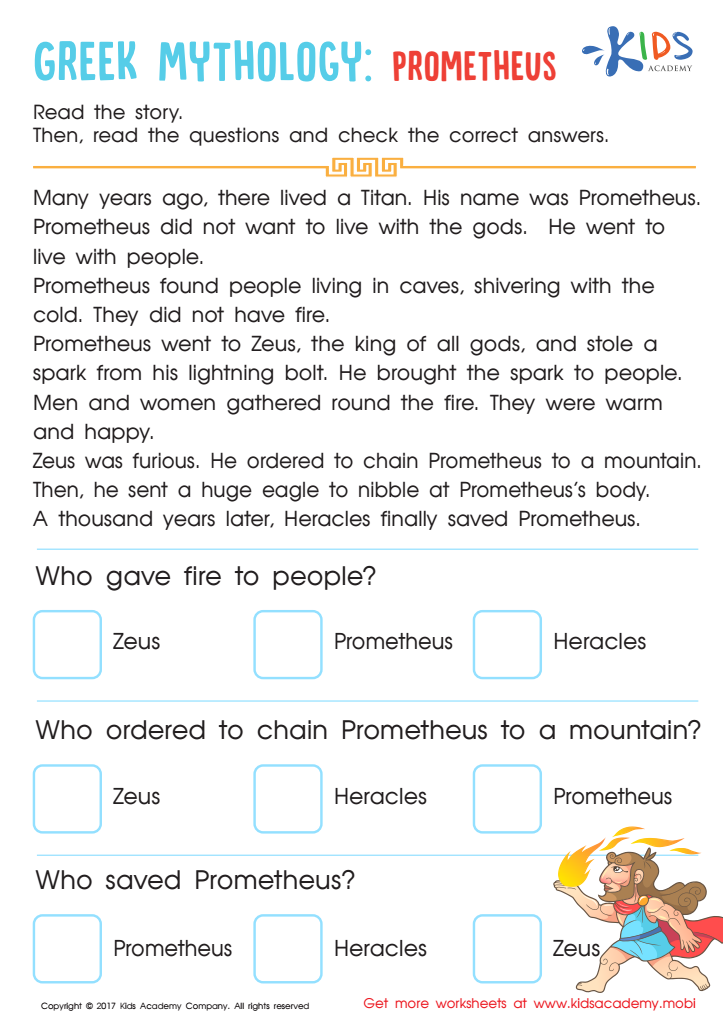
Prometheus Story Worksheet
 Assign to My Students
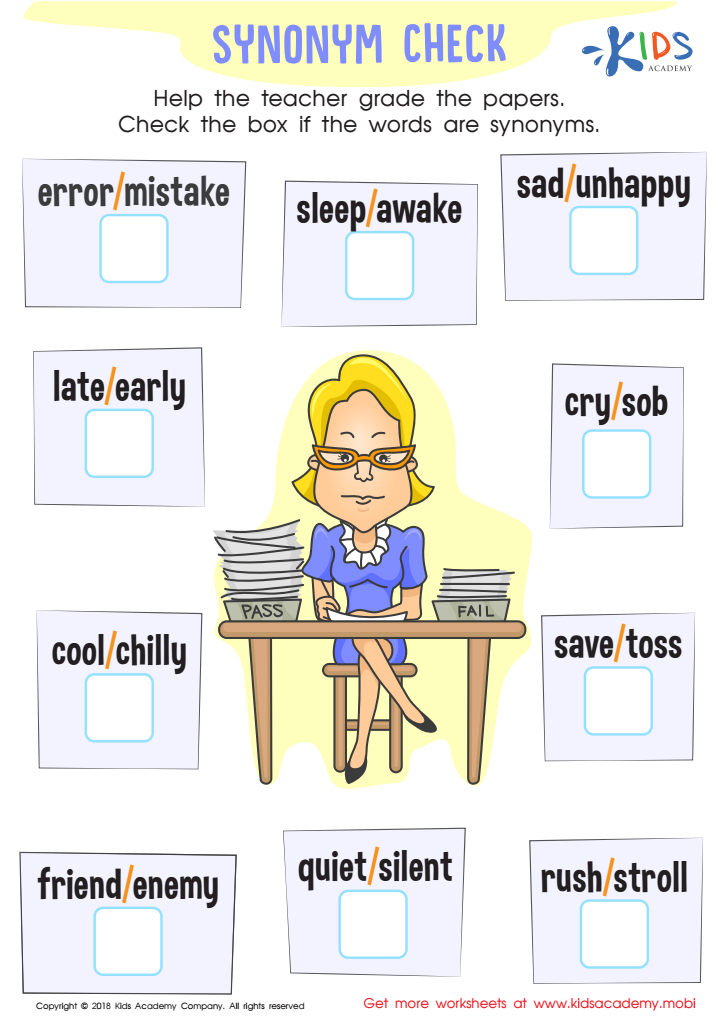
Synonym Check Worksheet
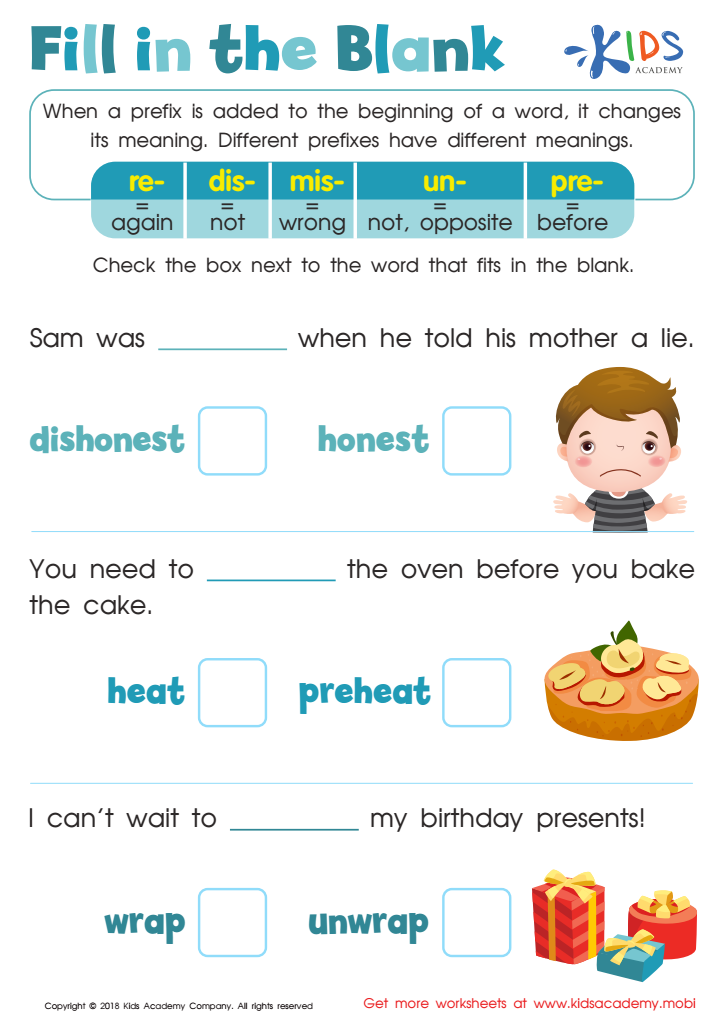
Reading: Fill in the Blank Worksheet
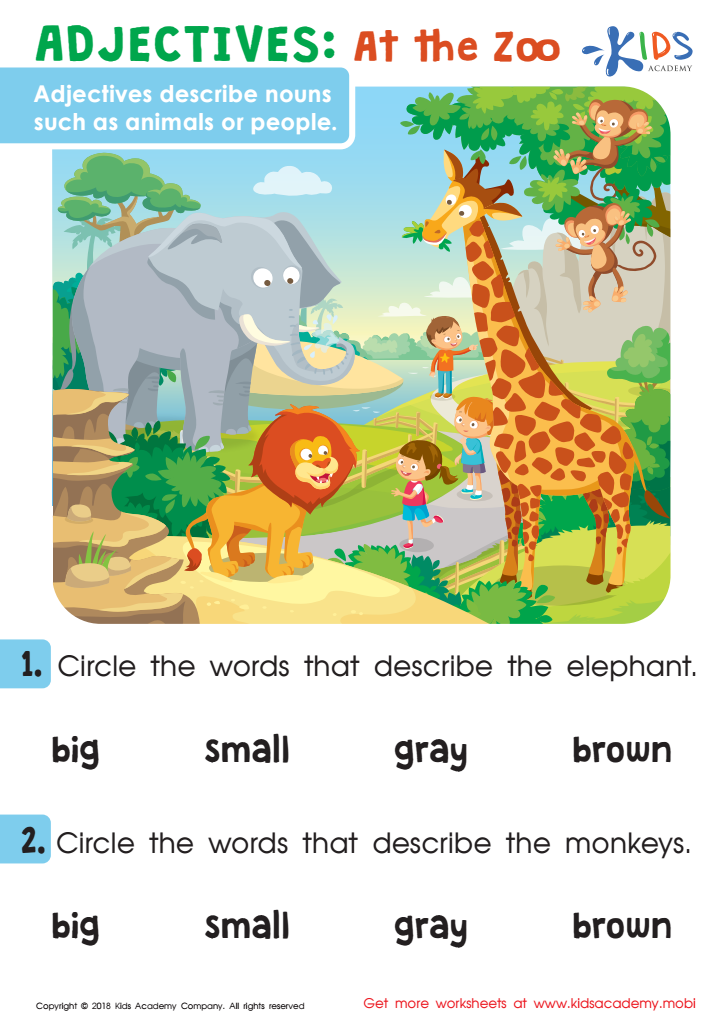
Adjectives: At The Zoo Worksheet
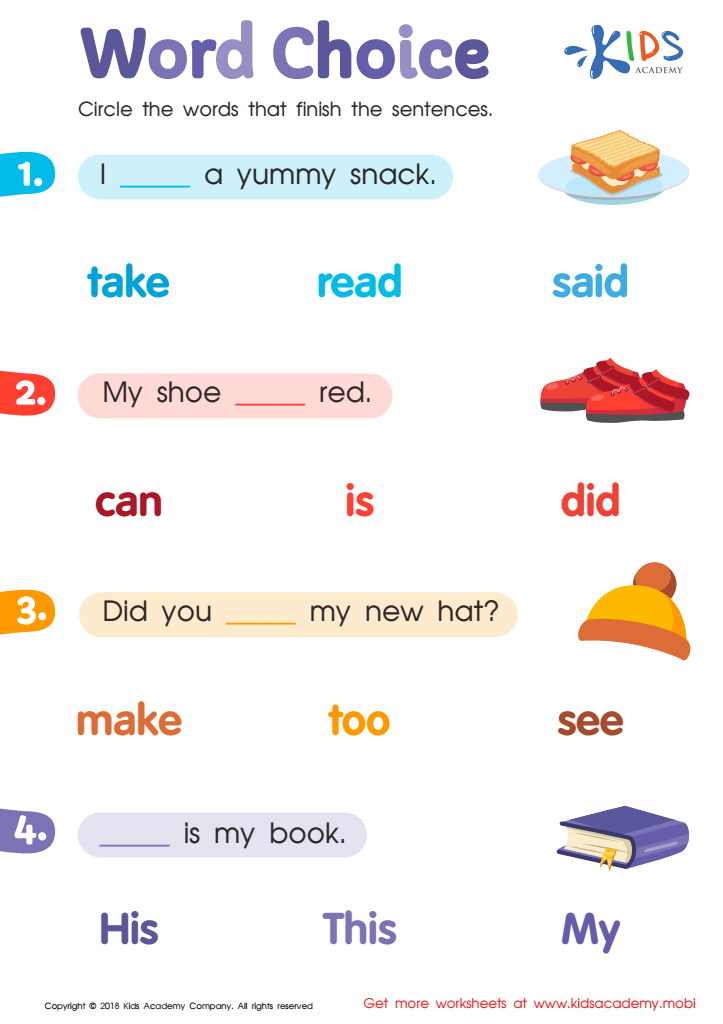
Word Choice Worksheet







.jpg)
Contextual understanding is crucial for children aged 6-8 as they develop essential reading skills. At this age, kids are transitioning from learning to read to reading to learn. Contextual understanding helps them make sense of texts by connecting words to their meanings based on surrounding information and the overall theme. When teachers and parents prioritize this skill, they foster deeper comprehension, critical thinking, and enhanced vocabulary.
Children are more likely to engage with texts when they can relate to the context, which nurtures a lifelong love for reading. Understanding context assists learners in predicting, inferring, and summarizing—skills necessary for academic success. Furthermore, developing this skill reduces frustration, as children grasp the material more easily, enhancing their confidence and motivation.
By engaging with children's literature, discussing characters' motivations, and encouraging predictions about storylines, caregivers and educators can support contextual understanding. Activities like contextual storytelling or contextual vocabulary games encourage a richer understanding of language. Ultimately, prioritizing contextual understanding not only aids children's literacy but also equips them with the cognitive tools to navigate broader meanings in texts, setting a strong foundation for future learning and critical engagement in all subjects.








