Critical Thinking Normal Reading Worksheets for Ages 6-8 - Page 2
37 filtered results
-
From - To
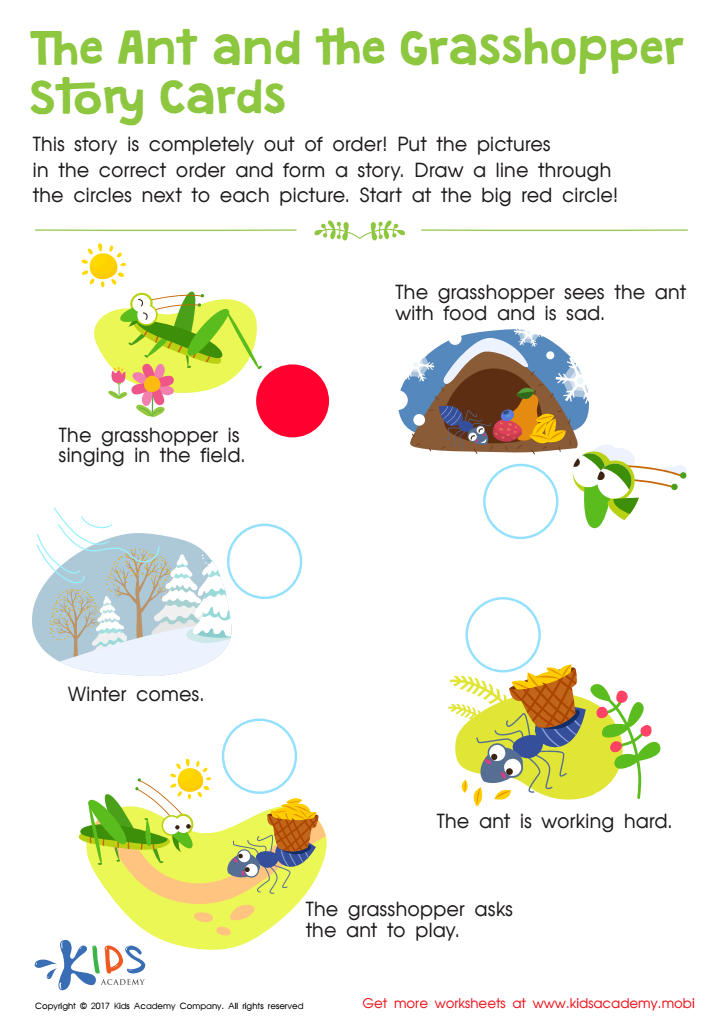
The Ant and The Grasshopper Worksheet
 Assign to My Students
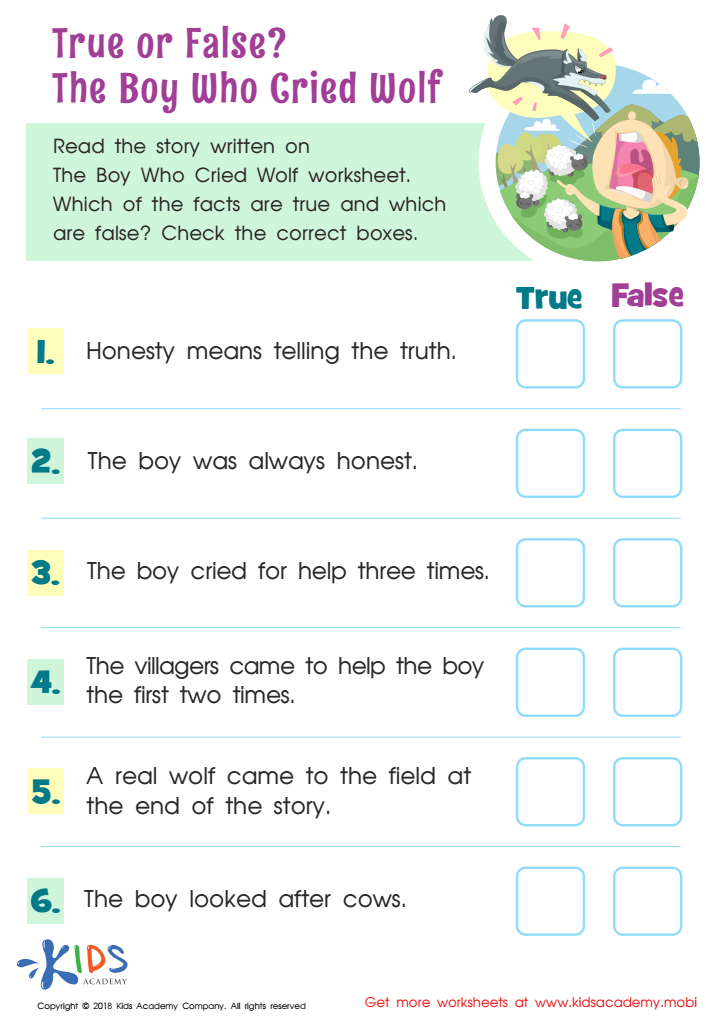
True or False? The Boy Who Cried Wolf Worksheet
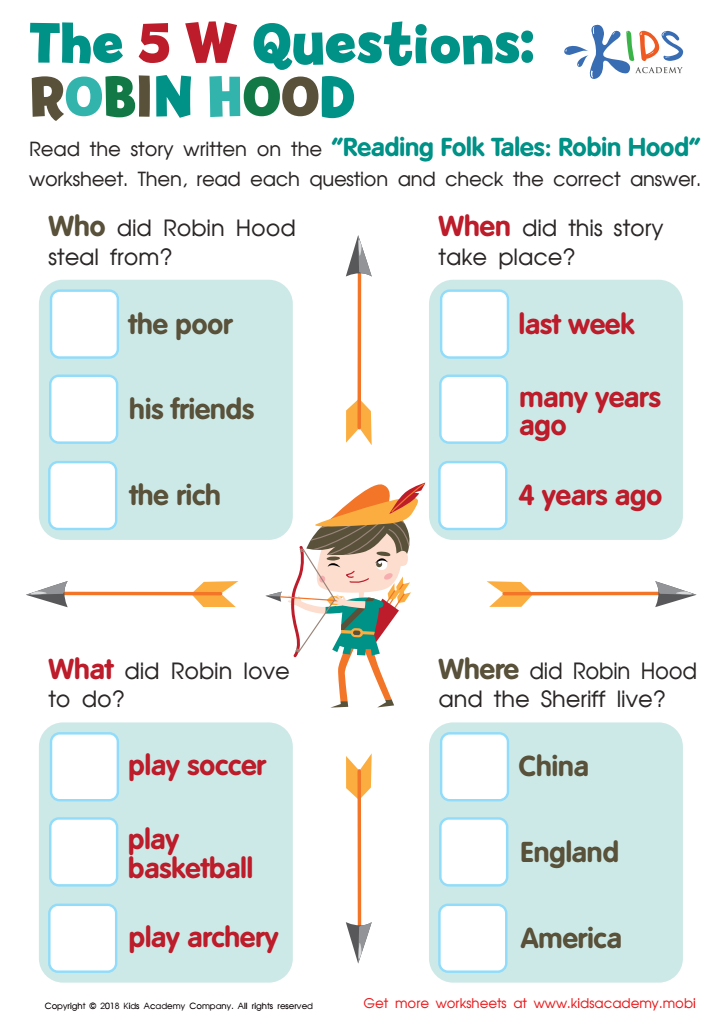
The 5 W Questions: Robin Hood Worksheet
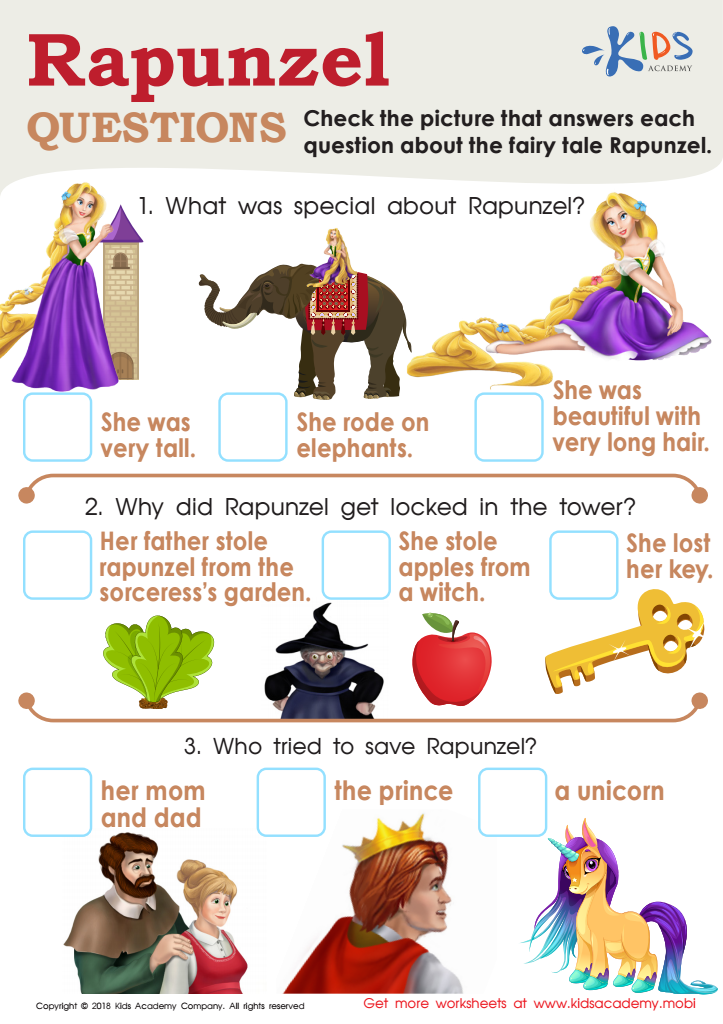
Rapunzel Questions Worksheet
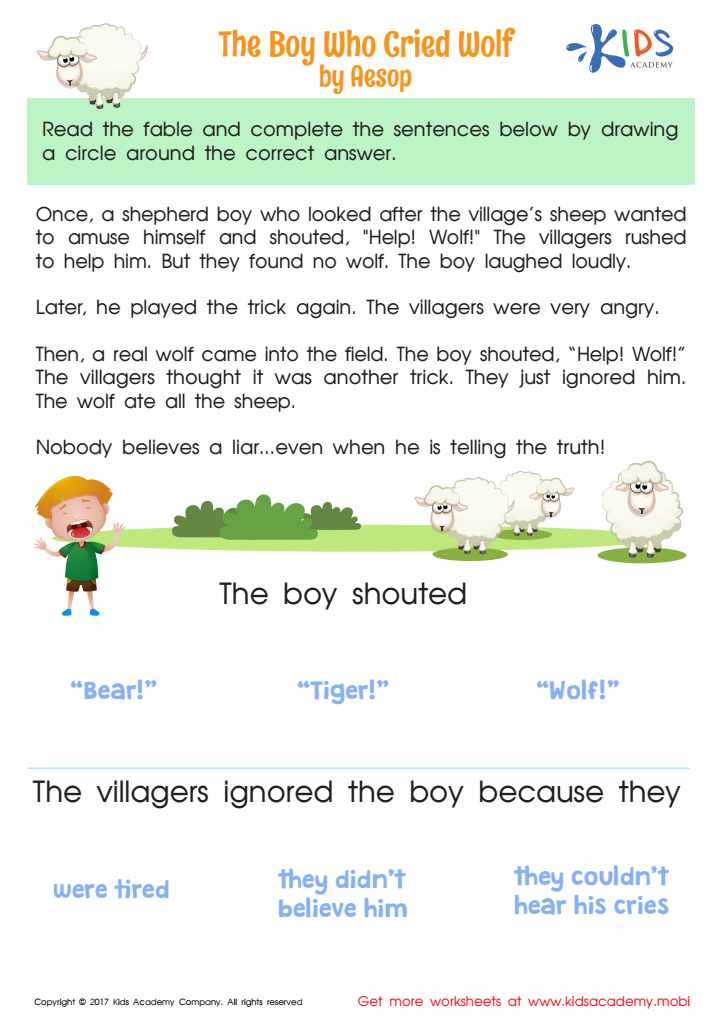
The Boy Who Cried Wolf Worksheet
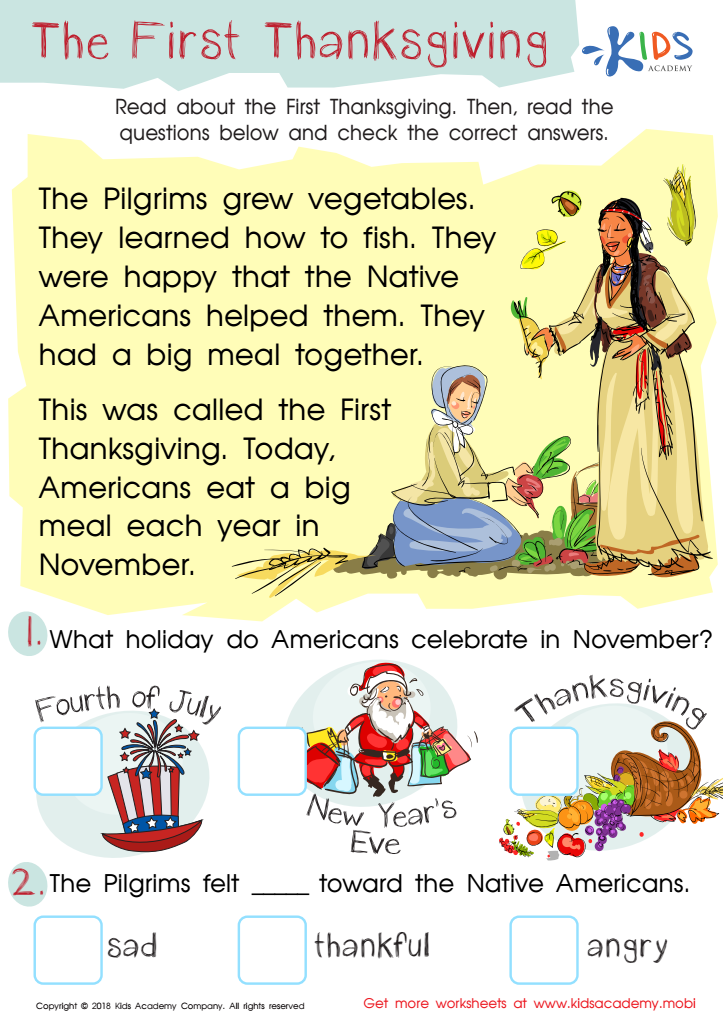
Assessment: First Thanksgiving Worksheet
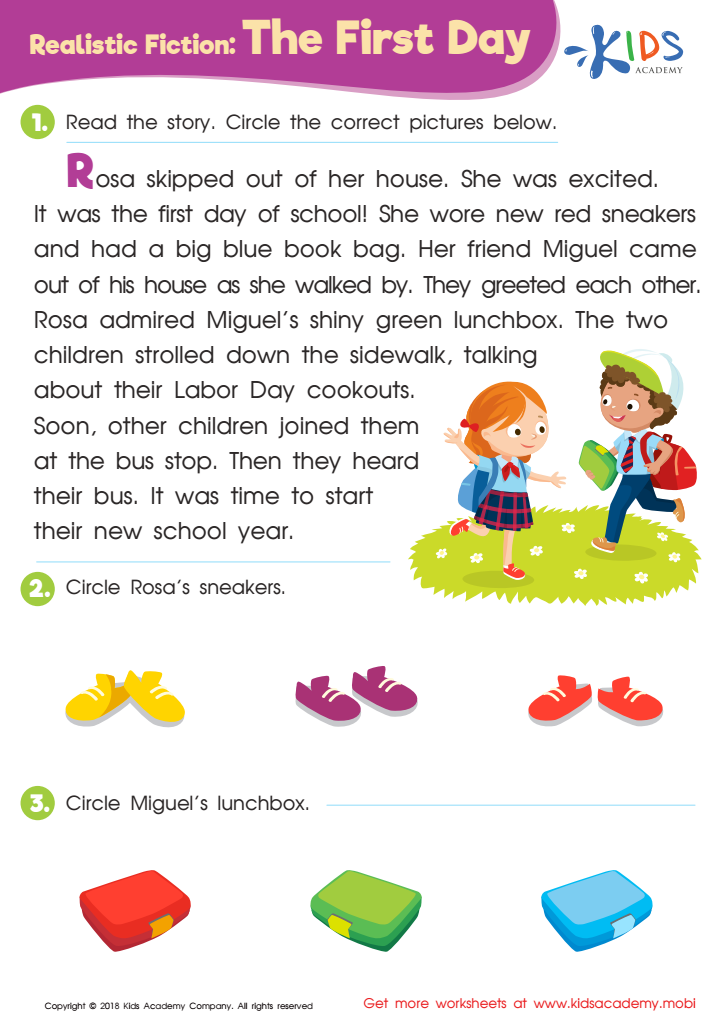
Realistic Fiction: The First Day Worksheet
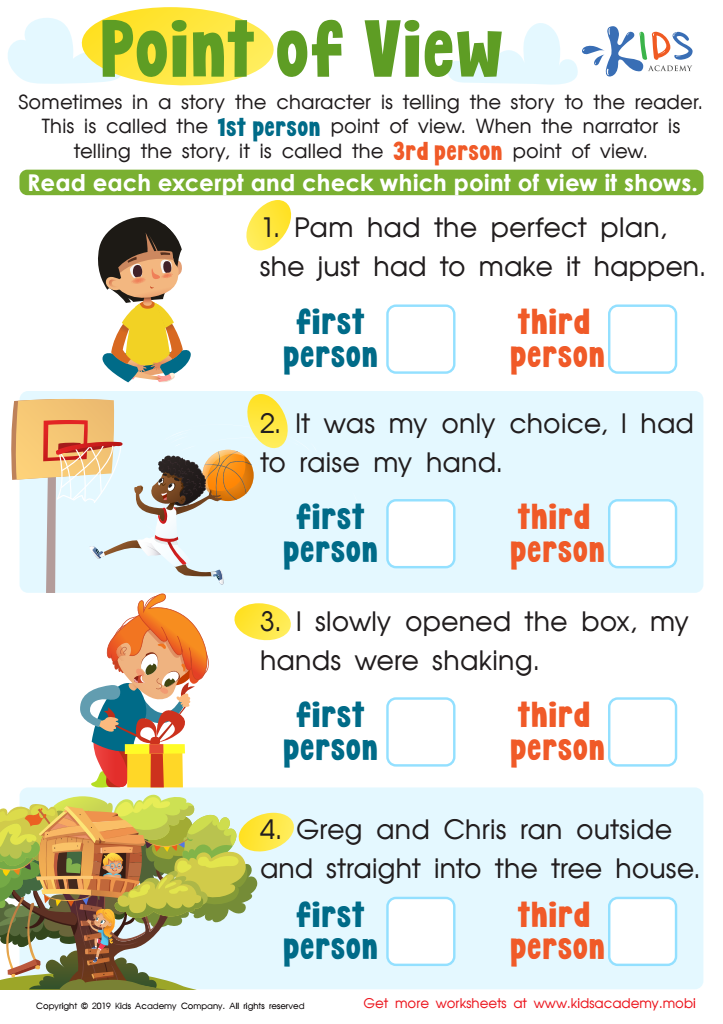
Point of View Printable
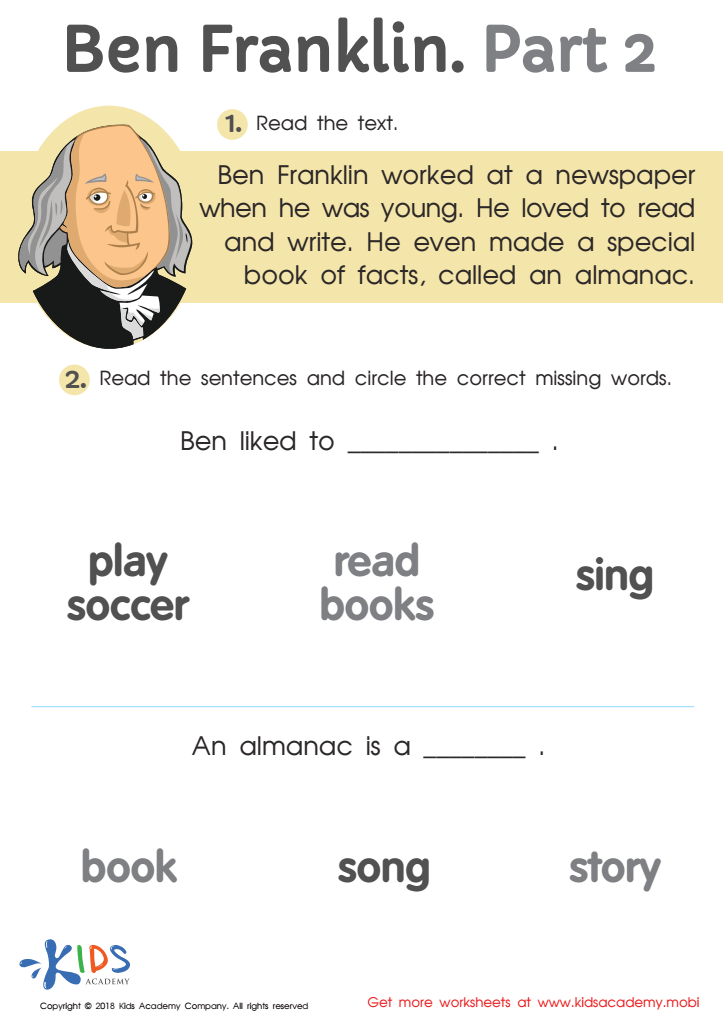
Ben Franklin Part 2 Worksheet
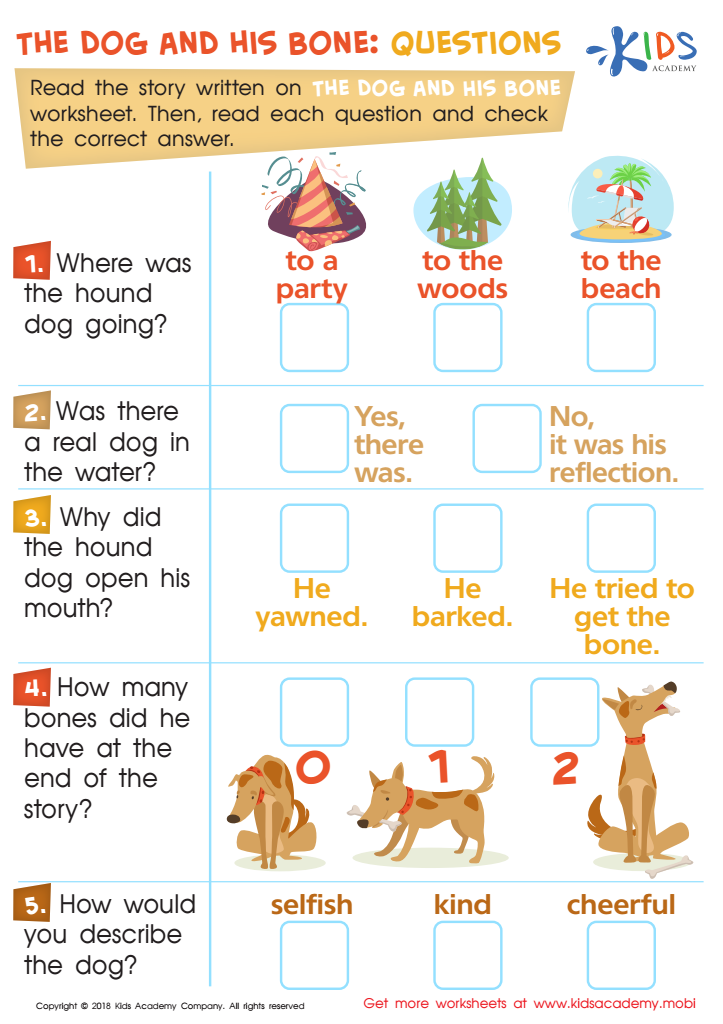
The Dog and His Bone: Questions Worksheet
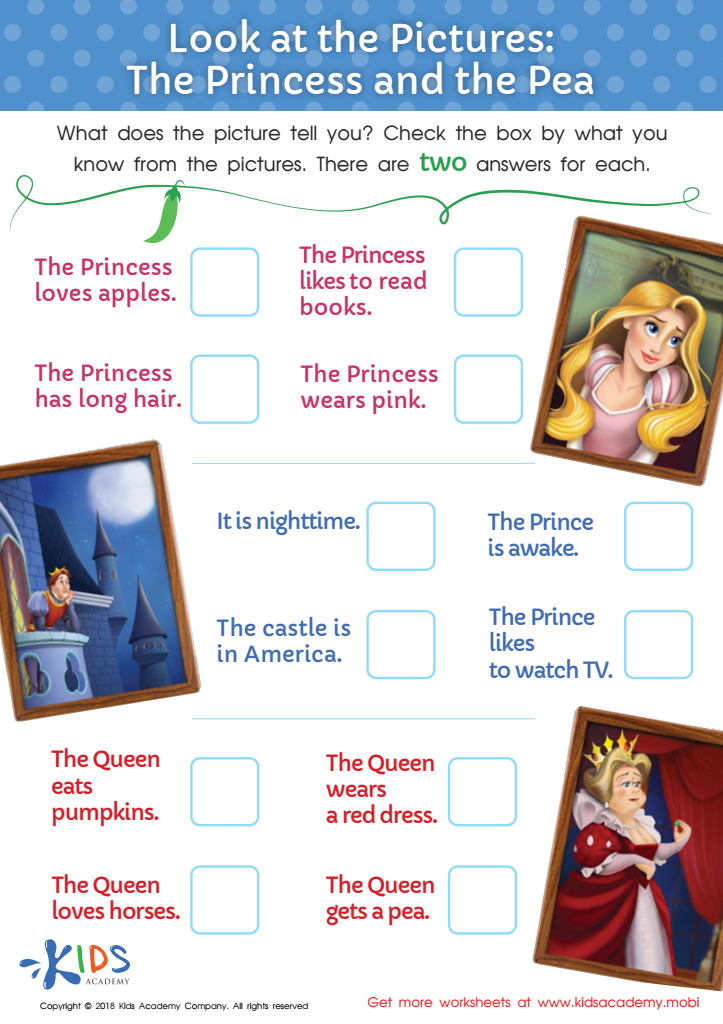
Look at the Pictures: The Princess and the Pea Worksheet
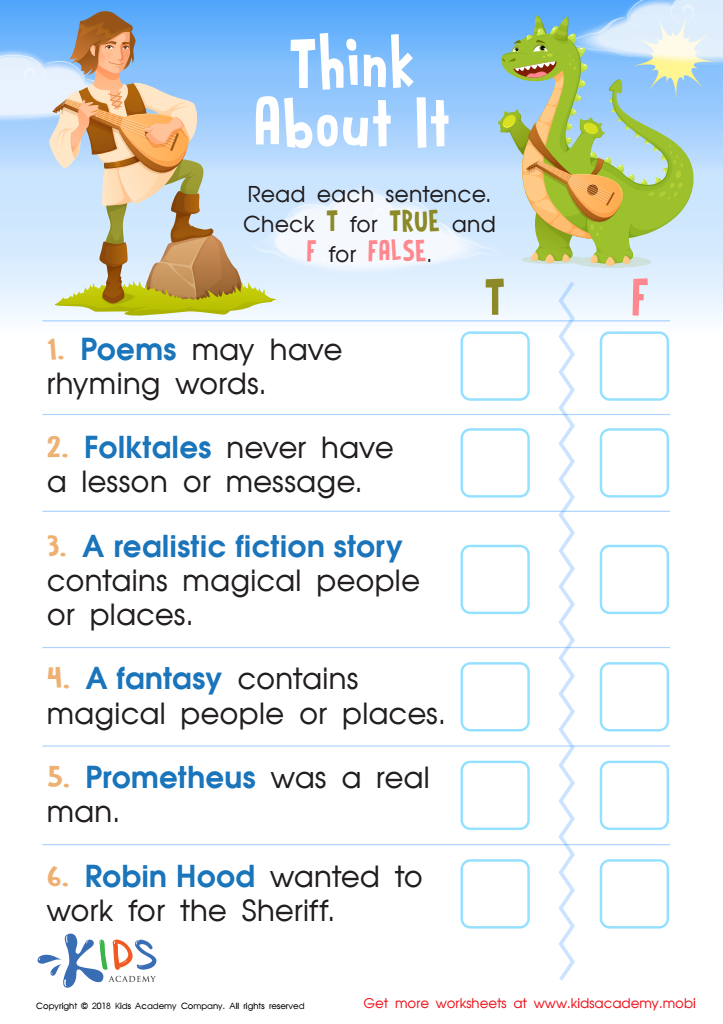
Think About It: Assessment Worksheet
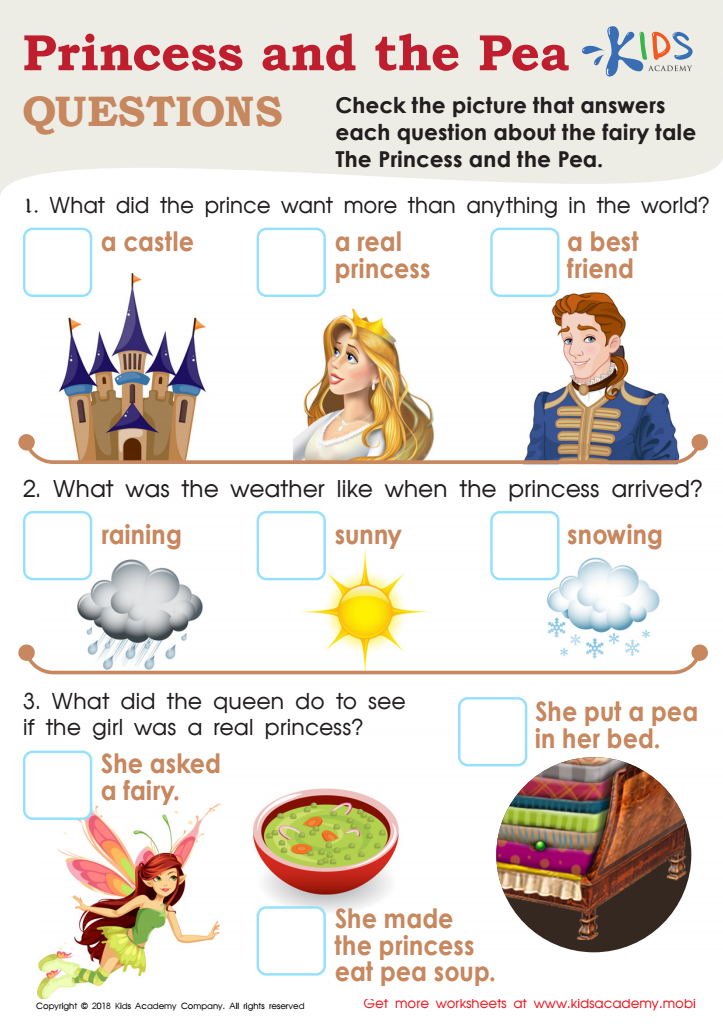
Princess and the Pea Questions Worksheet








Critical thinking and normal reading skills are crucial for children ages 6-8 as they significantly impact long-term educational success and cognitive development. At this developmental stage, children transition from simply recognizing words to understanding and interpreting text. Parents and teachers must prioritize critical thinking and normal reading for several reasons.
First, critical thinking enhances comprehension. It allows children to not just read words but to grasp underlying concepts, infer meanings, and connect ideas. This deepens their understanding and retention of information, fostering a habit of reflective thinking that is valuable in all learning areas.
Second, proficient reading skills build a strong academic foundation. Early readers with effective decoding and comprehension skills are likelier to excel in various subjects. They approach learning with confidence, developing a love for reading that can lead to lifelong learning and curiosity.
Moreover, critical thinking promotes problem-solving abilities. It encourages children to question, analyze, and critique information, which is essential in navigating an increasingly complex world. They become more adept at constructing logical arguments, understanding different perspectives, and making informed decisions.
In summary, fostering critical thinking through normal reading at ages 6-8 equips children with essential skills for academic success and personal growth. Parents and teachers who invest in these areas help build a generation of thoughtful, literate individuals prepared to meet future challenges.








