Phonics recognition Normal Reading Worksheets for Ages 6-8
4 filtered results
-
From - To
Explore our engaging phonics recognition worksheets tailored for children aged 6-8! Designed to enhance reading skills, these printable worksheets provide a variety of fun activities that help kids learn sound-letter associations, decode words, and improve fluency. Featuring colorful illustrations and interactive exercises, our resources make learning to read exciting and effective. Perfect for both classroom and home use, these worksheets support early literacy development by reinforcing phonetic concepts through practice and creativity. Help your child build confidence in their reading abilities and cultivate a lifelong love for learning with our expertly crafted phonics recognition materials!
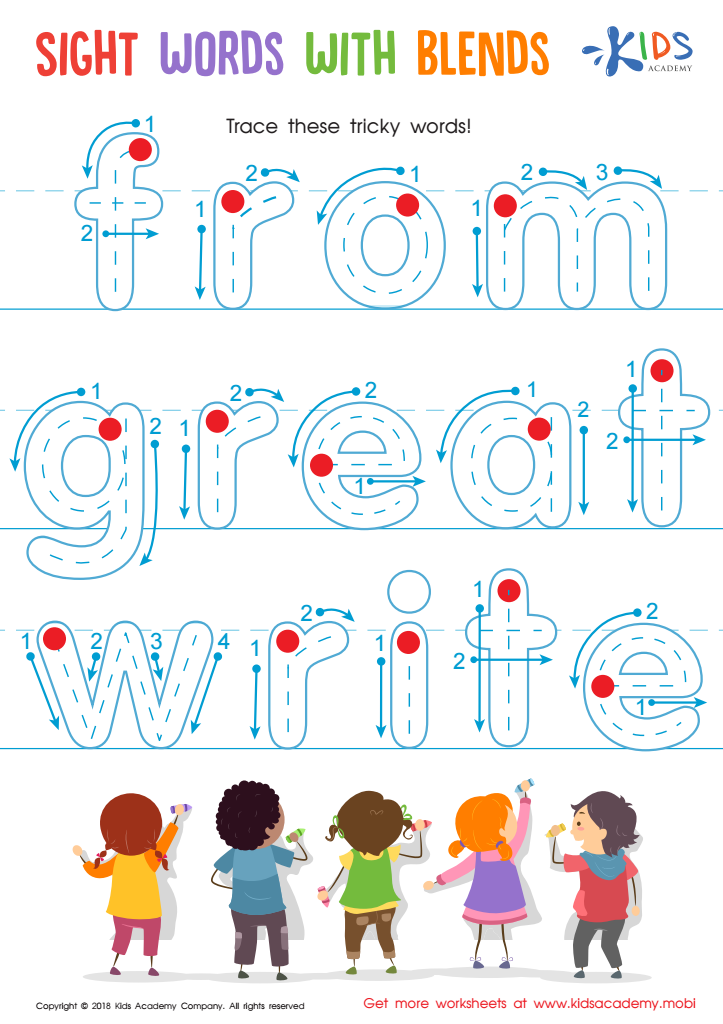
Sight Words with Blends Worksheet
 Assign to My Students
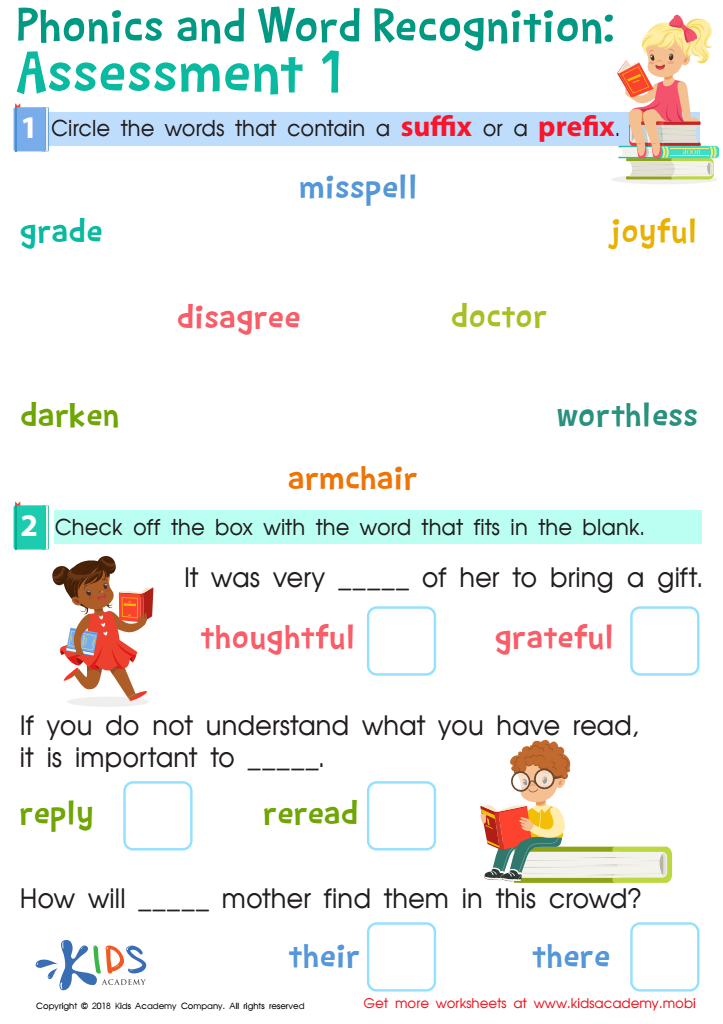
Phonics and Word Recognition: Assessment 1 Worksheet
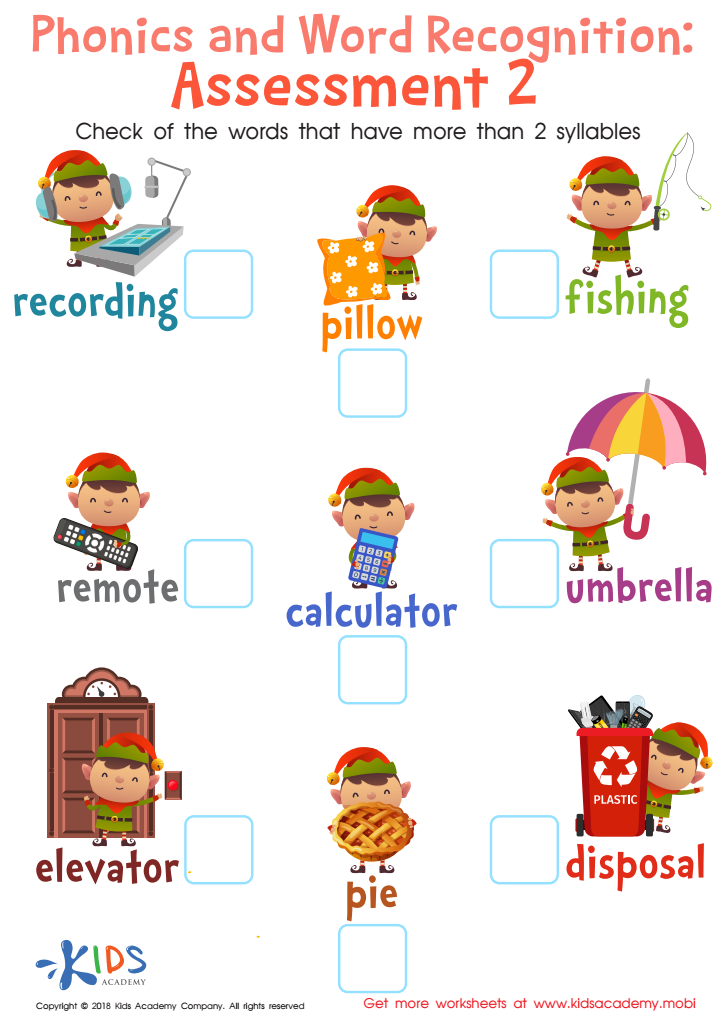
Phonics and Word Recognition: Assessment 2 Worksheet
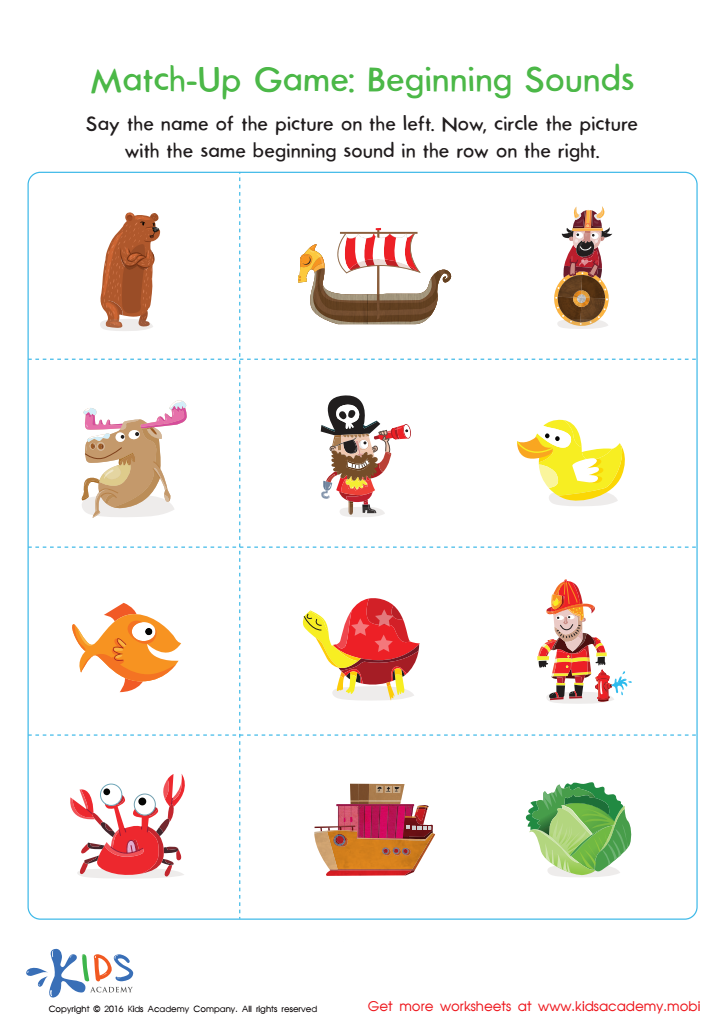
Match–Up Game: Beginning Sounds Worksheet








Phonics recognition and normal reading skills are crucial for children aged 6-8 as they form the foundation for successful literacy development. During these formative years, children transition from learning to read to reading to learn, making phonics an essential component of their education. Phonics helps children understand the relationship between sounds and letters, enabling them to decode words efficiently. This skill not only fosters independent reading but also enhances comprehension, crucial for other subjects.
Parents and teachers should prioritize phonics instruction because it equips children with the tools they need to explore literature, express ideas, and communicate effectively. High levels of phonics recognition lead to greater confidence in reading, which encourages a love for literature and learning. Furthermore, strong reading skills correlate with academic success, impacting future educational opportunities.
Ignoring phonics can lead to reading difficulties, impacting self-esteem and consistent academic performance. Parents and teachers are vital in creating supportive literacy environments, ensuring that children build these essential skills through engaging activities, practice, and reinforcement. By prioritizing phonics recognition, they play a pivotal role in shaping competent readers who can thrive in school and beyond, thus nurturing a lifelong appreciation for reading.