Understanding perspectives Normal Reading Worksheets for Ages 6-8
3 filtered results
-
From - To
Discover our "Understanding Perspectives Normal Reading Worksheets" designed specifically for children ages 6-8. These engaging worksheets help young learners develop critical thinking and comprehension skills by exploring different viewpoints in texts. Through fun activities and relatable scenarios, students will learn to identify characters' feelings, motivations, and opinions, enhancing their ability to interpret stories and improve reading fluency. Perfect for classroom use or at-home learning, these worksheets aim to cultivate a love for reading while reinforcing essential literacy skills. Foster your child’s understanding of diverse perspectives and encourage empathetic thinking with our thoughtfully crafted resources. Download and start exploring today!
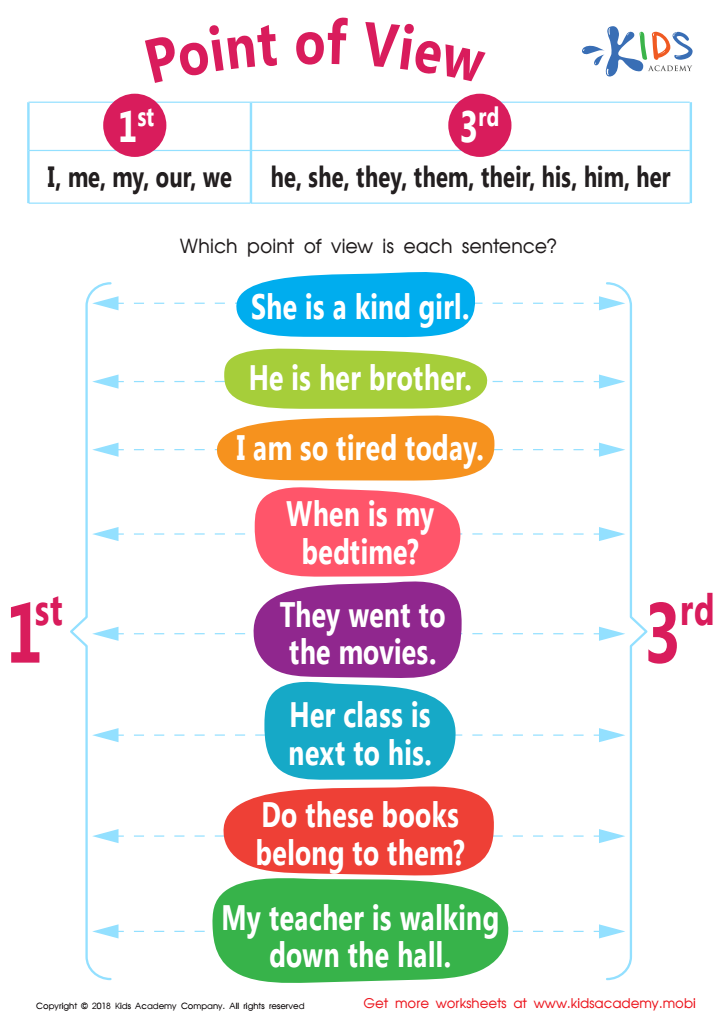
Point of View Worksheet
 Assign to My Students
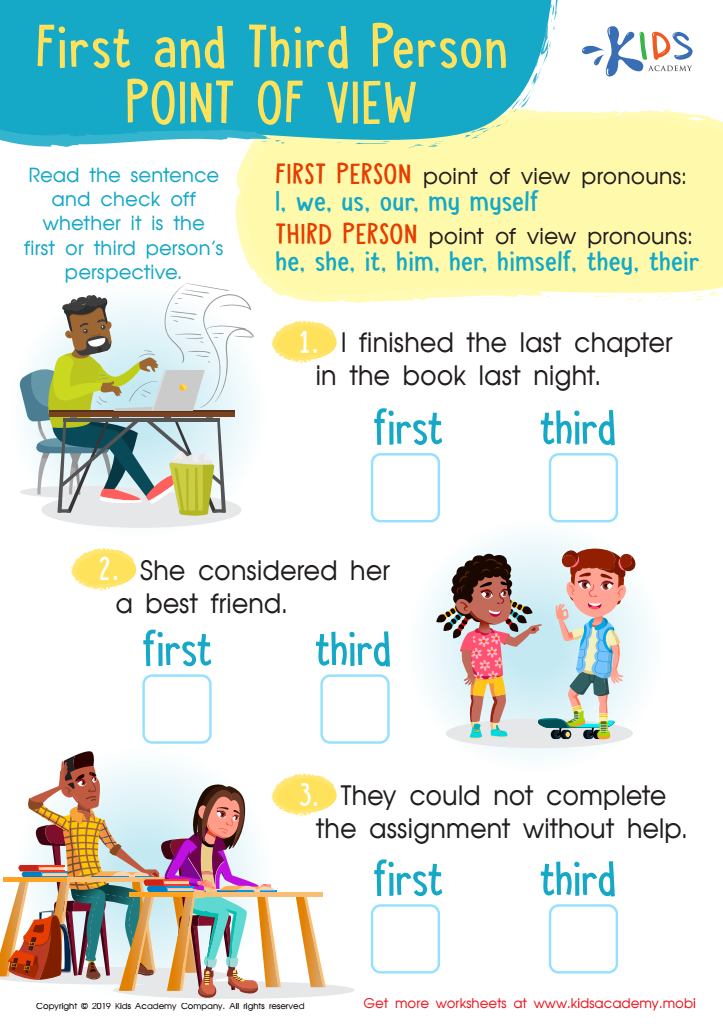
First and Third Person Point of View Worksheet
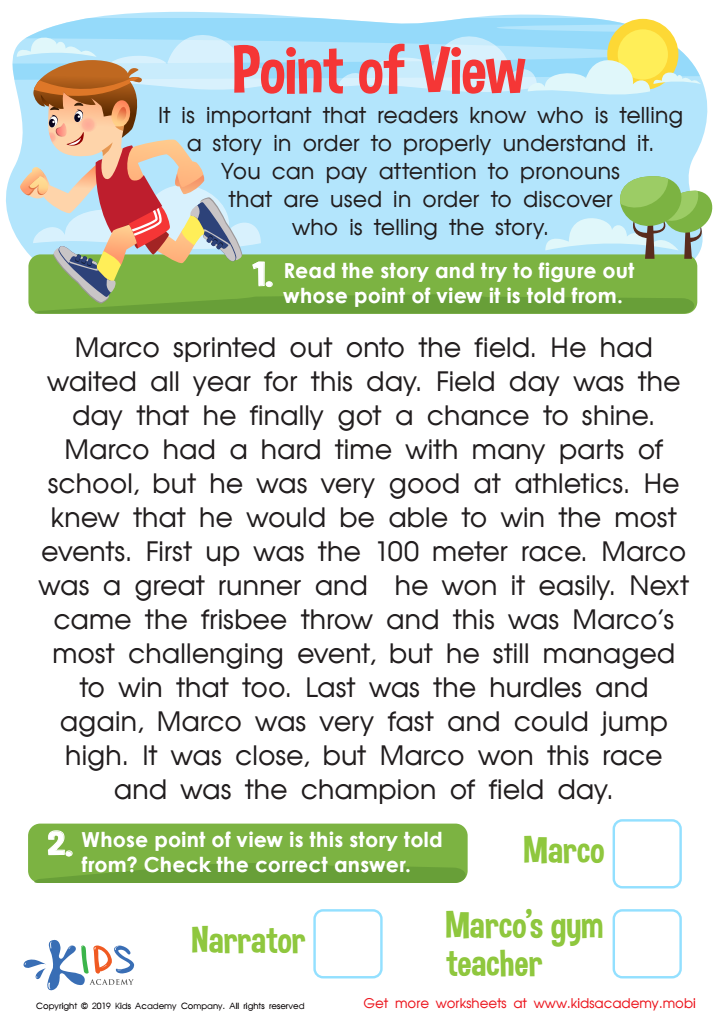
Point of View Worksheet






.jpg)

Understanding perspectives is crucial for children aged 6-8, as this developmental stage is pivotal for social-emotional growth and literacy skills. When parents and teachers emphasize the importance of appreciating different viewpoints, they help children build empathy and critical thinking abilities. Children learn to put themselves in others’ shoes, fostering compassion and respect for diversity.
Moreover, engaging with multiple perspectives enhances reading comprehension. As children explore stories with various characters, they develop a deeper grasp of plot and motivation. This practice not only aids in understanding narratives but also encourages discussions about real-life scenarios, ultimately benefiting their communication skills.
Furthermore, nurturing this skill prepares children for collaborative environments in school and later in life. It teaches them the value of listening, sharing ideas, and resolving conflicts—essential tools for effective teamwork.
As parents and teachers work together to cultivate an appreciation for diverse perspectives, they create a more inclusive learning environment. This integration strengthens the emotional intelligence of children, allowing them to navigate social complexities more effectively. Ultimately, prioritizing an understanding of perspectives equips young learners with the versatility needed for future interactions and academic success.








