Verb identification Normal Reading Worksheets for Ages 6-8
3 filtered results
-
From - To
Enhance your child's reading skills with our Verb Identification Normal Reading Worksheets designed for ages 6-8! These engaging worksheets encourage young learners to identify and understand verbs in sentences, fostering crucial reading comprehension and language development. With a variety of fun activities and colorful illustrations, kids will enjoy practicing their verb recognition while building confidence in their reading abilities. Perfect for classroom use or at-home learning, our resources cater to different learning styles and make grammar enjoyable! Equip your child with essential skills that lay the foundation for effective communication and literacy. Start exploring today for a brighter reading future!
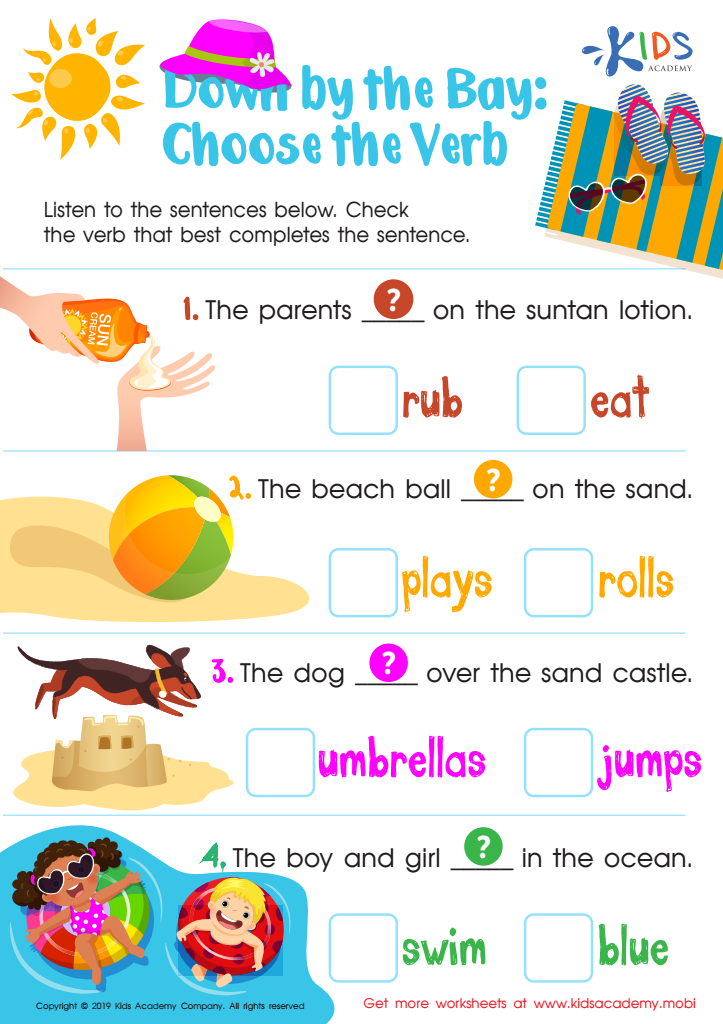
Down by the Bay: Choose the Verb Worksheet
 Assign to My Students
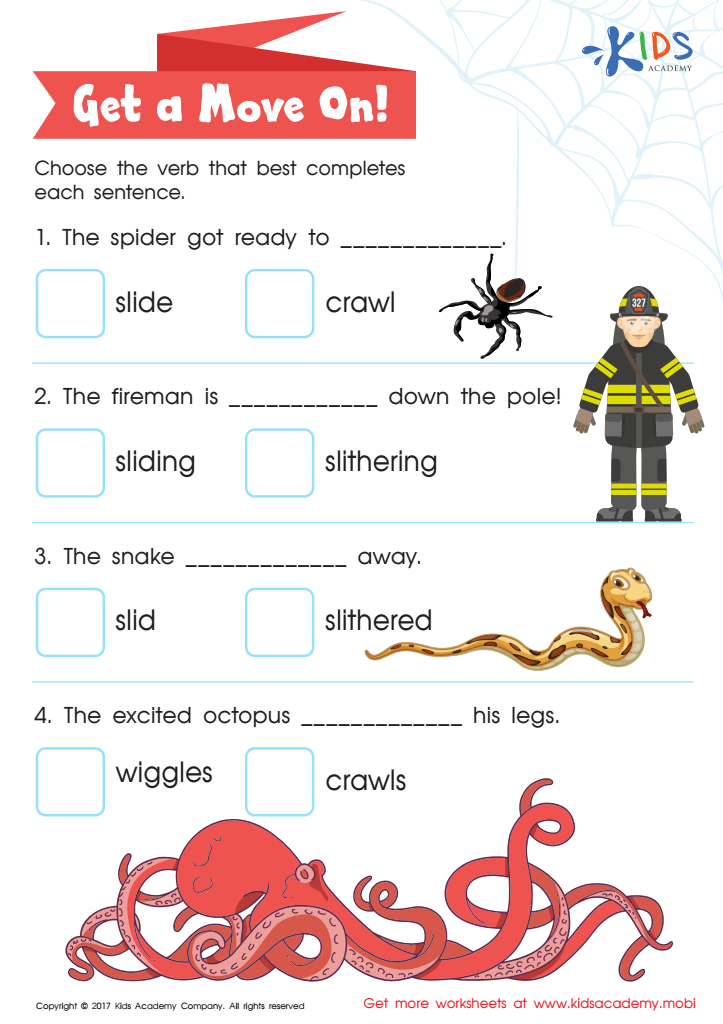
Verb Worksheet
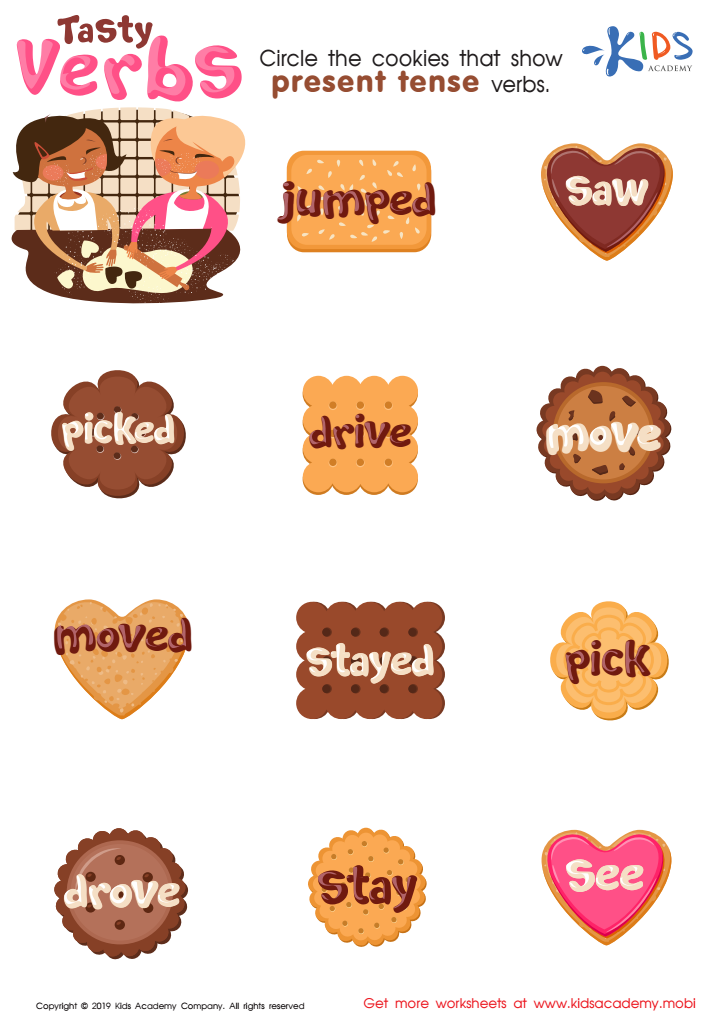
Tasty Verbs Worksheet








Parents and teachers should care about verb identification in normal reading for ages 6-8 because verbs are essential components of sentences that convey action and state of being. At this developmental stage, children are building their foundational literacy skills, and understanding verbs enhances their overall reading comprehension. By recognizing verbs, children can grasp the main idea and context of sentences, making it easier to follow narratives and instructions.
Furthermore, verb identification supports grammatical awareness, enabling young learners to construct sentences effectively. Enhanced vocabulary also arises from understanding verbs, as it encourages students to explore action words and their different tenses, enriching their language use. This skill is a gateway to creativity in writing, helping children express themselves more clearly.
Involving parents in this process can reinforce learning at home. Engaging in simple activities, like action games or storytelling that highlight verbs, can make literacy learning fun and interactive. Ultimately, cultivating verb identification skills in young learners contributes to their academic success and instills a love for reading and language that can last a lifetime. Hence, it’s crucial for parents and teachers to prioritize this element of literacy development in children's education.








