Moral understanding Normal Reading Fiction Worksheets for Ages 6-8
5 filtered results
-
From - To
Explore our Moral Understanding Normal Reading Fiction Worksheets designed for children aged 6-8! These engaging worksheets cultivate critical thinking and empathy through age-appropriate narratives. Children will enhance their reading skills while learning to identify morals and lessons within stories. Each activity encourages discussions around right and wrong, helping young learners grasp complex ethical concepts in a fun, relatable way. With vibrant illustrations and thought-provoking questions, these resources make moral development an enjoyable part of early literacy. Perfect for classroom settings or home learning, our worksheets provide a solid foundation for fostering responsible, caring individuals. Empower your child's understanding of moral themes today!
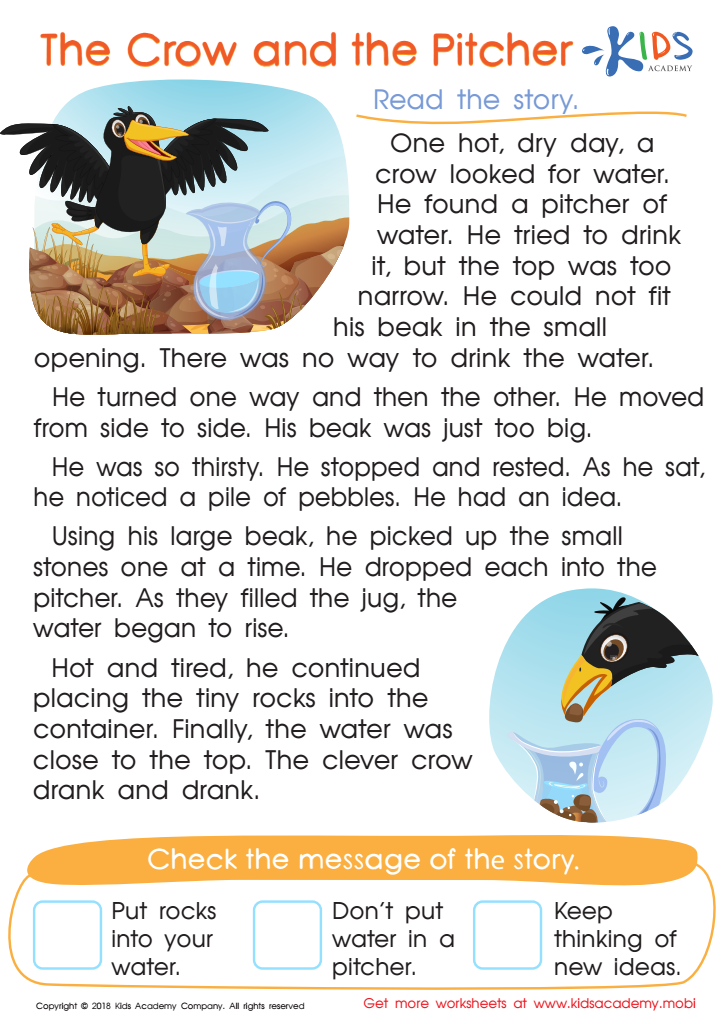
The Crow and the Pitcher Worksheet
 Assign to My Students
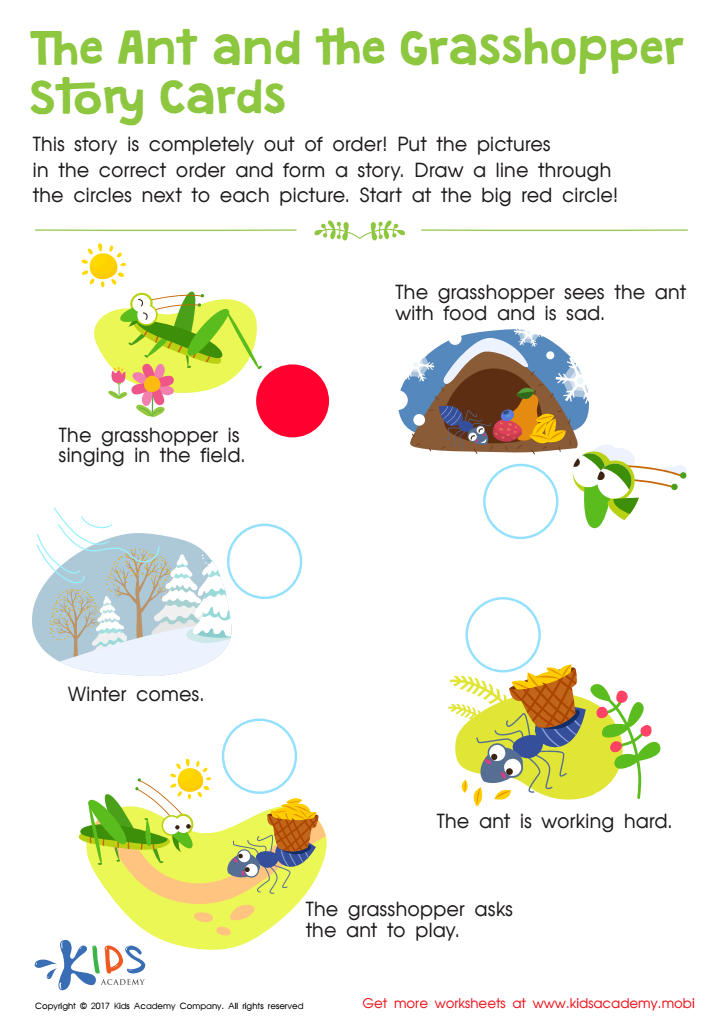
The Ant and The Grasshopper Worksheet
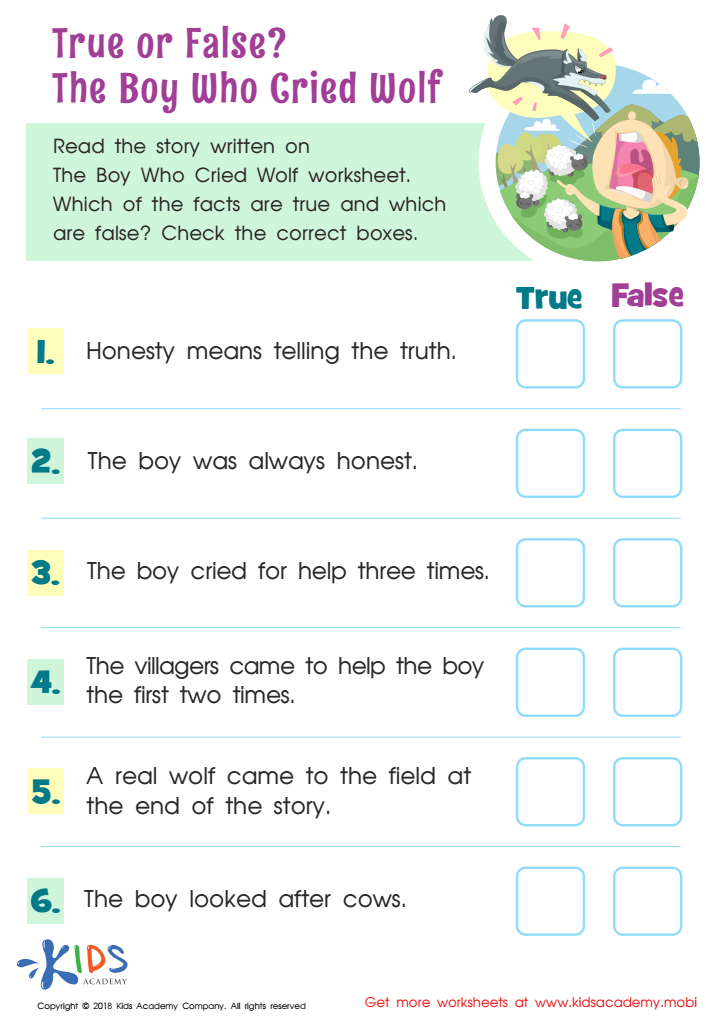
True or False? The Boy Who Cried Wolf Worksheet
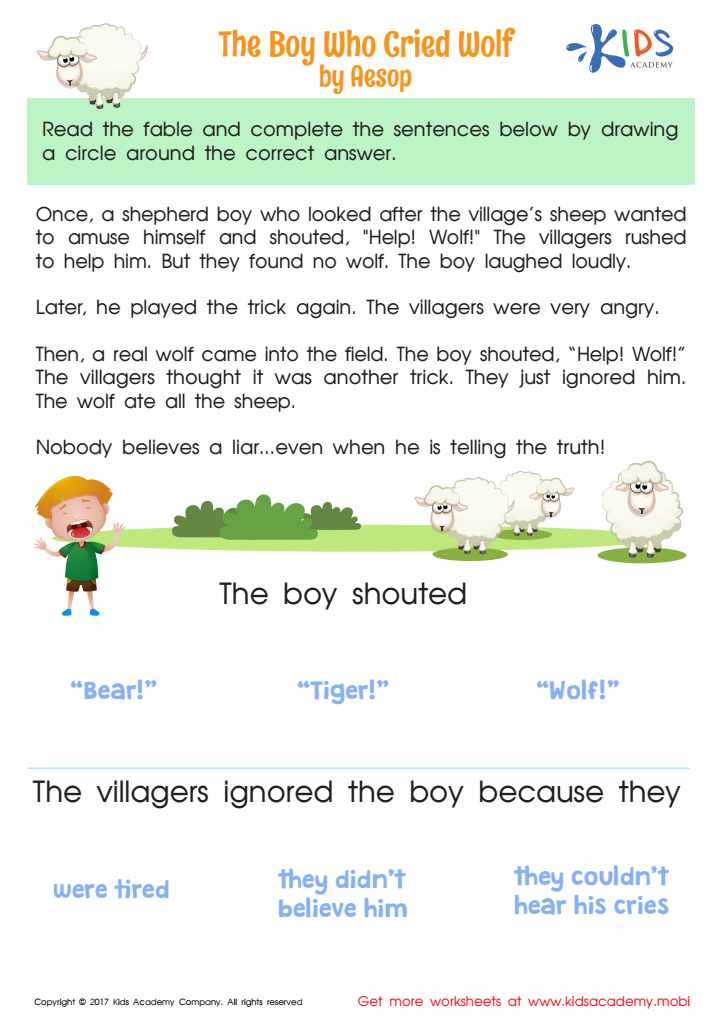
The Boy Who Cried Wolf Worksheet
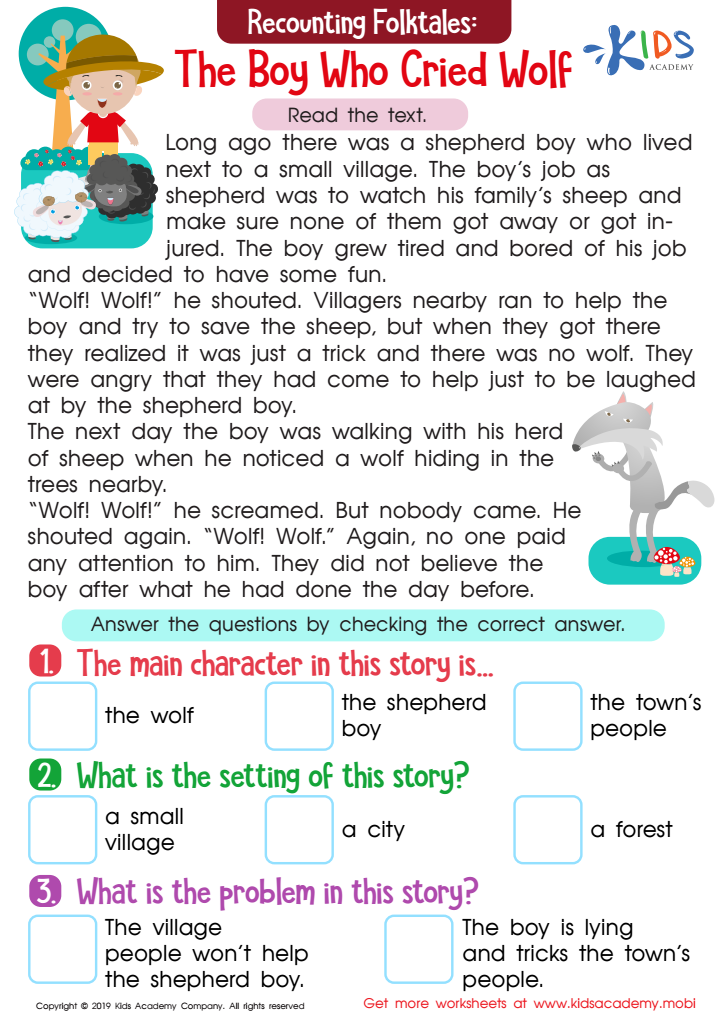
The Boy Who Cried Wolf Part 1 Worksheet







Parents and teachers should be particularly attentive to moral understanding in reading fiction for children ages 6-8, as it plays a crucial role in their social and emotional development. This age group is a formative stage where children begin to comprehend complex concepts like empathy, fairness, and justice through stories. Moral lessons woven into narratives can stimulate critical thinking and discussions about ethics, encouraging children to reflect on their values and the impact of their choices on others.
Reading fiction with moral themes helps children to build a framework for understanding right and wrong. They learn to navigate social interactions better by understanding different perspectives and cultural backgrounds. Engaging with characters' dilemmas helps kids develop compassion and problem-solving skills, allowing for personal growth.
Moreover, integrating moral understanding into reading fosters a sense of community and responsibility. Children exposed to these narratives are often more inclined to exhibit prosocial behaviors, reinforcing cooperative and kind interactions among peers. Ultimately, the lessons learned through fiction can have lasting effects, shaping compassionate, thoughtful individuals. Therefore, parents and teachers should proactively incorporate these stories into reading activities to enhance moral awareness and support overall character development in children.







