Rhyming skills development Normal Rhyming Words Worksheets for Ages 6-8
3 filtered results
-
From - To
Enhance your child’s language skills with our engaging Normal Rhyming Words Worksheets designed for ages 6-8! These worksheets focus on developing rhyming skills, a crucial component of early reading and phonics. Featuring various fun activities, your child will enjoy identifying and matching rhyming words, boosting their vocabulary and pronunciation. Our carefully crafted exercises cater to young learners, ensuring they build confidence while having fun with words. Ideal for both classroom and home use, these worksheets provide an excellent resource for reinforcing language concepts. Start nurturing your child's love for rhymes and words today with our fun and educational worksheets!
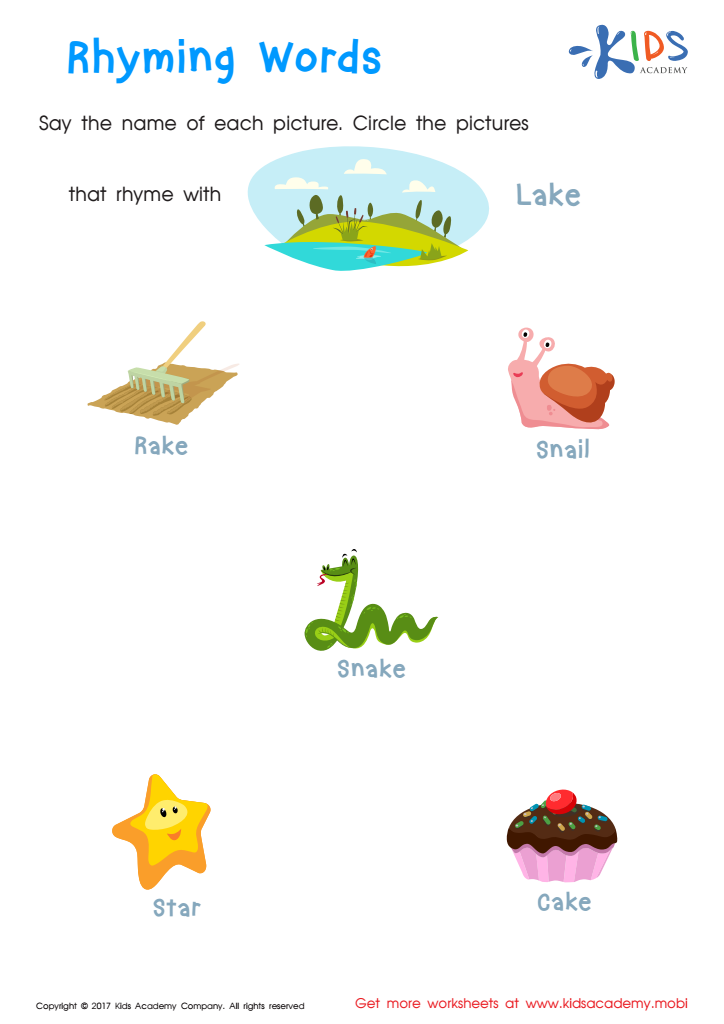
Rhyming Words Rhyming Worksheet
 Assign to My Students
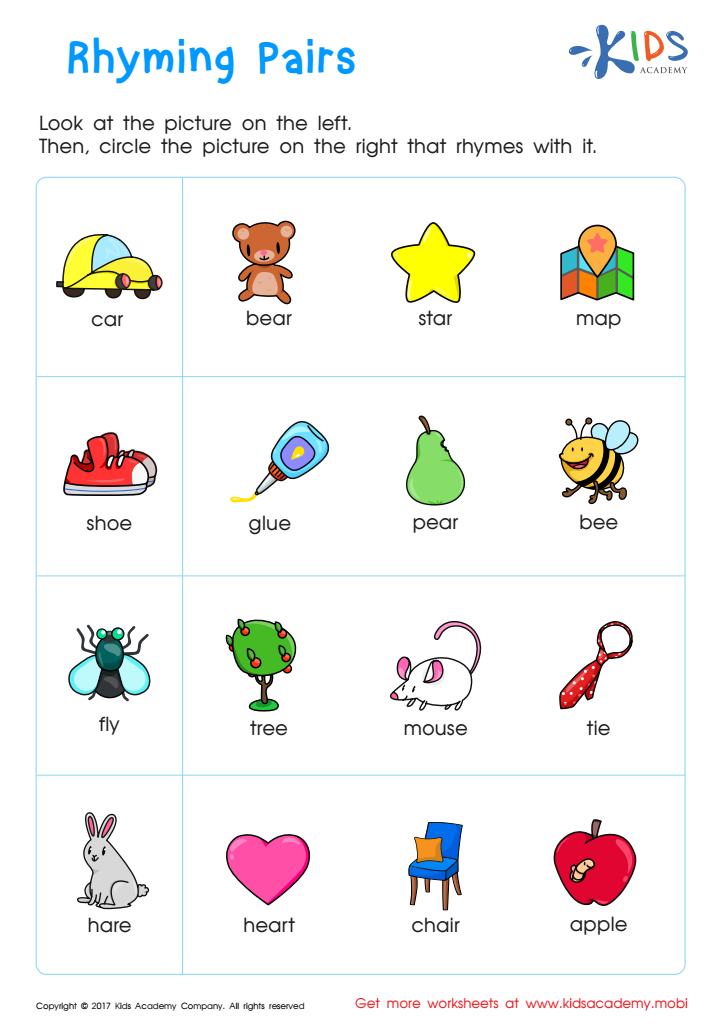
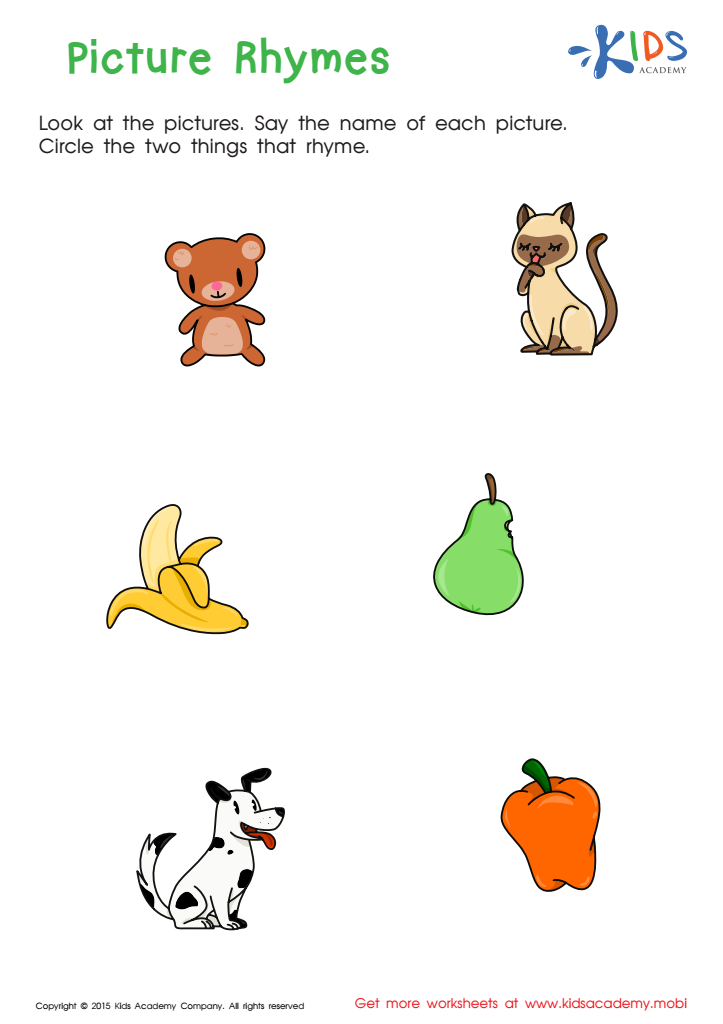
First Words: Picture Rhymes Worksheet








Rhyming skills are crucial for children aged 6-8, as they play a significant role in language development and literacy. At this age, children are expanding their vocabulary and beginning to understand the complexities of phonetics and word structures. Rhyming helps them recognize sound patterns, which enhances phonemic awareness—an essential skill for reading and writing.
When parents and teachers engage children in rhyming activities, such as reading nursery rhymes, singing songs, or playing rhyming games, they reinforce these sound patterns, making it easier for children to decode new words. This also builds their confidence in using language creatively, fostering both verbal and social skills.
Moreover, understanding rhymes supports comprehension and memory. Children often retain information better when it's presented in a rhythmic format, making learning more enjoyable and effective.
By cultivating rhyming skills, parents and teachers help lay a strong foundation for literacy, facilitating future success in reading comprehension, spelling, and overall communication. In a playful and supportive way, rhyming encourages cognitive development, critical thinking, and an appreciation for language, ultimately contributing to a child's academic growth and love for reading.








