Vocabulary enhancement Normal Rhyming Words Worksheets for Ages 6-8
5 filtered results
-
From - To
Enhance your child's vocabulary with our engaging Normal Rhyming Words Worksheets for ages 6-8. Designed by experts at Kids Academy, these worksheets are a fantastic resource for early readers. They not only help young learners recognize and practice rhyming pairs but also boost their vocabulary, phonics, and reading comprehension. Each worksheet is carefully crafted to be both educational and entertaining, ensuring children stay motivated and interested. Perfect for classroom use or at-home practice, these worksheets provide a fun and effective way to reinforce language skills, setting a solid foundation for future literacy development.
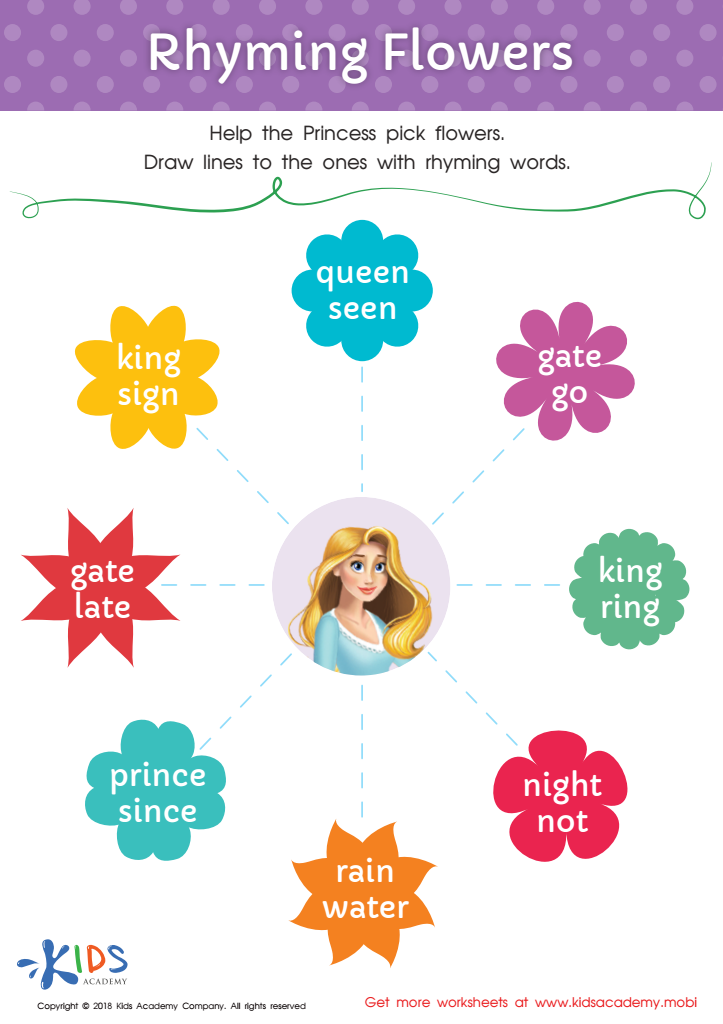
Rhyming Flowers Worksheet
 Assign to My Students
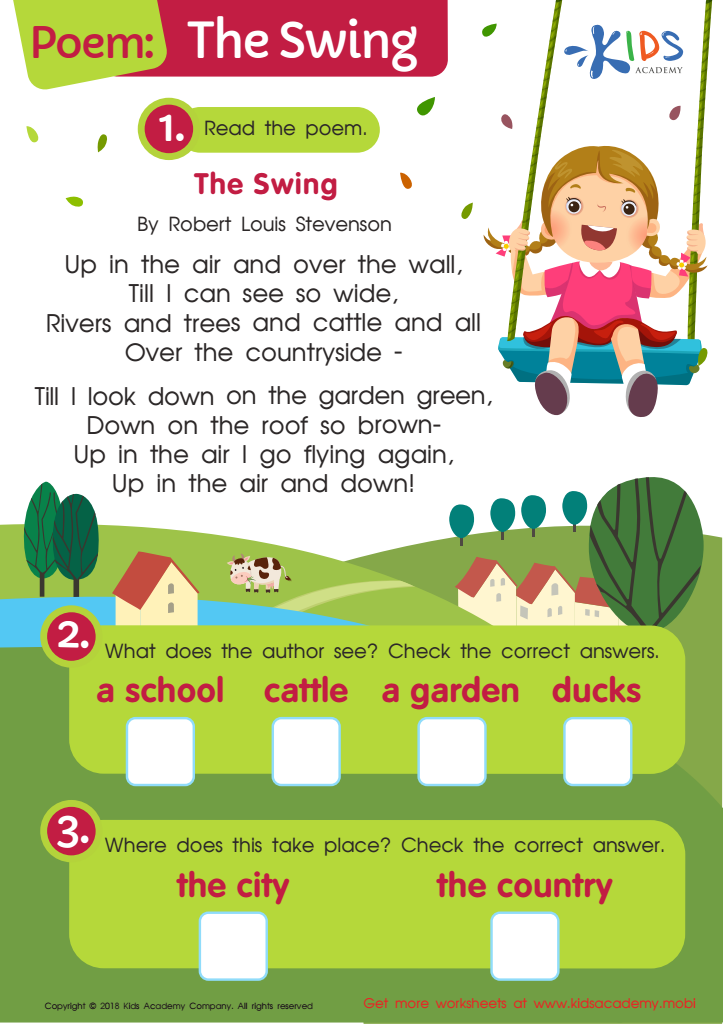
Poem: The Swing Worksheet
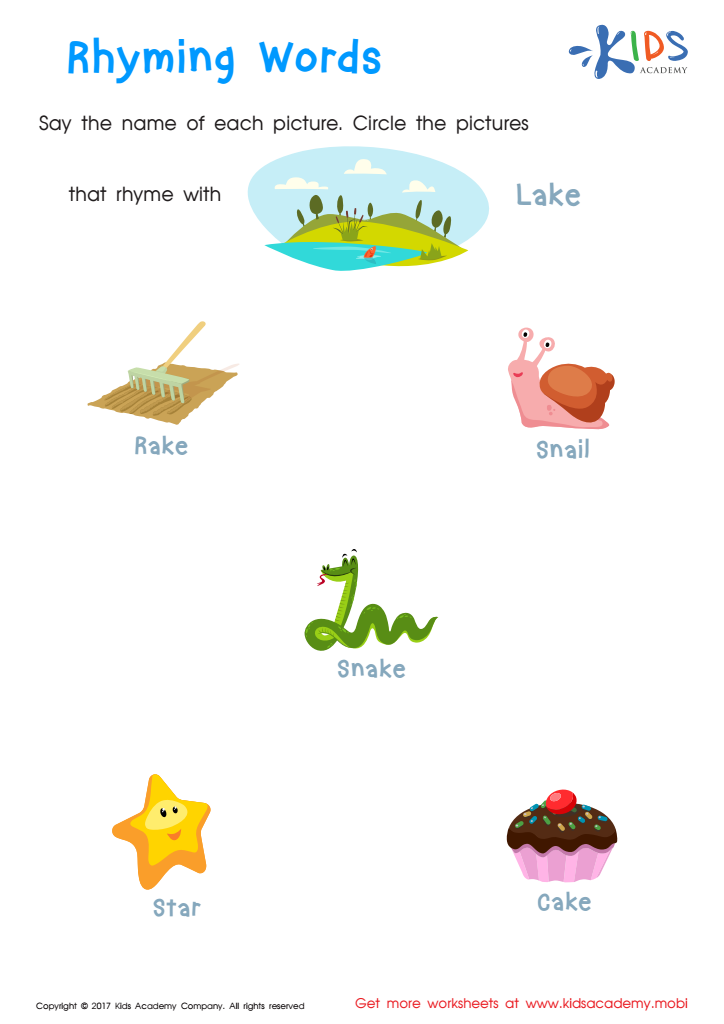
Rhyming Words Rhyming Worksheet
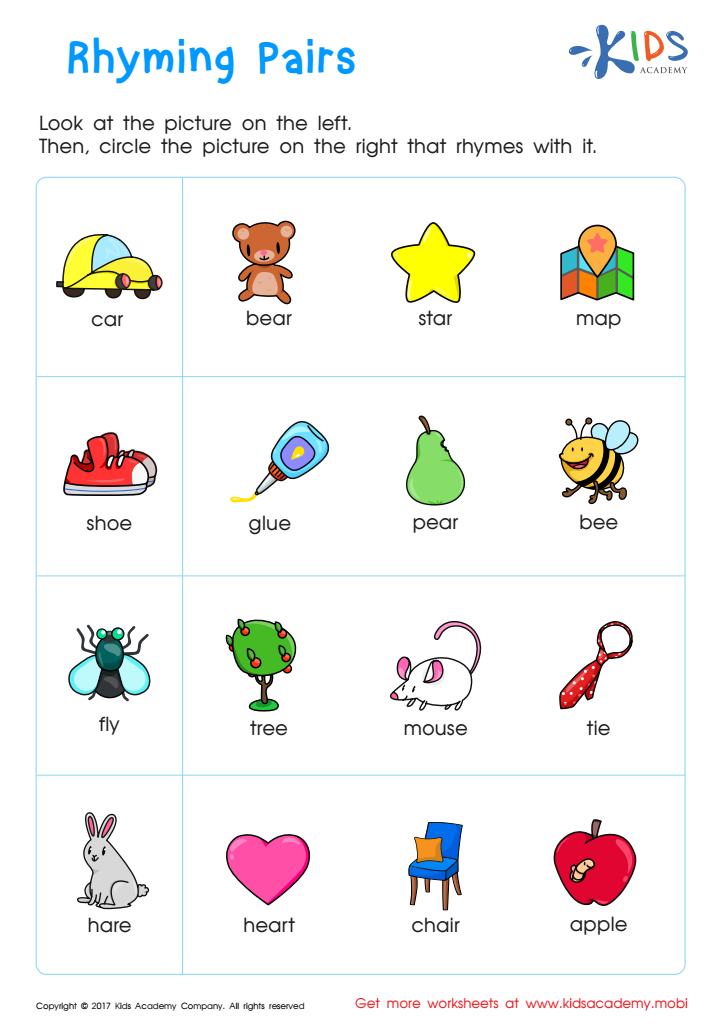
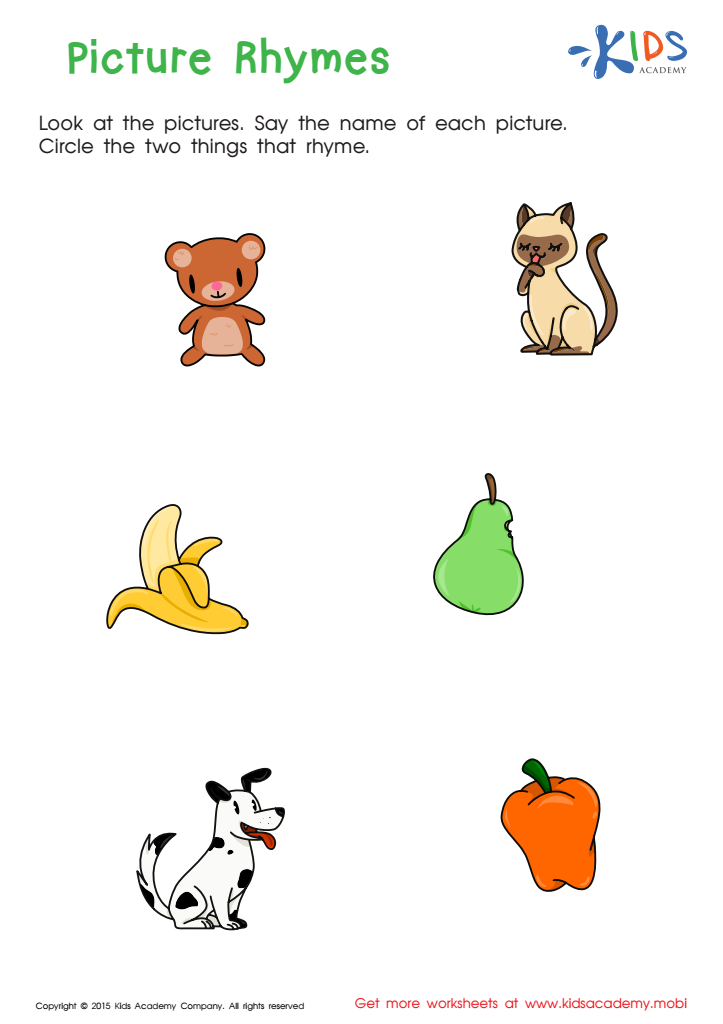
First Words: Picture Rhymes Worksheet








Vocabulary enhancement in the early years, particularly through engaging methods like normal rhyming words, is crucial for children aged 6-8 for several compelling reasons:
Firstly, expanding vocabulary at this age sets a strong foundation for language development and literacy skills. Rhyming words not only help children recognize sound patterns but also make the process of learning new words enjoyable and memorable. For example, pairing 'cat' with 'hat' or 'ball' with 'fall' aids in phonemic awareness, which is essential for reading fluency.
Secondly, a richer vocabulary enables children to better express themselves, leading to improved communication skills. When children have a broader range of words at their disposal, they can articulate their thoughts, feelings, and experiences more effectively, building confidence in both oral and written communication.
Furthermore, regular exposure to rhymes develops cognitive skills like memory, pattern recognition, and critical thinking. Engaging with rhymes requires children to anticipate word pairings and recognize similarities and differences, enhancing problem-solving abilities.
Finally, a strong vocabulary is intrinsically linked to academic success. Children who can understand and use a wide range of words are better equipped to grasp complex concepts across subjects, from understanding math word problems to engaging comprehensively with stories in English.
Thus, parents and teachers should prioritize vocabulary enhancement through rhyming words to support a child’s holistic language development and long-term academic achievement.








