Categorization skills Normal Animals Worksheets for Ages 6-8
3 filtered results
-
From - To
Our "Categorization Skills: Normal Animals Worksheets for Ages 6-8" offer engaging and educational activities designed to boost your child's comprehension and analytical abilities. These worksheets focus on developing essential categorization skills through fun exercises involving various animals. Perfect for young learners, the captivating content helps children distinguish and group animals based on different characteristics. Enhancing problem-solving skills, these worksheets are an excellent resource for homeschooling or supplemental classroom activities. Ideal for kids aged 6-8, each worksheet combines interactive learning with colorful illustrations to make the educational journey enjoyable and effective. Empower your child's learning with these top-quality resources from Kids Academy!
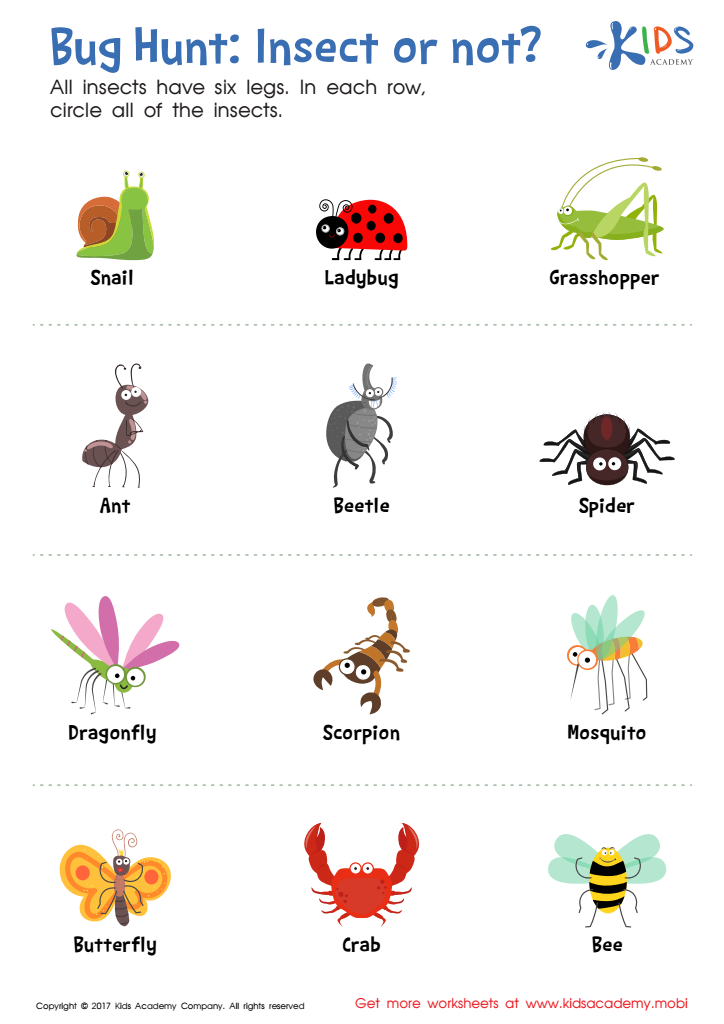
 Assign to My Students
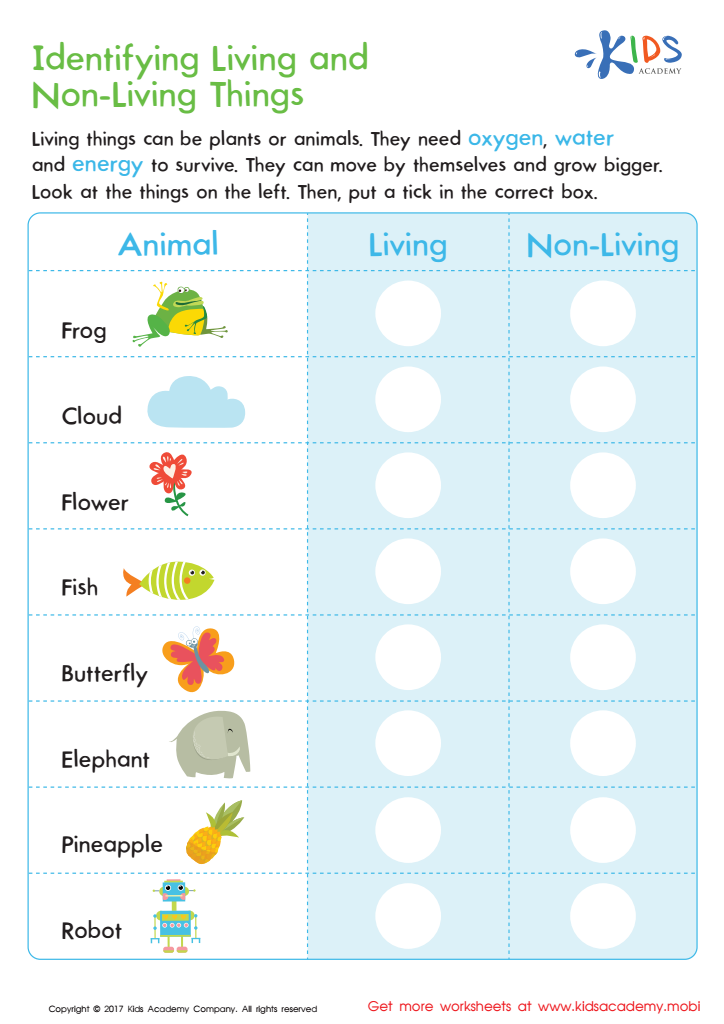
Identifying Living or Non–living Worksheet
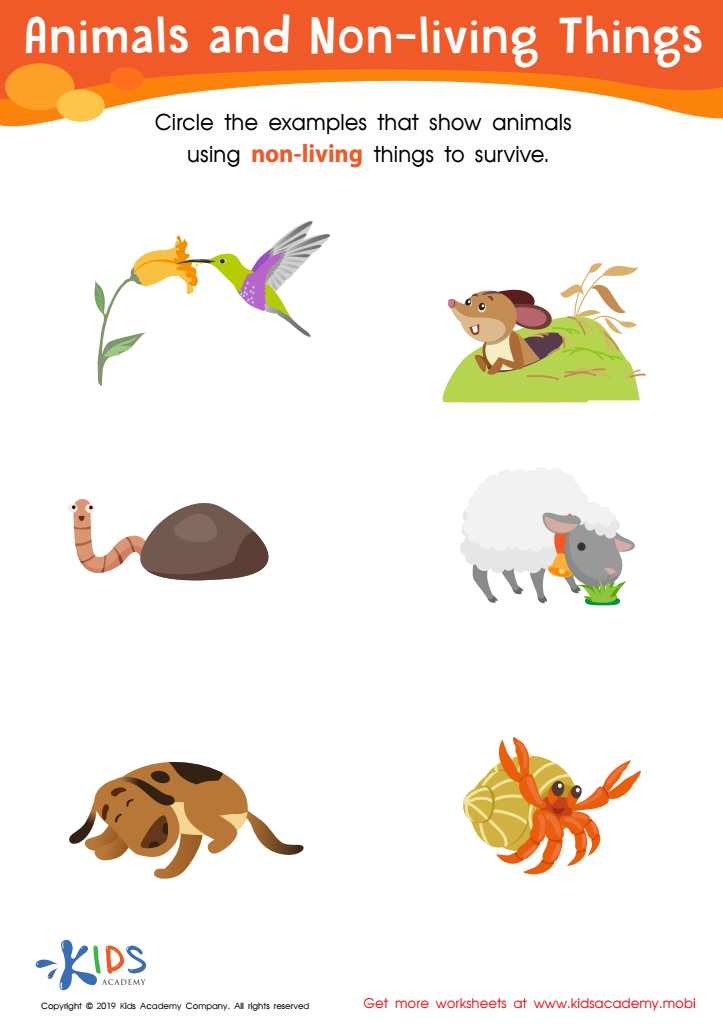
Animals and Non-Living Things Worksheet








Parents and teachers should care about the development of categorization skills in children aged 6-8, particularly concerning normal animals, because these skills are foundational for cognitive development and knowledge structuring. Categorization allows children to organize information meaningfully, making it easier for them to retrieve and use that information when needed. Understanding categories such as normal animals can enhance a child's ability to recognize patterns and relationships in the world around them.
Categorization skills directly influence language development and vocabulary. By learning about different animals and their characteristics, children expand their language base, which improves their communication skills. Discussing animal categories can also introduce them to hierarchical structures, like animal classifications (mammals, birds, reptiles), which fosters complex thinking and reasoning.
Moreover, engaging children in learning about animals through categorization can heighten their observational skills and curiosity about nature and science, laying a foundation for future education in these areas. These skills support problem-solving and critical thinking, essential competencies in all areas of education.
Lastly, teaching categorization through animals can be engaging and enjoyable for young children, promoting a love for learning. Integrating fun, age-appropriate activities like sorting games and storytime into the learning process can make education more active and participatory, leading to better retention and understanding.








