
Space knowledge Normal Science Worksheets for Ages 6-8
5 filtered results
Difficulty Level
Grade
Age
-
From - To
Subject
Activity
Standards
Explore the wonders of the universe with our "Space Knowledge Normal Science Worksheets" designed specifically for children aged 6-8! These engaging, interactive worksheets introduce young learners to essential concepts about planets, stars, and other celestial phenomena, making learning about space fun and exciting. Aligned with educational standards, these activities promote critical thinking and enhance students' understanding of their cosmic surroundings. Perfect for both home and classroom use, our worksheets encourage creativity and discovery, helping children develop a lifelong love for science. Dive into space exploration today and ignite curiosity in your child’s mind with our thoughtfully crafted resources!
Favorites
With answer key
Interactive
 Assign to My Students
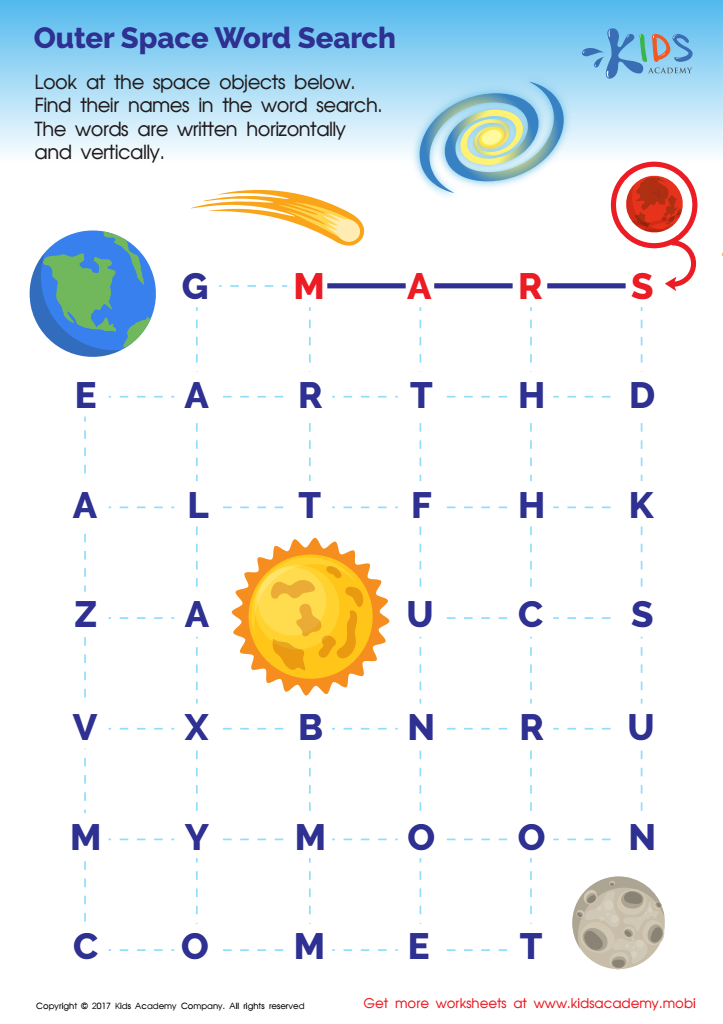
Outer Space Word Search Printable
Test your child's space knowledge with this fun outer space word search printable! With pictures as clues, they'll hardly realize they're learning and thinking hard. Let them have a blast finding each of the words!
Outer Space Word Search Printable
Worksheet
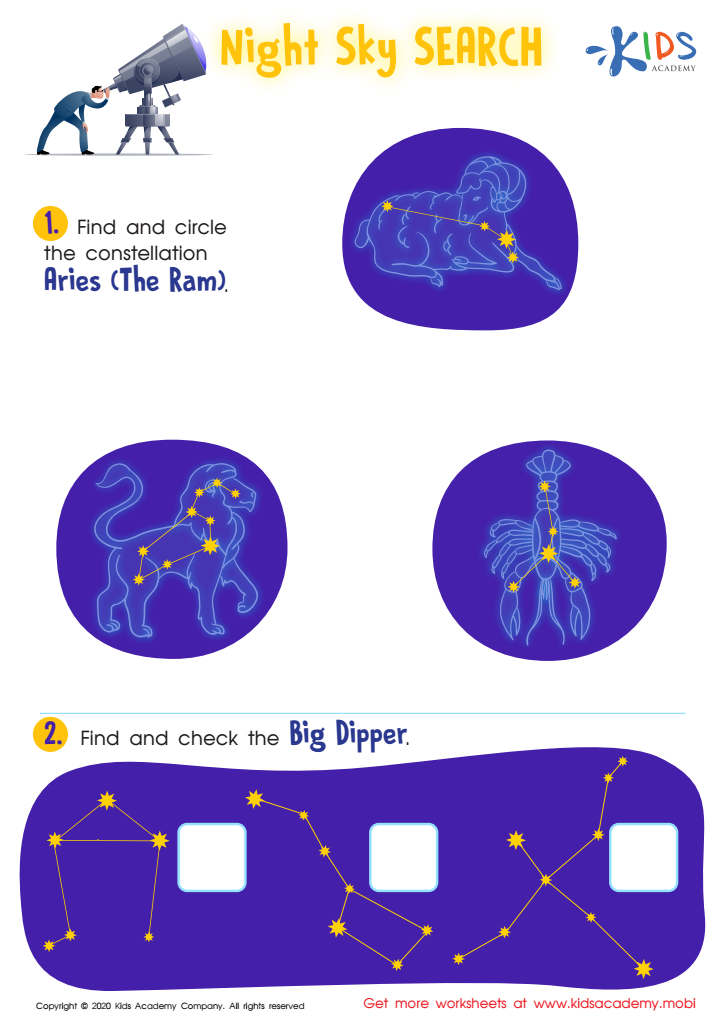
Night Sky Search Worksheet
Gaze up into the night sky and spot the stars! Your little astronomer can learn about Aries and Big Dipper constellations with this science worksheet. Simply find the ram for Aries and check the box for Big Dipper. Then, when the weather is right, go outside and look for them in the night sky!
Night Sky Search Worksheet
Worksheet
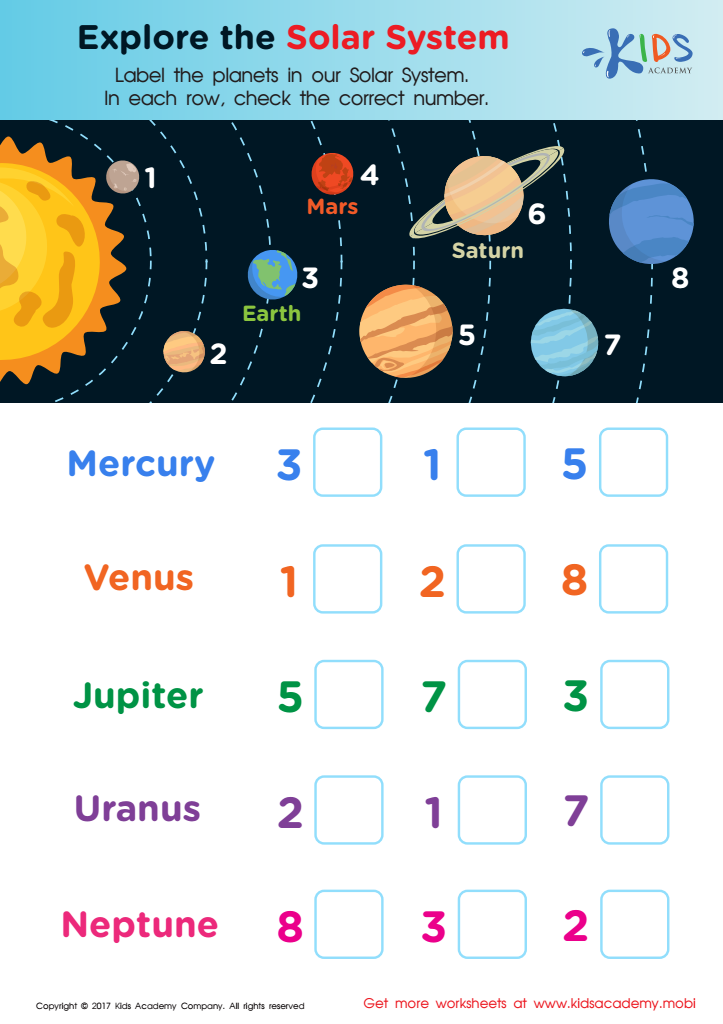
Solar System Planets Worksheet
Kids can explore outer space and learn the order of our solar system with this fun worksheet PDF! It features brilliantly colored illustrations to help them understand the third planet from the sun - Earth - and the rest. It's a great way to start learning about our galaxy!
Solar System Planets Worksheet
Worksheet
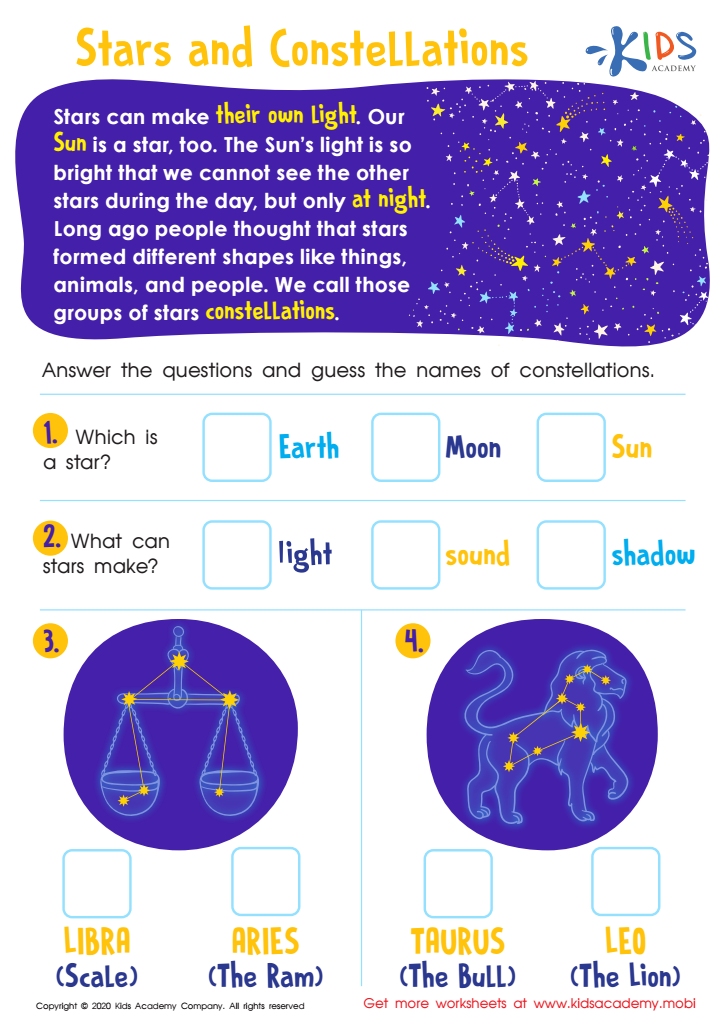
Stars and Constellations Worksheet
Learn about stars and constellations with this entertaining worksheet! Read the passage at the top of the page to gain an understanding of stars, then test your child's knowledge with the questions below. Check the right answers and finish this science worksheet with your child - they'll be amazed that stars can make their own light, just like the sun!
Stars and Constellations Worksheet
Worksheet
Join Kids Academy for Free
Who is primarily going to use this learning content?







Understanding space knowledge is crucial for children ages 6-8, as it stimulates curiosity and fosters critical thinking skills. At this age, children are naturally inquisitive about the world around them, and introducing them to concepts like planets, stars, and galaxies captures their imaginations.
Space science encourages exploration and hands-on learning. Through activities such as stargazing or model rocket launches, children develop observation skills and gain practical experience with scientific methods. These activities not only make learning fun but also help in building teamwork and communication skills when done in groups.
Moreover, space knowledge nurtures a sense of wonder and imagination. Engaging in discussions about space can inspire children to ask questions, hypothesize, and seek out answers, thus enhancing their problem-solving abilities.
For parents and teachers, bridging space knowledge into the curriculum aligns with broader goals of education, encouraging a lifelong love for learning and appreciation for science. As students learn about the universe's vastness, they also develop an understanding of scientific inquiry and reasoning. In a future where STEM skills are in high demand, fostering an early interest in space can pave the way for children to explore careers in science, technology, engineering, and mathematics.







