Geography knowledge Normal Our Planet and Environment Worksheets for Ages 6-8
3 filtered results
-
From - To

Explore the wonders of Geography with our "Our Planet and Environment Worksheets" designed specifically for children ages 6-8. These engaging activities help young learners discover essential concepts related to Earth, its various environments, and how humans interact with them. Through fun exercises, kids will enhance their understanding of geographical features, ecosystems, and environmental sustainability. Each worksheet encourages critical thinking while fostering a love for the planet. Perfect for classroom use or at-home learning, these resources provide a valuable way for young minds to grasp the importance of protecting our world. Start your journey into geography today!
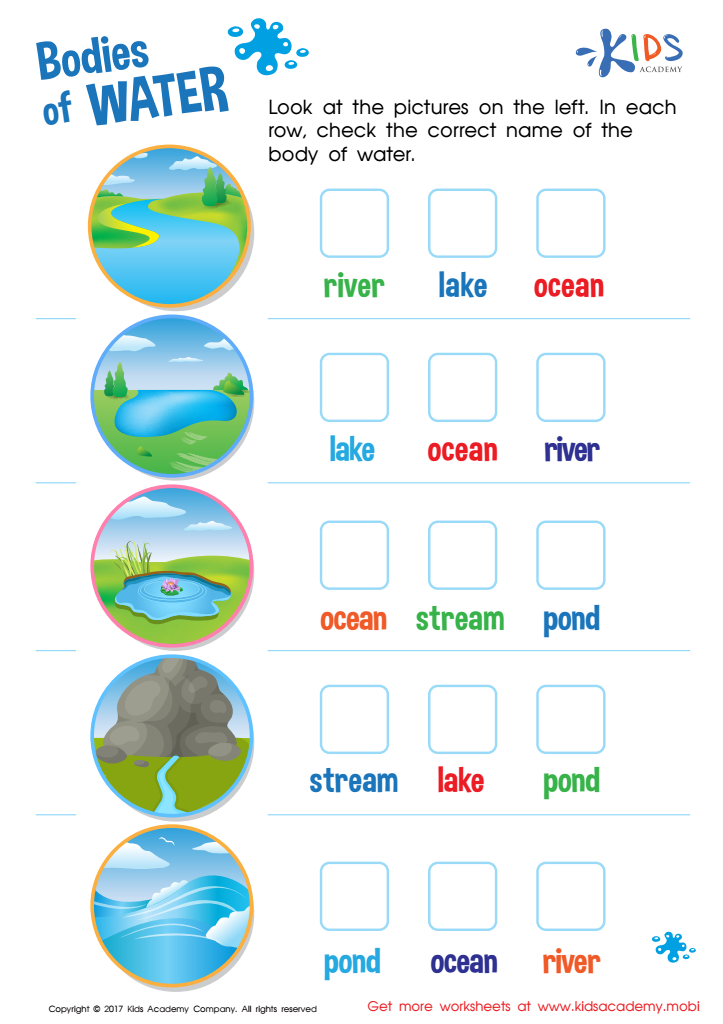
Bodies of Water Worksheet
 Assign to My Students
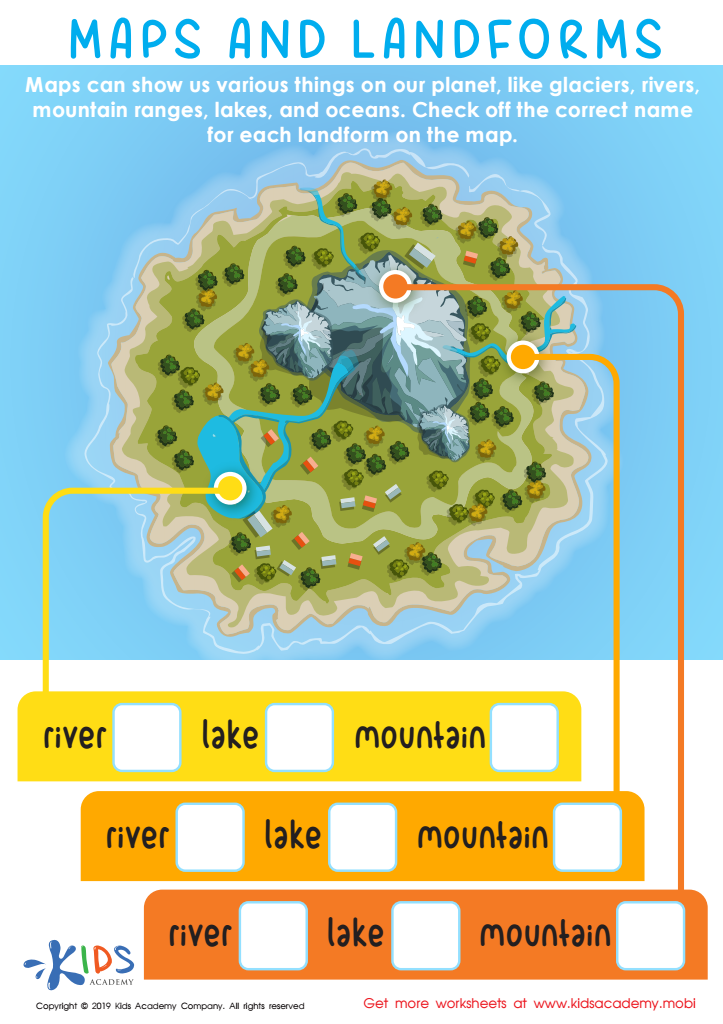
Maps and Landforms Worksheet
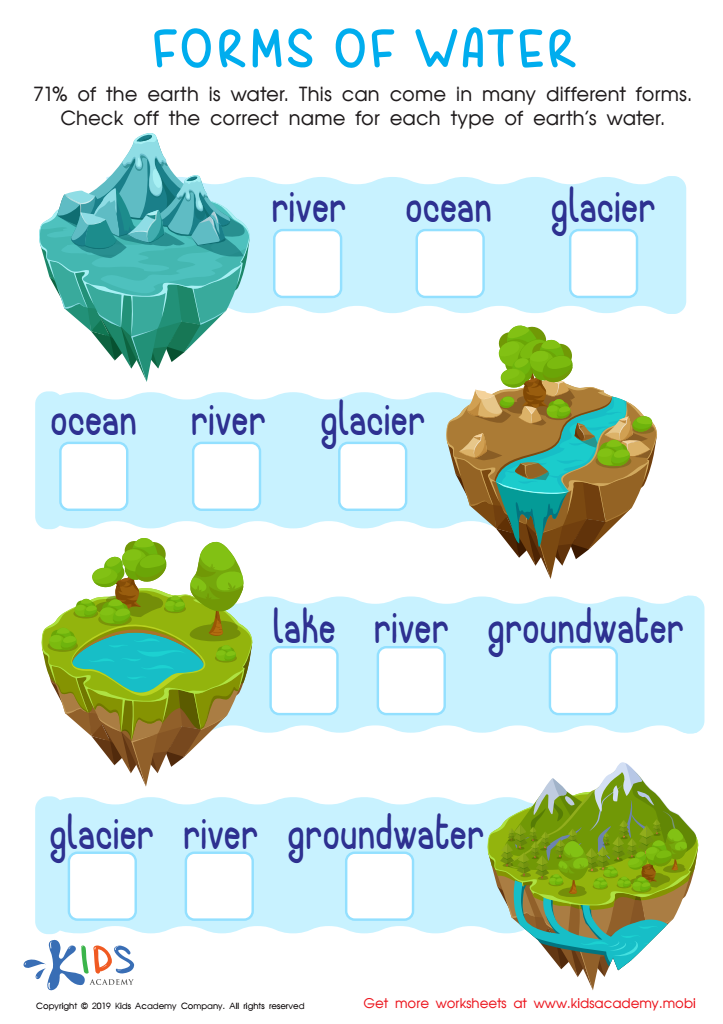
Forms of Water Worksheet




Understanding geography is essential for children aged 6-8 as it forms the foundation for their awareness of the world around them. At this age, children are naturally curious about their environment, and geography helps satisfy that curiosity by teaching them about continents, countries, cultures, and the planet's ecosystems.
Fostering geographic knowledge encourages critical thinking as children learn to observe and analyze how different environments impact lifestyles. It also promotes creativity and empathy; as children study various cultures and communities, they begin to appreciate diversity and understand the importance of global interconnectedness.
Additionally, early geography education lays the groundwork for environmental stewardship. By knowing about local and global environments, young learners are more likely to develop a sense of responsibility toward protecting their planet. This awareness can lead to lifelong sustainable habits.
For teachers and parents, integrating geography into everyday learning promotes a holistic educational approach. It enriches conversations and activities that teach skills like map reading and data interpretation, which are essential for today's interconnected world. Ultimately, geography knowledge empowers children, helping them grow into informed and responsible citizens ready to engage positively with their communities and the planet.







