Categorizing objects Normal Physical Science Worksheets for Ages 6-8
3 filtered results
-
From - To
Explore our "Categorizing Objects Normal Physical Science Worksheets for Ages 6-8" to engage young learners in identifying and grouping different items. These fun and educational worksheets are designed to help children develop critical thinking and observational skills by sorting objects based on various attributes such as size, shape, and color. Perfect for classroom activities or at-home practice, our worksheets make learning physical science concepts enjoyable and interactive. Nurture your child's curiosity and understanding of the world around them with our comprehensive and age-appropriate categorization exercises. Visit Kids Academy to download and start learning today!
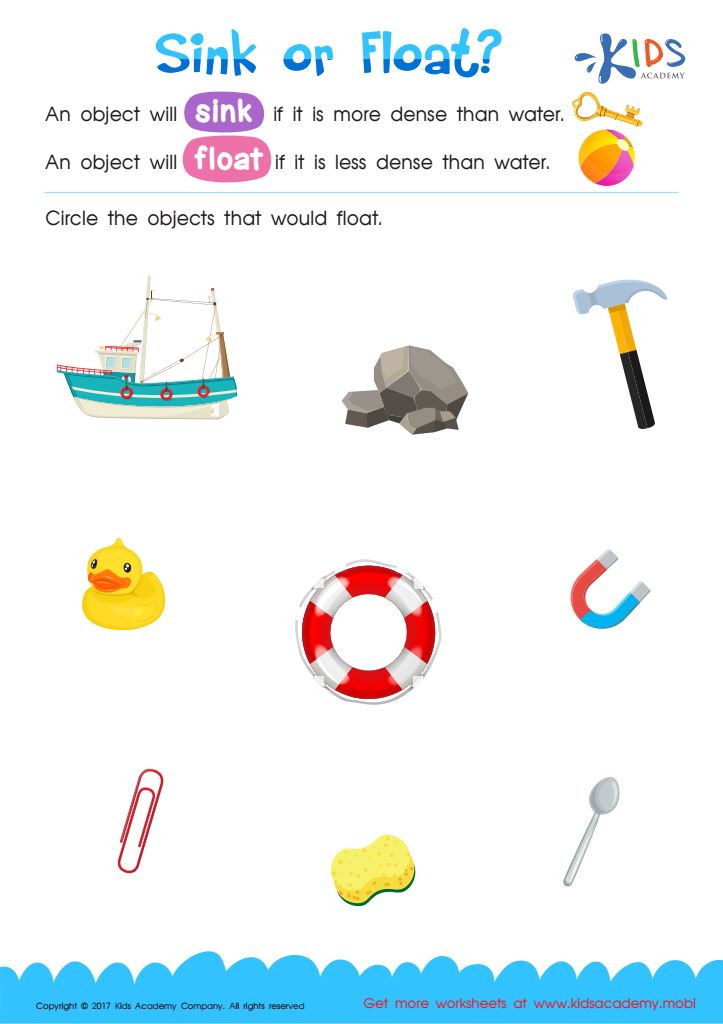
Sink or Float Printable
 Assign to My Students
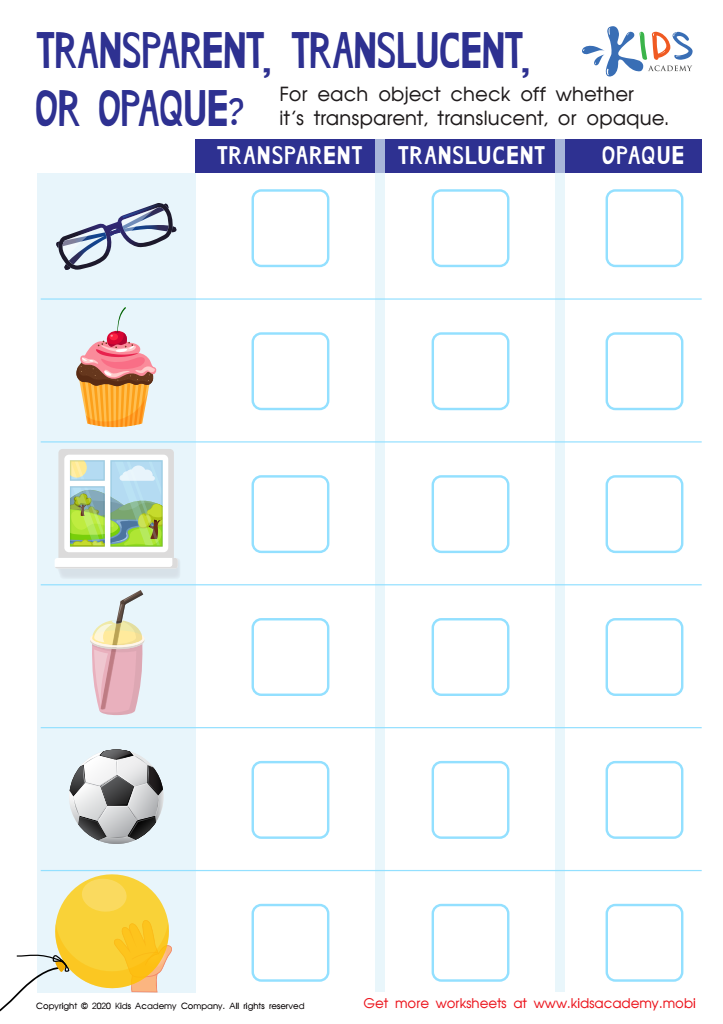
Transparent, Translucent, or Opaque Worksheet
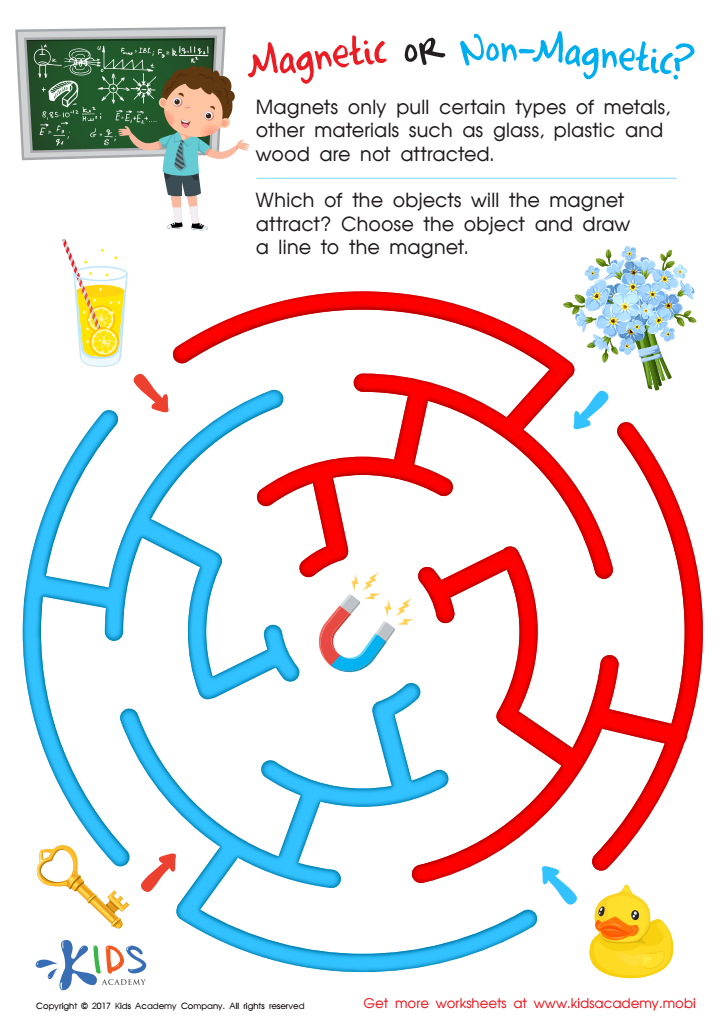
Magnetic or Non–Magnetic Worksheet




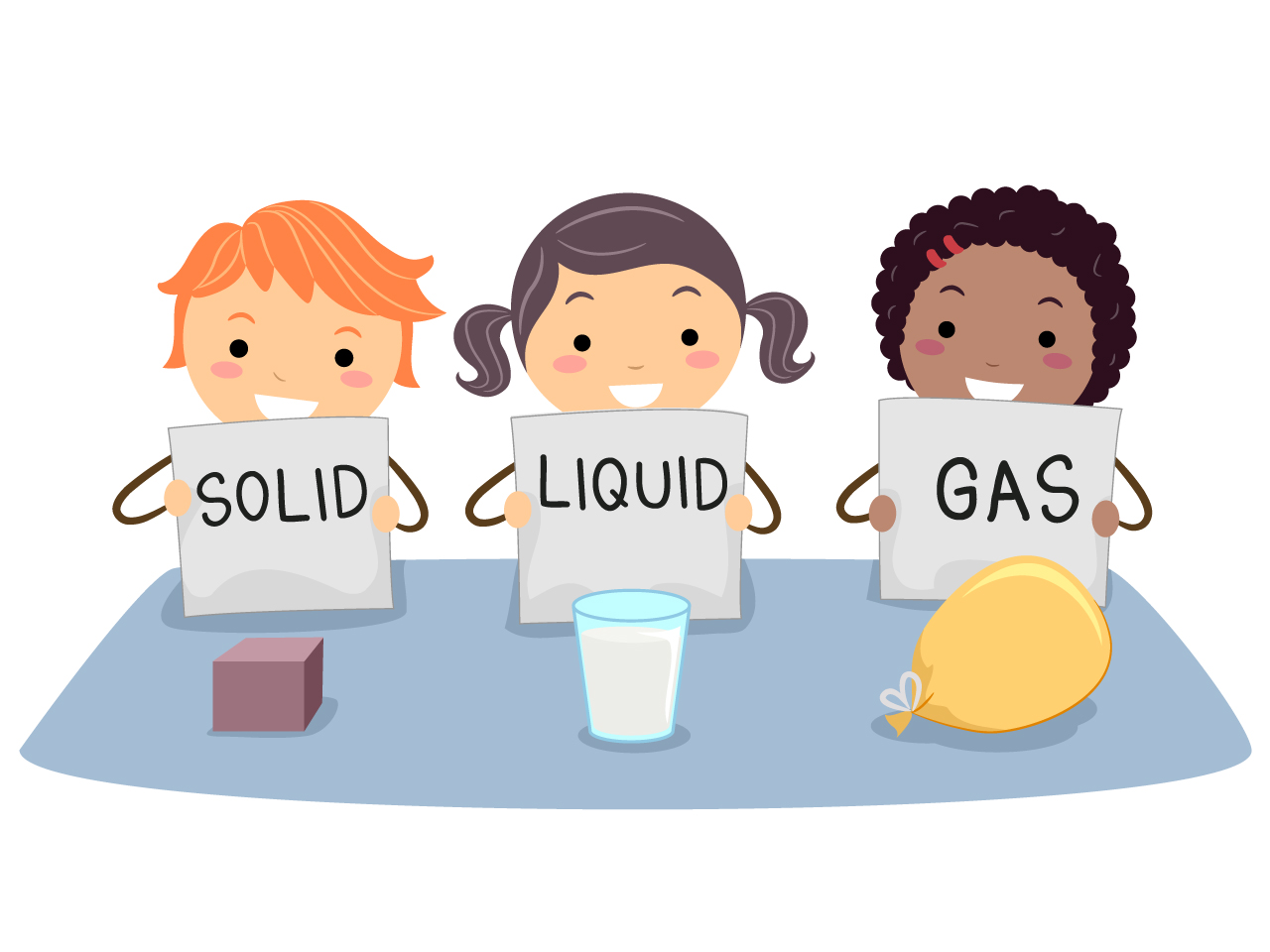



Categorizing objects is a foundational skill in early childhood education with deep implications for a child's development in the physical sciences and beyond. For children aged 6-8, this activity enhances cognitive abilities by teaching them to observe and sort objects based on attributes such as size, shape, color, and material. This fundamental skill builds critical thinking and problem-solving abilities, enabling children to make sense of their environment in an organized manner.
Parents and teachers should care about this aspect of learning because it directly influences a child's ability to understand and engage with more complex scientific concepts later on. By categorizing objects, children learn essential scientific processes, such as classification and systematization, which are crucial for their future scientific learning and inquiry.
Furthermore, categorizing objects helps in the development of fine motor skills and hand-eye coordination as children manipulate objects. Social skills and language development are also beneficiaries; discussing categories and different characteristics with peers or adults enhances vocabulary and collaborative skills.
Ultimately, teaching children to categorize objects encourages curiosity and a love for exploration and discovery. It lays a strong educational foundation that supports lifelong learning across various disciplines, highlighting the interconnectedness of different fields from a very young age. Thus, parents and teachers play a pivotal role in nurturing these skills early on.







