Animal identification Normal Plants and Animals Worksheets for Ages 6-8
3 filtered results
-
From - To
Discover our "Animal Identification Normal Plants and Animals Worksheets" specially designed for ages 6-8! These engaging, educational worksheets help young learners effortlessly identify different animals and plants. Tailored to nurture curiosity and enhance recognition skills, each activity is packed with vibrant illustrations and fun facts. Perfect for classroom or at-home learning, our resources align with key educational standards, promoting hands-on learning through puzzles, matching games, and coloring tasks. Boost your child’s knowledge and appreciation of the natural world with our expertly crafted worksheets. Unlock interactive, stimulating science experiences with Kids Academy!
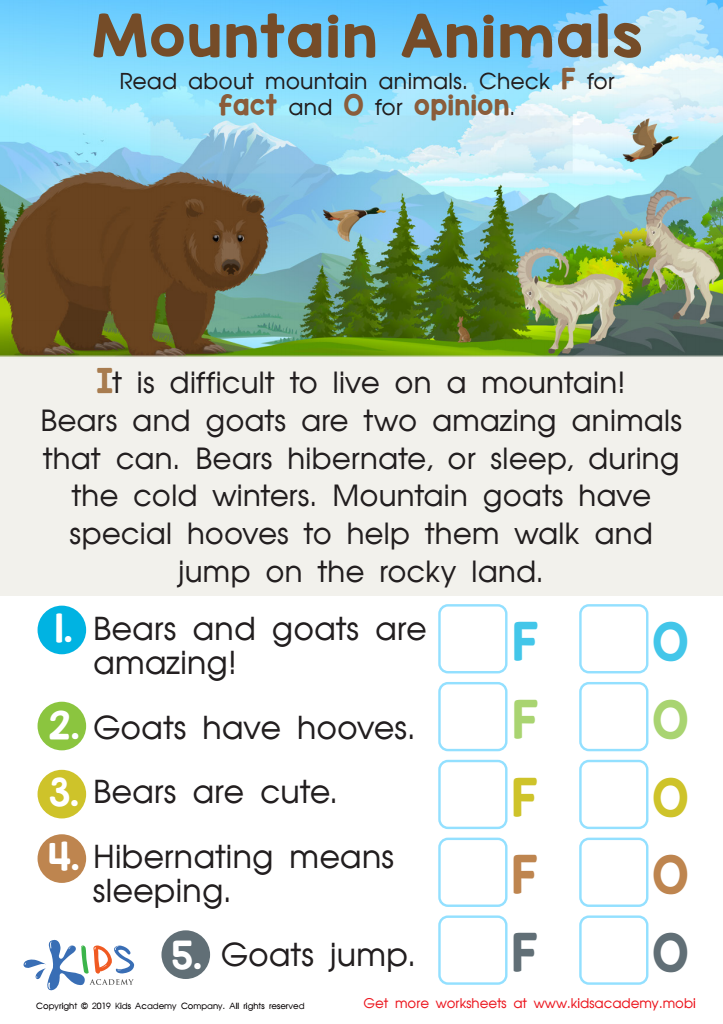
Mountain Animals Worksheet
 Assign to My Students











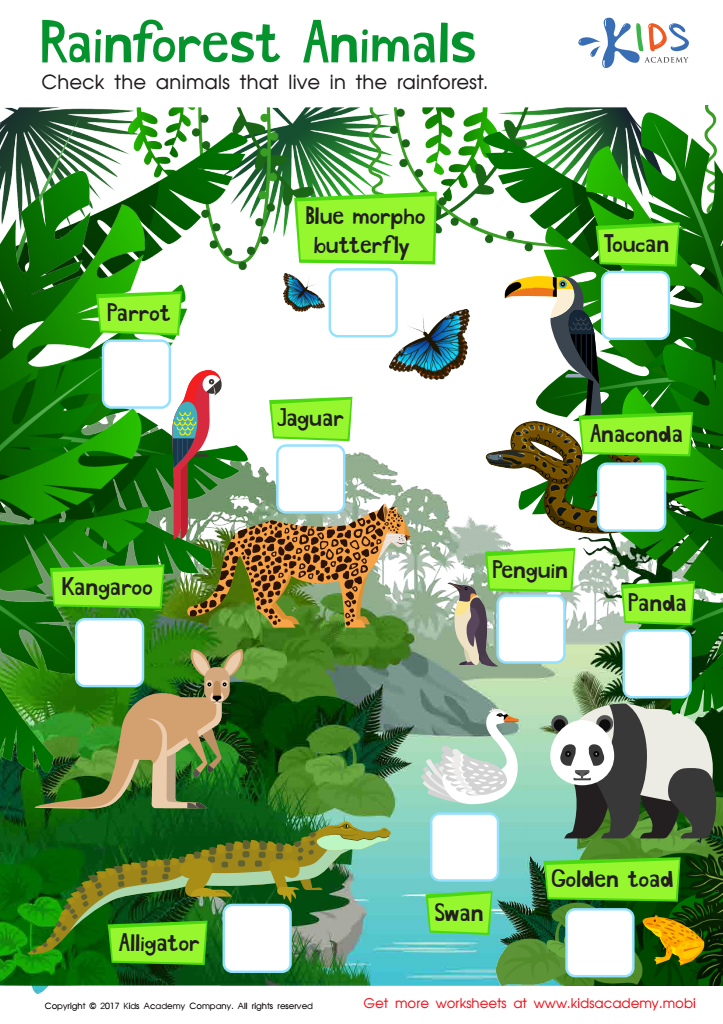
Rainforest Animals Worksheet
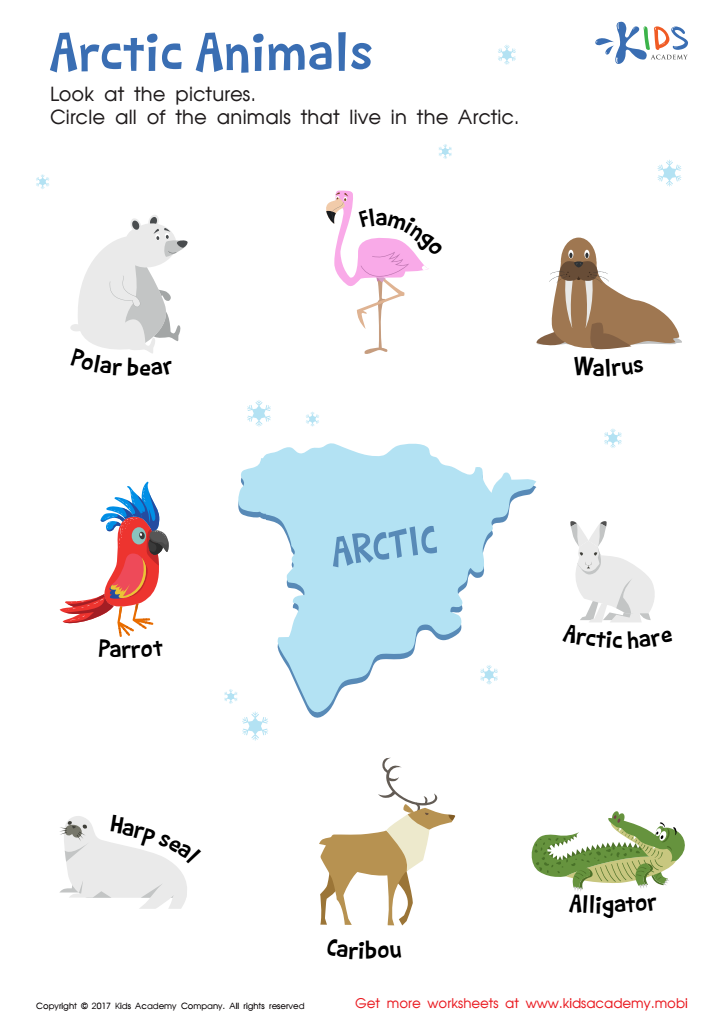
Arctic Animals Worksheet








Parents and teachers play a critical role in fostering a child’s understanding and love for the natural world. Introducing animal identification and knowledge of normal plants and animals for children aged 6-8 can have profound benefits. At this impressionable age, kids are naturally curious and eager to explore their surroundings. Learning about animals and plants enhances their observational skills and sharpens their attention to detail. It nurtures their inquisitiveness and encourages scientific thinking.
Additionally, understanding nature fosters empathy and respect for living things. When children learn to identify different species and appreciate the roles they play in ecosystems, they develop a sense of responsibility toward conserving and protecting the environment. This foundation in early environmental education is crucial as it builds lifelong sustainable practices.
Moreover, engaging with nature can improve physical and mental health. Regular outdoor activities and explorations reduce stress and boost mood. Cognitive benefits include improved concentration, creativity, and problem-solving skills.
Lastly, early exposure to biodiversity enhances academic performance through integrated learning. Subjects like science, art, and even math can be taught more dynamically by incorporating elements of nature. Parents and teachers, by prioritizing natural education, equip children with knowledge, attitudes, and skills essential for their holistic development.







