
Number Recognition Normal Plants and Animals Worksheets for Ages 6-8
6 filtered results
Difficulty Level
Grade
Age
-
From - To
Subject
Activity
Standards
Explore our engaging "Number Recognition Normal Plants and Animals Worksheets" designed for children aged 6-8! These interactive worksheets combine fun with education, helping young learners recognize numbers while exploring the fascinating world of plants and animals. Each worksheet features vibrant illustrations and age-appropriate activities that promote number identification and counting skills. Whether sorting animals by numbers or connecting ants to their corresponding flowers, these resources foster a love for learning about nature and mathematics simultaneously. Perfect for classroom use or home practice, these worksheets make number recognition an exciting adventure for children! Download now and nurture your child's early math skills!
Favorites
With answer key
Interactive
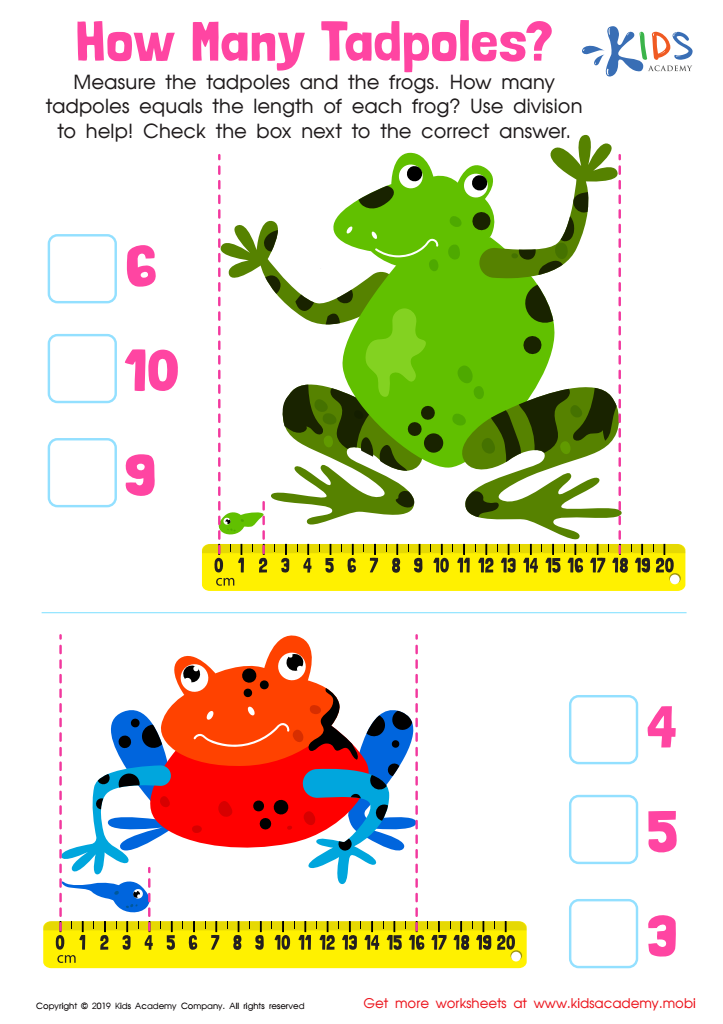
How Many Tadpoles Worksheet
Kids love tadpoles! They'll have fun using them to work out the measurements of their frog friends. By dividing the length of the frogs by the length of the tadpoles, children can deduce how many tadpoles it takes to equal a frog. With the use of 'how many' and 'each' they'll solve math problems without realizing it!
 Assign to My Students
How Many Tadpoles Worksheet
Worksheet

African Wildlife: Giraffe Worksheet
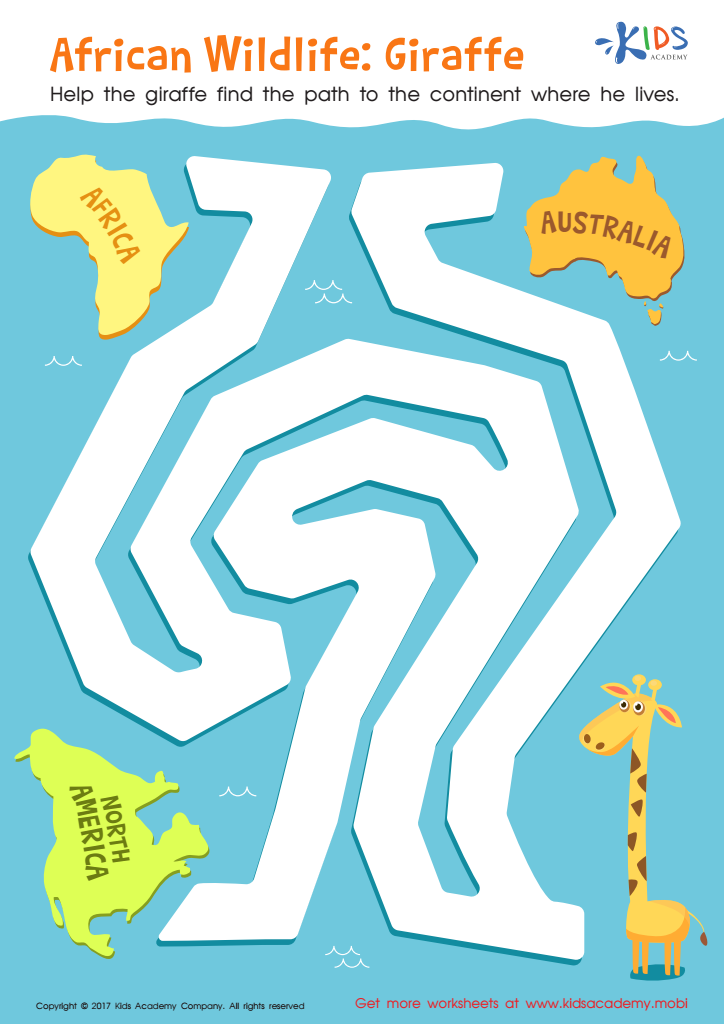
Help the giraffe get home! This African wildlife giraffe worksheet will boost your child's logical reasoning skills while they complete a maze to help the giraffe navigate choppy waters. Learn about different continents and their unique climates, practice problem solving and expand knowledge of the world and its habitats. Perfect for inspiring little learners!
African Wildlife: Giraffe Worksheet
Worksheet
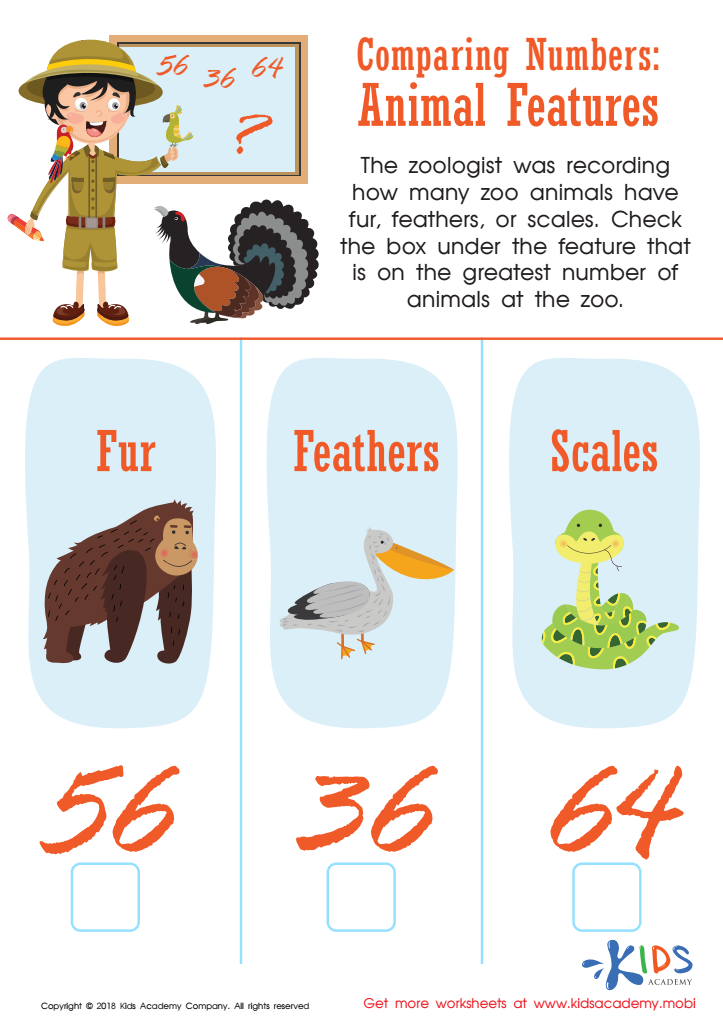
Animal Features Worksheet
Let your kids join a budding zoologist! They can count zoo animals' fur, feathers or scales, then use numbers and comparison to check the box with the most friends. The PDF will captivate them and help them understand how the value of '6' changes based on its position.
Animal Features Worksheet
Worksheet
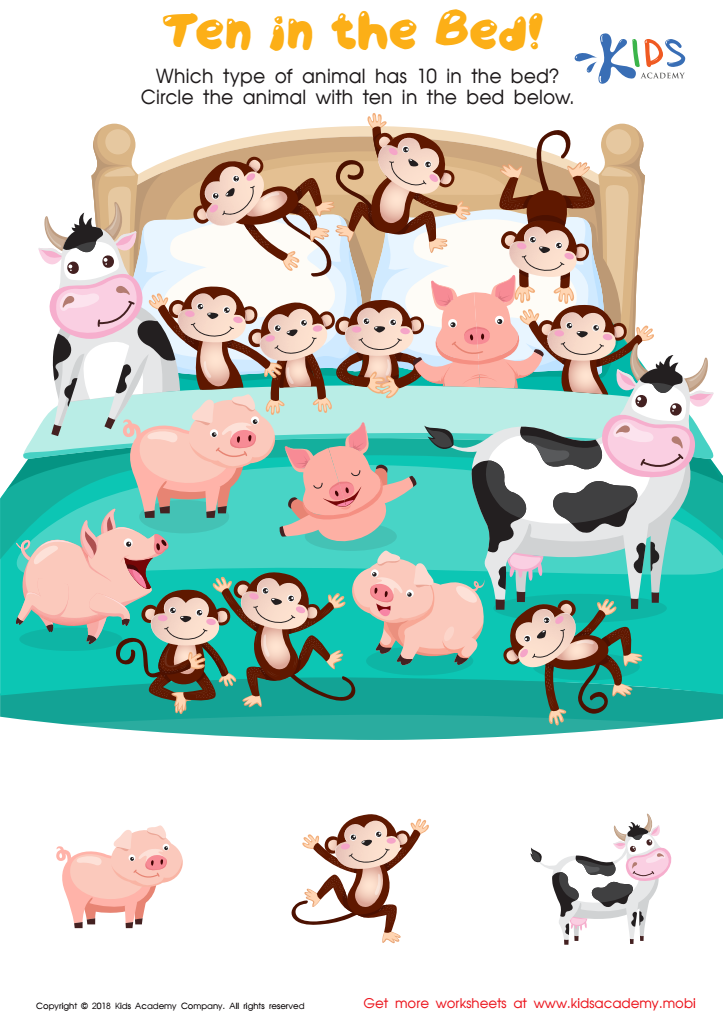
Ten in the Bed Worksheet
This fun worksheet has your kids counting and sorting friendly animal faces in a bed of ten! It's a great way for them to practice their mental math skills, like adding and multiplying more efficiently. Plus, it brings a new meaning to the classic song "Monkeys Jumping on the Bed"!
Ten in the Bed Worksheet
Worksheet
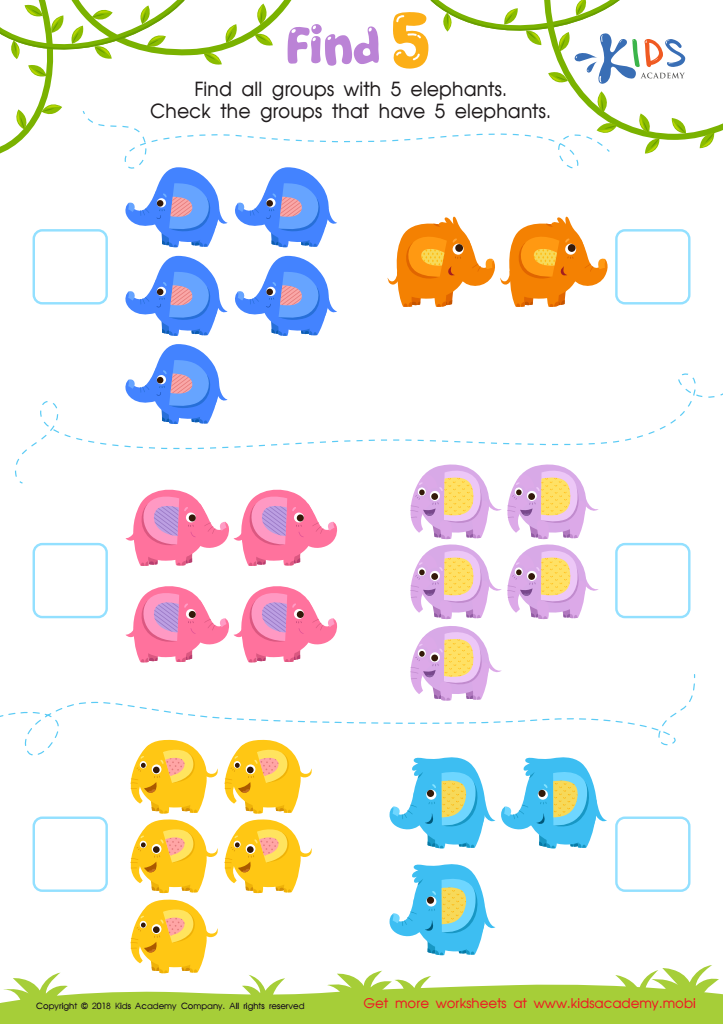
Find 5 Worksheet
Kids will love these cheery elephants that help them discover grouping and counting by fives. It's a great way to start learning addition and multiplication, while also developing fine motor skills. Download the free PDF and let the fun begin.
Find 5 Worksheet
Worksheet
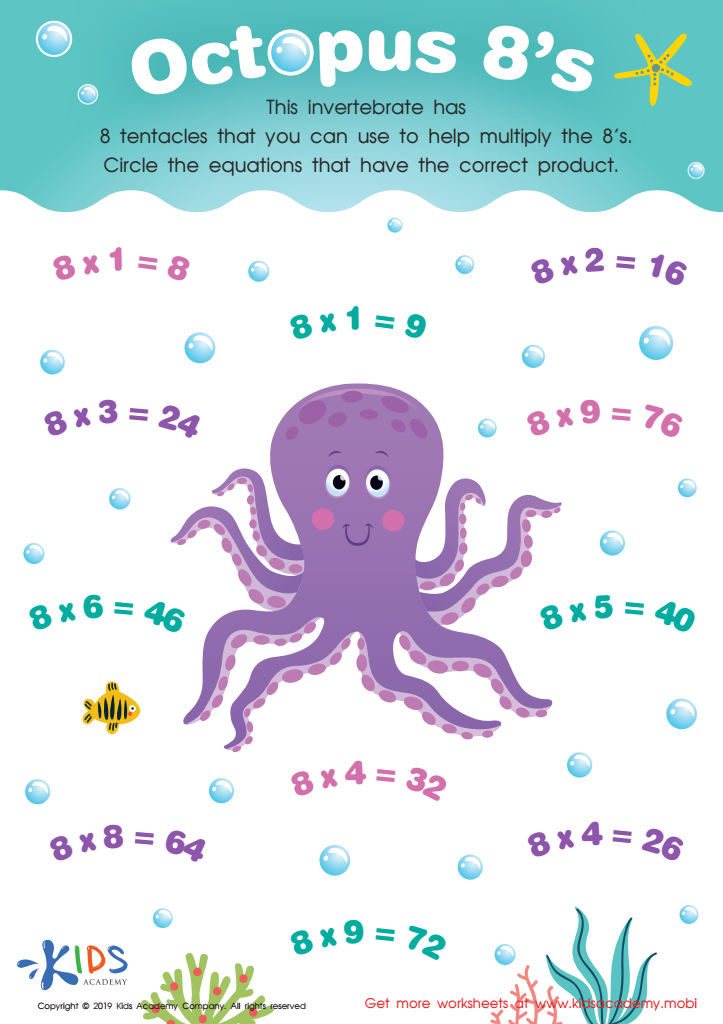
Octopus 8’s Worksheet
Can your child identify the octopus in the worksheet? It's an invertebrate with 8 tentacles. Have your child circle the equations with the correct products, and see if they can tell you some other features of the octopus too.
Octopus 8’s Worksheet
Worksheet
Join Kids Academy for Free
Who is primarily going to use this learning content?








Parents and teachers play a crucial role in fostering early numeracy skills in children aged 6-8, particularly through number recognition related to familiar contexts like plants and animals. This recognition is essential for building a solid foundation in mathematics, as it promotes the understanding of quantity, allowing children to make connections between numbers and the world around them. Engaging with nature-themed examples—like counting leaves, flowers, or animal tracks—can captivate children's interests, making learning more enjoyable and relatable.
Furthermore, number recognition enhances cognitive development, helping children develop problem-solving and critical-thinking skills. It encourages active exploration as children classify and quantify their surroundings, fostering curiosity and observational skills. Such interactions can improve literacy as well, as discussions about plants and animals introduce new vocabulary related to nature.
Moreover, recognizing numbers and their applications in real-life contexts builds confidence and lays the groundwork for more complex mathematical concepts later on. By integrating number recognition with themes of nature, parents and teachers can present math as an essential, integrated part of everyday life, ultimately nurturing a love for both learning and the environment in young minds. Supporting this initiative enriches children's educational experiences and prepares them for future academic success.







